

Bedroom Interior Design – A Complete Guide
Bedroom interior design is not simply about choosing a bed, wardrobe and attractive wall colour. A well-designed bedroom should make movement easy, provide enough storage, offer the right lighting and create a comfortable atmosphere for everyday use. The best bedroom interiors start with the way you sleep, dress, work, relax and use the room—not with a picture copied from Pinterest.
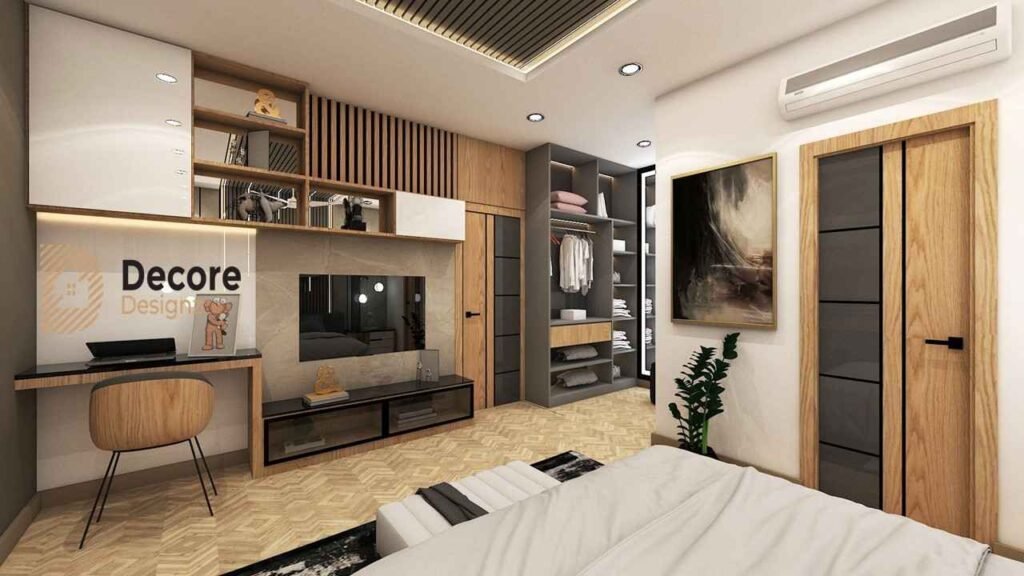
What makes a good bedroom interior design?
A good bedroom brings together five things: layout, furniture, storage, lighting and finishes.
The room should feel balanced when you enter it, but it also needs to work at 7 in the morning when you are getting ready for work or at night when you want the room to feel calm.
Before deciding on colours or decorative elements, consider:
- Where the bed should go
- How much space is needed around the bed
- Where wardrobes and storage will fit
- Whether a dressing area is required
- Whether the room needs a study or work corner
- How much natural light enters the room
- Where switches, sockets and lighting points should be placed
- Which materials will be easy to maintain
- How the bedroom connects visually with the rest of the home
This is why bedroom interior design should begin with planning rather than decoration.
How should you plan a bedroom layout?
The bed is usually the starting point because it is the largest piece of furniture in the room.
Once its position is established, the rest of the bedroom can be organised around it. Bedside tables, wardrobes, dressing units, study tables and other furniture should be placed without creating unnecessary obstacles.
A common mistake is choosing furniture first and trying to fit it into the room afterwards. This can leave awkward gaps, narrow walking paths or doors that interfere with other furniture.
Instead, plan the room as a complete layout.
For example, if the wardrobe doors open towards the bed, you need to consider the usable space in front of the wardrobe. If a study table is placed beside a window, check whether the position provides useful daylight without creating glare.
The right bedroom layout is the one that makes the room easy to use—not simply the one that looks good in a floor plan.
What furniture does a bedroom actually need?
Bedroom furniture should be selected according to the room and the people using it.
The basic furniture may include:
- Bed
- Bedside tables
- Wardrobe
- Dressing unit
- Chest of drawers or additional storage
- Study table
- Chair
- Bench or seating, where space permits
Not every bedroom needs all of these.
A smaller bedroom may work better with a compact bed, integrated bedside storage and a full-height wardrobe. A larger master bedroom may have enough room for a dressing area, seating or a study corner.
The important point is proportion.
Oversized furniture can make a large bedroom feel crowded, while furniture that is too small can make the room feel unfinished.
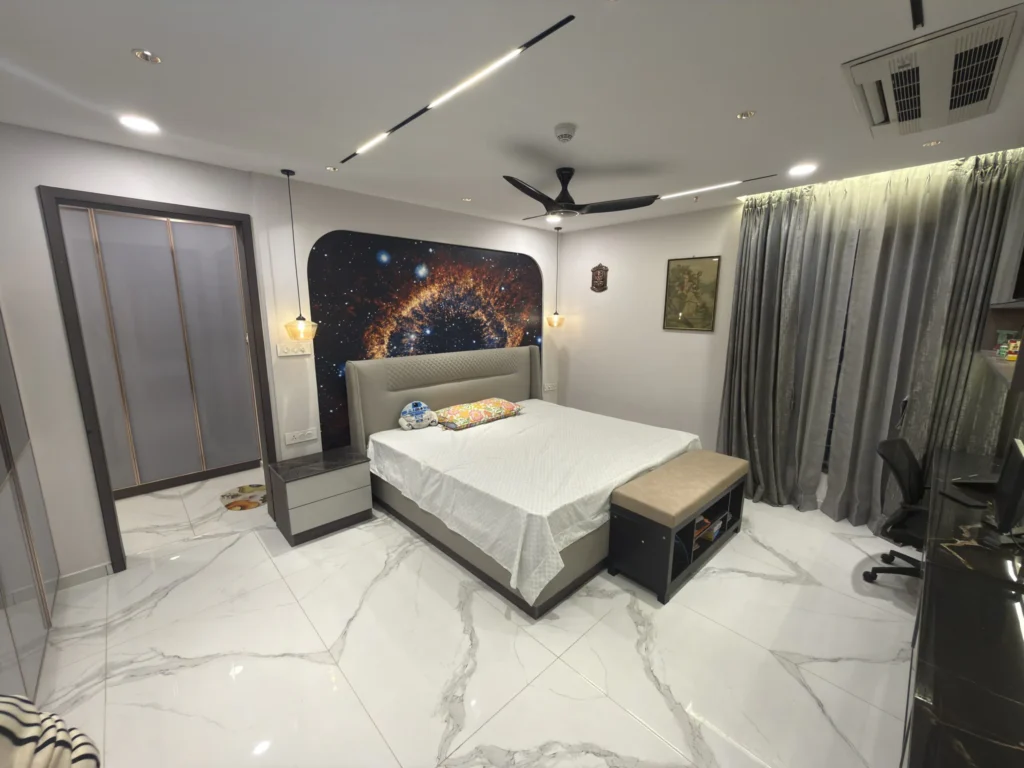
How should bedroom wardrobes be planned?
Wardrobes are one of the most important functional elements of bedroom interiors.
A wardrobe should be planned around what you actually store rather than simply selecting a shutter style.
Think about:
- Hanging clothes
- Folded clothes
- Drawers
- Accessories
- Shoes
- Bags
- Seasonal items
- Frequently used items
- Less frequently used storage
Internal organisation matters just as much as the exterior finish.
Decore Designz has a dedicated guide to Bedroom Wardrobe Planning because wardrobe planning deserves more attention than simply deciding between sliding and hinged shutters.
The goal is straightforward: everyday items should be easy to reach, while less frequently used belongings can be stored in less accessible areas.
Which bedroom colours work best?
There is no single colour combination that works for every bedroom.
The right choice depends on the amount of natural light, room size, furniture finish and the atmosphere you want to create.
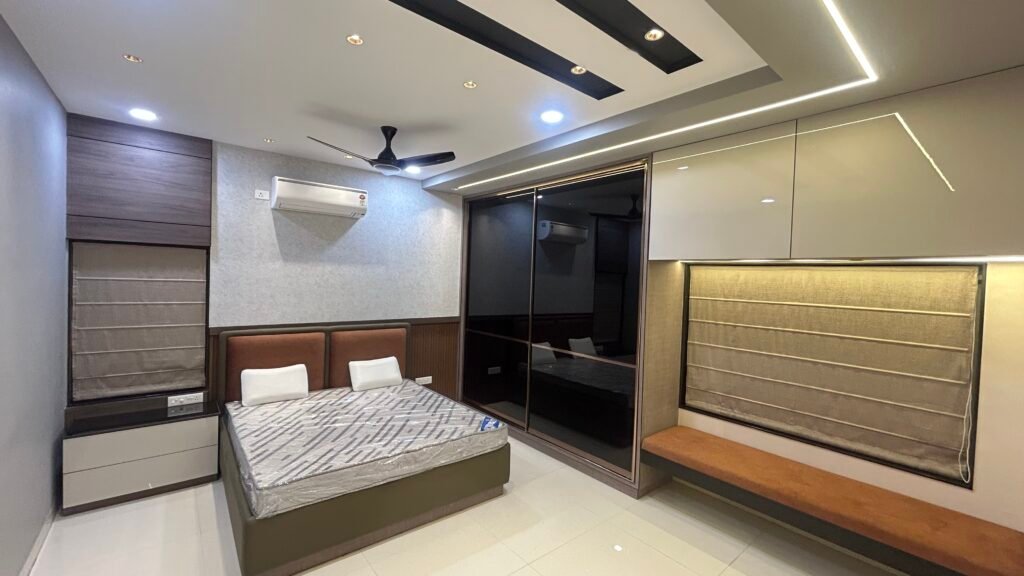
Neutral bedroom colours
Beige, cream, warm white, taupe and soft grey can create a calm foundation. They also give you flexibility when choosing furniture, curtains and accessories.
Earthy bedroom colours
Wood tones, muted greens, terracotta, brown and warm beige can make a bedroom feel warmer and more grounded.
Dark bedroom colours
Deep grey, charcoal, navy or darker brown can create a dramatic bedroom, particularly when balanced with adequate lighting and lighter elements.
Two-colour combinations
A neutral base with one stronger colour can be more effective than using several competing shades.
The important thing is not to choose colours independently. The wall colour, wardrobe, bed, flooring, curtains and lighting should be considered together.
What type of bedroom lighting is best?
Bedroom lighting should not depend on one bright ceiling light.
A better approach is to use different layers for different activities.
Ambient lighting
This provides the general illumination for the room.
Bedside lighting
Bedside lamps, wall lights or integrated lighting can provide more comfortable illumination when reading or using the room at night.
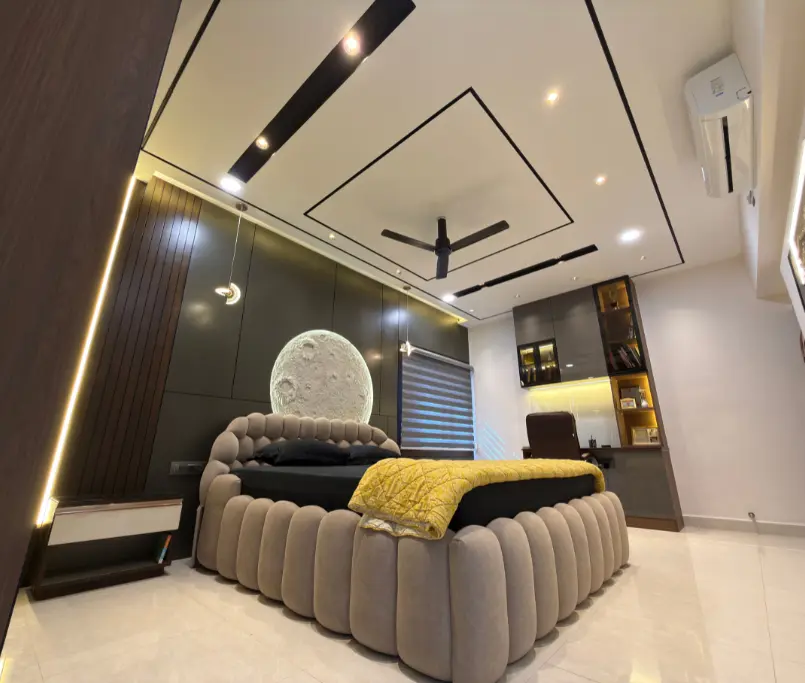
Wardrobe and dressing lighting
Wardrobes and dressing areas may require additional focused lighting so that the space is practical to use.
Decorative lighting
Pendant lights, concealed LED lighting or carefully positioned accent lights can add character without becoming the main source of illumination.
The lighting should also be planned with the furniture layout. A beautiful lighting design can become inconvenient if a switch is hidden behind the bed or a reading light is positioned too far from the person using it.
For bedrooms with limited ceiling height, a false ceiling should not be added simply because it is popular. The design should justify the loss of ceiling height through lighting, service integration or a useful architectural feature. Decore Designz’s dedicated false ceiling design for bedroom guide covers that decision in more detail.
What wall design works well in a bedroom?
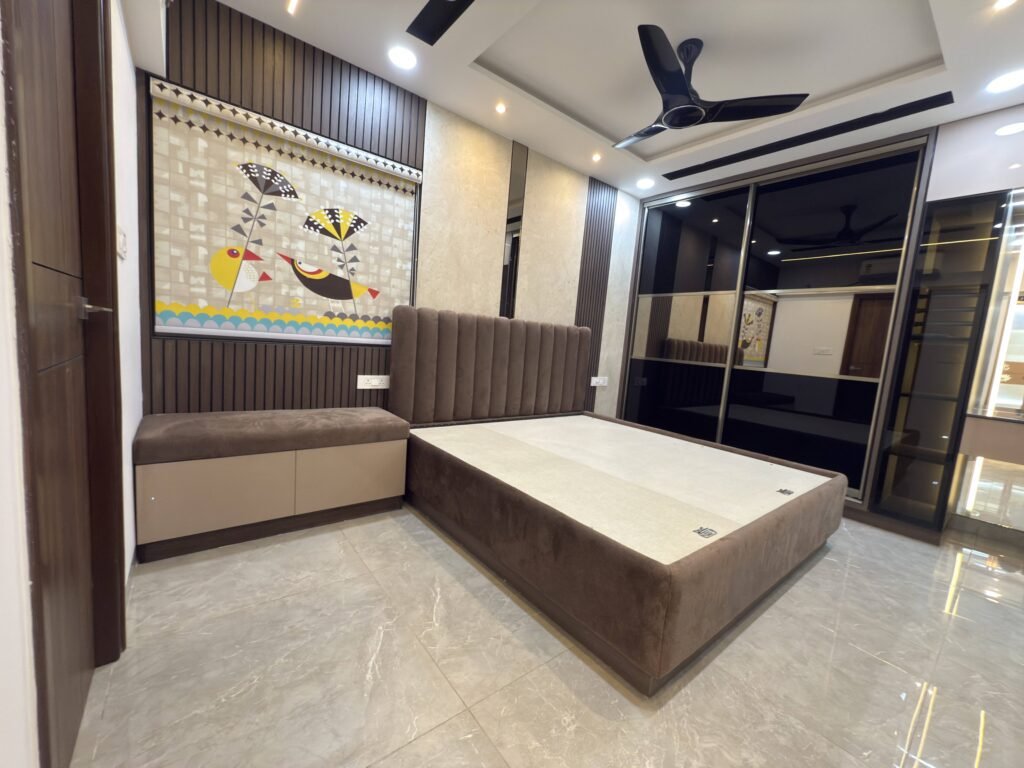
The bed wall is often the natural focal point of a bedroom.
Possible treatments include:
- Wood or laminate panelling
- Upholstered headboards
- Textured finishes
- Wallpaper
- Paint
- Fluted or slatted elements
- Integrated bedside units
- Simple artwork
The mistake is treating the bed wall as an opportunity to add everything at once.
If the headboard is visually strong, the opposite walls can remain quieter. If the room already has elaborate furniture or a strong colour palette, a simple painted wall may create better balance.
A bedroom should have a focal point, not a competition between several focal points.
For more decorative approaches, the existing bedroom wall décor ideas article can be used as a more specific reference.
How do you design a small bedroom?
Small bedrooms require better planning, not simply smaller decoration.
Start by identifying what the room genuinely needs.
A compact bedroom can benefit from:
- Full-height storage
- Storage integrated around the bed
- Wall-mounted or compact furniture
- Sliding wardrobe shutters where appropriate
- Light or visually quiet finishes
- Mirrors used selectively
- Multi-purpose furniture
- Good circulation around the bed
Avoid filling every available wall.
A smaller bedroom can feel larger when there is enough visual breathing room between furniture pieces.
The objective is not to make every part of the room useful. It is to make the important parts work well.
How should a master bedroom be designed?
A master bedroom generally offers more flexibility, but additional space should not automatically mean additional furniture.
A larger bedroom can accommodate:
- A more substantial bed wall
- Full-height wardrobes
- Dressing area
- Study corner
- Seating
- Additional storage
- Layered lighting
- More detailed material combinations
The challenge is maintaining proportion.
A master bedroom should still feel restful. Large furniture, dark finishes and multiple decorative features can make a room feel heavy if they are not balanced properly.
Modern vs simple vs luxury bedroom interiors: which is right?
These styles are not mutually exclusive.
Modern bedroom
Modern bedrooms generally rely on clean lines, controlled detailing and a balanced material palette.
Simple bedroom
A simple bedroom reduces visual complexity. It can still use high-quality materials and carefully designed furniture without becoming elaborate.
Luxury bedroom
Luxury is less about adding more decoration and more about proportion, material quality, detailing, lighting and execution.
A well-designed luxury bedroom can therefore be relatively restrained.
The right style is the one that suits the architecture of your home and the way you actually live.
What materials work well in bedroom interiors?
Material selection should consider both appearance and daily use.
For example, a matte finish may be easier to integrate into a calm bedroom than a highly reflective surface. Wood-look finishes can introduce warmth, while upholstered elements can soften a predominantly hard-material interior.
When comparing materials, consider:
- Durability
- Maintenance
- Cleaning requirements
- Texture
- Light reflection
- Colour stability
- Compatibility with surrounding materials
- How the material will look over time
A bedroom is used every day. Materials should therefore be selected for the real conditions of the room, not only for how they appear in a sample or render.
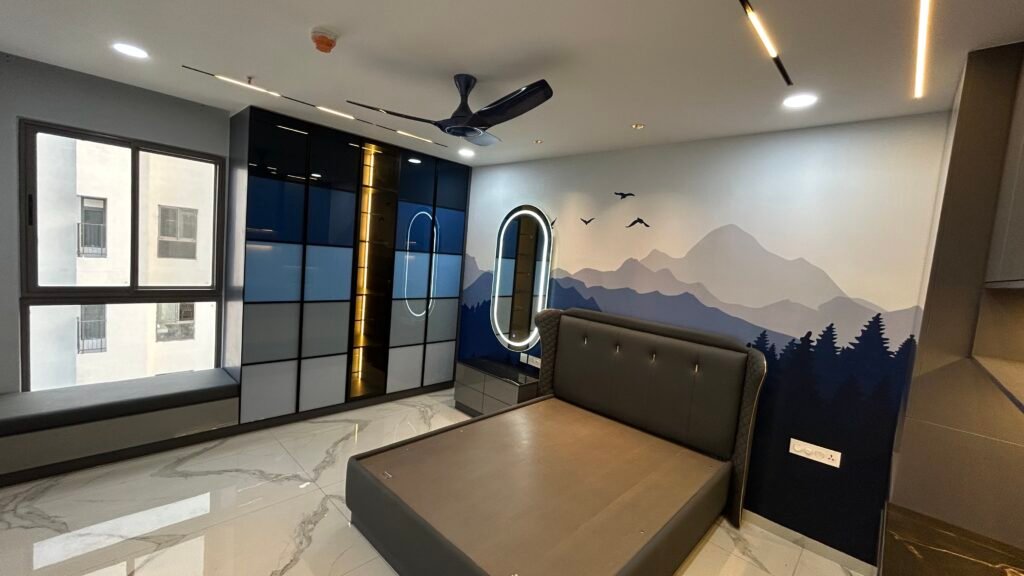
What are the most common bedroom interior design mistakes?
Some problems appear repeatedly in bedroom planning.
1. Starting with decoration instead of layout
A beautiful colour scheme cannot fix a badly planned room.
2. Insufficient storage
Storage requirements are often underestimated until the room is already finished.
3. Too much furniture
More furniture does not necessarily make a bedroom more functional.
4. Poor lighting placement
Lighting should be planned alongside furniture, electrical points and daily activities.
5. Ignoring maintenance
Some finishes look impressive initially but require more care than homeowners expect.
6. Copying a reference image exactly
A reference image can communicate your taste, but it cannot account for your room dimensions, windows, electrical points, storage requirements or lifestyle.
7. Treating every bedroom the same
A master bedroom, child’s bedroom and guest bedroom have different requirements. The design should reflect that.
How does a professional bedroom interior design process work?
A well-planned bedroom usually moves through several stages.
- Understand the requirements
Identify who uses the bedroom, what needs to be stored, how the room is used and what the homeowner wants from the space. - Plan the layout
Position the bed, wardrobes, furniture and circulation areas before finalising decorative elements. - Develop the design
Choose the style, colours, materials, furniture details, wall treatments and lighting approach. - Review materials and finishes
Compare finishes based on appearance, maintenance and suitability for the room. - Coordinate execution
Electrical work, carpentry, ceiling details, painting, lighting and other elements need to work together. - Complete the finishing
The final result depends heavily on detailing, alignment, installation quality and finishing—not only on the original design.
This connection between design and execution matters. A bedroom can look excellent in a 3D render and still disappoint if the actual dimensions, materials or finishing are poorly handled.
Bedroom interior design should be planned around you
There is no universal bedroom formula.
The best bedroom interior design is the one that understands the room first and the style second.
Your sleeping habits, storage requirements, work routine, preferred colours, maintenance expectations and available space should influence the decisions. Once those practical requirements are clear, the visual design becomes much easier to develop.
At Decore Designz Studio, this is how we approach residential interiors: from the first conversation and space planning through materials, furniture, lighting and execution, the design is developed around how the homeowner actually lives.
If you are planning a bedroom as part of a larger home interior, you can explore our interior design services in Hyderabad to see how the bedroom fits into a complete residential design process. For a specific bedroom or complete home project, you can also contact Decore Designz Studio to discuss your requirements.
Frequently Asked Questions
What is the most important part of bedroom interior design?
The layout is the starting point. Bed position, circulation, wardrobe placement, furniture dimensions and storage should be resolved before decorative decisions are finalised.
What colours are best for bedroom interiors?
There is no universal best colour. Neutral, earthy and muted shades often work well because they create a calmer visual environment, but the choice should consider natural light, furniture and the overall home design.
How can I make a small bedroom look bigger?
Prioritise circulation, reduce unnecessary furniture, use well-planned storage and avoid visually overcrowding the walls. Full-height storage and carefully selected finishes can also make better use of limited space.
Does every bedroom need a false ceiling?
No. A false ceiling should have a functional or design reason. If the existing ceiling already works and ceiling height is limited, retaining it may be the better decision.
Should the wardrobe match the bed?
It does not have to match exactly. The wardrobe, bed, flooring, walls and other furniture should instead belong to a coherent material and colour palette.
How should bedroom lighting be planned?
Use layers: general ambient lighting, bedside lighting and task lighting where required. Decorative lighting can then be added selectively.
What is the difference between modern and luxury bedroom design?
Modern design describes an aesthetic approach, while luxury is more about the quality of materials, detailing, proportions, comfort and execution. A bedroom can be both modern and luxurious without being heavily decorated.