

Living Room Hanging Lights: Pendants, Jhumars and Chandeliers by Ceiling Height
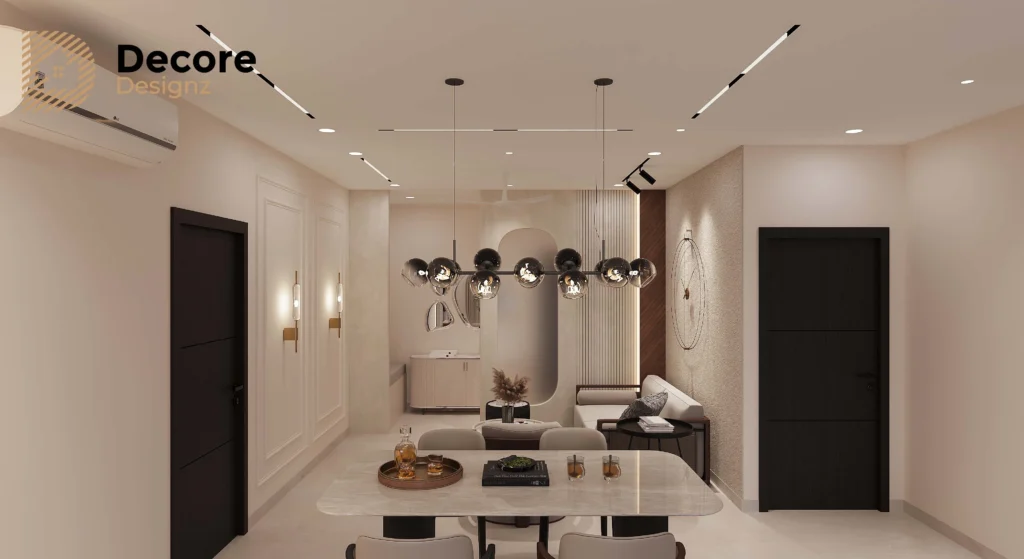
Choosing living room hanging lights involves more than selecting an attractive fixture. Ceiling height, room dimensions, furniture placement and false ceiling design all influence which pendant, jhumar or chandelier will work best. A well-proportioned fixture can create a focal point without making the living room feel crowded. The key is to select the right design, size and hanging height for the space.
Which Hanging Light Is Best for a Living Room?
Pendant lights, jhumars and chandeliers each serve a different design purpose. Pendants generally suit contemporary interiors, jhumars introduce decorative character, and chandeliers create a statement in larger or taller living rooms.
Hanging light | Best suited for |
Pendant light | Contemporary living rooms, minimal interiors and focused seating arrangements |
Jhumar | Traditional, transitional and decorative Indian living rooms |
Chandelier | Spacious living rooms, formal seating areas and high ceilings |
The best choice depends on the interior style, available ceiling space and the visual relationship between the fixture and furniture.
Are Pendant Lights Suitable for Living Rooms?
Pendant lights are a practical choice for contemporary living rooms. Their relatively simple forms allow them to create a focal point without overwhelming the surrounding interiors.
A single pendant can work above a centre table or within a clearly defined seating arrangement. Multiple pendants may suit larger spaces, although their alignment, spacing and combined visual weight need careful planning.
Pendant lights are particularly effective when the ceiling design is relatively simple and the furniture arrangement has a clear centre.
When Should You Choose a Jhumar?
A jhumar can add decorative richness to a living room. Traditional detailing, glass elements and metallic finishes can complement Indian interiors, wooden furniture and warmer colour palettes.
However, the fixture should complement the ceiling rather than compete with it. An elaborate jhumar paired with an equally elaborate false ceiling may make the room appear visually crowded.
For contemporary interiors, simpler jhumar designs with restrained detailing can provide decorative character without making the ceiling feel heavy.
Can You Install a Chandelier in an Apartment Living Room?
Yes. A chandelier can work in an apartment living room when its dimensions and suspension are appropriate.
Compact chandeliers are suitable for some standard-height rooms, while larger fixtures generally need more vertical space. The important consideration is not simply whether the room is an apartment or villa, but whether the chandelier fits the available dimensions and maintains comfortable clearance.
How Do You Choose Hanging Lights by Ceiling Height?
Ceiling height directly influences the fixture’s body size, suspension length and position within the living room.
Hanging Lights for Low-Ceiling Living Rooms
Low ceilings require careful selection because every additional centimetre of suspension reduces the available clearance.
Consider:
- Compact pendant lights with shorter suspension.
- Semi-flush decorative fixtures when hanging clearance is limited.
- Smaller jhumars with restrained detailing.
- Slim fixtures that do not visually dominate the ceiling.
- Simple false ceiling designs that preserve vertical space.
Avoid bulky chandeliers with long drops. A fixture may look attractive in a product photograph but feel uncomfortable when installed in a compact living room.
Hanging Lights for Standard Apartment Ceilings
Standard apartment ceilings generally benefit from fixtures that create a focal point without dominating the room.
A compact pendant or jhumar can work above the seating arrangement. However, the fixture should be positioned according to the furniture rather than automatically centred on the ceiling.
For example, an offset sofa arrangement may require the decorative light to align with the seating composition instead of the geometric centre of the room.
Chandeliers for High and Double-Height Living Rooms
High ceilings provide greater flexibility for chandeliers and longer suspension arrangements.
A larger chandelier can help establish visual scale in a double-height living room. Nevertheless, the fixture’s total height, suspension length and viewing angles from the upper floor must be considered.
The chandelier should feel connected to the seating area below rather than appearing isolated in the vertical space.
How High Should a Living Room Hanging Light Be?
The correct hanging height depends on the fixture’s location.
Fixture placement | Recommended consideration |
Above a centre table | Keep the fixture visually connected to the table while maintaining comfortable head clearance |
Above a sofa | Avoid obstructing seated sightlines or creating glare |
In an open walkway | Maintain unobstructed walking clearance |
In a double-height room | Consider viewing angles from both floors |
Near a TV wall | Prevent reflections and distracting glare |
For open circulation areas, approximately 7 feet of clearance from the finished floor can serve as a preliminary planning reference. Actual clearance must be checked against the fixture, site conditions and applicable safety requirements.
Above a centre table, the light can sit lower because the furniture establishes a defined zone. However, it should not interfere with people leaning forward or moving around the seating arrangement.
The fixture’s position should be finalised alongside the furniture layout. Installing the pendant first and shifting the sofa later can create alignment problems.
What Size Jhumar or Chandelier Should You Choose?
The size of a hanging light should relate to the living room’s proportions.
A large chandelier can overwhelm a compact room, while a small pendant may disappear visually in a spacious living room.
Before selecting the fixture, evaluate:
- Living room length and width.
- Ceiling height and suspension space.
- Sofa and centre-table dimensions.
- False ceiling perimeter and central design.
- Fixture diameter and body height.
- Visual weight of nearby furniture and wall treatments.
Should a Hanging Light Be Centred in the Living Room?
Not always.
When the seating arrangement is offset, the fixture may look better centred over the seating composition rather than the entire floor area.
In open living-dining layouts, the living room pendant and dining chandelier should also be coordinated. Both fixtures may be visible from the entrance, so their styles, sizes and positions should complement each other.
How Should Hanging Lights Work With a False Ceiling?
A hanging light should be planned alongside the false ceiling instead of being added after the ceiling is completed.
The ceiling determines where suspension points can be accommodated, how wiring is routed and whether the decorative fixture competes with cove lighting or profile lights.
Before finalising the ceiling:
- Confirm the fixture’s weight and mounting requirements.
- Coordinate suspension points with the ceiling framework.
- Provide suitable structural support where necessary.
- Plan wiring and switching before ceiling closure.
- Check the relationship between the fixture and ceiling recesses.
- Leave practical access for maintenance.
For ceiling-integrated lighting, explore our guides to false ceiling cove lights and false ceiling LED lighting.
Can You Combine a Chandelier With Cove Lighting?
Yes. Both can serve different purposes.
Cove lighting provides soft ambient illumination, while a chandelier contributes decorative character and visual focus.
However, excessive light sources, complicated ceiling patterns and reflective finishes can make the room visually busy. The objective is a balanced lighting arrangement rather than the maximum number of fixtures.
Our guide to false ceiling designs for living rooms explains how ceiling layouts can accommodate different lighting arrangements.
Which Light Temperature Works Best for Living Rooms?
Light temperature affects how the fixture, furniture and surrounding finishes appear.
Light temperature | Appearance and suitable application |
Warm white (2700K–3000K) | Soft, warm and relaxed. Suitable for decorative lighting, wooden finishes and cosy seating |
Neutral white (3500K–4000K) | Cleaner and more balanced. Works with contemporary interiors requiring a less warm appearance |
Cool white (5000K–6500K) | Crisp and bluish. Generally less suitable for relaxed decorative living-room ambience |
Warm white is a comfortable starting point for most decorative living-room arrangements. It can complement wooden furniture, textured walls and warm neutral palettes.
However, colour temperature alone does not determine lighting quality. Brightness, glare, dimming capability and light distribution also influence comfort.
Common Hanging Light Mistakes to Avoid
Several problems become apparent only after installation.
Choosing the fixture before planning furniture: The light may end up misaligned with the seating arrangement.
Ignoring ceiling height: A long chandelier can obstruct movement or make a compact room uncomfortable.
Oversizing the fixture: Excessive diameter or decorative detailing can overwhelm the living room.
Overloading the false ceiling: Multiple decorative elements, cove lighting and elaborate fixtures can compete for attention.
Ignoring maintenance: Detailed jhumars and chandeliers may require regular cleaning. Consider accessibility before selecting intricate designs.
Using the same lighting everywhere: A living room benefits from different lighting layers rather than relying entirely on one decorative fixture.
What Homeowners Often Miss
The fixture is only one part of the lighting plan. Electrical points, ceiling support, furniture placement, glare, switching and maintenance all affect the final result.
A decorative light may look excellent in a product photograph but perform poorly in a real room if these details are overlooked.
How We Plan Living Room Lighting at Decore Designz Studio
At Decore Designz Studio, we approach living-room lighting as part of the interior layout rather than an isolated decorative decision.
We begin with the room dimensions, ceiling conditions and furniture arrangement. Next, we consider whether the living room needs a pendant, jhumar, chandelier or a more compact decorative fixture.
The selection also depends on the interior style, ceiling treatment, wall finishes and lighting layers already planned.
If you are planning a living room renovation or a new apartment interior, our living room interior design service in Hyderabad can help coordinate the furniture layout, ceiling design and lighting selection.
Plan Your Living Room Lighting With the Right Interior Design Decisions
A well-chosen hanging light should complement the living room rather than compete with it. Ceiling height, fixture size, furniture alignment, lighting temperature and installation requirements all influence the outcome.
At Decore Designz Studio, we bring these decisions together as part of the interior design process, helping homeowners create living rooms that look considered and work comfortably in everyday use.
Planning a new living room or upgrading an existing one?
Discuss your requirements with Decore Designz Studio.
Explore our living room interior design services in Hyderabad or contact us to arrange a consultation.
Decore Designz Studio
Fourth Floor, Bhagyalaxmi Construction, KM Cube Building, 401, Ghousia Masjid Rd, Ramakrishnapur, Weaker Section Colony, Izzathnagar, HITEC City, Khanammet, Hyderabad, Telangana 500084
Phone: +91 96182 18055
Email: decoredesignzstudio@gmail.com
Frequently asked questions
Which hanging light is best for a living room?
Pendants suit contemporary arrangements, jhumars suit decorative or traditional interiors, and chandeliers work well in appropriately proportioned rooms. Ceiling height, fixture dimensions and placement determine the final choice.
Can I install a chandelier in a low-ceiling living room?
Yes, if the chandelier is compact and provides adequate clearance. Semi-flush decorative fixtures may be a better option when suspension space is limited.
Which is better for a living room: pendant or jhumar?
A pendant is generally simpler and more contemporary. A jhumar offers more decorative detailing. Neither is universally better; the choice depends on the interior style and available space.
Can I install a hanging light above my sofa?
Yes, but its position should preserve seated sightlines and avoid glare. Suspension height and fixture dimensions should be checked against the actual seating arrangement.
How many hanging lights should a living room have?
The number depends on room size, layout and the lighting plan. One well-positioned decorative fixture may be sufficient for a compact living room, while larger rooms may need multiple coordinated fixtures.
Should hanging lights be installed before or after the false ceiling?
The fixture should be selected and its electrical and structural requirements planned before the false ceiling is completed. Final installation may happen later, once the ceiling and other finishing work are ready.
Are jhumars suitable for modern living rooms?
Yes. Contemporary jhumars with restrained forms and simpler detailing can work well with modern furniture, neutral palettes and minimal ceiling designs.