

False Ceiling Design for Hall & Living Room: 40+ Ideas 2026
A good false ceiling design for hall does more than hide wiring or add decorative detail. It can organise lighting, define the living area, improve visual proportions and give the room a finished look. The right design depends on ceiling height, room size, fan position, lighting requirements and the overall interior style. Here are 40+ practical false ceiling ideas for halls and living rooms, from simple single-layer designs to more detailed contemporary layouts.
What should you consider before choosing a false ceiling design?
Before selecting a ceiling pattern from an inspiration image, look at the room itself.
The most important factors are:
- Existing ceiling height
- Room dimensions and proportions
- Number and position of fans
- Lighting requirements
- Electrical and AC services
- TV wall and furniture layout
- Natural light
- Overall interior style
- Maintenance requirements
- Material and finish
A ceiling that looks impressive in a large villa may make a compact apartment living room feel lower and heavier.
At Decore Designz Studio, ceiling design is considered alongside furniture, lighting, materials and the way the room will actually be used rather than as an isolated decorative element. Our living-room design services similarly combine furniture planning, TV units, wall treatments, lighting and ceiling concepts.
40+ False Ceiling Design Ideas for Hall & Living Room
1. Simple single-layer false ceiling
A clean single-layer ceiling is one of the safest choices for a contemporary hall. Keep the profile simple and use recessed lights or a restrained cove around the perimeter.
2. Minimal border false ceiling
Create a narrow false ceiling border around the room while leaving most of the central ceiling visually open. This works particularly well when you want a modern look without a heavy ceiling.
3. Floating false ceiling
A floating central panel can create the impression that part of the ceiling is suspended independently. Concealed lighting around the edge makes the floating effect more visible.
4. False ceiling with cove lighting
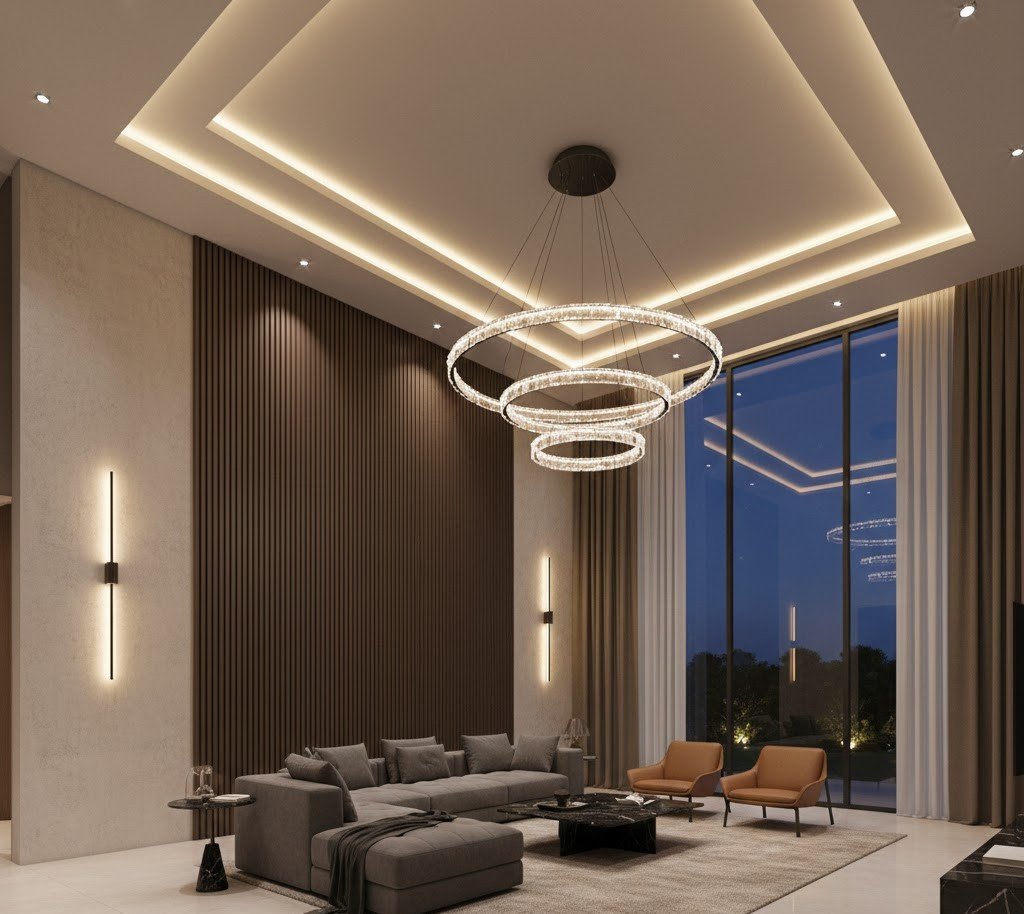
A recessed cove can provide soft indirect illumination instead of relying entirely on visible spotlights. It is particularly useful when you want the living room to feel warmer in the evening.
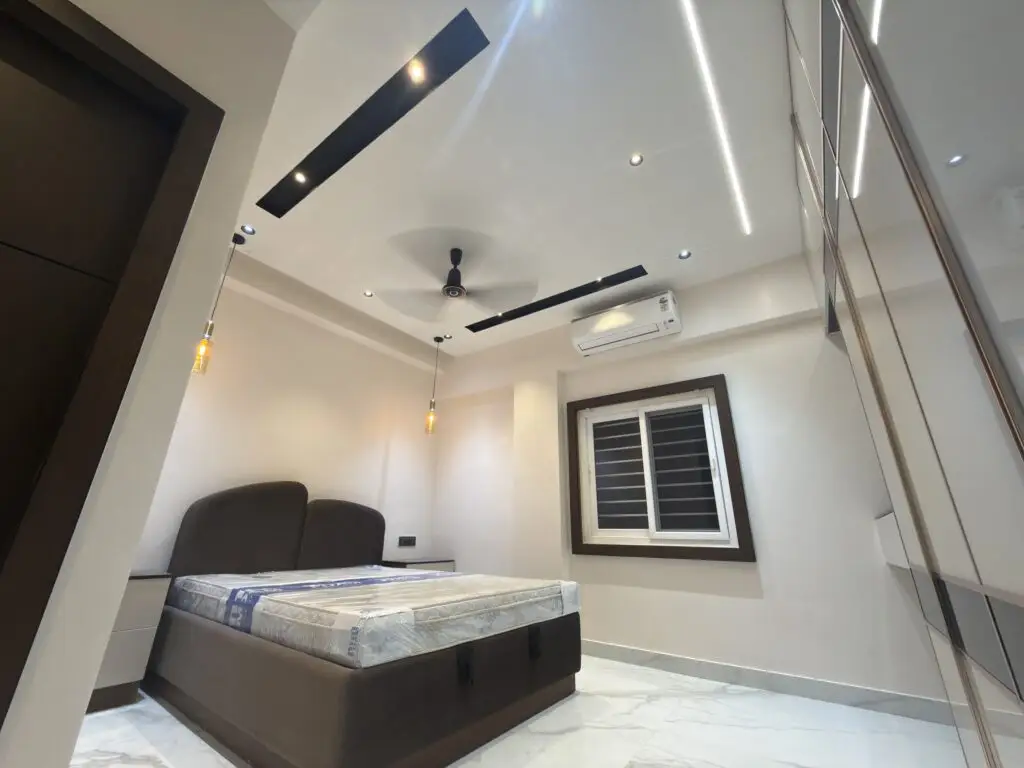
5. LED strip perimeter ceiling
LED strips can be concealed within a recessed perimeter detail. The important part is to avoid excessive brightness and choose a light tone that works with the room’s materials and colours.
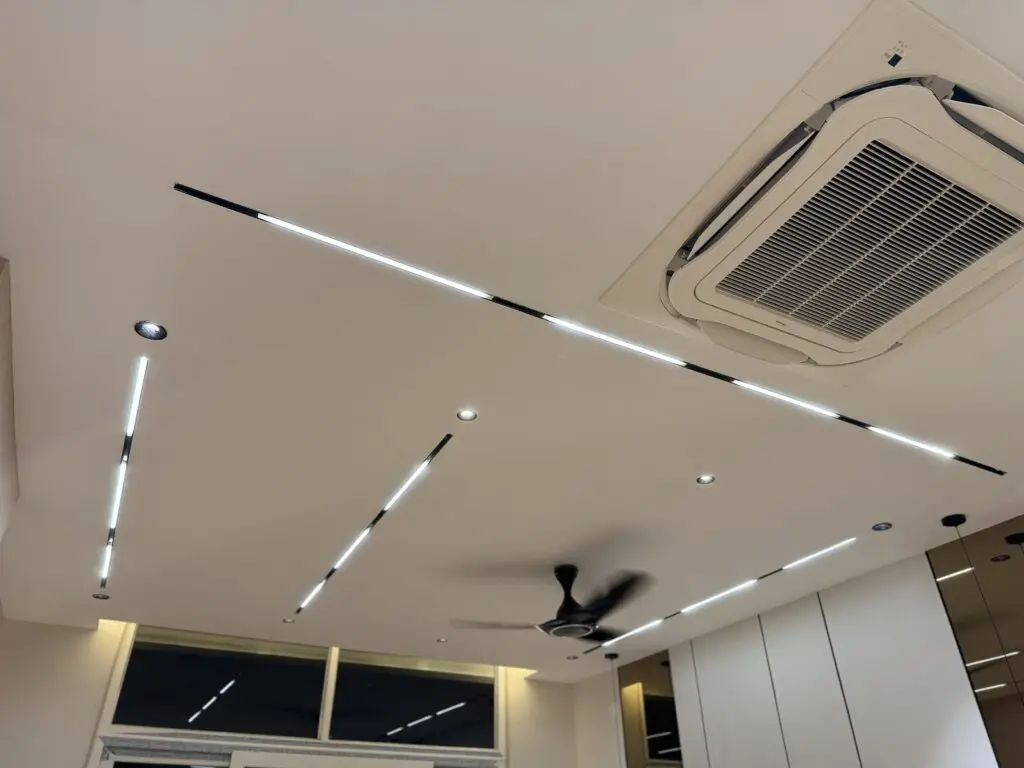
6. Gypsum false ceiling with spotlights
Gypsum board provides flexibility for creating clean geometric forms and integrating recessed lighting. A simple grid of spotlights can provide functional illumination without making the ceiling visually busy.
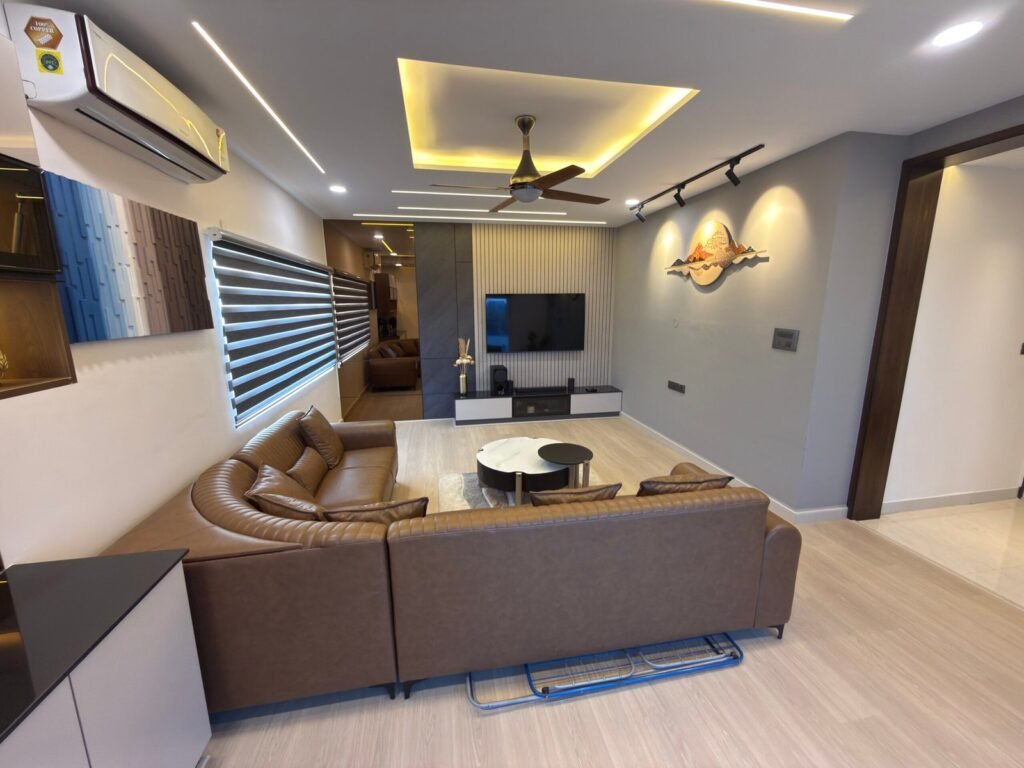
7. POP-style decorative ceiling
Decorative POP detailing can be used for curved or moulded elements where the design calls for more ornamentation. It is better suited to interiors where the ceiling detail relates to the rest of the room rather than appearing as an isolated feature.
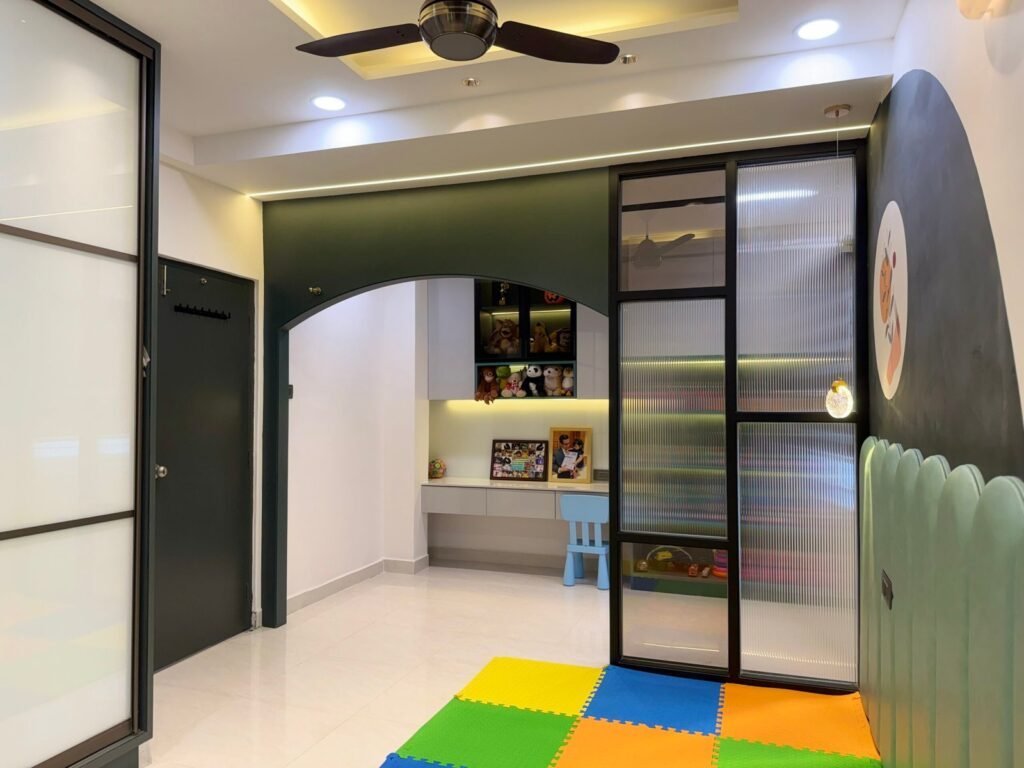
8. Tray ceiling design
A recessed central section creates a tray-like effect. The stepped profile can visually separate the main seating area from the surrounding ceiling.

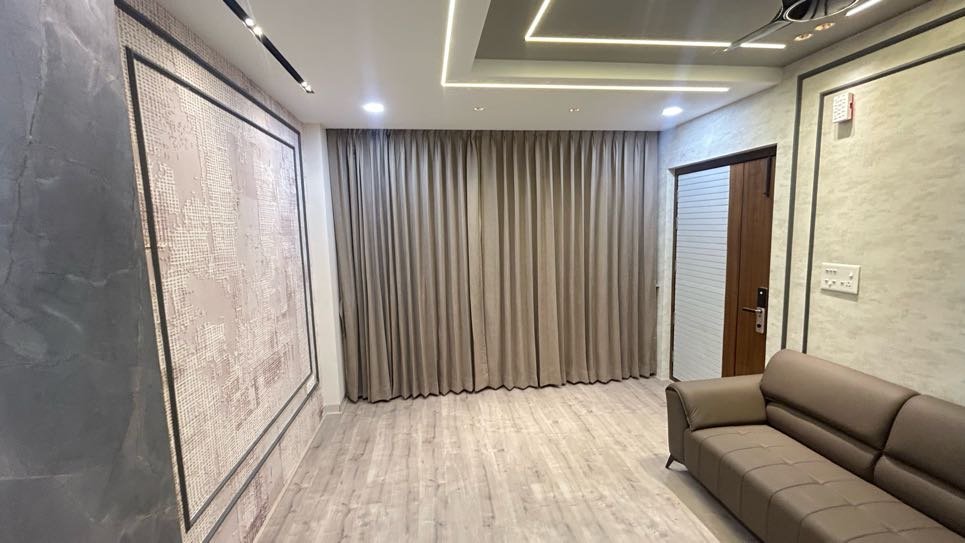
9. Double-layer false ceiling
Two levels can create stronger depth and allow different lighting zones. Use this carefully because additional layers can make a low ceiling feel more compressed.
10. Wooden accent false ceiling
A wood or wood-finish panel can add warmth to a predominantly neutral living room. It works particularly well with beige, grey, white or natural material palettes.
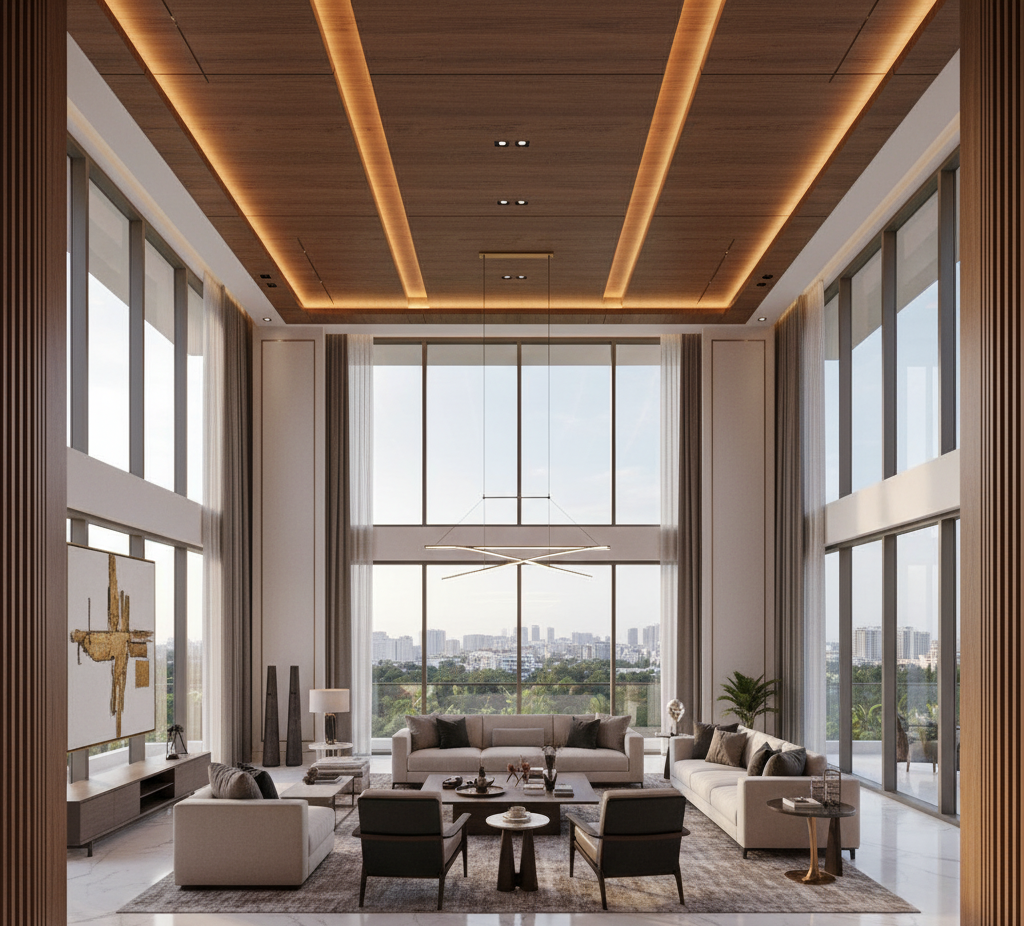
11. Wooden slat ceiling detail
Vertical or linear wooden slats can introduce rhythm into an otherwise plain ceiling. They can also visually connect with wooden wall panelling or furniture.
12. False ceiling with a central panel
Instead of covering the entire ceiling with multiple levels, create one defined central panel over the main seating or circulation area.
13. Rectangular geometric ceiling
Straight rectangular forms suit modern and contemporary interiors. The geometry should generally follow the room’s architecture rather than fight against it.
14. Linear false ceiling design
Long recessed lines can emphasise the length of a living room. This is particularly useful in rectangular rooms where the ceiling can reinforce the room’s natural proportions.
15. Cove-and-spotlight combination
Use concealed cove lighting for ambient illumination and recessed spotlights for more focused lighting. This creates more flexibility than using one lighting type throughout the room.
16. False ceiling with pendant light
A central or dining-adjacent pendant can become the visual focus while the surrounding ceiling remains relatively simple. The pendant should be positioned according to furniture rather than simply centred on the room.
17. False ceiling above the seating area
A ceiling detail can be restricted to the main seating zone instead of extending across the entire hall. This creates a visual boundary without adding a physical partition.
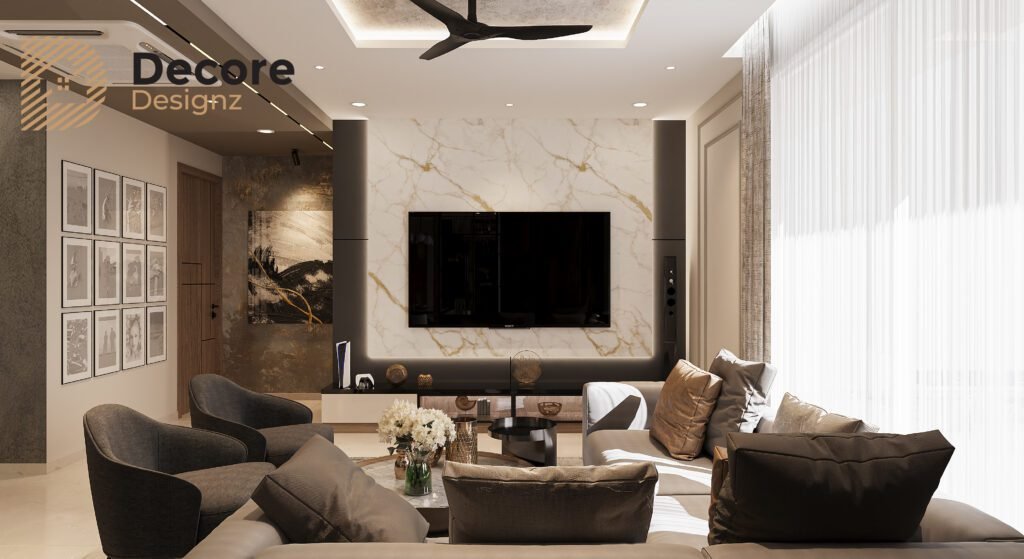
18. Ceiling design connected to the TV wall
The ceiling and TV wall can share the same lines, colours or materials. This creates a stronger visual connection between two major elements of the living room.
19. Ceiling with recessed lighting grid
A carefully planned arrangement of recessed lights provides even illumination. Avoid placing lights randomly just to fill available ceiling space.
20. Black-and-white ceiling contrast
A restrained dark-and-light combination can create a sharper contemporary appearance. Keep the darker element controlled so the ceiling does not visually dominate the room.
21. White-on-white minimalist ceiling
For a calm, spacious appearance, keep the ceiling layers and finishes predominantly white. The lighting and shadow lines then provide most of the visual definition.
22. Beige false ceiling design
Warm neutral tones can soften a contemporary living room. Beige works especially well when repeated through upholstery, wood finishes, curtains or wall treatments.
23. Grey false ceiling accent
Grey can introduce contrast without the visual intensity of a strong colour. It works well with white ceilings and modern furniture.
24. Wood-and-white combination
Pairing a white ceiling with a controlled wooden accent creates a balance between clean contemporary lines and natural warmth.
25. False ceiling with concealed curtain lighting
Where the living room has full-height curtains, the ceiling can be detailed to accommodate concealed lighting near the curtain line. This needs to be coordinated before execution.
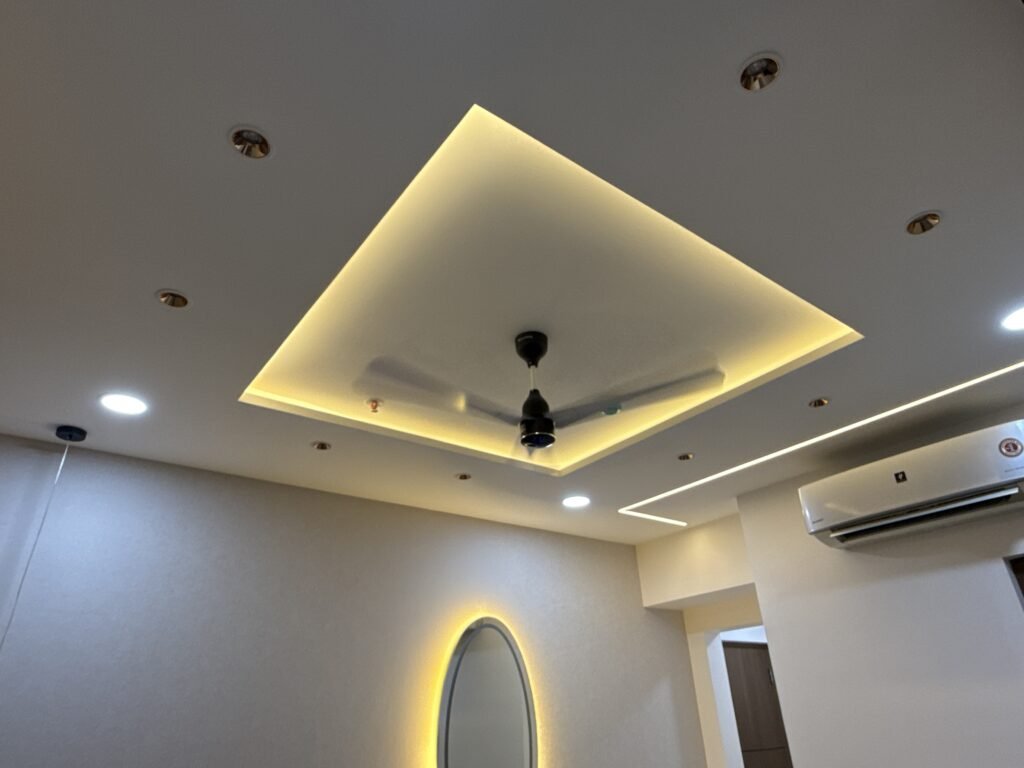
26. False ceiling around the fan
Instead of treating the fan as an obstacle, design the ceiling around its location. The surrounding geometry should maintain enough visual breathing room around the fan.
27. False ceiling design for a hall with two fans
Two fans require more planning than simply mirroring two ceiling cut-outs. The ceiling geometry, lighting and fan positions should be balanced so that the room does not look divided unnecessarily.
For larger halls, symmetrical planning can work well when the architecture and furniture layout are also symmetrical.
28. False ceiling with a central fan and perimeter cove
A central fan can remain visually dominant while a restrained cove surrounds the room. This is useful when you want ambient lighting without competing with the fan.
29. False ceiling for a small hall
Small halls usually benefit from simpler profiles, lighter finishes and controlled lighting. Avoid multiple heavy layers that unnecessarily reduce the visual height of the room.
30. Compact L-shaped false ceiling
An L-shaped ceiling feature can follow the furniture arrangement or architectural shape of the room. It is useful when the hall contains distinct seating or circulation zones.
31. False ceiling for an open living-dining area
In an open-plan home, the ceiling can help define the living and dining zones without building a wall. Different ceiling details or lighting zones can establish the transition.
32. Living room with dining ceiling transition
A subtle change in ceiling profile above the dining area can create a sense of separation while keeping the overall space visually connected.
33. False ceiling with a feature beam
If an existing beam cannot be removed, the design can incorporate it into the ceiling rather than attempting to hide it awkwardly. The beam can become part of a larger geometric composition.
34. Ceiling design around an AC duct
AC ducts and other services should be considered before finalising the ceiling. A well-planned design conceals services without creating unnecessary drops throughout the room.
35. Ceiling with recessed curtain pocket
A curtain pocket can give curtains a cleaner, built-in appearance. It needs to be coordinated with curtain tracks, electrical points and the finished ceiling level.
36. Modern layered false ceiling
A combination of two restrained levels can create depth while retaining a contemporary appearance. The key is proportion rather than the number of layers.
37. Luxury false ceiling with restrained detailing
Luxury does not require a highly decorated ceiling. High-quality materials, precise lines, controlled lighting and good proportions can create a more refined result than excessive ornamentation.
38. Contemporary geometric ceiling
Use clean rectangles, linear recesses or controlled offsets to create a contemporary focal point. The geometry should relate to the furniture and architecture below.
39. Minimal ceiling with wall lighting
A very simple ceiling can work when the room already has strong wall treatments or architectural features. Instead of adding more ceiling decoration, use wall washers or other lighting to create depth.
40. False ceiling with warm ambient lighting
Warm ambient lighting can make a living room feel more comfortable in the evening. It is particularly effective when combined with neutral finishes and natural-looking materials.
41. False ceiling with accent spotlights
Spotlights can highlight artwork, textured walls, architectural features or selected furniture. They should be positioned according to the objects being illuminated.
42. False ceiling with layered lighting
Use separate circuits for ambient, general and accent lighting where practical. This allows the room to change according to whether you are watching TV, entertaining guests or simply relaxing.
43. Ceiling with a central decorative feature
A central panel, subtle geometric detail or carefully selected light fitting can provide a focal point without requiring the entire ceiling to be elaborate.
44. False ceiling with natural-material accents
Wood, stone-look finishes or textured materials can connect the ceiling with the wider interior palette. Use them selectively because too many competing textures can make the room feel busy.
45. Simple false ceiling with clean shadow gaps
A narrow shadow gap can create a crisp transition between surfaces. This approach suits minimalist interiors where small construction details provide the visual character.
Which false ceiling design works best for a small hall?
For a small hall, a simple false ceiling design usually works better than a heavily layered ceiling.
Use a shallow, visually light profile with carefully positioned recessed lights or a narrow cove. White or light finishes can help maintain a sense of openness. The ceiling should also leave enough room for the fan, AC requirements and other services.
The common mistake is trying to make a small living room look luxurious by adding more layers. More layers do not automatically make a ceiling look more premium.
What is the best false ceiling design for a large living room?
A larger living room gives you more room to use zoning.
You can consider:
- A central ceiling panel
- Perimeter cove lighting
- Separate living and dining ceiling treatments
- Larger geometric forms
- Wood-finish accents
- Multiple lighting zones
- Decorative or architectural features
The design should still follow the furniture arrangement. A large empty ceiling does not need to be filled simply because space is available.
Which material is suitable for a hall false ceiling?
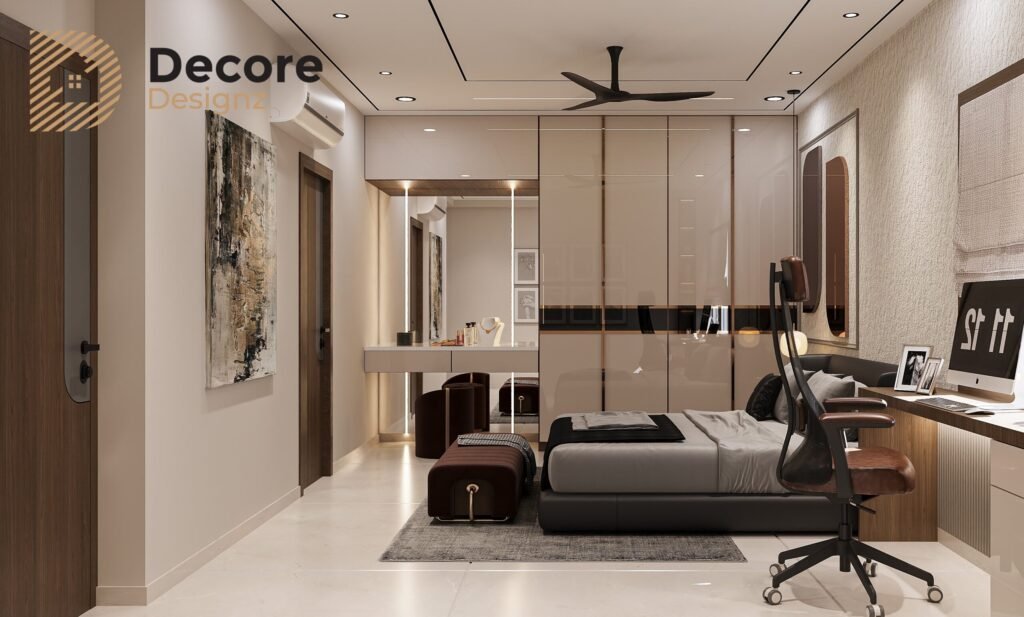
Gypsum board is commonly useful when you want clean geometric forms, recessed lighting and integrated ceiling details. POP can be considered where moulded or more decorative detailing is required.
The material decision should also account for the design complexity, existing ceiling, service requirements, maintenance and site conditions.
The cluster for this topic separately identifies gypsum board false ceiling as a material-focused supporting article, so material selection should not be turned into a long standalone section here.
What mistakes should you avoid in a false ceiling design?
1. Designing from an inspiration image alone
A ceiling design has to fit your actual ceiling height, room proportions, fan locations and services.
2. Using too many layers
Multiple levels can make a room feel visually heavy, especially in apartments.
3. Ignoring the furniture layout
The ceiling should support the room below it. It should not be designed independently.
4. Adding lights without a lighting plan
More spotlights do not automatically mean better lighting.
5. Forgetting maintenance
Access to electrical components, drivers and concealed services should be considered during planning.
6. Treating every room the same
A compact apartment hall, large villa living room and open living-dining space have different requirements.
7. Ignoring ceiling height
A design that works beautifully in a high-ceilinged villa may be inappropriate for an apartment with limited vertical space.
8. Choosing decoration before function
The ceiling should first solve the room’s practical requirements. Decorative detailing comes afterward.
Final Takeaway
The best false ceiling design for hall and living room is not necessarily the most elaborate one. Start with the room’s height, furniture arrangement, fan positions, lighting requirements and overall interior style. Then choose the ceiling form and material that support those decisions.
For a compact apartment, that may mean a simple perimeter or single-layer ceiling. For a larger living room, it could mean zoning, cove lighting, geometric forms or carefully controlled wood accents.
The goal is simple: the ceiling should make the room work better and look more complete without becoming the room’s only feature.
If you are planning a complete home interior in Hyderabad, Decore Designz Studio handles living-room planning alongside furniture, lighting, materials, false ceiling concepts and execution. You can explore the studio’s interior design services in Hyderabad or review its completed interior projects in Hyderabad before discussing your own space.
For a project-specific discussion, share your floor plan, approximate room dimensions and the kind of living-room design you have in mind. The right ceiling design should come from the space—not from a catalogue image.
Frequently Asked Questions
Is a false ceiling good for a living room?
Yes, when it solves a genuine requirement such as lighting integration, service concealment, zoning or visual proportion. It is not automatically necessary in every living room.
Which false ceiling is best for a hall?
There is no single best design for every hall. A simple single-layer or perimeter design can suit a compact room, while a larger living room may support layered, geometric, cove-lit or zoned ceiling designs.
Which false ceiling design is best for a small hall?
A simple, visually light design with controlled lighting generally works better than multiple heavy layers. Ceiling height and room proportions should determine the final design.
Can I use a false ceiling with two fans?
Yes. The ceiling should be planned around the fan positions, room proportions, furniture layout and lighting. Symmetrical layouts can work particularly well in larger rectangular halls.
Is gypsum good for a hall false ceiling?
Gypsum can be suitable for clean geometric designs, recessed lighting and integrated ceiling details. The right material depends on the design, site conditions and technical requirements.
Does a false ceiling make a room look smaller?
It can if too much of the original ceiling height is lost or the design is visually heavy. A restrained profile and appropriate lighting can avoid that problem.
Can a false ceiling hide electrical wiring?
One advantage of a false ceiling is that it can provide a planned space for concealing certain services. The electrical layout should be coordinated before ceiling execution rather than improvised afterward.
Should the false ceiling match the TV wall?
It does not need to match exactly, but the two elements should work together. Repeating a material, colour, line or lighting language can make the living room feel more cohesive.
Are modern false ceiling designs always better than simple ones?
No. “Modern” does not mean “more complicated.” A simple ceiling with good proportions, precise detailing and well-planned lighting can look more refined than an elaborate design.