

False Ceiling Design for Bedroom: Ideas for Every Style
A false ceiling design for bedroom should do more than make the ceiling look decorative. It should work with the bed position, wardrobe, lighting, fan, ceiling height and the overall mood of the room. A master bedroom may need layered ambient lighting and a stronger focal point, while a child’s or guest bedroom often benefits from a simpler treatment. Here are practical bedroom false ceiling ideas for modern, minimalist, contemporary and more detailed interiors.
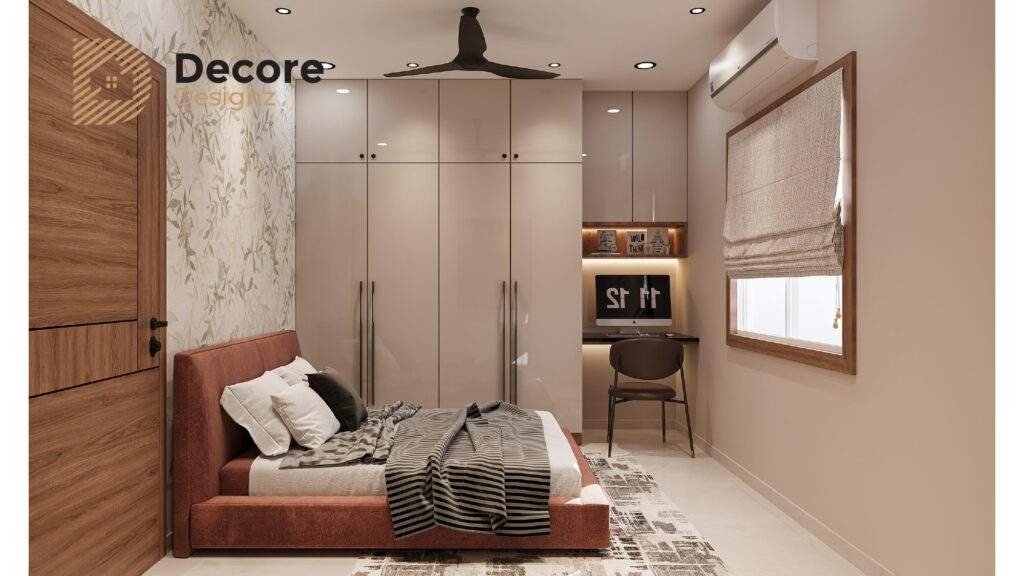
What should you consider before choosing a bedroom false ceiling?
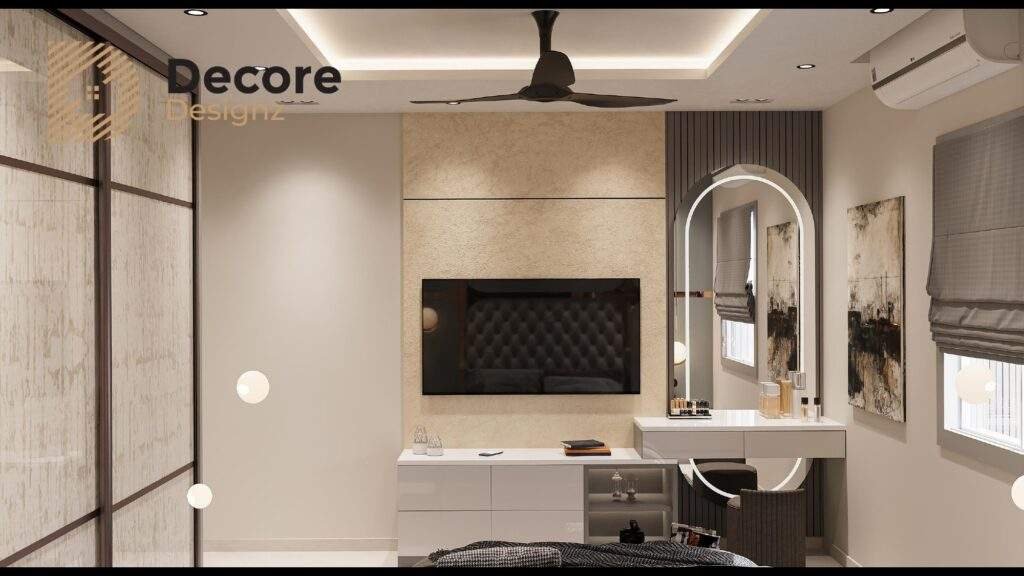
The bedroom is different from the living room.
You generally do not need as much general lighting, and the ceiling should contribute to a calmer atmosphere rather than compete with the bed wall or furniture.
Before choosing a design, consider:
- Ceiling height
- Bedroom dimensions
- Bed position
- Wardrobe location
- Fan position
- Natural light
- Electrical requirements
- Reading or bedside lighting
- AC and other services
- Overall bedroom style
The ceiling should be planned together with the rest of the room.
For example, if the wardrobe is full-height, the ceiling detail should not visually fight with it. If the bed wall already has strong panelling or texture, a heavily decorated ceiling may be unnecessary.
Decore Designz approaches bedroom interiors in the same way: storage, lighting, furniture, colours and finishes are considered according to how the homeowner actually uses the room rather than applying one standard design to every bedroom.
25+ False Ceiling Design Ideas for Bedrooms
1. Simple single-layer false ceiling
A clean single-layer ceiling is one of the most practical choices for a modern bedroom.
Keep the profile simple and use recessed lights or a restrained perimeter detail. This works particularly well when the bed wall is already the main feature.
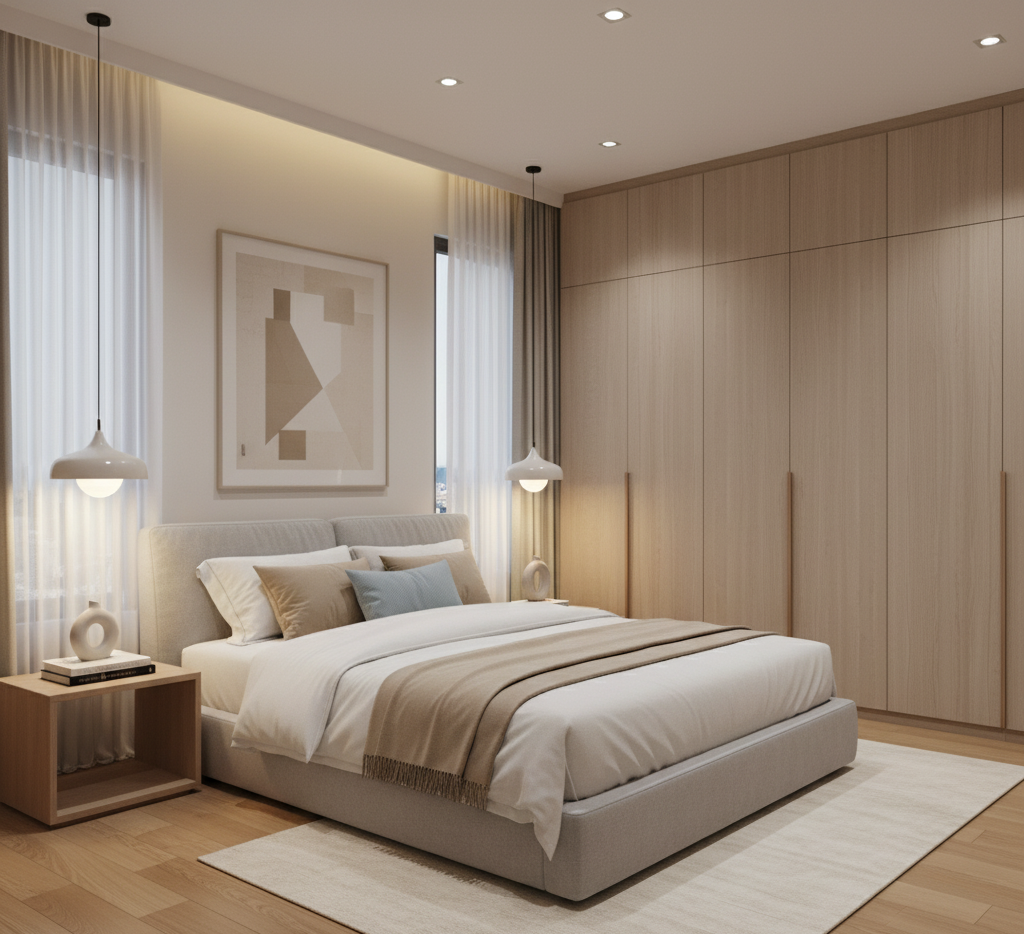
2. Minimal perimeter false ceiling
A narrow border around the bedroom can provide a finished appearance without making the ceiling visually heavy.
This is particularly suitable for bedrooms where you want the walls, wardrobe or bed to remain the focus.
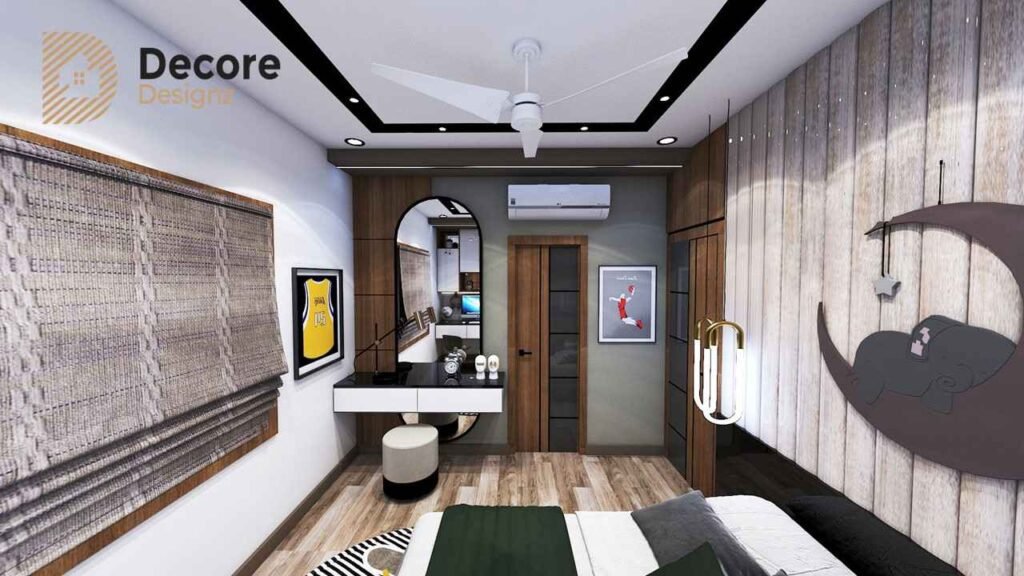
3. False ceiling with cove lighting
A concealed cove can provide soft indirect illumination around the room.
It is useful in bedrooms because the light can be softer than direct overhead lighting. The cove should be designed so the light source itself is hidden rather than becoming a bright visual line.
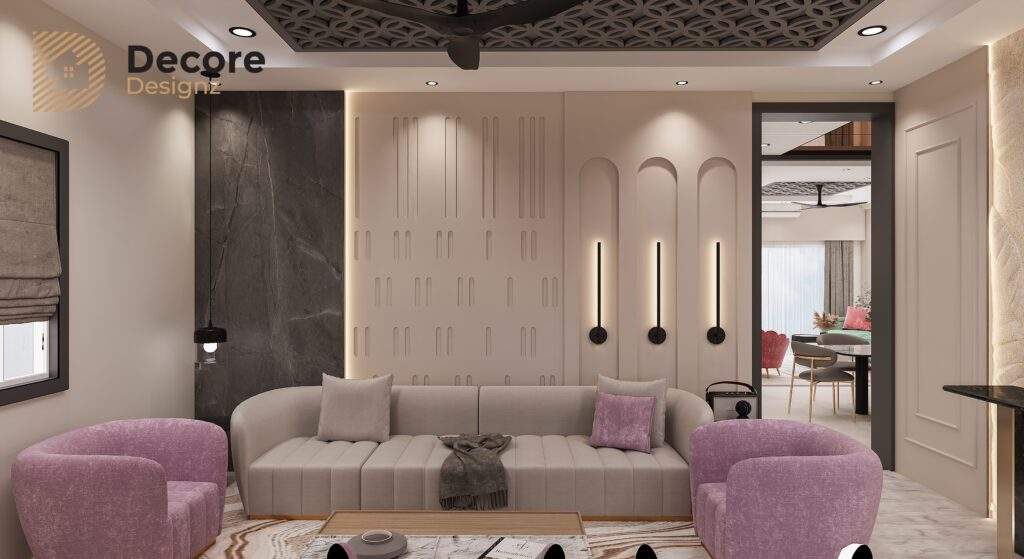
4. Bedroom false ceiling with LED strip lighting
LED strips can be integrated into a recessed ceiling detail to create ambient lighting.
Use them as one layer of the lighting plan rather than making the entire bedroom dependent on a bright ceiling strip.
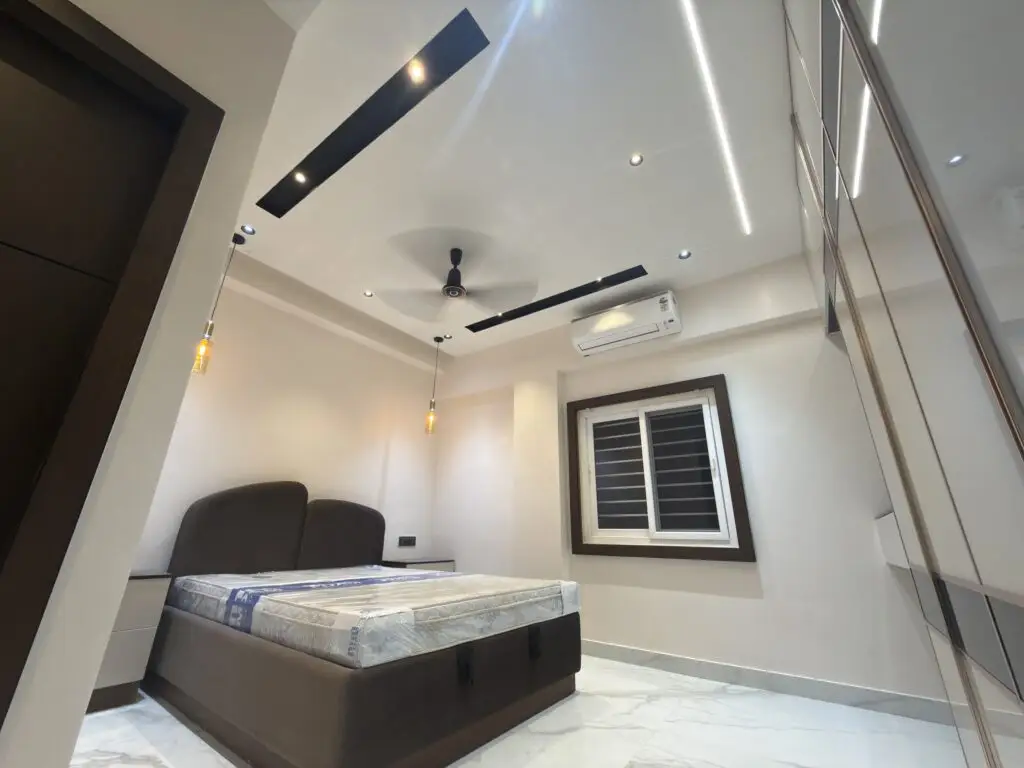
5. Gypsum false ceiling for bedroom
Gypsum is useful when you want clean lines, recessed lighting and geometric ceiling details.
It can be shaped into simple rectangular panels, stepped forms or recessed sections depending on the room.
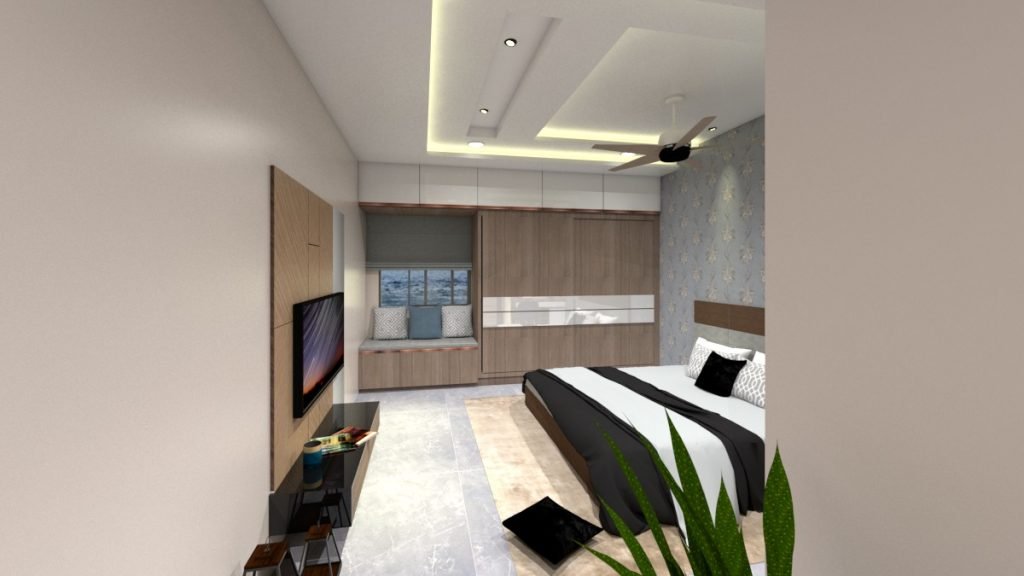
6. Tray ceiling for a master bedroom
A recessed central section can create a tray effect and provide a natural area for ambient lighting.
This can work particularly well in a larger master bedroom where a completely flat ceiling may look visually empty.
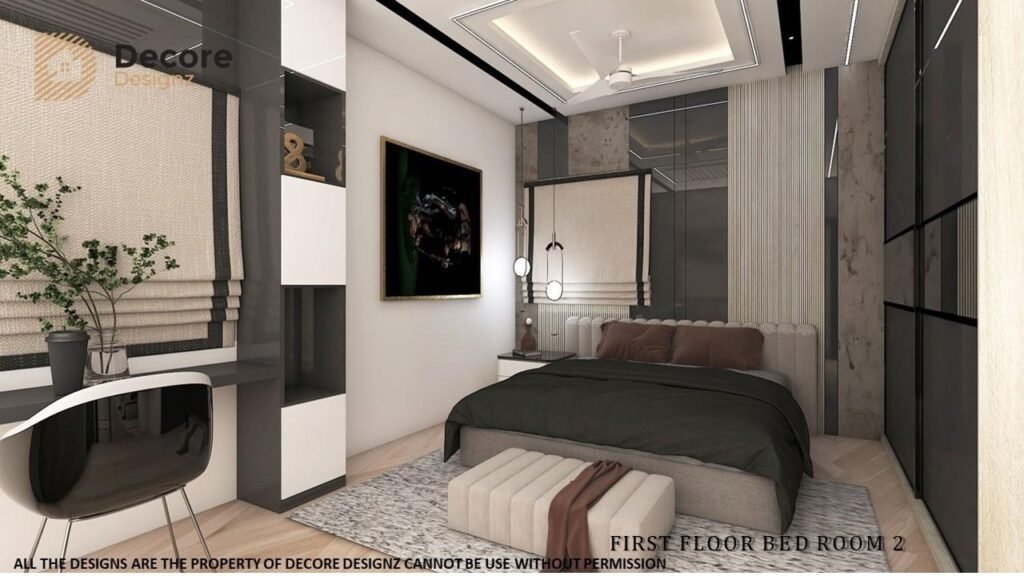
7. Floating false ceiling
A floating panel creates a visual gap between the main ceiling and a central or partial ceiling element.
Concealed lighting can emphasise the separation.
The proportions matter. A floating panel that is too large can make the room feel compressed.
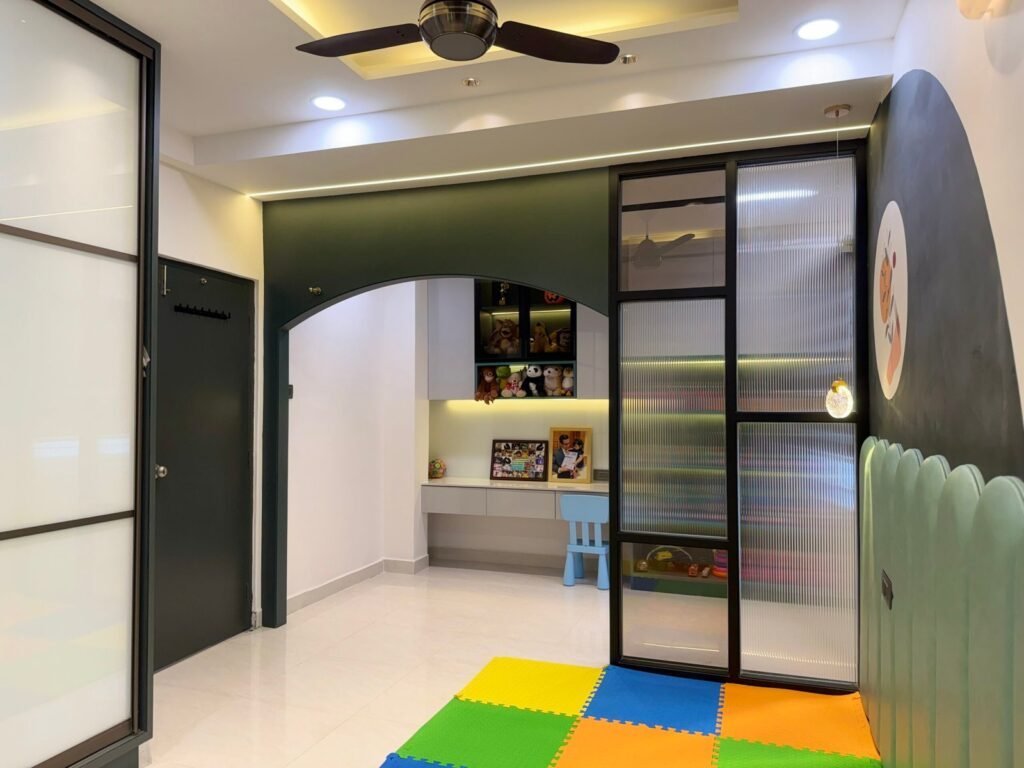
8. False ceiling above the bed
The ceiling can be designed to visually frame the bed area.
This works particularly well when the bed wall is relatively simple and the ceiling becomes part of the bedroom’s main focal point.
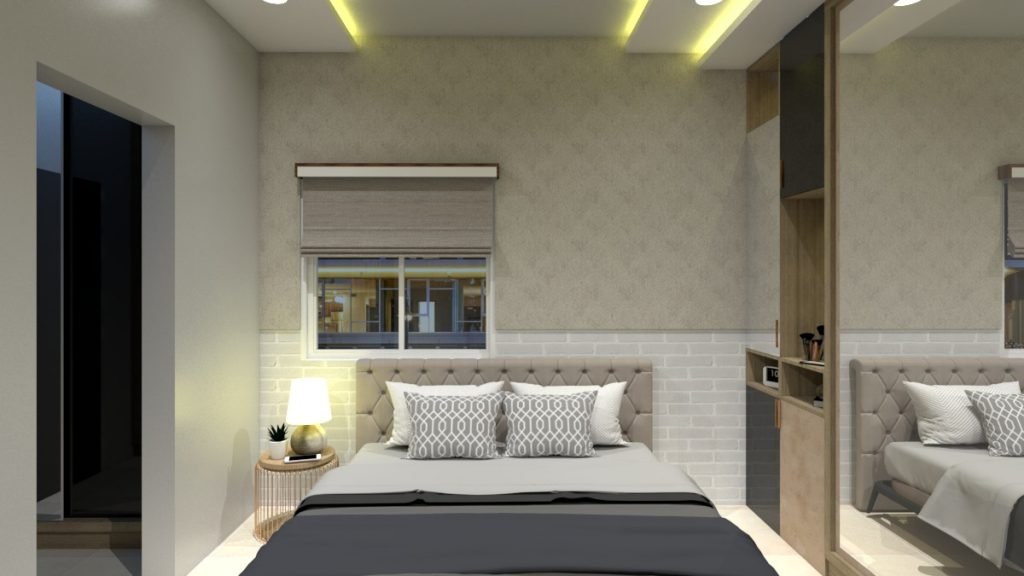
9. False ceiling connected to the bed wall
A ceiling line can continue visually into the wall behind the bed.
Repeating the same wood finish, colour, vertical line or geometric shape can connect the two surfaces.
This is more effective than treating the ceiling and bed wall as unrelated decorative elements.
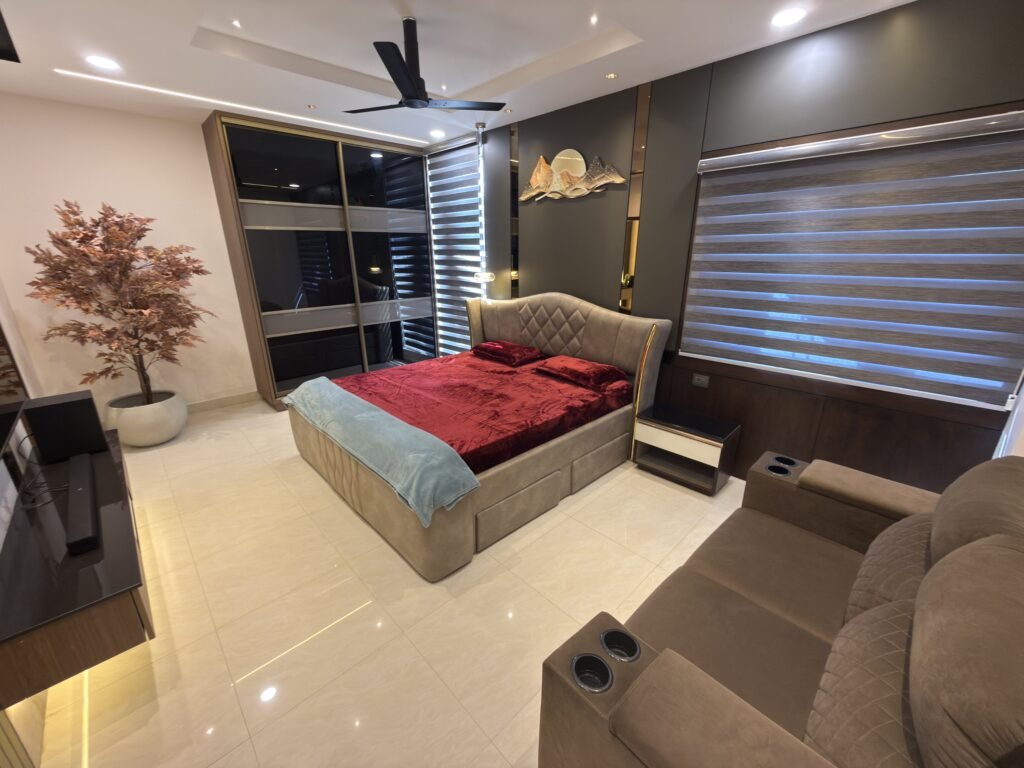
10. False ceiling with pendant bedside lights
If pendant lights are planned beside the bed, the ceiling should accommodate their electrical points and visual position.
The pendants should relate to the bedside tables and bed width rather than simply being placed symmetrically on the ceiling.
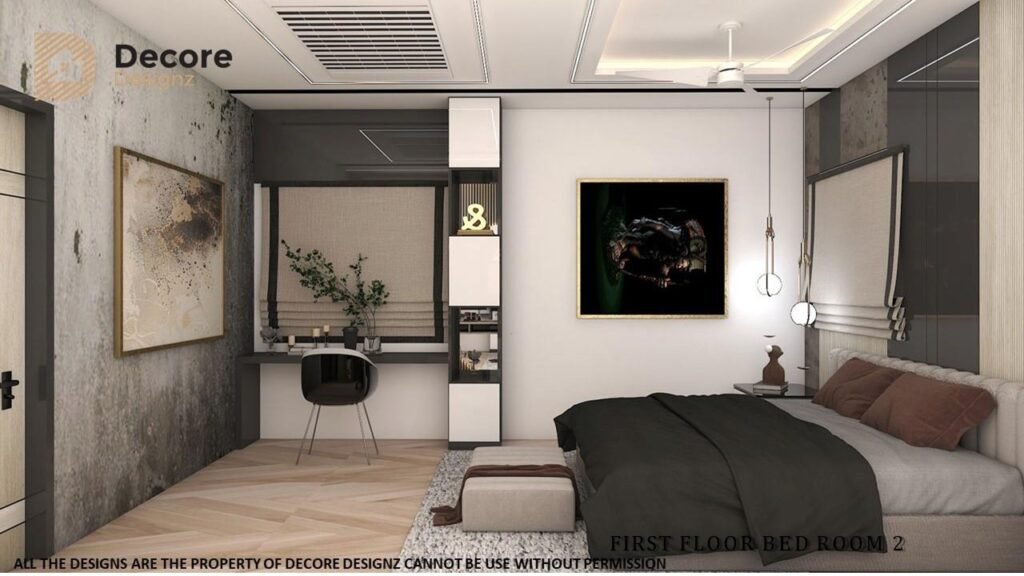
11. False ceiling with recessed spotlights
Recessed spotlights can provide general or focused lighting.
In a bedroom, avoid creating a grid of lights simply because the ceiling has enough space. The number and position of lights should follow actual lighting requirements.
12. Cove and spotlight combination
A combination of concealed ambient lighting and selected recessed lights gives you more control.
The cove can provide softer background illumination while the spotlights provide functional light where required.
13. Wooden accent false ceiling
A wood or wood-finish ceiling panel can introduce warmth into a bedroom.
It works particularly well with beige, cream, taupe, brown and other natural palettes.
Use the same finish selectively on the bed wall, wardrobe or furniture to create continuity.
14. Wood-and-white bedroom ceiling
A white ceiling with a controlled wood accent gives you contrast without making the entire ceiling visually dark.
This is suitable for contemporary bedrooms where natural warmth is important.
15. Modern geometric false ceiling
Rectangular or linear forms can give a bedroom a contemporary appearance.
Keep the geometry related to the room’s architecture. Random shapes rarely make a bedroom look more sophisticated.
16. Minimalist false ceiling
Minimalism does not mean leaving the ceiling completely untreated.
A clean recessed border, shadow gap or carefully positioned lighting can provide enough detail without adding multiple layers.
17. Luxury false ceiling with restrained detailing
A luxury bedroom does not need an elaborate ceiling.
Precise lines, good proportions, concealed lighting and carefully selected finishes can create a more refined result than excessive decoration.
18. False ceiling with a central panel
A defined central panel can become the visual centre of a larger bedroom.
It can also provide a logical location for a fan, pendant or other ceiling feature.
19. False ceiling around the fan
The fan should be considered during the initial ceiling layout.
The ceiling geometry should leave adequate visual clearance around the blades and should not place strong decorative elements directly against the fan.
20. False ceiling with fan and cove lighting
A central fan combined with perimeter cove lighting is a practical arrangement for many bedrooms.
The fan handles air circulation while the concealed perimeter lighting creates a softer evening atmosphere.
21. False ceiling for a children’s bedroom
A child’s bedroom can use a simpler ceiling with lighting that supports study, play and general room use.
The ceiling does not need to become a themed feature simply because the room belongs to a child.
Colour or a subtle geometric element can be enough.
22. False ceiling for a guest bedroom
Guest bedrooms generally benefit from a flexible, neutral design.
A simple ceiling with ambient lighting and a few functional light points can create a comfortable room without excessive custom detailing.
23. False ceiling for a modern master bedroom
A master bedroom gives more room for layered design.
You can combine:
- A restrained ceiling border
- Cove lighting
- A central panel
- Bed-wall integration
- Recessed spotlights
- Wood or textured accents
The important part is keeping these elements visually connected.
24. False ceiling with wardrobe lighting
The ceiling and wardrobe should be planned together when integrated wardrobe lighting is required.
Lighting near the wardrobe can improve visibility, but it should not create glare when someone is standing in front of the storage.
25. False ceiling with dressing-area lighting
A dressing area often requires more focused lighting than the sleeping area.
The ceiling can accommodate additional lighting near the dressing unit while maintaining softer ambient illumination elsewhere.
26. False ceiling with study-area lighting
If the bedroom includes a study desk, the lighting requirement changes.
A focused light source should illuminate the work surface without creating uncomfortable glare or shadows.
The ceiling plan should therefore follow the furniture layout.
27. False ceiling for a large bedroom
Large bedrooms can accommodate stronger ceiling zoning.
A central panel, bed-zone detail, dressing-area lighting and perimeter cove can be combined if the room proportions support it.
Do not fill the ceiling simply because there is more empty space.
28. False ceiling for a compact bedroom
Compact bedrooms need restraint.
A lighter profile, simple lighting and controlled colours usually work better than several ceiling levels.
If the ceiling height is already limited, reducing it unnecessarily can make the room feel more enclosed.
The cluster separately reserves a future article for false ceiling design for a small bedroom, so this page should remain focused on the broader bedroom category rather than turning into a dedicated small-bedroom guide.
How should the false ceiling work with the wardrobe?
The wardrobe is one of the most important elements to consider when planning a bedroom ceiling.
A full-height wardrobe creates a strong vertical line. A complicated ceiling above it can make the room feel visually crowded.
A better approach is to coordinate:
- Wardrobe height
- Ceiling border
- Wardrobe lighting
- Bed position
- Dressing area
- Circulation space
For example, if the wardrobe reaches close to the ceiling, a simple ceiling border can keep the transition visually clean.
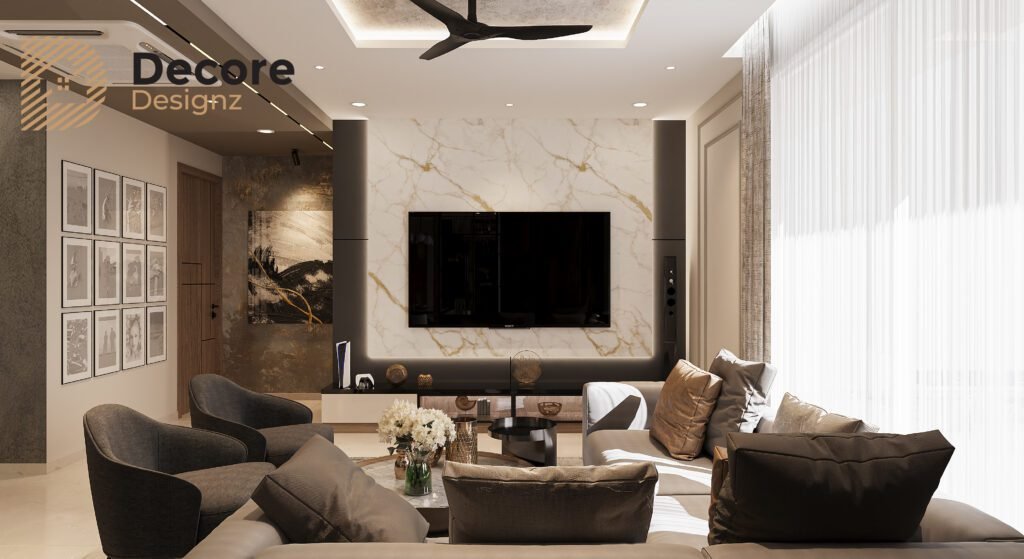
If the wardrobe has an integrated dressing area, the ceiling lighting can be planned around that zone.
This is also why wardrobe planning should happen before the bedroom ceiling is finalised. Decore Designz’s bedroom wardrobe planning guidance stresses that storage needs to be considered alongside the bed, dressing area, doors, windows and circulation rather than treated as an isolated cabinet.
How should bedroom lighting be planned with a false ceiling?
Bedroom lighting should normally be layered rather than relying on one bright ceiling light.
Ambient lighting
This provides the general mood of the room.
Cove lighting or concealed LED lighting can be useful here.
Functional lighting
This supports activities such as dressing, studying or finding items inside storage.
Bedside lighting
Bedside pendants, wall lights or lamps can provide focused light without illuminating the entire room.
Accent lighting
Accent lighting can highlight a bed wall, artwork, textured surface or architectural detail.
The ceiling should accommodate these requirements before construction begins.
A common mistake is to finalise the ceiling first and then try to fit the electrical points into whatever space remains.
Should a master bedroom and children's bedroom have the same ceiling design?
No.
A master bedroom, children’s bedroom and guest bedroom have different requirements.
Master bedroom
A master bedroom may support:
- Layered ambient lighting
- Bed-wall integration
- Dressing-area lighting
- Larger wardrobe planning
- More detailed ceiling treatment
Children’s bedroom
A child’s room may need:
- General lighting
- Study lighting
- Simple ceiling geometry
- Easy-to-maintain finishes
- Space for changing furniture needs
Guest bedroom
A guest room can generally use a more neutral ceiling treatment with comfortable ambient lighting and minimal decorative complexity.
The overall home can still have a consistent design language without making every bedroom identical.
Does every bedroom need a false ceiling?
No.
A bedroom does not automatically need one.
If the existing ceiling already works, the room has sufficient lighting points and there is little need to conceal services or create a specific ceiling feature, keeping the original ceiling can be a sensible choice.
This is particularly relevant in apartments where available ceiling height is limited.
Decore Designz’s existing false-ceiling guidance makes the same distinction: bedrooms may benefit from a false ceiling when lighting, wiring or a ceiling feature requires it, but it is not automatically necessary in every bedroom.
The purpose of the ceiling should determine the design—not the other way around.
Final Takeaway
The best false ceiling design for bedroom is the one that fits the room rather than simply looking impressive in an inspiration image.
For a minimalist bedroom, that may mean a clean perimeter with concealed lighting. A larger master bedroom may benefit from a tray ceiling, layered lighting or a controlled connection between the ceiling and bed wall. A children’s or guest bedroom may need considerably less detailing.
The ceiling should be planned together with the bed, wardrobe, fan, lighting, furniture and overall bedroom style.
That is what turns a false ceiling from a decorative layer into a useful part of the interior.
If you are planning a complete bedroom or home interior in Hyderabad, Decore Designz Studio can coordinate bedroom planning, wardrobes, lighting, materials, false ceiling design and execution as part of the wider interior.
Frequently Asked Questions
Which false ceiling is best for a bedroom?
There is no single design that works for every bedroom. Simple perimeter ceilings, cove lighting, recessed panels and restrained geometric designs can all work depending on the ceiling height, room size, furniture and lighting requirements.
Is a false ceiling good for a master bedroom?
It can be useful when you want integrated lighting, concealed services or a defined ceiling feature. A master bedroom also gives more scope for combining the ceiling with the bed wall, wardrobe and dressing area.
What is the best false ceiling design for a small bedroom?
A simple, visually light ceiling is generally more appropriate when space and ceiling height are limited. Avoid excessive layers and unnecessary drops.
Can a false ceiling be used with a ceiling fan?
Yes. The fan position should be established before the ceiling design is finalised so that the decorative elements and lighting do not interfere with it.
Is gypsum suitable for bedroom false ceilings?
Gypsum can work well for bedrooms where clean lines, recessed lighting and controlled geometric forms are required. The material should still be selected according to the design and site requirements.
Should the ceiling match the bedroom wardrobe?
It does not need to match exactly. However, the ceiling, wardrobe, bed wall and lighting should have a coherent visual relationship.
Should bedroom false ceiling lights be warm or cool?
The choice depends on the room’s use and overall lighting plan. Bedrooms often benefit from a softer, warmer atmosphere, while focused areas such as a study or dressing unit may require different lighting.
Does a false ceiling make a bedroom smaller?
It can if it reduces ceiling height too much or uses visually heavy detailing. In compact bedrooms, the available height should be assessed before deciding on the design.