

False Ceiling Cove Lighting: Ideas That Elevate a Room
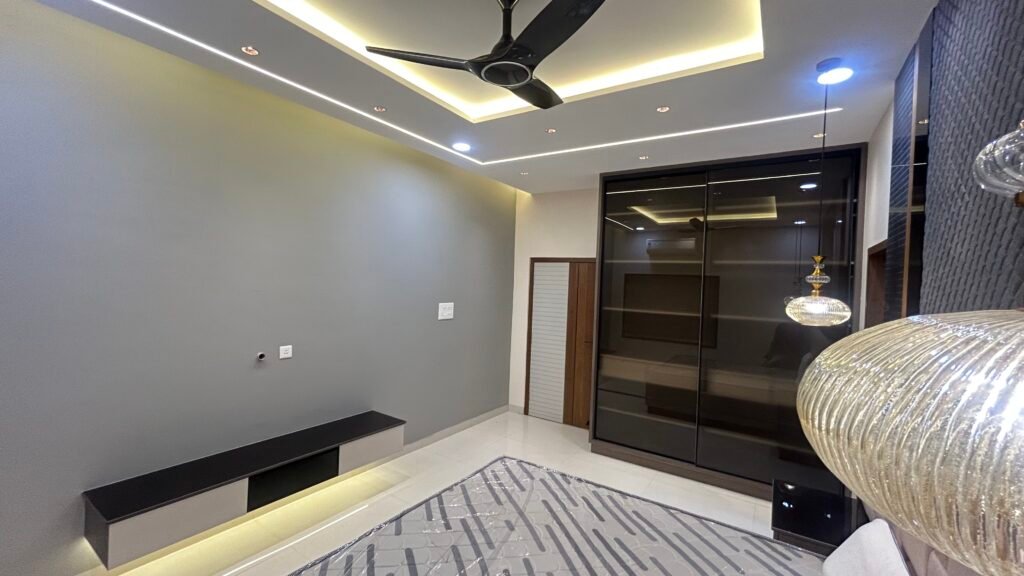
False ceiling cove lighting is a concealed lighting technique where the light source is hidden inside a recessed ceiling detail, allowing light to wash across the ceiling or wall rather than shining directly into the room. It can create a softer, warmer atmosphere and make a simple false ceiling feel more considered. The key is not using more light, but placing and controlling it properly.
What is false ceiling cove lighting?
Cove lighting uses a recessed section, ledge or concealed channel in the false ceiling to hide the light source.
Instead of seeing the LED strip or fixture directly, you mainly see the light reflected from the ceiling or wall surface.
This makes cove lighting different from a conventional downlight.
A downlight directs light toward the room.
A cove light creates indirect illumination.
That difference is what makes it useful for living rooms, bedrooms and other spaces where softer ambient lighting is desirable.
The cove itself can be part of a:
- Perimeter false ceiling
- Tray ceiling
- Floating ceiling
- Layered ceiling
- Simple recessed ceiling detail
The ceiling design and the lighting therefore need to be planned together.
Why do homeowners choose cove lighting for a false ceiling?
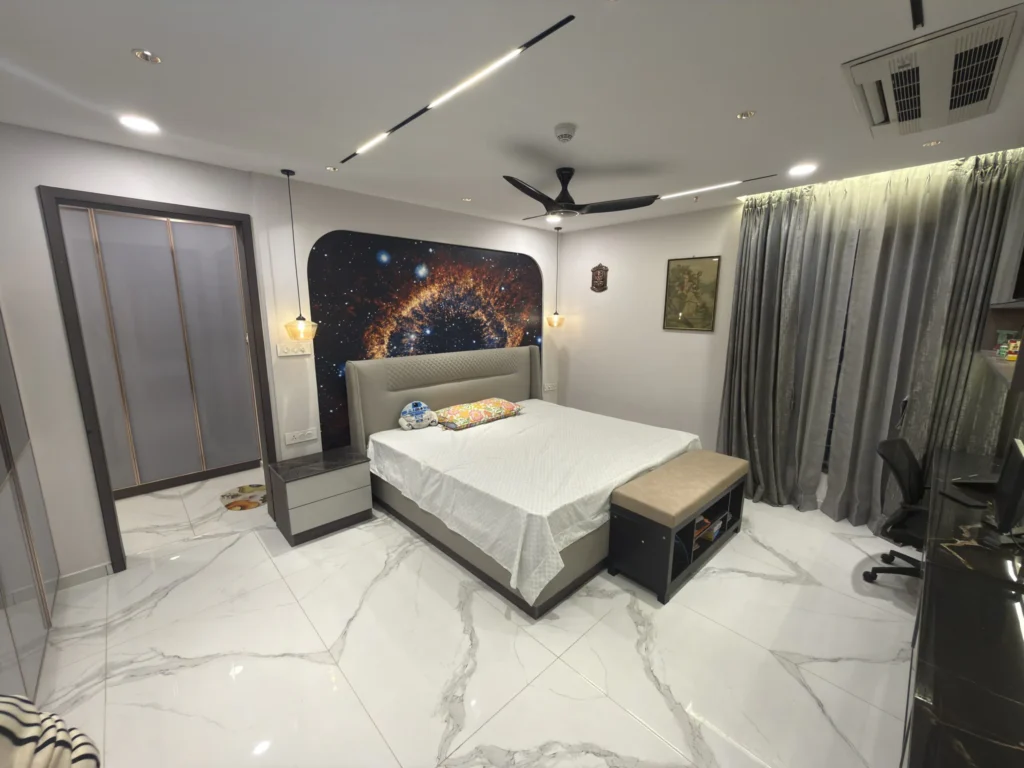
The biggest advantage is atmosphere.
A room illuminated only with direct downlights can sometimes feel bright but flat. Cove lighting introduces another layer of illumination that can soften the overall appearance.
It can also:
- Create a warmer evening atmosphere
- Highlight the shape of the ceiling
- Add depth to a simple ceiling
- Provide ambient background illumination
- Reduce dependence on harsh overhead lighting
- Complement furniture and wall finishes
But cove lighting should not be treated as a replacement for all other lighting.
A well-planned room usually has different lighting layers serving different purposes.
For example, a living room may use cove lighting for ambient illumination, downlights for general light and a decorative pendant or accent light for a specific area.
What are the best false ceiling cove lighting ideas?
1. Simple perimeter cove
A narrow cove running around the perimeter of the room is one of the most versatile approaches.
The central ceiling remains clean while concealed light creates a soft glow around the edges.
This works particularly well in contemporary apartments because it adds detail without requiring a heavily layered ceiling.
It is also easier to coordinate with fans and furniture than a complicated central ceiling design.
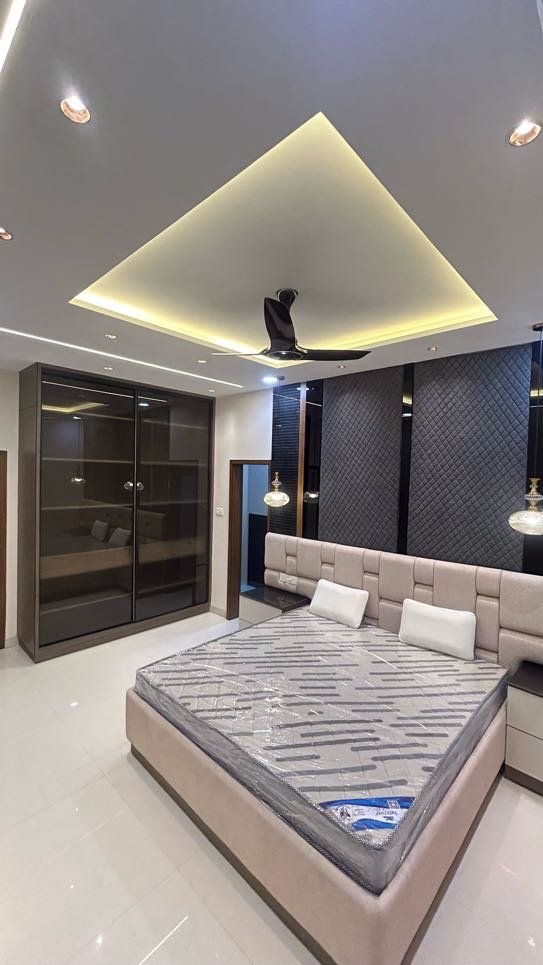
2. Cove lighting around a tray ceiling
A tray ceiling can create a recessed central area surrounded by a border.
Cove lighting placed inside that transition can emphasise the change in level.
This works particularly well in larger living rooms, dining spaces and bedrooms where the ceiling has enough height to support the architectural detail.
The important point is proportion.
A large room may accommodate a wider ceiling border. A compact room usually needs a much more restrained version.
3. Floating ceiling with concealed cove lighting
A floating ceiling is designed to appear visually separated from the surrounding ceiling.
Concealed lighting around the edge strengthens that effect.
When viewed from below, the light can make the central ceiling element appear lighter or suspended.
This can be effective in modern interiors, but the recess needs to be designed carefully. If the light source becomes directly visible, the floating effect can turn into a visible bright line.
4. Cove lighting with recessed spotlights
This is one of the most practical combinations.
Use the cove for soft ambient illumination and recessed spotlights for more focused or general lighting.
The two serve different purposes.
For example:
Cove lighting: atmosphere and indirect illumination.
Spotlights: functional illumination.
This gives the homeowner more control over the room at different times of the day.
5. Cove lighting around a living-room perimeter
Living rooms often benefit from a perimeter cove because it can create a softer evening environment without making the entire ceiling visually busy.
It can work particularly well when:
- The furniture is relatively simple
- The TV wall already has visual detail
- The room has adequate ceiling height
- The homeowner prefers a warm contemporary look
The cove should follow the architecture rather than simply forming a rectangle because that is the easiest shape to construct.
6. Bedroom cove lighting
Bedrooms are one of the spaces where indirect lighting can be especially useful.
The objective is usually not maximum brightness.
A concealed cove can provide a softer background glow while bedside lights, dressing lights or selected recessed fixtures handle more specific tasks.
The bedroom false-ceiling article already highlights cove lighting as a useful approach for creating softer indirect illumination. This page should therefore go further into how the light is planned, rather than repeating bedroom ceiling designs.
Should you use warm or cool light for cove lighting?
For most residential cove lighting, warm or neutral-warm light is generally easier to live with, especially in bedrooms and living spaces.
The choice should still depend on the room’s materials, colours and purpose.
Light tone | Usually suits | Visual effect |
Warm light | Bedrooms, living rooms, lounges | Softer and more relaxed |
Neutral light | Contemporary living areas, multipurpose spaces | Cleaner and more balanced |
Cool light | Functional areas where a brighter appearance is required | Crisper and more energetic |
The important point is consistency.
If the cove lighting is warm but the main ceiling lights are very cool, the room can develop an uncomfortable colour contrast.
The lighting should therefore be considered as a complete system rather than selecting the cove strip separately.
What colour should false ceiling cove lighting be?
For a home, the safest starting point is usually a warm white or neutral-warm tone, particularly where the goal is a comfortable evening atmosphere.
But the ceiling colour and surrounding materials matter.
Warm light can complement:
- Beige
- Cream
- Walnut
- Natural wood
- Taupe
- Warm grey
- Earthy finishes
A very cool light can make warm materials appear less natural.
This is particularly important in premium interiors where the appearance of wood, stone, fabrics and wall finishes is part of the overall design.
Should cove lighting run around the entire room?
Not necessarily.
A full perimeter cove is common, but it is not automatically the best solution.
You can use cove lighting selectively around:
- A seating zone
- A tray ceiling
- A bed zone
- A dining area
- A floating ceiling feature
- A specific architectural transition
Selective lighting can sometimes look more intentional than simply running a strip around every available edge.
This is particularly useful in open-plan homes where the ceiling can help distinguish different zones.
How should cove lighting be planned with ceiling fans?
Fan placement needs to be considered before the cove is finalised.
The fan should not appear accidentally squeezed between ceiling elements and lighting.
For a living room with two fans, for example, the ceiling geometry, fan positions and lighting need to be balanced together. The existing Decore Designz guide on false ceiling designs for halls with two fans treats this as a layout problem rather than simply placing two fan cut-outs.
The same principle applies to cove lighting.
The lighting should support the ceiling geometry and furniture arrangement instead of fighting them.
What should you consider before installing false ceiling cove lights?
Ceiling height
The available height affects how much ceiling detailing you can introduce.
If the room is already low, a deep or heavily layered cove may make it feel more enclosed.
Cove depth and proportion
The recess needs to be large enough to hide the light source and produce the intended wash of light.
Too shallow, and the LEDs may become visible.
Too large, and the ceiling detail may become unnecessarily bulky.
LED placement
The strip should be positioned so the light washes the intended surface evenly.
Simply hiding an LED strip inside a ceiling does not guarantee attractive cove lighting.
Electrical planning
Power supply, switching, wiring and access should be considered before the ceiling is closed.
This is one reason cove lighting should be part of the false-ceiling planning process rather than added as an afterthought.
Maintenance access
LED strips and their drivers may eventually need attention.
The ceiling should not be designed in a way that makes basic maintenance unnecessarily difficult.
Relationship with other lights
Cove lighting, spotlights, pendants, wall lights and decorative fixtures should work together.
Adding every possible lighting type can make a room feel visually noisy.
Where does cove lighting work best?
Living room
One of the strongest applications.
A perimeter or tray cove can create soft ambient lighting while spotlights handle general illumination.
Bedroom
Useful when a calmer lighting atmosphere is preferred.
It can work particularly well alongside bedside and wardrobe lighting.
Dining area
A cove can help visually define the dining zone, especially in an open-plan apartment.
However, the dining table may still require a pendant or focused light.
Foyer
A small cove can create a subtle transition into the home without requiring an elaborate ceiling.
Kitchen
Cove lighting can work, but it should be used selectively.
Kitchen lighting needs to prioritise work surfaces, cabinets and functional visibility. Cove lighting should not replace proper countertop illumination.
The existing Decore Designz kitchen guidance makes the same practical distinction: cove lighting can add a softer layer, but it should not automatically run around the entire kitchen perimeter.
Balcony
Cove lighting needs more caution here.
A covered or enclosed balcony may allow suitable applications, but exposed balconies introduce moisture and weather considerations. The separate false ceiling in a balcony article should handle that topic in greater depth.
What are the most common cove-lighting mistakes?
Making the cove too bright
The result can look harsh rather than atmospheric.
Using different colour temperatures everywhere
Warm cove lighting combined with very cool downlights can create an inconsistent appearance.
Exposing the LED strip
If you can directly see the LED points from normal viewing positions, the lighting may lose the soft quality expected from a cove.
Designing the cove without the furniture
A ceiling should relate to the room below.
Ignoring ceiling height
A cove that works in a tall villa may feel excessive in an apartment.
Using cove lighting everywhere
Not every room needs the same lighting treatment.
Sometimes a clean ceiling with a few well-positioned lights is the better design.
Forgetting maintenance
The lighting system should remain serviceable after the false ceiling is finished.
Final Takeaway
Good false ceiling cove lighting is less about making the ceiling glow and more about controlling how the room feels after the main lights are switched on.
Choose the ceiling profile first, understand the room’s lighting requirements, select a suitable light tone, hide the light source properly and coordinate the cove with fans, furniture and other fixtures.
A restrained cove can make a simple ceiling feel refined.
An oversized or badly planned one can make the room feel lower, brighter and more complicated than it needs to be.
If you are planning a complete home interior in Hyderabad, Decore Designz Studio can coordinate false ceiling concepts with lighting, furniture, materials and execution rather than treating the ceiling as a standalone element.
Frequently Asked Questions
What are the main types of false ceilings?
The main types include single-layer, multi-level, tray, cove or perimeter, floating and grid-style ceilings. These designs can be constructed using materials such as gypsum, POP, PVC, wood or metal systems.
Which false ceiling is best for a living room?
A single-layer, perimeter, tray or floating false ceiling can work well in a living room. The choice depends on the room’s size, ceiling height, furniture layout and lighting plan.
Which false ceiling is best for a bedroom?
Bedrooms generally benefit from simpler ceiling profiles that support comfortable ambient and bedside lighting without making the room feel visually heavy.
Is gypsum better than POP for a false ceiling?
Neither is automatically better. Gypsum is practical for many clean residential ceiling designs, while POP provides flexibility for customised decorative forms. The right choice depends on the design, site conditions and workmanship.
Is PVC good for false ceilings?
PVC can be useful in selected areas where moisture resistance is important. It should still be evaluated against the room’s appearance, ventilation, maintenance and overall design requirements.
Are wooden false ceilings suitable for homes?
Yes. Wood or wood-finish elements can add warmth and texture, particularly when used as a feature or coordinated with furniture and wall finishes. The exact material should be selected according to the room and maintenance requirements.
Does every room need a false ceiling?
No. A false ceiling should have a clear purpose, such as integrating lighting, concealing services or adding useful architectural detail. Some rooms may work better with the original ceiling left exposed.