

Living Room Wall Art and Decor Ideas: Frames, Mirrors and Shelves
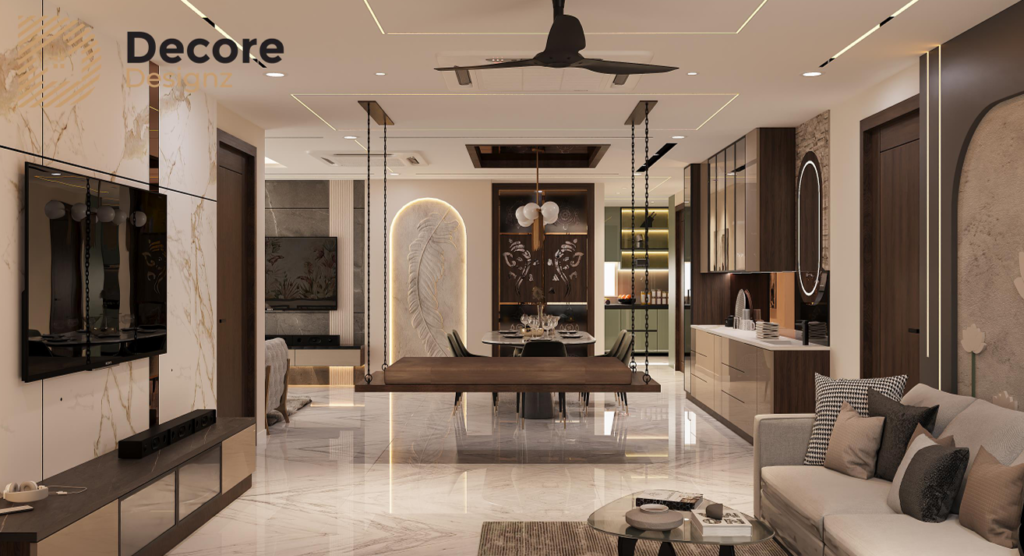
Living room wall art can make a space feel more personal without changing its furniture or layout. Frames, mirrors and decorative shelves offer different ways to add character, introduce visual balance and make use of empty walls. The best living room wall decor ideas depend on wall dimensions, furniture placement, lighting and the overall interior style. Instead of filling every available surface, choose a few elements that complement the room and give each one enough space to stand out.
1. Which Wall Art Works Best in a Living Room?
The right wall art depends on the wall’s purpose and the visual weight of the furniture beneath it.
Wall decor | Best suited for |
Framed artwork | Personal expression, contemporary interiors and gallery-style arrangements |
Mirrors | Reflecting light, creating visual depth and complementing consoles |
Decorative shelves | Displaying selected books, artwork and small decorative objects |
Gallery walls | Combining multiple frames into a coordinated arrangement |
Oversized artwork | Creating a focal point above a sofa or on a large empty wall |
Each option serves a different purpose. A mirror can change how a room feels, while artwork introduces colour, subject and personality. Shelves add a functional element but require more attention to spacing and clutter.
2. How Do You Decorate a Living Room Wall With Frames?
Framed artwork is one of the most flexible living room wall decor ideas. It can introduce a personal touch, complement the colour palette or create a focal point above the sofa.
Should You Choose One Large Frame or Multiple Small Frames?
Both approaches can work.
A single large artwork creates a clear focal point and generally suits simpler interiors. Multiple smaller frames allow more variety and can create a gallery-wall arrangement.
Arrangement | Design consideration |
One large frame | Creates a strong focal point with relatively little visual clutter |
Two coordinated frames | Works well with symmetrical furniture arrangements |
Gallery wall | Adds variety but needs consistent spacing and visual balance |
Mixed frame sizes | Creates a more informal arrangement when subjects and finishes relate to each other |
For gallery walls, decide the overall arrangement before drilling into the wall. A paper template or temporary layout can help you evaluate spacing and proportions.
What Should You Hang Above the Sofa?
The wall above the sofa is often the most visible location for artwork in a living room.
The artwork should relate to the sofa’s width and the arrangement beneath it. A very small frame above a large sofa can appear disconnected, while an oversized composition may overwhelm the seating.
Consider:
- Artwork width in relation to the sofa.
- Frame colour and finish.
- Distance between the sofa and artwork.
- Subject and colour palette.
- Nearby lighting and wall finishes.
Avoid placing artwork so high that it appears detached from the furniture. It should visually connect with the seating arrangement.
3. How Can Mirrors Improve Living Room Wall Decor?
Mirrors can be decorative as well as functional. Their reflective surface can introduce visual depth, reflect daylight and make a room feel more open.
However, mirror placement matters more than simply adding a reflective surface.
Where Should You Place a Living Room Mirror?
A mirror can work above a console, on a side wall or in an area that reflects an attractive part of the room.
Mirror placement | Design consideration |
Above a console | Creates a coordinated decorative arrangement |
Opposite a window | Can reflect daylight, depending on the orientation |
On a side wall | Introduces visual depth without dominating the seating area |
Near an entry into the living room | Can create a more open visual impression |
Behind or near seating | Requires careful checking of reflections and sightlines |
Before installation, check what the mirror will reflect. A mirror facing an attractive window or artwork can enhance the room. One reflecting clutter, harsh sunlight or an awkward television view may have the opposite effect.
Which Mirror Shape Suits a Living Room?
Round mirrors can soften rooms with many straight furniture lines. Rectangular mirrors suit more structured arrangements, while irregular shapes can introduce a contemporary decorative element.
The frame should also relate to the surrounding finishes. Metal frames may complement modern interiors, while wooden frames can work with warmer furniture and natural textures.
4. Are Decorative Shelves a Good Idea for Living Room Walls?
Decorative shelves provide a way to display selected objects while adding depth to an otherwise plain wall.
They work particularly well when the display is planned rather than filled randomly.
How Should You Style Living Room Wall Shelves?
A shelf arrangement should have a visual hierarchy. Larger objects establish the composition, while smaller pieces fill selected spaces.
Consider:
- Combining objects of different heights.
- Leaving some shelf space empty.
- Keeping colours and finishes coordinated.
- Avoiding excessive decorative objects.
- Allowing enough space for books and artwork.
- Checking wall support and shelf loading requirements.
Floating shelves can suit contemporary interiors because their supports remain concealed. However, the wall construction and expected load should be checked before installation.
Should Shelves Be Installed Above the TV?
They can, but the television wall needs particular attention.
Shelves placed too close to the television may make the arrangement feel crowded. Decorative objects can also create visual distractions during viewing.
For a cleaner result, coordinate shelves with the TV unit’s proportions, surrounding storage and cable-management requirements.
Explore our TV unit design ideas for living rooms for more guidance on planning this wall.
5. How Do You Prevent Living Room Wall Decor From Looking Cluttered?
A decorated wall does not necessarily need more objects.
The most effective arrangements often use fewer elements with better spacing.
Common Wall Decor Mistakes
Too many frames: Multiple artworks without a clear arrangement can make the wall feel busy.
Incorrect proportions: Artwork that is too small or too large can disturb the relationship between the wall and furniture.
Unplanned mirror placement: Reflections may highlight clutter or create unwanted glare.
Overloaded shelves: Too many objects reduce the visual impact of individual pieces.
Ignoring the TV wall: Artwork and shelves can compete with the television if their placement is not coordinated.
Mixing unrelated finishes: Different frame colours, materials and styles can make the arrangement feel disconnected.
Before adding another decorative element, consider whether the existing arrangement needs better spacing or a simpler composition.
6. How Should Wall Art Match the Living Room Interior?
Wall decor should relate to the room’s materials, colours and overall design language.
For example, minimalist interiors often benefit from simple frames, restrained artwork and uncluttered shelf arrangements. More traditional interiors can accommodate decorative frames, detailed artwork and richer finishes.
The objective is not to match every object exactly. Instead, establish a visual relationship through colour, material, shape or subject.
For broader ideas about treating the living room’s main walls, explore our living room wall design ideas. Wall finishes, panels and artwork should work together rather than compete for attention.
7. How We Plan Living Room Wall Decor at Decore Designz Studio
At Decore Designz Studio, we consider wall decor alongside the furniture arrangement and interior design rather than treating it as a final accessory.
We first identify which walls need attention and whether the room would benefit from artwork, mirrors, shelves or a combination of elements.
Next, we evaluate the wall dimensions, furniture proportions, lighting, finishes and practical requirements. This helps ensure that the selected decor feels connected to the room.
If you are planning a new living room or updating an existing home, our living room interior design services in Hyderabad can help coordinate wall decor with furniture, lighting and finishes.
Give Your Living Room Walls a More Considered Design
Living room wall art does not need to be complicated. The right combination of frames, mirrors and shelves can introduce character, create visual balance and make the interior feel more complete.
At Decore Designz Studio, we bring these details together with furniture, lighting and wall finishes to create interiors that look considered and work comfortably in everyday use.
Planning a new living room or updating your existing interiors?
Discuss your requirements with Decore Designz Studio.
Explore our living room interior design services in Hyderabad or contact us to arrange a consultation.
Decore Designz Studio
Fourth Floor, Bhagyalaxmi Construction, KM Cube Building, 401, Ghousia Masjid Rd, Ramakrishnapur, Weaker Section Colony, Izzathnagar, HITEC City, Khanammet, Hyderabad, Telangana 500084
Phone: +91 96182 18055
Email: decoredesignzstudio@gmail.com
Frequently asked questions
What are the best living room wall decor ideas?
Framed artwork, gallery walls, decorative mirrors and floating shelves are versatile options. Their suitability depends on wall dimensions, furniture placement and the interior style.
What should I hang on the wall above my sofa?
A large artwork, coordinated pair of frames or a gallery arrangement can work well. Choose proportions that relate to the sofa and leave sufficient visual space around the artwork.
Are mirrors good for living room walls?
Yes. Mirrors can reflect daylight and introduce visual depth. Their placement should be checked carefully to avoid reflecting clutter or creating uncomfortable glare.
How do you decorate a blank living room wall?
Start by identifying the wall’s purpose. A focal wall may benefit from one large artwork, while a side wall may suit a mirror or a restrained shelf arrangement.
Are floating shelves suitable for small living rooms?
Yes, when their dimensions and placement are appropriate. They provide display space without introducing bulky furniture, although excessive objects can still make a compact room feel cluttered.
Can I combine mirrors, frames and shelves on one wall?
Yes, but the arrangement should have a clear visual hierarchy. Coordinate their proportions, spacing and finishes so the wall feels composed rather than crowded.