Bedroom Wall Decor Ideas: Stylish Ways to Transform Your Bedroom
Bedroom wall decor can change the character of a room without requiring a complete redesign. The right combination of wall colour, texture, wood, artwork, lighting and decorative details can turn an ordinary bedroom wall into a feature that feels intentional and personal.
The key is not to fill every wall with decoration. A well-designed bedroom usually benefits from one or two carefully planned focal points, supported by practical furniture, storage and lighting.
Here are some bedroom wall decor ideas to consider when planning a modern Indian bedroom.
1. Create a Feature Wall Behind the Bed
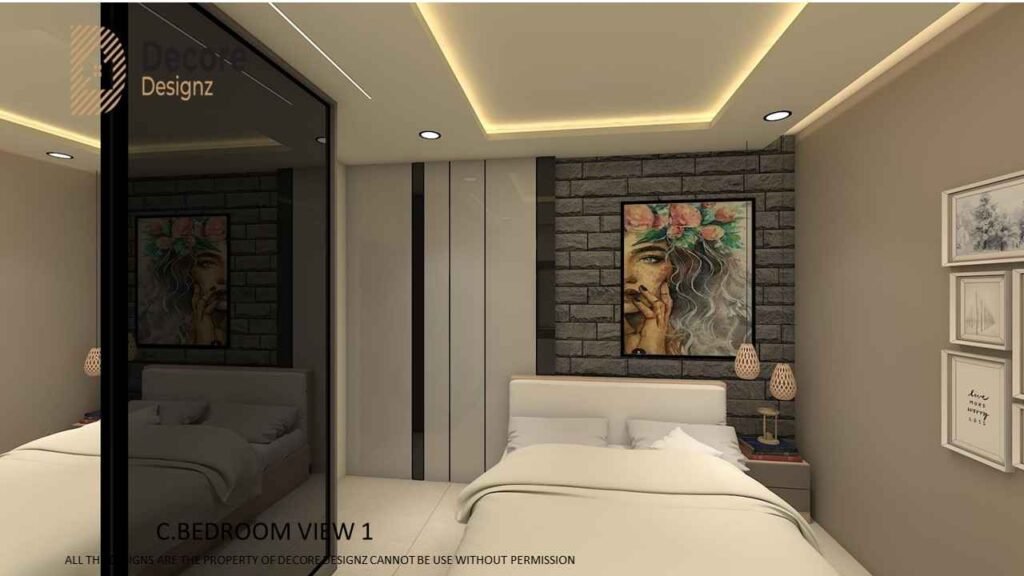
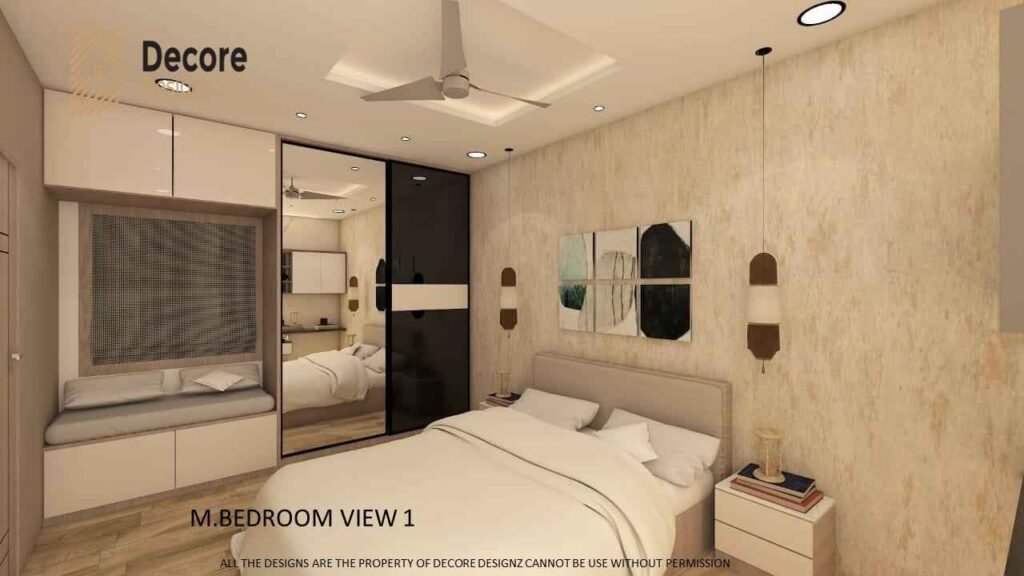
The wall behind the bed is usually the natural focal point of a bedroom. Instead of treating it as an empty background, you can use it to establish the visual character of the room.
A feature wall can be created with:
- Textured wall finishes
- Wallpaper
- Wooden panels
- Upholstered panels
- Fluted or grooved detailing
- Decorative paint
- Stone-look surfaces
- Wall moulding
- Artwork and framed pieces
The important part is to make the wall work with the bed, bedside tables, ceiling lighting and other furniture. A feature wall should feel like part of the bedroom design rather than an isolated decorative element.
2. Use Wall Decor Wood for Warmth and Texture
Wood is one of the most versatile choices for bedroom wall decor. It introduces warmth and texture while working with both contemporary and more traditional interiors.
Wall decor wood can take different forms depending on the overall design:
- Vertical wooden slats
- Wood-look panels
- Veneer-finished panels
- Fluted wall detailing
- Wood and upholstered combinations
- Wooden frames around a headboard
- Floating wooden shelves
Wood does not necessarily need to cover the entire wall. A smaller section behind the bed can be enough to create contrast against a neutral wall.
The finish also matters. A darker wood tone can create a richer, more intimate bedroom, while lighter wood can keep the room feeling softer and more relaxed.
3. Combine the Headboard with the Wall Design
A bedroom wall and headboard do not need to be designed separately.
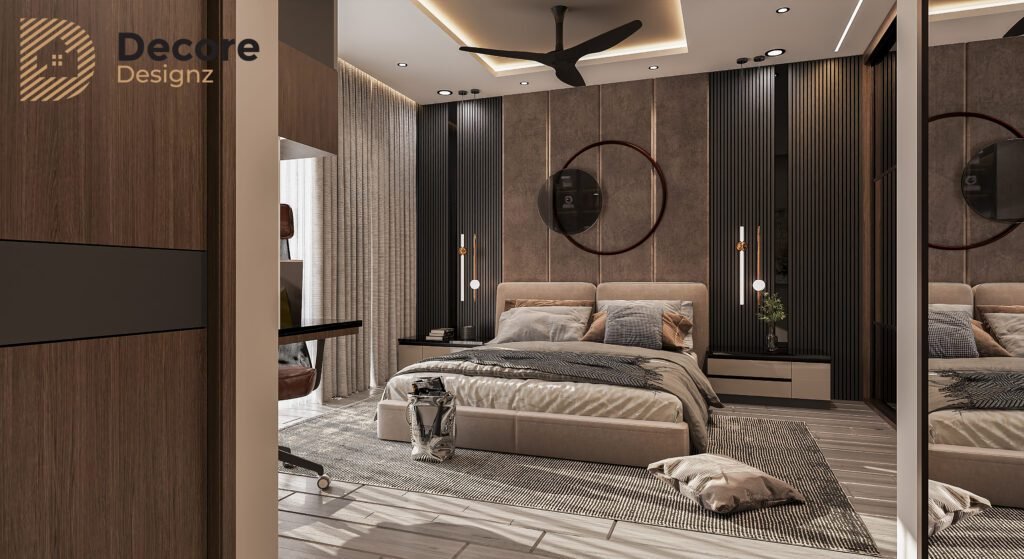
One effective approach is to create a continuous composition where the headboard, wall panel and lighting work together. For example, an upholstered headboard can sit against a textured wall, while vertical panels or warm lighting extend the visual line around it.
This approach is particularly useful in master bedrooms where the bed wall needs to become the main design feature.
Instead of adding several unrelated bedroom wall decoration items, focus on creating one composition with a clear visual hierarchy.
4. Add Bedroom Wall Decoration Items Carefully
Decorative items can personalise a bedroom, but more is not necessarily better.
Some useful bedroom wall decoration items include:
- Framed artwork
- Mirrors
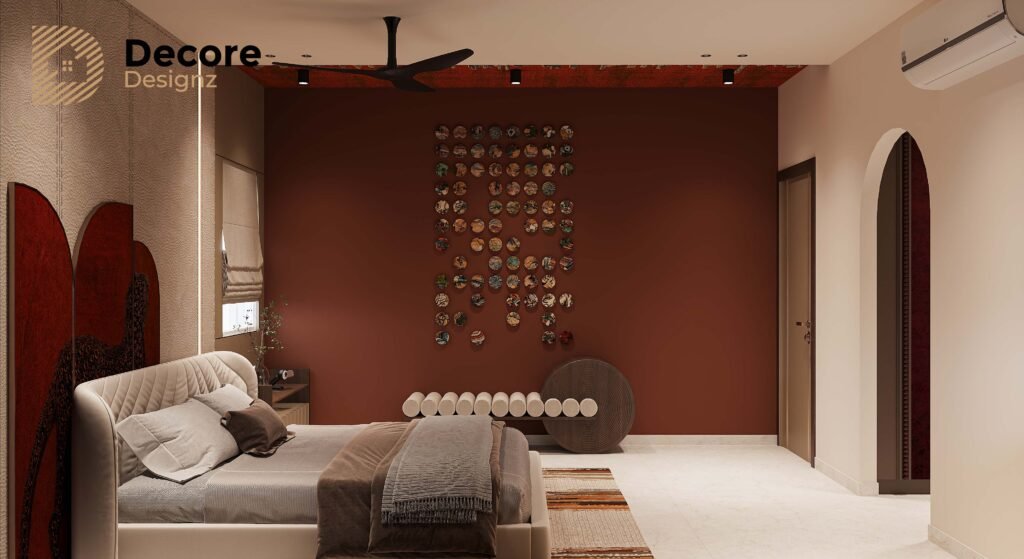
- Decorative panels
- Wall-mounted lamps
- Small shelves
- Photographs
- Sculptural wall pieces
- Woven or textile wall art
- Decorative objects
- Personal travel photographs
Choose items according to the size and style of the room.
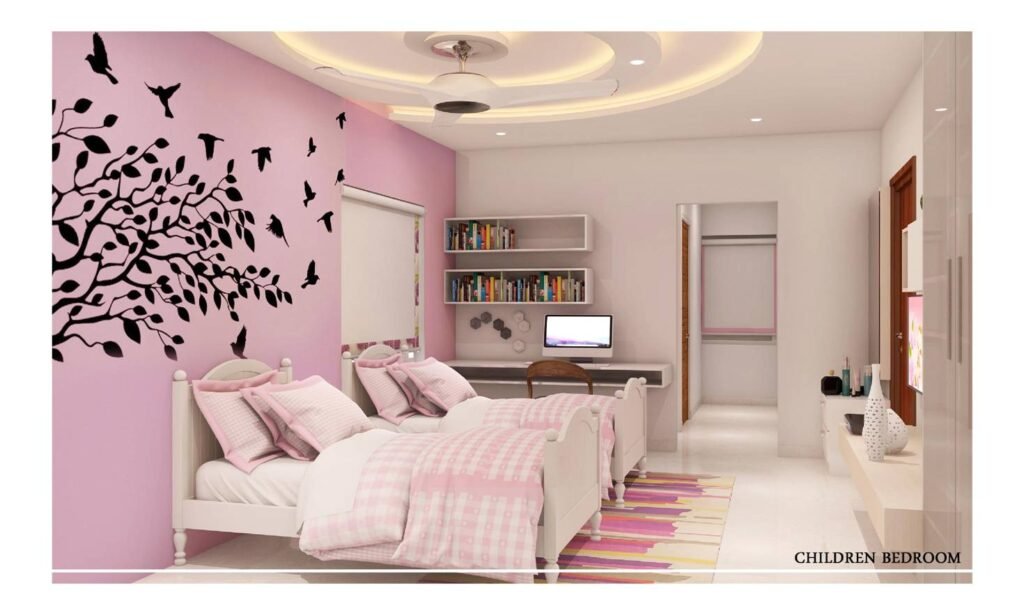
For example, a large bedroom wall may accommodate a larger artwork or a balanced arrangement of multiple frames. In a smaller bedroom, one statement piece may work better than several small objects competing for attention.
5. Try a Gallery Wall
A gallery wall can bring personality to a bedroom without requiring a permanent architectural feature.
You can combine photographs, artwork, illustrations or prints using frames of similar or complementary finishes.
For a more organised look, keep the frame arrangement relatively symmetrical. For a relaxed bedroom, different frame sizes can create a more collected appearance.
Before fixing anything to the wall, plan the arrangement first. The size of the artwork should relate to the bed, bedside furniture and available wall area.
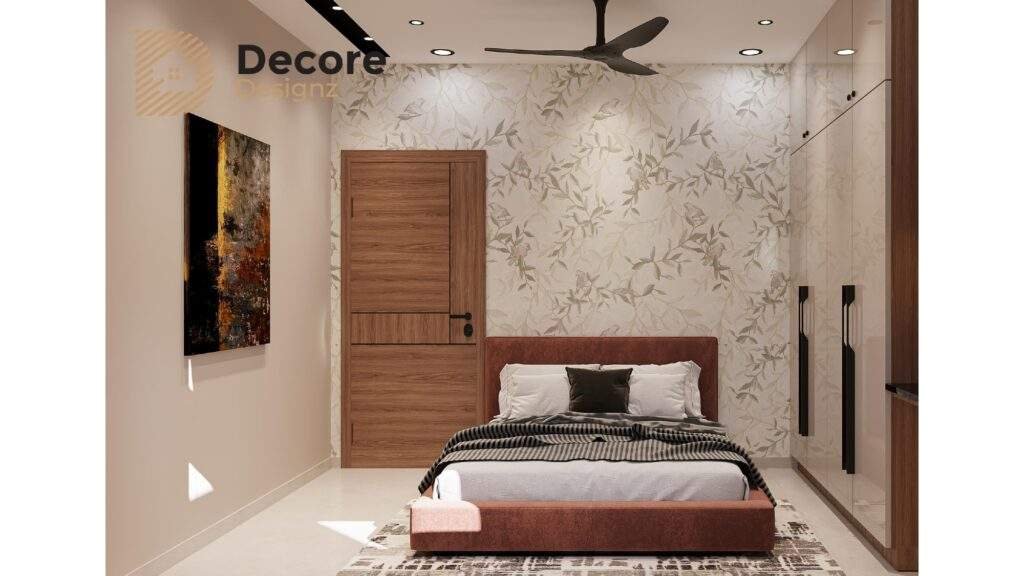
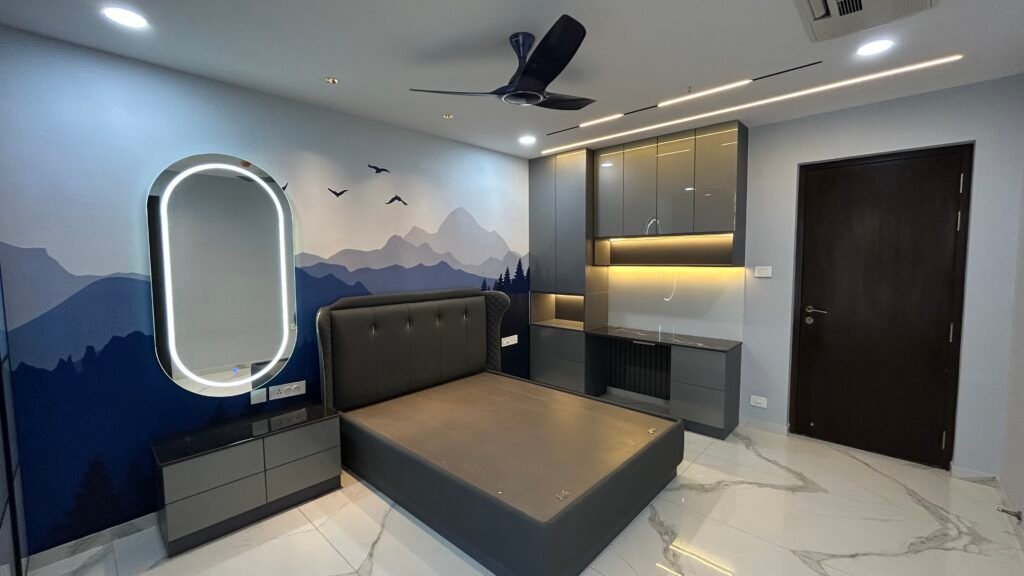
6. Use Wallpaper for a Strong Bedroom Wall Design
Wallpaper remains a practical way to introduce pattern, colour or texture without constructing a full feature wall.
It can be used:
- Behind the bed
- Across one accent wall
- Inside a wall niche
- Around a dressing area
- On a smaller architectural section
For bedrooms, the pattern should support the atmosphere you want to create. Subtle textures and muted patterns can make the room feel calm, while stronger geometric or botanical patterns can become the main visual feature.
If the bedroom already contains detailed furniture or a prominent wardrobe, a simpler wallpaper may create a better balance.
7. Consider Decorative Wall Panels
Wall panels can give a bedroom a more architectural appearance than paint or artwork alone.
Depending on the design, panels can be used to introduce:
- Vertical lines
- Geometric patterns
- Fluted textures
- Symmetry
- Depth
- Material contrast
Panels can also be combined with lighting. Warm concealed lighting around a panelled bed wall can create depth in the evening without relying only on the main ceiling light.
The choice should depend on the bedroom’s proportions, furniture and overall interior style rather than following a trend simply because it is popular.
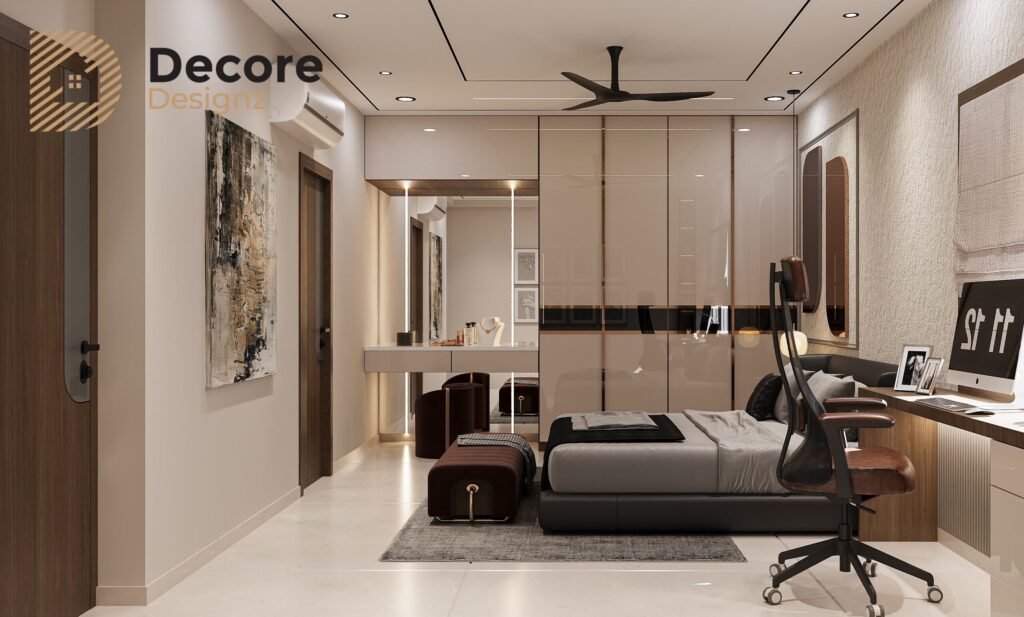
8. Plan the Wardrobe Design for Bedroom Alongside the Wall
Wall decor should not be planned independently from storage.
The wardrobe design for bedroom can occupy a significant portion of the room, particularly in apartments where storage needs to be planned carefully. Its colour, shutter finish, handles and vertical lines can therefore influence the appearance of the surrounding walls.
For example, a bedroom with a detailed wooden bed wall may work better with a relatively restrained wardrobe finish. Alternatively, a wardrobe with a wood-look finish can be visually connected to wooden wall detailing elsewhere in the room.
The goal is to make the storage feel integrated into the bedroom rather than like a separate block of furniture.
If you are planning wardrobe storage in more detail, our guide to bedroom wardrobe planning covers the planning considerations behind bedroom storage.
9. Use Mirrors to Add Light and Visual Depth
Mirrors can be both decorative and functional.
A well-positioned mirror can reflect natural or artificial light and make a bedroom feel more open. It can also become part of a dressing area or be incorporated into custom furniture.
Rather than adding mirrors randomly, consider what they will reflect. A mirror facing a visually attractive part of the room can strengthen the overall design, while a mirror reflecting clutter can have the opposite effect.
10. Make Lighting Part of the Wall Decor
Wall decoration does not have to be limited to objects fixed onto the wall.
Lighting can become part of the wall design itself.
Wall-mounted lights beside the bed can provide useful reading light while also framing the bed. Concealed lighting behind panels or around a headboard can highlight texture and create a softer evening atmosphere.
This is particularly effective when combined with a layered lighting plan that includes ambient, task and accent lighting.
11. Keep Small Bedrooms Visually Simple
In a small bedroom, too many decorative elements can make the room feel crowded.
A better approach is to select one strong wall treatment and keep the surrounding elements relatively simple.
For example, you could combine:
- A textured bed wall
- A simple upholstered headboard
- Integrated bedside lighting
- A streamlined wardrobe
- One or two carefully selected decorative pieces
This creates a focal point without using up valuable floor space.
For more ideas on making smaller homes work harder, see our guide to interior design for small apartments.
12. Match Wall Decor With the Rest of the Bedroom
The best bedroom wall decor does not exist in isolation.
The wall treatment should relate to the:
- Bed and headboard
- Wardrobe
- Flooring
- Curtains
- Bedside furniture
- Lighting
- Colour palette
- Decorative accessories
For example, a bedroom using warm wood tones can carry that material into the wall design, furniture or wardrobe details. A neutral bedroom may benefit from texture rather than strong colour. A contemporary bedroom may use clean geometric panels instead of several decorative objects.
This creates a more cohesive bedroom rather than a collection of individual design ideas.
Bedroom Wall Decor Is About Balance
A good bedroom wall design does not need to be complicated. The most successful spaces usually have a clear focal point and enough visual restraint around it.
You might choose a wooden feature wall, textured finish, wallpaper, artwork, decorative panels or a combination of materials. What matters is how those choices relate to the bed, wardrobe, lighting and way the room is used.
For a complete bedroom, the wall design should be considered alongside storage and furniture from the beginning rather than added at the end.
At Decore Designz, bedroom interiors are planned around how the space will actually be used, including storage, furniture, lighting, materials and finishing details. If you are planning interiors for your home, explore our interior design services in Hyderabad to discuss your requirements.
Frequently Asked Questions
What are the best ideas for bedroom wall decor?
Popular bedroom wall decor options include textured walls, wooden panels, wallpaper, artwork, mirrors, decorative moulding, upholstered headboards and integrated lighting. The right choice depends on the room’s size, furniture, storage and overall design style.
What can I use for bedroom wall decoration?
You can use artwork, photographs, mirrors, wooden panels, wallpaper, wall moulding, decorative panels, shelves and wall-mounted lighting. Choose fewer, well-planned elements rather than filling every available wall.
Is wood good for bedroom wall decor?
Yes. Wood and wood-look finishes can add warmth and texture to a bedroom. They can be used as full-height panels, slatted details, headboard surrounds or smaller accent sections.
How should wardrobe design for bedroom be planned?
Wardrobe design should consider the amount of storage required, available wall space, shutter type, internal organisation, finish and its relationship with the bed and other bedroom elements. Planning the wardrobe together with the room layout usually produces a more cohesive result.
How can I decorate a small bedroom wall?
For a small bedroom, choose one main focal wall and avoid excessive decoration. A textured finish, simple wooden panel, wallpaper, mirror or carefully planned artwork can add character without making the room feel visually crowded.