

Bedroom Wardrobe Design: Planning, Layouts & Storage Ideas
A good bedroom wardrobe design is not just about choosing attractive shutters or a premium finish. It should make everyday storage easier, fit the available bedroom space and give you sensible access to the things you actually use.
The best wardrobe design for a bedroom starts with your clothes, storage habits and room layout. From internal wardrobe layout and hanging space to sliding or hinged shutters, materials, lighting and full-height storage, every decision should work together.
At Decore Designz, we approach wardrobe design as part of the bedroom rather than as a separate piece of furniture. The objective is simple: create storage that looks refined and works comfortably every day.
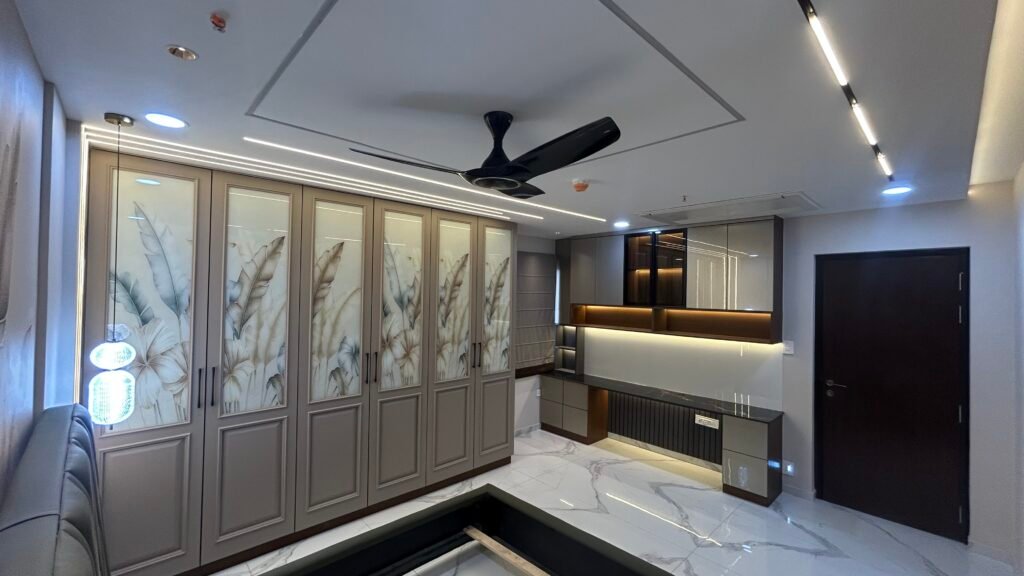
What Makes a Good Bedroom Wardrobe Design?
A well-designed bedroom wardrobe balances three things:
- Storage: enough space for clothes, accessories, bags, shoes and other belongings.
- Accessibility: everyday items should be easy to reach and organise.
- Space planning: the wardrobe should work with the bed, dressing area, doors, windows and walking space.
A wardrobe with beautiful shutters can still be poorly designed if the internal layout does not match your needs.
For example, someone who wears mostly formal clothing may need more hanging space, while another homeowner may need more drawers and shelves for folded clothes. A shared wardrobe may also need clearly separated storage zones.
There is no single internal wardrobe layout that works for every bedroom.
How to Plan a Bedroom Wardrobe
Before choosing colours, finishes or wardrobe styles, start with what needs to be stored.
Ask yourself:
- How much clothing needs to be hung?
- How much clothing is normally folded?
- Do you need separate storage for sarees, suits or long dresses?
- Where will bags and accessories go?
- Do you need drawers for watches, jewellery or smaller items?
- Will two people use the wardrobe?
- Which items are used every day?
- Which belongings are seasonal or rarely used?
These answers determine the internal configuration.
A practical bedroom wardrobe design may combine hanging sections, adjustable shelves, drawers, accessory compartments, upper storage and dedicated spaces for shoes or bags.
The important point is to design the storage around your routine rather than filling the cabinet with standard compartments simply because they are available.
Bedroom Wardrobe Layout: What Should Go Inside?
The inside of the wardrobe matters more than most homeowners realise.
A useful internal wardrobe layout can include:
Storage Area | Suitable Use |
Hanging section | Shirts, dresses, suits and other garments |
Long hanging section | Sarees, dresses and longer clothing |
Shelves | Folded clothes and linen |
Drawers | Smaller everyday items and accessories |
Upper storage | Seasonal or occasional belongings |
Accessory compartments | Watches, jewellery and smaller items |
Shoe storage | Footwear where appropriate |
Open section | Frequently used items or dressing-area accessories |
The exact arrangement should depend on the person using the wardrobe.
Everyday clothing should generally be easier to reach than luggage or seasonal items. Less frequently used storage can move higher, while daily-use drawers and hanging sections should remain convenient.
This is where custom wardrobe design becomes useful: the internal arrangement can be developed around the homeowner instead of forcing the homeowner to adapt to a standard cabinet.
Bedroom Wardrobe Design for Small Bedrooms
A small bedroom does not necessarily need a small wardrobe.
It needs a better-planned wardrobe.
A bedroom wardrobe design for a small bedroom can use vertical space while controlling the amount of floor area occupied by furniture.
Useful approaches include:
- Full-height wardrobes
- Sliding shutters where they suit the layout
- Integrated overhead storage
- Carefully positioned drawers
- Internal compartments instead of additional freestanding furniture
- Mirrors where they genuinely improve the room
- Consistent finishes that reduce visual clutter
However, maximising storage should not mean filling every available centimetre.
The wardrobe still needs to leave enough space for comfortable movement around the bed and access to drawers, doors and other furniture.
In a compact bedroom, the few inches gained or lost around the walking path can make a noticeable difference to everyday comfort.
Full-Height Wardrobe Design: Is It Worth It?
A full-height wardrobe can make better use of vertical space, especially in bedrooms where floor area is limited.
The upper sections can be used for:
- Suitcases
- Seasonal clothing
- Extra bedding
- Occasional-use items
- Other belongings that do not need daily access
Full-height storage can also create a cleaner visual line from floor to ceiling.
However, it should not automatically be treated as the best solution.
The ceiling height, proportions of the room, accessibility, lighting and internal layout all need to be considered.
If the upper section becomes difficult to access, simply adding more storage does not necessarily improve the wardrobe.
Sliding vs Hinged Wardrobe Design
The choice between sliding and hinged wardrobes should be based on the bedroom layout rather than appearance alone.
Hinged Wardrobes
Hinged shutters open towards the room and provide direct access to individual wardrobe sections.
Advantages include:
- Full access when the shutters are open
- Straightforward internal organisation
- Easy access to individual compartments
- Wide range of shutter designs
The main limitation is clearance.
You need enough space in front of the wardrobe for the shutters to open without interfering with the bed, dressing unit or walking path.

Sliding Wardrobes
Sliding shutters move along a track rather than opening into the room.
They can therefore work well where floor clearance is limited.
However, when one shutter is opened, another section may remain covered depending on the configuration.
So there is no universally better option.
If you want to explore this specific choice in more detail, see our guide to wardrobes with sliding doors.
The right choice depends on the bedroom dimensions, wardrobe width, circulation and how you want to access the storage.
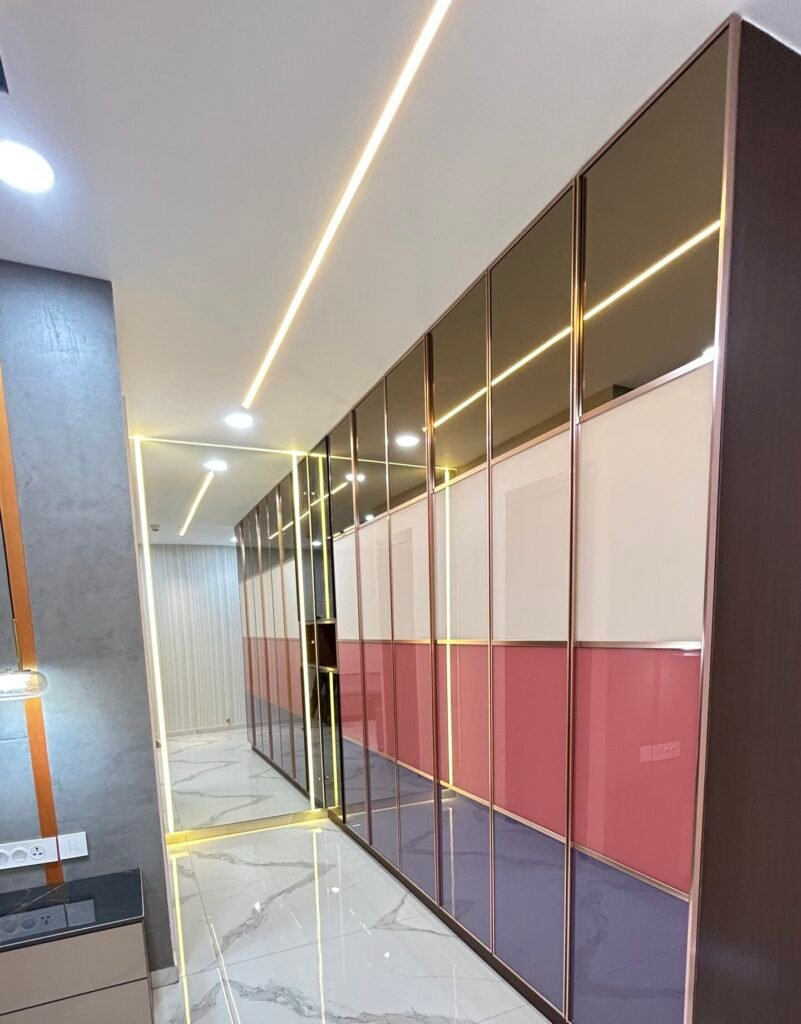
Modern Bedroom Wardrobe Design Ideas
Modern wardrobe design does not have to mean complicated detailing.
A clean bedroom can use:
- Matte laminate finishes
- Wood-look finishes
- Veneer for natural variation
- Neutral colours
- Mirrored or glass elements
- Minimal handles
- Integrated lighting
- Full-height shutters
- Simple horizontal or vertical divisions
The finish should support the overall bedroom rather than compete with it.
For example, a bedroom with several decorative elements may benefit from a quieter wardrobe front, while a more restrained room may use the wardrobe as one of its stronger visual elements.
The same principle applies to luxury bedrooms. A premium wardrobe does not need excessive decoration. Better materials, proportions, hardware and detailing can create a more refined result without making the room visually busy.
Choosing Wardrobe Materials
The external finish usually receives most of the attention, but the internal construction is equally important.
Common considerations include:
- Plywood
- MDF
- Laminate
- Veneer
- Acrylic
- Glass
- Hardware and drawer systems
The correct material depends on the application.
For example, a component carrying a heavier load may require different consideration from a decorative shutter designed primarily for a particular finish.
The decision should therefore consider:
- Expected load
- Construction method
- Finish requirement
- Edge treatment
- Durability
- Hardware
- Maintenance
- Intended use
There is no single material that is automatically the best choice for every wardrobe.
This experience-led approach is consistent with how Decore Designz approaches material decisions: the material should solve a particular requirement rather than simply follow a popular recommendation.
Wardrobe Lighting and Hardware
Small hardware decisions can have a large impact on daily use.
Consider planning for:
- Internal wardrobe lighting
- Soft-close drawers
- Soft-close shutters
- Quality hinges
- Smooth drawer mechanisms
- Integrated mirrors
- Accessory storage
- Appropriate handles or handleless profiles
Internal lighting can be particularly useful in deeper wardrobes where the rear sections become difficult to see.
These decisions should be considered during the design stage rather than after the wardrobe has already been finalised.
Lighting points, furniture dimensions and electrical planning may all need to work together.
Bedroom Wardrobe Design Should Consider the Whole Room
A wardrobe does not exist independently from the bedroom.
Its size and position affect:
- Bed placement
- Bedside tables
- Dressing areas
- Door movement
- Window access
- Walking paths
- Cleaning
- Natural light
- Visual balance
This is particularly important in smaller bedrooms.
A larger wardrobe may provide more storage but create a less comfortable room if its depth or shutter movement interferes with circulation.
That is why wardrobe planning should happen alongside the rest of the bedroom design.
Decore Designz’s bedroom interior services include wardrobe design as part of the wider room-planning process, allowing storage, furniture, lighting and finishes to be considered together. You can explore our interior design services in Hyderabad to see how these elements fit into a complete residential interior project.
Common Bedroom Wardrobe Design Mistakes
A wardrobe can look impressive and still be inconvenient to use.
Some common mistakes include:
1. Designing the outside before planning the inside
The shutter finish is visible, but the internal layout determines how useful the wardrobe will be.
2. Creating too many shelves
More shelves do not automatically mean more useful storage. The compartments need to match what you actually store.
3. Ignoring circulation space
A wardrobe should not make it difficult to walk around the bed or open drawers comfortably.
4. Putting everyday items in difficult-to-reach areas
Frequently used clothes and accessories should be positioned where they can be accessed easily.
5. Adding storage without considering the rest of the room
A wardrobe should work with the bed, dressing unit, doors and windows rather than being treated as an isolated cabinet.
6. Choosing materials based only on appearance
The material should also be suitable for the construction, load, finish and intended use.
How Much Does a Bedroom Wardrobe Cost?
There is no single price for a bedroom wardrobe because the final cost depends on size, internal configuration, material, shutter finish, hardware and customisation.
For example, two wardrobes with the same external dimensions can have very different prices if one has simple shelves while the other includes multiple drawers, premium hardware, internal accessories, lighting and specialised storage.
If you are comparing quotations in Hyderabad, our wardrobe cost guide explains the main factors that influence the final price and why comparing only a per-square-foot rate can be misleading.
The important point is to finalise the requirement before comparing prices.
A Better Way to Approach Bedroom Wardrobe Design
Instead of starting with:
“Which wardrobe looks best?”
Start with:
“How do we actually use this bedroom?”
Then work through:
- What needs to be stored?
- Who will use the wardrobe?
- Which items are used every day?
- How much hanging and folded storage is required?
- How much room is available?
- Would sliding or hinged shutters work better?
- Where should drawers and accessories go?
- Which materials and finishes suit the intended use?
- How will the wardrobe work with the bed and other furniture?
- Does the final design leave enough space to move comfortably?
This approach produces a wardrobe that is designed for real life rather than simply designed for photographs.
Bedroom Wardrobe Design Should Make Everyday Life Easier
The best bedroom wardrobe design is not necessarily the one with the most shelves, most expensive finish or most elaborate shutters.
It is the one that makes the bedroom easier to use.
You should be able to reach the things you use regularly, store less frequently used belongings without wasting prime space, and move around the room comfortably.
At Decore Designz, we treat wardrobes as part of the home’s overall interior design rather than as an isolated storage unit. The design, materials, furniture, lighting and execution should work together around the way you actually live.
If you are planning a new bedroom or complete home interiors in Hyderabad, you can speak with Decore Designz about planning the wardrobe, storage and wider interior together.
Frequently Asked Questions
What is the most important part of bedroom wardrobe design?
The internal layout is one of the most important parts. Storage should be organised around what you own and how you use it, while the wardrobe’s size, shutter movement and position should work with the bedroom’s circulation and furniture.
What should a bedroom wardrobe contain?
A bedroom wardrobe may include hanging sections, shelves, drawers, accessory storage, upper compartments, shoe storage and dedicated spaces for seasonal belongings. The exact configuration should depend on what the user needs to store.
Is a sliding or hinged wardrobe better?
Neither is universally better. Hinged wardrobes provide direct access to individual sections but need opening clearance. Sliding wardrobes save floor clearance but can limit access to part of the wardrobe when a shutter is open.
Is a full-height wardrobe a good idea?
A full-height wardrobe can make good use of vertical space and provide additional storage for seasonal or occasional items. However, accessibility, ceiling height and the overall bedroom proportions should be considered before choosing one.
How should I design a wardrobe for a small bedroom?
Use the available wall efficiently and consider full-height storage, carefully planned internal compartments and sliding shutters where they suit the room. At the same time, maintain enough clearance around the bed and other furniture for comfortable movement.
Which material is best for a bedroom wardrobe?
There is no single material that is best for every wardrobe. The choice depends on the construction, expected load, finish, durability, hardware and how each part of the wardrobe will be used.
Should wardrobe design be planned before the bedroom is finished?
Yes. Wardrobe dimensions and positioning can affect furniture placement, electrical points, lighting, circulation and other bedroom decisions. Planning the wardrobe alongside the rest of the room generally produces a more cohesive result.