

Luxury vs Premium Interior Design: What Actually Changes in a Hyderabad Home
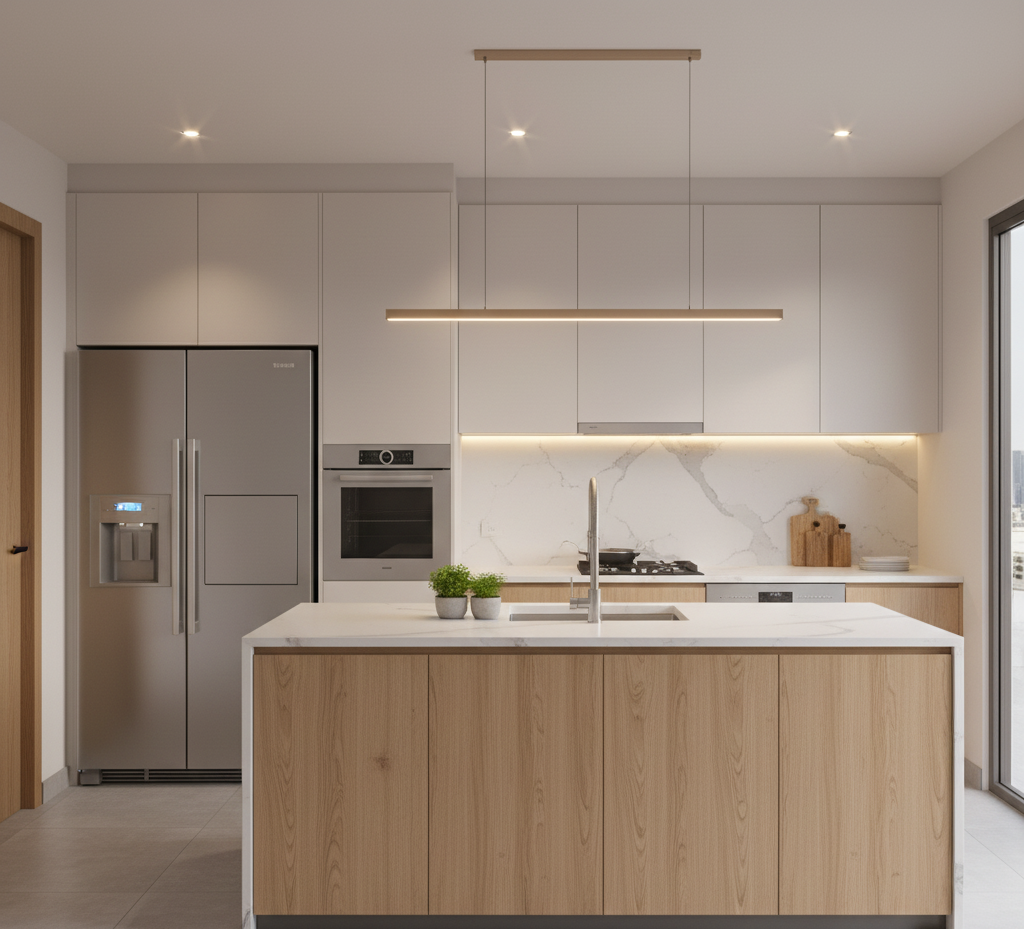
The difference between premium and luxury interior design is not simply how expensive a home looks. It comes down to the quality of the decisions behind it: how precisely furniture is made, how hardware performs, how finishes meet, how lighting is layered and how consistently the design is executed. In a Hyderabad home, both approaches can look refined. The real difference becomes clear when you examine the specifications, detailing, functionality and execution behind the finished space.
What is the difference between premium and luxury interior design?
Premium interior design focuses on a well-planned home with considered materials, reliable functionality and a consistent finish. Luxury interior design takes these decisions further through greater customisation, more detailed coordination, carefully resolved junctions and a stronger emphasis on how every part of the home works together.
These are not rigid industry categories. A designer may use the terms differently, and a premium project can have excellent workmanship. The useful approach is to look beyond the label and ask what the design, material specification and execution actually include.
Design consideration | Premium interior design | Luxury interior design |
Space planning | Efficient layouts designed around daily needs | More detailed coordination of movement, views, privacy and individual routines |
Furniture and joinery | Well-planned, functional furniture with a consistent finish | More tailored proportions, integrated details and carefully resolved junctions |
Hardware | Suitable, reliable hardware selected for the application | More deliberate selection based on function, feel, usage and design integration |
Finishes | Coordinated colours and finishes across rooms | Greater attention to transitions, alignment, texture and continuity |
Lighting | Practical ambient and task lighting | More layered lighting planned around different activities and moods |
Customisation | Selected units adapted to the layout | More opportunities to tailor furniture, storage and details to the home |
Execution | Work completed to the agreed specifications | Close coordination between design intent, trades, installation and finishing |
Neither column guarantees quality on its own. The specifications and completed work are what matter.
1. Does luxury interior design use better materials?
Not automatically. A luxury interior design brief is not a reason to select the most expensive material in every room. The important decision is whether the material suits its location, use, maintenance requirements and design intent.
For example, kitchen cabinets face a different environment from bedroom wardrobes. Moisture exposure, cleaning, storage needs and daily use all affect the choice of boards and finishes. A thoughtful specification considers these conditions rather than using one material everywhere simply to create a consistent label.
When reviewing a proposal, ask:
- What board type is specified for the cabinet carcass, shutters and shelves?
- Are the laminate, veneer or other finishes identified clearly?
- Are the hardware brands and product ranges documented?
- How will exposed edges, corners and transitions be finished?
- What maintenance will the selected surfaces require?
Premium and luxury interiors can both use practical, durable materials. The distinction is often in how carefully those materials are selected, combined and detailed.
2. Where does the difference show in joinery and furniture?
Joinery is one of the clearest ways to assess the quality of an interior. It is also where a polished render and a finished home can look quite different.
Look at wardrobe shutters, kitchen drawers, TV units and storage cabinets. Do the lines align? Are the gaps consistent? Do visible edges look clean? Do doors open smoothly without interfering with nearby handles or walls?
In a well-resolved luxury interior, the design accounts for these details before installation. The team considers how the furniture meets the wall, how corners are finished, where cables and services need to pass, and how the unit will be used once the home is occupied.
Custom furniture can help when a standard unit does not suit the room. But customisation is valuable only when it solves a real design or functional problem. Adding decorative panels or unusual shapes without improving proportion, use or finish does not automatically make a space luxurious.
When comparing designers, ask to inspect completed furniture—not just 3D renders. Open the drawers, examine the edges and look at the alignment of doors and panels.
3. Does luxury mean more expensive hardware?
Hardware affects how furniture feels and functions every day. Hinges, drawer runners, lift-up mechanisms and internal organisers all influence usability.
A premium specification may use reliable hardware suited to the intended application. A more detailed luxury brief may involve a more carefully selected product range, additional internal organisation or mechanisms integrated into custom furniture.
The right choice depends on the unit. A frequently used kitchen drawer has different demands from a decorative cabinet that is opened occasionally. A lift-up shutter also needs to be specified for its size, weight and intended use.
Before approving a design, ask for the actual hardware specification rather than accepting a general description such as “premium fittings.” Confirm the product, function, finish and warranty where applicable.
The practical test: does the hardware suit the way the furniture will be used, and has the design allowed for its installation and operation?
4. How do finishes and detailing change the result?
Premium interiors often rely on a coordinated palette: complementary colours, well-matched laminates, balanced textures and consistent finishes.
Luxury interiors may take the coordination further. The design pays closer attention to how materials meet at corners, how different finishes transition between adjacent surfaces, how patterns align and how visible edges are resolved.
These details are easy to miss in a mood board. They become obvious in the completed room.
Consider a TV unit with multiple finishes. The result depends not only on the selected colours but also on their proportions, the alignment of panels, the treatment of edges and how the unit relates to the wall, lighting and surrounding furniture.
More detailing is not always better. A room with too many textures, profiles and contrasting materials can feel busy. The goal is to use detail where it improves proportion, function or visual coherence.
5. What changes in lighting design?
Lighting can make the same room feel practical, calm or dramatic. The difference comes from planning light around activities rather than treating every fixture as a separate decorative choice.
A premium scheme may provide suitable general lighting and task lighting for areas such as the kitchen or study. A more developed luxury scheme may coordinate several layers: ambient light, task lighting, accent lighting and feature lighting where appropriate.
For example, a living room may need comfortable general illumination for everyday use, focused light for reading and carefully positioned accent lighting to highlight a feature. These layers need to work together without producing uncomfortable glare or unnecessary visual clutter.
Before finalising the ceiling and electrical layout, check:
- Whether the lighting suits the room’s actual activities
- Whether fixtures align with furniture and architectural features
- Whether task areas have enough usable light
- Whether decorative lighting is proportionate to the space
- Whether switches and controls are convenient to use
The goal is not to install more lights. It is to create a lighting plan that supports how the home is used.
6. Is customisation what makes a home luxurious?
Customisation is useful when it responds to the homeowner’s routines, the shape of the room or a specific functional requirement.
A wardrobe might need a different internal arrangement because of the clothes and accessories being stored. A kitchen may need carefully planned drawer positions and reachable storage. A study might need to serve both as a work area and as occasional storage.
In a luxury brief, these requirements can be coordinated more deeply with the furniture design, finish selection and overall layout. But customisation should still be practical. A complicated cabinet that is difficult to clean or a display shelf that consumes useful storage space may look striking without improving the home.
The question is not how many items are custom-made. It is whether each design decision has a reason.
7. How important is site supervision and execution?
Even a strong design can lose its quality when measurements, material specifications or installation details are not followed consistently.
The design team needs to coordinate furniture dimensions, electrical points, ceiling work, finishes and installation requirements. Changes on site should be checked against the approved design so that one adjustment does not create problems elsewhere.
This is especially important when several trades work in the same area. A light fitting, cabinet, false ceiling and wall finish may all need to align. If their positions are decided independently, the finished result can feel disconnected.
Decore Designz Studio’s approach moves from understanding the homeowner’s requirements to design development, material selection, a final quotation and agreement, execution and handover. The intention is to connect the design decisions to the work delivered on site—not leave the homeowner with a set of renders and unresolved execution details.
For a real example of the scale and coordination involved in residential work, see the JNS Hill View Villas project in Mallampet, a contemporary villa project spanning more than 4,000 sq. ft. The project reference demonstrates the kind of larger residential scope where planning, materials, furniture and finishing need to work as a coordinated whole.
8. Where should you prioritise quality in a Hyderabad home?
The best allocation depends on the property, the household and how each room will be used. Instead of treating luxury as a checklist of expensive features, prioritise the decisions that have the greatest effect on everyday use and the finished result.
Area | What deserves attention |
Kitchen | Workflow, storage access, board suitability, hardware and lighting |
Wardrobes | Internal layout, shutter alignment, usable storage and hardware |
Living room | Circulation, seating arrangement, lighting and furniture proportions |
Bedrooms | Comfortable lighting, practical storage and uncluttered movement |
Ceilings and lighting | Coordination with furniture, services and room proportions |
Finishes across the home | Compatibility, maintenance and clean transitions |
Execution | Accurate measurements, installation quality, finishing and final checks |
For a villa, consistency across multiple rooms and floors can be especially important. The Akriti Arv Viva villa project in Tellapur is a relevant reference for understanding residential design and execution at a larger home scale. The project is described as a villa spanning more than 3,500 sq. ft.; any more specific material or design claims should be confirmed with the project team before publication.
How should you compare premium and luxury interior design proposals?
Do not compare proposals by the labels alone. Ask each designer to explain the scope and specifications in writing.
Use this checklist when reviewing two proposals:
- Layout: Does the plan respond to your family’s routines and movement?
- Materials: Are board types, finishes and applications clearly identified?
- Joinery: Are furniture dimensions and important detailing decisions documented?
- Hardware: Are the proposed products and functions specified?
- Lighting: Does the plan cover general, task and accent lighting where needed?
- Customisation: Does each custom element solve a clear functional or design need?
- Execution: Who coordinates the work and checks the finished installation?
- Scope: Are inclusions, exclusions, changes and handover responsibilities clear?
If the proposals are difficult to compare, ask the designers to clarify the same rooms and items against the same requirements. A clear specification is more useful than a broad promise of luxury.
Planning a home that feels right to live in
Luxury should be visible in the quality of the decisions, not only in the appearance of a room. The most successful interiors combine practical planning, suitable materials, considered detailing and careful execution.
If you are planning a residential project in Hyderabad, explore premium interior designers in Hyderabad at Decore Designz Studio and discuss your home’s layout, requirements and intended scope. A personalised consultation can help establish which design decisions deserve the most attention in your home.
Decore Designz Studio
- Address: Fourth Floor, Bhagyalaxmi Construction, KM Cube Building, 401, Ghousia Masjid Rd, Ramakrishnapur, Weaker Section Colony, Izzathnagar, HITEC City, Khanammet, Hyderabad, Telangana 500084
- Phone: +91 96182 18055
- Email: decoredesignzstudio@gmail.com
Frequently Asked Questions
Is premium interior design the same as luxury interior design?
No. The terms are used differently by different firms, but premium interiors generally focus on well-planned layouts, suitable materials and a consistent finish. Luxury interiors may involve more extensive customisation, finer detailing and closer coordination between design and execution. The written scope and completed work matter more than the label.
Does luxury interior design always use imported materials?
No. Imported products do not automatically make a home luxurious. The suitability of a material, its performance, workmanship, detailing and how it fits the design are more meaningful considerations. Any specific product claim should be verified against the actual project specification.
Can a premium home look luxurious?
Yes. Good proportions, thoughtful lighting, a restrained palette, well-made furniture and clean finishing can produce a refined result without adding unnecessary features. The quality of the design decisions and execution matters more than the number of decorative elements.
What should I inspect when comparing interior design companies?
Review their completed projects and look closely at furniture alignment, edge finishing, hardware, material transitions, lighting placement and practical storage. Ask how the approved design is carried through to site execution and how changes are managed.
Which matters more: materials or workmanship?
Both matter, but they serve different purposes. Appropriate materials support durability and appearance; good workmanship ensures those materials are assembled, installed and finished correctly. A strong result needs both.