

How to Compare Interior Design Quotations in Hyderabad: A BOQ Checklist
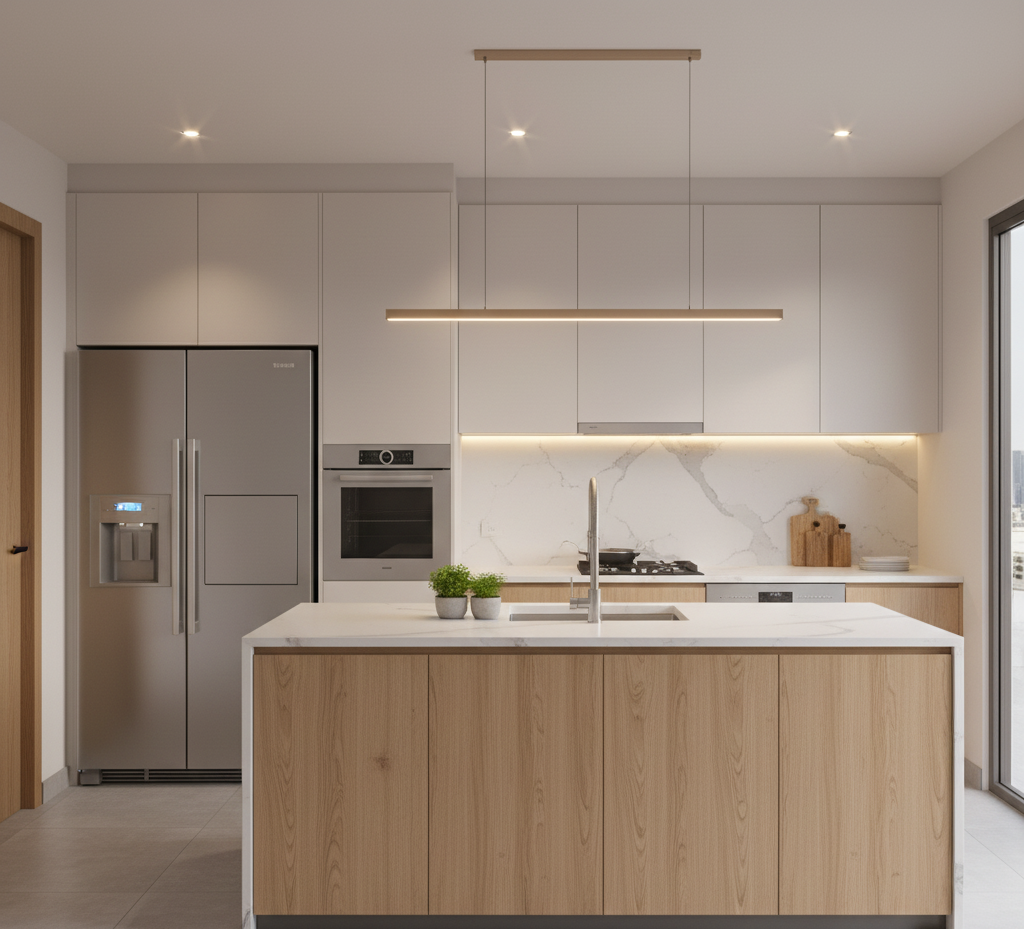
Comparing interior design quotations in Hyderabad is easier when you look beyond the final amount and check exactly what each company has included. An itemised Bill of Quantities (BOQ) helps you compare materials, board thickness, finishes, hardware, quantities, installation, exclusions, timelines and payment terms. The aim is to compare the same scope of work on both quotations before deciding which proposal offers the right balance of quality, clarity and execution.
What is a BOQ in interior design?
A Bill of Quantities, or BOQ, is an itemised breakdown of the work proposed for your home. Depending on the project and how the designer prepares the document, it may list furniture units, wardrobes, kitchen cabinets, materials, finishes, hardware, quantities, installation and other work.
A broad quotation might describe a modular kitchen and wardrobes as a single package. A detailed BOQ should make it easier to understand what those items contain and what is required to complete them.
When you compare interior design quotations, ask both companies to clarify their specifications in writing. Descriptions such as “premium plywood,” “branded hardware” or “high-quality finish” are not precise enough to compare fairly.
How to compare two interior design quotations
Use this checklist before comparing the totals.
1. Is the scope of work the same?
Start by checking which rooms and work items are included. One quotation may cover the kitchen, wardrobes, TV unit and beds, while another may include additional storage, a study unit or finishing work.
Check whether both proposals cover:
- Modular kitchen cabinets and accessories
- Bedroom wardrobes and loft storage
- Beds, side tables and other specified furniture
- TV units, crockery units and other living-area furniture
- False ceiling and lighting-related work
- Electrical modifications and painting
- Civil work, dismantling and repairs, where required
- Delivery, installation, finishing and site clean-up
Do not assume that an item is included because it appears in a design render. Ask the designer to confirm whether it is part of the written scope.
2. Are the boards and their thickness specified?
For wardrobes, kitchen cabinets and other furniture, check the board type, intended application and thickness. The specification should identify what is proposed for the cabinet carcass, shutters, shelves and other relevant components.
Ask whether plywood, MDF, particle board or another material is being proposed for each application. These materials are not interchangeable in every situation; the right choice depends on the location, expected use, design and exposure to moisture.
For example, a kitchen cabinet near a sink needs a different level of moisture consideration from a dry bedroom storage unit. Ask the designer to explain the material choice rather than accepting a general description.
3. Are laminates, finishes and edge banding clear?
The finish affects both the appearance and maintenance of furniture. Compare the specified laminate or other finish, colour, texture and finish category. If a particular brand or product has been agreed, ask for it to be named.
Also check the edge banding used on exposed board edges. Its specification, application and workmanship affect the final appearance and durability of the unit.
A quotation that says “laminate finish” without identifying the agreed specification may leave too much room for interpretation later.
4. Are the hardware specifications comparable?
Hardware can make a meaningful difference to how kitchen drawers, wardrobe shutters and storage systems function every day.
Check the proposed brands and specifications for:
- Hinges and soft-close mechanisms
- Drawer channels and runners
- Tandem or other drawer systems, where specified
- Lift-up mechanisms
- Pull-outs, baskets and internal organisers
- Handles and other accessories
Ask whether the quoted hardware is a specific product or simply a category. If you are comparing different brands or product ranges, request the exact details and discuss the functional differences with the designer.
5. Do the quantities and dimensions match?
Compare the dimensions and quantities of major units wherever these are available. Look for differences in wardrobe length and height, cabinet depth, drawer counts, internal shelves, lofts and other storage components.
If one quotation includes additional cabinets or a different internal layout, the totals will not be directly comparable.
Where the final design is still being developed, ask which quantities are provisional and when they will be confirmed. Make sure changes following design approval are documented.
What should you check in inclusions and exclusions?
A quotation can look comprehensive while leaving important work outside its scope. Review these items individually rather than assuming they are included.
Item | What to confirm |
GST and taxes | Whether taxes are included or shown separately |
Electrical work | Wiring changes, points, switches and related labour |
Lighting | Fixtures, profiles, drivers, installation and specified accessories |
Civil work | Dismantling, masonry, repairs and related work |
Painting | Surface preparation, putty, primer and finishing coats, where applicable |
False ceiling | Framework, boards, cut-outs, finishing and installation |
Transport | Delivery, material movement and site handling |
Installation | Labour, fitting, alignment and finishing |
Site protection | Protection of existing floors, lifts and common areas, where required |
Waste removal | Removal and disposal of debris or packaging |
Exclusions | Every item the company expects the homeowner to arrange separately |
Not every project requires every item in this table. The important thing is to mark each one as included, excluded, not applicable or awaiting confirmation.
Two-quotation comparison worksheet
Use this worksheet with your own quotations. Fill it in from the written documents rather than relying on verbal assurances.
Comparison point | Quotation A | Quotation B |
Rooms and areas covered | ______ | ______ |
Furniture and units included | ______ | ______ |
Board type and thickness | ______ | ______ |
Laminate or other finish | ______ | ______ |
Edge banding specification | ______ | ______ |
Hardware brand and product | ______ | ______ |
Dimensions and quantities | ______ | ______ |
Electrical and lighting scope | ______ | ______ |
Civil work and painting | ______ | ______ |
Transport and installation | ______ | ______ |
GST and other taxes | ______ | ______ |
Explicit exclusions | ______ | ______ |
Project timeline and milestones | ______ | ______ |
Payment schedule | ______ | ______ |
Change-order procedure | ______ | ______ |
Warranty and post-handover support | ______ | ______ |
After filling in the worksheet, mark every difference that could affect the completed home. Ask both companies to clarify missing specifications and revise their documents where necessary. Only then is it useful to compare the overall quotation amounts.
How do payment milestones, changes and warranty affect the decision?
The BOQ is only one part of the agreement. Before signing, check how payments are linked to project stages and what conditions apply to each milestone.
The agreement should also explain how changes are handled. If you change a finish, add a storage unit or alter an approved design, ask for the impact on scope, schedule and payment to be documented before the extra work proceeds.
Clarify the warranty terms for the work and products being supplied, including what is covered, exclusions, how issues are reported and who handles after-handover support. Do not assume that all materials, hardware and workmanship have identical warranty conditions.
These details help you understand not only what the project includes, but how the company intends to deliver it.
What causes two interior design quotations to differ?
Differences usually come from a combination of scope, material specifications, hardware, quantities, design complexity, installation requirements and the work excluded from the proposal.
A quotation may be lower because it includes fewer units, a different material specification or less work outside the furniture package. Another may cover more of the project from design development through installation and finishing.
The useful question is not simply which company has quoted less. It is whether both proposals deliver the same agreed outcome, with comparable specifications and clearly documented responsibilities.
At Decore Designz Studio, the process moves from understanding the homeowner’s requirements to a tentative quote and scope, then design development, a final quotation and agreement, execution and handover. This sequence allows the quotation to be reviewed against the developed design rather than relying only on an early estimate.
Compare the scope before you commit
A clear quotation helps you make a more informed decision about the home you are planning. Take the time to check the BOQ, confirm exclusions and understand how the work will be managed before signing an agreement.
If you are planning a home interior project, you can contact Decore Designz to discuss your requirements and request a quotation based on your home, design preferences and intended scope of work.
Decore Designz Studio
- Address: Fourth Floor, Bhagyalaxmi Construction, KM Cube Building, 401, Ghousia Masjid Rd, Ramakrishnapur, Weaker Section Colony, Izzathnagar, HITEC City, Khanammet, Hyderabad, Telangana 500084
- Phone / WhatsApp: +91 96182 18055
- Email: decoredesignzstudio@gmail.com
- Website: https://decoredesignz.com/
Frequently Asked Questions
Should I ask every interior designer for a BOQ?
Yes. Request an itemised quotation or BOQ that identifies the scope, key material specifications, quantities, inclusions and exclusions. The level of detail may vary by project stage, so ask which items are final and which are provisional.
What if a company will not specify the material brand?
Ask for a written specification that is detailed enough to identify what will be supplied, including the material type, grade or product range where applicable. If the proposal uses an alternative, ask how it differs from your agreed requirement.
Should I choose the lowest interior design quotation?
Not based on the total alone. First check whether the scope, materials, hardware, installation, exclusions and contractual terms are comparable. Resolve unexplained differences before making a decision.
Can the final quotation change after the design is approved?
It can change if the scope, specifications or quantities change, or if the original proposal contained provisional items. The agreement should explain how revisions are recorded, approved and reflected in the schedule and quotation.
What should I do if two quotations are difficult to compare?
Ask both companies to clarify their scope against the same room list and design requirements. Use the worksheet above to record missing information, then request written revisions for significant differences.