

How to Choose an Interior Designer in Hyderabad: 12 Checks Before You Sign
Choosing an interior designer in Hyderabad requires more than comparing portfolios and quotations. Before you sign an agreement, verify the designer’s completed projects, material specifications, execution responsibilities, payment terms and approach to handling changes. The right professional should understand how you live, explain what the project includes and establish who is accountable for delivering the approved design.
Whether you are planning a new apartment, renovating an existing home or designing a villa, these 12 checks will help you make a more informed decision.
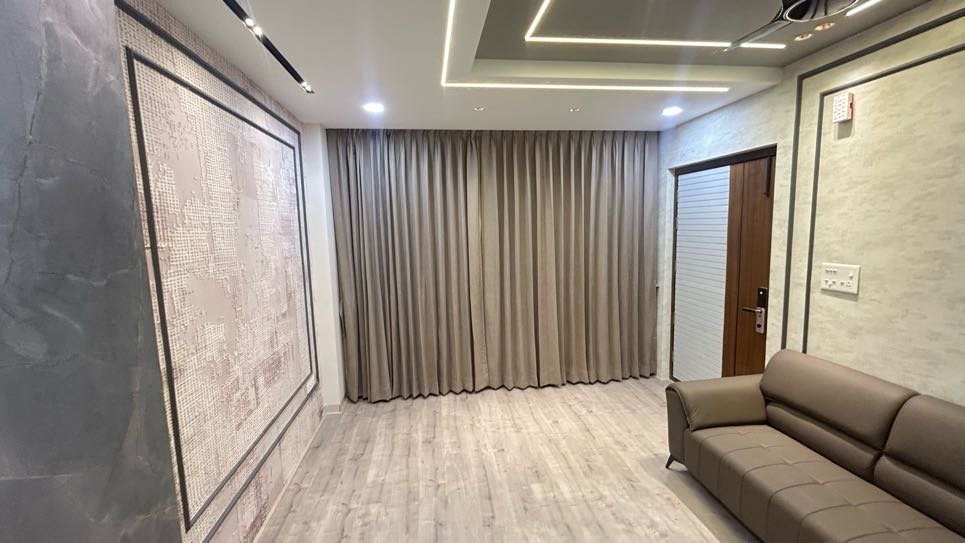
1. Have you visited a completed project similar to yours?
A portfolio shows the intended appearance of a home. A completed project can reveal how well the design has been implemented.
Ask to see a finished apartment, villa or home with requirements similar to yours. If a physical visit is possible and authorised by the homeowner, inspect the workmanship rather than looking only at photographs.
Check:
- Whether wardrobe doors and drawers align properly.
- Whether laminate edges and joints are neatly finished.
- Whether kitchen drawers and hinges operate smoothly.
- Whether paint, ceiling lines and visible junctions are consistent.
- Whether storage interiors are as carefully planned as the visible exterior.
A photograph cannot tell you everything about hardware quality, internal storage or installation accuracy. Ask the designer to explain how the project was delivered and what the original scope included.
2. Does the designer understand how you actually live?
Good interior design starts with your routines, not a reference image.
Before proposing layouts, the designer should understand how many people use the home, how you cook, what you need to store, where children study and how the family uses shared spaces.
For example, a kitchen designed around appearance alone may leave frequently used utensils difficult to reach. A wardrobe can look minimal from outside yet provide insufficient hanging space or poorly planned internal storage.
Ask the designer how your requirements influence the layout, furniture dimensions, storage and material choices.
The strongest proposal should explain why its decisions suit your household rather than simply reproducing a popular style.
3. Is the quotation detailed enough to compare fairly?
Never compare interior design quotations by their final totals alone. Two proposals can look similar while including different materials, quantities, installation work and exclusions.
Request an itemised scope or bill of quantities (BOQ), where applicable. The document should identify what is being supplied, what work will be carried out and what falls outside the agreement.
What to inspect | What a clear quotation should establish |
Furniture and cabinetry | Dimensions, quantities, construction specifications and finishes |
Boards and surfaces | Board type, thickness where relevant, laminate or other finish specifications |
Hardware | Brand and model or a sufficiently precise specification, grade and included quantity |
Electrical and lighting | Included fittings, installation work and exclusions |
Civil and finishing work | Whether painting, ceiling work, plumbing changes and related activities are included |
Project management | Site supervision, coordination and the responsibilities assigned to each party |
Payments | Milestones, approval requirements and the conditions for releasing payments |
Exclusions | Any work, material, transport or other item that is not covered |
A vague line such as “premium materials” is not enough to establish what you are receiving. Ask for specific written descriptions.
For more detail, see our guide to identifying good plywood.
4. Are the materials and hardware specified clearly?
Material quality affects appearance, durability, maintenance and the way furniture performs over time. Ask the designer to explain the trade-offs between the options being proposed.
For example, a glossy surface can reflect light and create a polished appearance, but it may show fingerprints and scratches more readily than some matte finishes. A textured finish can conceal minor marks, although its cleaning requirements depend on the material and texture.
Similarly, hardware should be selected according to the door or drawer size, expected use and load requirements, rather than appearance alone.
For kitchens and wardrobes, clarify the specifications for:
- Boards and their intended application.
- Laminate, veneer, paint or other surface finishes.
- Hinges, drawer channels and other hardware.
- Edge banding and exposed edges.
- Cleaning, maintenance and relevant warranty conditions.
Ask to approve physical samples where appropriate. A small sample helps you judge colour and texture, but it does not replace checking the product specification or workmanship.
5. Who will supervise the work on site?
This is one of the most important questions to ask before signing.
A designer may prepare the drawings while another team manufactures and installs the furniture. Some firms manage execution through an internal team; others coordinate external contractors. Either model can work if the responsibilities are clear.
Ask who will:
- Verify site measurements before production.
- Coordinate with electricians, painters, carpenters and installers.
- Check that execution follows the approved drawings.
- Resolve discrepancies between drawings and actual site conditions.
- Approve finishing quality and compile the snag list.
Also establish how often the site will be inspected and whom you should contact when a decision is required.
Do not assume that hiring a designer automatically includes daily site supervision or responsibility for every contractor. Those services must be explicitly defined.
6. Is the timeline realistic and documented?
A project schedule should explain the sequence of work, not just promise a handover date.
Ask how the designer plans to coordinate design approvals, site measurements, material procurement, manufacturing, installation and finishing. These activities are connected: a delay in finalising a kitchen layout can affect manufacturing and subsequent installation.
Clarify:
- When design and material approvals are required.
- Which activities depend on other work being completed.
- How procurement delays or unavailable materials are handled.
- What happens if you request changes after approval.
- How progress and delays will be communicated.
Ask for a written timeline with milestones and a process for revising it when circumstances change. No designer can responsibly guarantee that every project will remain unaffected by site conditions, supply delays or client changes.
7. Are the payment milestones and contract clear?
Your agreement should explain what you are paying for and when each payment becomes due.
Review the payment schedule alongside the work stages and procurement requirements. Confirm how advance payments, material orders, completed work and final handover are handled.
The agreement should also state:
- The approved scope and deliverables.
- Material and hardware specifications.
- The process for approving additional work.
- The responsibilities of the designer and other parties.
- How disputes, delays and incomplete work are addressed.
- The applicable warranty and defect-resolution terms.
Avoid relying on verbal assurances that are not reflected in the agreement. If an important promise affects your decision, request written confirmation before signing.
8. What happens when you request a change?
Changes are common in residential interiors. You might decide to add storage, alter a finish or revise a lighting position after seeing a design proposal.
The risk is not simply making a change. It is making one without documenting its impact.
Ask whether every significant revision will be recorded with the revised scope, any applicable additional charges and the effect on the timeline. Confirm who must approve the change before the work proceeds.
For example, changing a wardrobe finish before manufacturing may involve a different process from changing cabinet dimensions after production has started.
A documented change-order process reduces misunderstandings and makes it easier to distinguish the original agreement from later additions.
9. Do the reviews describe the actual project experience?
Online reviews can help you assess communication, execution and post-handover support, but a high rating alone does not establish whether a designer is right for your project.
Read the substance of the reviews. Look for specific comments about how requirements were understood, whether commitments were communicated clearly, how issues were resolved and what happened after handover.
Check whether the business identity is consistent across its website and public profiles. Where possible, ask for references from homeowners whose projects resemble yours, subject to their consent.
Be cautious of relying entirely on generic praise, selected photographs or review counts without examining the underlying experience.
10. Who will actually work on your home?
The person who presents the design may not be the person coordinating installation or supervising the site.
Ask who will manage your project day to day, which team members will handle design decisions and which contractors or external vendors will carry out the work.
You do not need every task to be performed by the same employee. You do need a clear structure for responsibility and communication.
Confirm who can approve technical changes, who handles material-related questions and whom you should contact when work differs from the approved design.
A well-defined team structure makes accountability easier, regardless of whether the firm uses in-house staff, specialist contractors or a combination of both.
11. Is communication structured, with clear points of approval?
Residential interior projects involve frequent decisions about finishes, dimensions, hardware, drawings and site conditions. Poor communication can create delays even when the design itself is sound.
Before signing, establish:
- Your primary point of contact.
- How often you will receive progress updates.
- How drawings, samples and material selections will be approved.
- Where decisions and changes will be documented.
- How urgent site questions will be escalated.
Ask how the designer records your approvals. A clear record helps everyone work from the same version of the design.
You should not have to reconstruct important project decisions from scattered messages or verbal conversations.
12. Are the warranty, handover and red flags addressed?
Before committing, understand what happens when the project is completed and something needs correction.
Ask for the applicable warranty terms in writing, including which products or workmanship elements are covered, the duration of coverage, exclusions and the process for reporting defects. Do not assume that all materials and installations carry identical warranty terms.
Also establish what constitutes handover. Depending on the agreed scope, this may involve a snag list, rectification of agreed defects, relevant product documentation and confirmation of outstanding items.
Watch for these warning signs:
- Refusal to document the scope or material specifications.
- Pressure to make a decision before you can review the agreement.
- Unclear responsibility for site execution.
- Promises that conflict with the written quotation.
- Resistance to documenting design changes.
- No clear process for defects or post-handover issues.
One concern does not automatically prove that a designer is unreliable, but unresolved questions about accountability should be addressed before you sign.
How should you evaluate “best interior designer in Hyderabad” lists?
Search results for the best interior designer in Hyderabad can include company websites, directories, editorial roundups and paid promotional placements. The position of a business on a list does not, by itself, prove its suitability for your home.
Use the same checks for every candidate: relevant projects, workmanship, material transparency, scope, site supervision, contract terms and communication.
A provider with experience in homes similar to yours may be a better fit than one with a larger online presence but a different project focus. Compare evidence against your requirements rather than relying on rankings alone.
What a real residential project can tell you
Decore Designz Studio’s DSR Enclave project in Madhapur is a documented premium 4BHK residential interior project spanning more than 2,000 sq. ft.
A project of this type provides a relevant reference when evaluating whether a designer has experience with a larger apartment brief. However, the project’s existence alone does not prove every aspect of workmanship, communication or after-sales support. Those details should be assessed using the evidence available for each project.
When reviewing any comparable project, ask how the layout and storage requirements were addressed, which materials were specified, how the work was coordinated and what was included at handover.
You can explore the DSR Enclave Madhapur residential project as part of your portfolio review.
Ready to plan your home interiors?
Decore Designz Studio has been designing residential interiors since 2014, with an approach centred on how people use their homes and how design decisions carry through to execution.
If you are planning a new apartment, villa or complete home interior, share your property type, location and requirements to discuss the scope and next steps.
Contact Decore Designz Studio
- Phone / WhatsApp: +91 96182 18055
- Email: decoredesignzstudio@gmail.com
- Address: Fourth Floor, Bhagyalaxmi Construction, KM Cube Building, 401, Ghousia Masjid Rd, Ramakrishnapur, Weaker Section Colony, Izzathnagar, HITEC City, Khanammet, Hyderabad, Telangana 500084
Frequently asked questions
How do I choose an interior designer in Hyderabad?
Start with completed projects similar to yours, then verify material specifications, quotation clarity, execution responsibility, timeline, payment terms and warranty conditions. Choose the professional whose documented process matches the scope you need.
What questions should I ask an interior designer before signing?
Ask who supervises site work, what the quotation includes, which materials and hardware are specified, how changes affect the schedule, what the payment milestones are and how defects are handled after handover.
How can I identify a good interior designer in Hyderabad?
Look for relevant experience, clear communication, detailed documentation and a consistent process from design approval to execution. Verify the work rather than relying exclusively on marketing claims or online ratings.
Should I visit a completed interior design project?
Yes, where a visit can be arranged with the homeowner’s permission. Inspect joinery, edges, alignment, hardware operation, finishes and storage. Ask what was included in the project and how issues were resolved.
How do I compare two interior design quotations?
Compare the scope line by line, including board specifications, finishes, hardware, quantities, installation, exclusions, payment milestones and warranty terms. A lower total is not meaningful if the proposals cover different work.
Should an interior designer provide a written contract?
You should have a written agreement defining the scope, specifications, payment terms, responsibilities, changes, timeline and applicable warranty provisions before committing to the project.
Is a 3D design enough to judge an interior designer?
No. A 3D visualisation helps you understand the intended appearance, but it does not prove execution quality. Review completed work and establish how drawings, materials and installation will be coordinated.
What are the biggest red flags when hiring an interior designer?
Unclear quotations, undocumented promises, vague material specifications, no named person responsible for execution and an unwillingness to document changes are reasons to pause and seek clarification.