

Modular Kitchen Materials: A Complete Guide
Choosing modular kitchen materials is not simply about picking the most expensive board or the finish that looks best in a showroom. A kitchen has different requirements at different levels: the cabinet structure needs to handle everyday use, the outer finish needs to suit the desired appearance and maintenance expectations, and the countertop needs to handle regular food preparation.
The right material therefore depends on where it is being used, how the kitchen will be used, moisture and heat exposure, expected load, finish requirements, maintenance and overall design priorities.
This guide explains the main modular kitchen materials and how to think about them before finalising your kitchen.
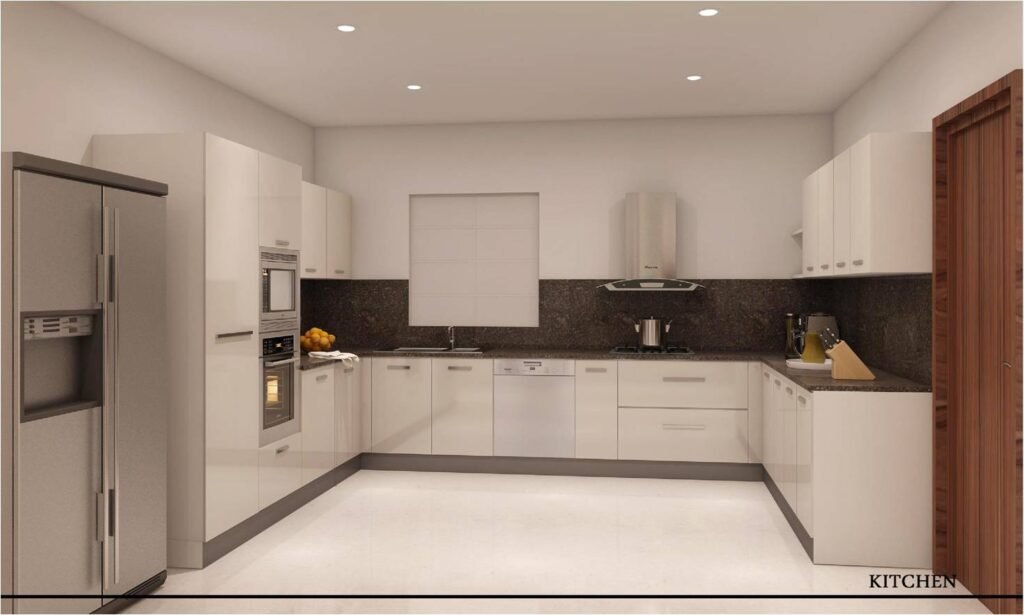
What are the main modular kitchen materials?
Modular kitchen materials can broadly be divided into four groups:
- Cabinet construction materials — such as plywood, MDF and other board options.
- Shutter and surface finishes — such as laminate, acrylic and veneer.
- Countertop materials — such as granite and quartz.
- Special construction options — such as aluminium for kitchens where its particular properties make sense.
These materials do different jobs.
That distinction matters because saying that one material is simply “the best” can be misleading.
A material that works well for a cabinet structure may not be the right choice for a decorative shutter. Similarly, a good cabinet board does not automatically make a good countertop.
What should you consider before choosing kitchen materials?
Before comparing individual materials, start with the conditions in which they will be used.
1. Moisture exposure
Kitchen cabinets are exposed to water, steam and regular cleaning. Areas around the sink require particular attention.
However, moisture resistance is not determined by the board name alone. Construction, edge treatment, installation and the specific product specification also matter.
2. Expected load
Some cabinets carry heavier cookware, appliances or stored items than others.
A material decision should therefore consider what the cabinet is expected to support and how frequently it will be used.
3. Frequency of use
A kitchen used several times a day has different demands from a rarely used secondary kitchen.
Daily opening, closing, cleaning and loading can influence the choice of board, finish and hardware.
4. Finish requirements
Do you want a smooth painted appearance?
A glossy surface?
A textured finish?
A wood-like appearance?
The answer can influence which material and finish combination makes sense.
5. Maintenance
A beautiful finish is not automatically a practical finish for every household.
Consider how easily the surface can be cleaned, how visible fingerprints or marks may be and how much maintenance you are comfortable with.
6. Construction quality
The material specification is only one part of the finished cabinet.
Thickness, joining method, edge treatment, hardware and installation can all affect how the finished kitchen performs.
This is why two kitchens described using the same board name can still have different levels of quality.
What is plywood, and where does it work in a modular kitchen?
Plywood is made by bonding layers of wood veneer together. The construction gives it good structural strength, which makes it a commonly considered option for furniture that needs to handle regular use and load.
In kitchens, plywood can be considered for cabinet components where structural performance is important.
However, simply specifying “plywood” is not enough.
The actual specification, construction, thickness, edge treatment, finish and installation should also be understood.
For example, a kitchen cabinet near a sink may have very different exposure conditions from a tall dry-storage unit.
So the question should not only be:
“Is plywood good for a modular kitchen?”
A better question is:
“Where does plywood make sense in this particular kitchen, and what specification is being proposed?”
For a detailed plywood-versus-MDF comparison, refer to the existing Plywood vs MDF for Home Interiors guide rather than treating this article as a replacement for that deeper comparison.
What is MDF, and where can it be useful?
MDF, or Medium-Density Fibreboard, is manufactured from refined wood fibres compressed with resin.
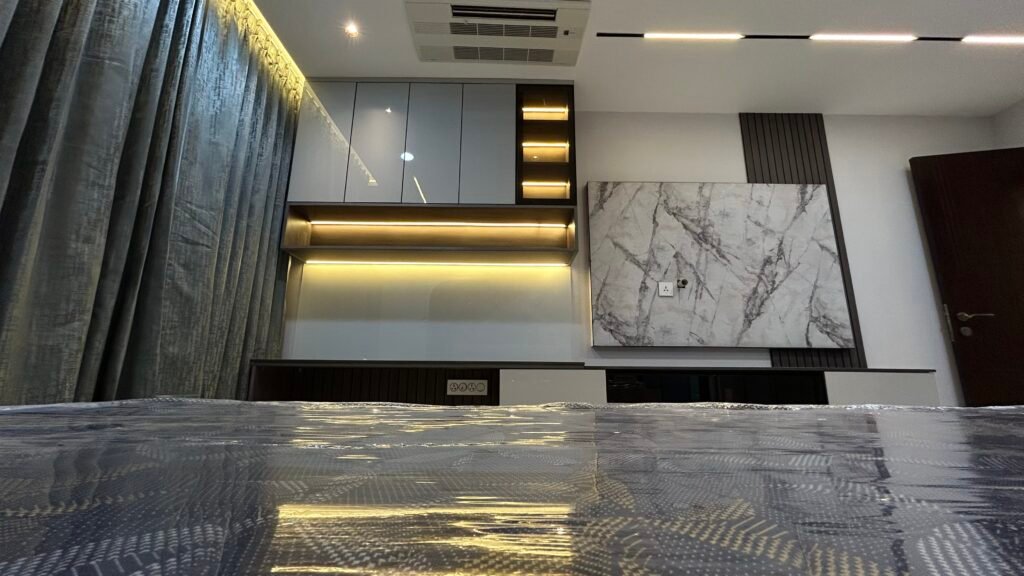
Its smooth and consistent surface can make it useful for certain painted, routed and decorative applications.
That does not mean MDF is automatically suitable for every part of a kitchen.
Its suitability depends on the specific application, moisture exposure, construction and finish.
For example, a decorative component with a smooth painted finish may have different requirements from a heavily used cabinet structure.
Therefore, MDF should be evaluated according to where it is being used, rather than simply labelled as good or bad for kitchens.
Can plywood and MDF be used together?
Yes.
A modular kitchen does not have to use one board material for every component.
Different materials can be considered for different applications when their properties suit the job.
For example, one component may prioritise structural strength while another may prioritise a smooth surface for a particular finish.
This approach can be more practical than deciding that the entire kitchen must use one material.
The important question is whether each choice has a clear reason behind it.
What are laminate finishes for modular kitchens?
Laminate is a commonly used exterior finish for modular furniture.
It is available in a wide range of colours, patterns, textures and surface appearances. This makes it useful when homeowners want flexibility in the visual direction of the kitchen.
Laminate can work particularly well when the priorities include:
- A wide choice of colours and textures
- Practical everyday surfaces
- Easy visual coordination
- Different matte or textured appearances
- A finish that fits the overall interior design
However, laminate is a finish, not the same thing as the board used inside the cabinet.
This distinction is important when comparing quotations.
A quotation may mention laminate while separately specifying plywood, MDF or another board for the cabinet construction.
So always ask:
What is the cabinet made from, and what is the exterior finish?
What is acrylic for modular kitchens?
Acrylic is another kitchen surface finish, commonly associated with a smooth and glossy appearance.
It can create a more reflective, contemporary look and can be useful when the visual goal is a sleek kitchen.
However, appearance should not be the only consideration.
When evaluating acrylic, think about:
- Desired visual effect
- Cleaning and maintenance
- Surface appearance over time
- Fingerprints and marks
- Colour selection
- Compatibility with the overall kitchen design
Acrylic and laminate should therefore not be compared only as “which one looks better?”
The better question is:
Which finish suits the way you use the kitchen and the level of maintenance you are comfortable with?
What is veneer, and how is it different from laminate?
Veneer uses a thin layer of natural wood to create a wood-based appearance.
It can provide a warmer and more natural visual character than many manufactured decorative finishes.
Laminate, by comparison, offers a broader range of manufactured colours, patterns and textures.
Neither is automatically better.
The choice depends on the desired appearance, maintenance expectations, application and overall design direction.
For a kitchen where the goal is a strong natural-wood character, veneer may be considered. For homeowners prioritising a wider range of colours, textures or practical surface options, laminate may be more suitable.
The finish should support the overall design rather than being selected in isolation.
What materials are used for modular kitchen countertops?
The countertop is a separate material decision from the cabinet construction.
Two commonly considered options are granite and quartz.
Granite
Granite is a natural stone commonly used for kitchen countertops.
It can provide a durable work surface with natural variation in colour and pattern.
However, different stones can have different porosity and maintenance requirements. The specific stone should therefore be evaluated rather than treating every granite surface as identical.
Quartz
Quartz surfaces are also widely considered for kitchen countertops and can provide a more consistent manufactured appearance.
They are available in different colours and patterns, making them useful when the countertop needs to coordinate closely with the cabinetry.
What about aluminium modular kitchens?
Aluminium is another material category worth understanding separately.
An aluminium kitchen can make sense in situations where homeowners are specifically looking for the characteristics of an aluminium-based kitchen system.
However, it should not be presented as universally superior to wood-based board systems.
The decision involves trade-offs around:
- Moisture exposure
- Maintenance
- Appearance
- Construction system
- Storage requirements
- Overall design
- Cost priorities
For this materials hub, the important point is that aluminium represents a different construction approach rather than simply another decorative finish.
Is there one best material for a modular kitchen?
No.
There is no single material that is automatically the best for every modular kitchen.
A better approach is to match the material to the application.
For example:
Kitchen requirement | Material decision to evaluate |
Structural cabinet strength | Plywood and other suitable board options |
Smooth painted or detailed finish | MDF may be considered for selected applications |
Wide choice of colours and textures | Laminate |
Glossy contemporary appearance | Acrylic |
Natural wood appearance | Veneer |
Kitchen countertop | Granite, quartz and other suitable slab materials |
Alternative kitchen construction | Aluminium |
This table is a starting point, not a specification sheet.
The final decision should consider the actual product, construction, site conditions and intended use.
Why should cabinet material and finish be specified separately?
This is one of the most important things to understand when comparing modular kitchen quotations.
Imagine two quotations both say:
“Kitchen shutters with laminate finish.”
That statement does not tell you what the cabinet structure is made from.
The board underneath the finish could be different.
Similarly, two quotations may both mention plywood but use different specifications, thicknesses, construction methods or edge treatments.
A useful material specification should therefore make it clear:
- What is the cabinet board?
- What is the shutter material?
- What is the exterior finish?
- What is the countertop?
- What hardware is included?
- What storage accessories are included?
- What installation work is included?
This makes comparisons much more meaningful.
Does the most expensive material make a better kitchen?
Not necessarily.
A well-designed kitchen is not one where the most expensive material is used everywhere.
It is one where the material choice makes sense for the application.
A structurally demanding component may need a different material from a decorative element. A high-use area may need different considerations from a less frequently accessed cabinet.
This is also where professional material planning becomes valuable.
At Decore Designz, material selection is considered alongside use, durability, appearance, maintenance, hardware and construction rather than selecting one “premium” material for every part of the kitchen.
How should materials be selected for a Hyderabad modular kitchen?
The same material principles apply in Hyderabad: start with the actual kitchen rather than choosing materials from a generic checklist.
Consider:
- Kitchen layout
- Sink and plumbing location
- Moisture exposure
- Cooking frequency
- Storage requirements
- Appliance placement
- Expected cabinet load
- Desired finish
- Maintenance expectations
- Countertop requirements
- Hardware
- Overall project scope
The local climate and the specific conditions of the room can be relevant, but they should not be used as a reason to prescribe one material for every kitchen.
The right choice still depends on the actual site and application.
How do you compare two modular kitchen material specifications?
Do not compare only the names of the materials.
Compare the complete specification.
Check | What to ask |
Cabinet board | What board and specification is proposed? |
Shutters | What material are the shutters made from? |
Finish | Is it laminate, acrylic, veneer or another finish? |
Countertop | What slab material and specification is included? |
Hardware | Which hinges, channels and mechanisms are included? |
Storage | Which internal accessories are included? |
Edge treatment | How are exposed edges finished and protected? |
Installation | Is fitting and installation included? |
Site work | Are required electrical, plumbing or other changes included? |
Maintenance | What maintenance should the homeowner expect? |
This approach makes it easier to understand what you are actually comparing.
A material should solve a problem, not just look premium
The most useful way to think about modular kitchen materials is to start with the requirement.
If a cabinet needs to handle regular load, structural performance matters.
If a shutter needs a particular visual character, the finish becomes important.
If a countertop needs to support everyday food preparation, the surface material needs to be evaluated separately.
If a cabinet is close to water, moisture exposure needs to be considered.
That is why there is no universal answer to “Which is the best material for a modular kitchen?”
The better question is:
“Which material is appropriate for this component, in this kitchen, for the way we will use it?”
Planning a Modular Kitchen in Hyderabad?
Material selection is only one part of a successful modular kitchen.
The layout, storage, appliance positions, materials, finishes and execution need to work together.
If you are still deciding how the kitchen should be arranged, start with the Types of Modular Kitchen Layouts Explained guide. If storage is your main concern, explore the Kitchen Storage Planning guide.
Once the major decisions are clear, Decore Designz Studio can help bring the layout, materials and overall kitchen design together as part of your Hyderabad home interior project.
Frequently Asked Questions
What are the main materials used in modular kitchens?
The main material categories include cabinet boards such as plywood and MDF, finishes such as laminate, acrylic and veneer, countertop materials such as granite and quartz, and alternative construction systems such as aluminium.
Which material is best for modular kitchen cabinets?
There is no single best material for every cabinet. The appropriate choice depends on the cabinet’s use, expected load, moisture exposure, construction, finish and maintenance requirements.
Is plywood better than MDF for a modular kitchen?
Plywood is generally considered for applications where structural strength and regular use are important, while MDF can be useful for selected smooth, painted or decorative applications. The right choice depends on the specific component.
Is laminate good for modular kitchens?
Laminate can be a practical kitchen finish and offers a wide range of colours, textures and patterns. It should be evaluated together with the board underneath and the intended use of the cabinet.
Is acrylic better than laminate?
Not automatically. Acrylic can provide a smooth, glossy appearance, while laminate offers a broad range of colours, textures and surface options. The better choice depends on appearance, maintenance and usage requirements.
Which is better for a kitchen countertop: granite or quartz?
Both can be considered for kitchen countertops. The choice depends on the desired appearance, stone characteristics, maintenance expectations and overall kitchen design.
Can different materials be used in the same modular kitchen?
Yes. Using different materials for different components can be practical when each material is selected according to its intended application.
What should I check before approving kitchen materials?
Confirm the cabinet board, shutter material, finish, countertop, hardware, storage accessories, edge treatment, installation scope and any required site work.
Does a premium modular kitchen need expensive materials everywhere?
No. A well-planned kitchen uses materials according to their purpose. Good design is about appropriate material selection, construction, detailing and execution rather than simply using the most expensive option.