

Wooden False Ceiling Designs: Warmth Meets Structure
A wooden false ceiling can bring warmth, texture and architectural character to a room without relying on heavy decoration. But “wooden ceiling” can mean very different things: solid wood, veneer, engineered wood panels or wood-finish ceiling panels. The right choice depends on the room, ceiling height, humidity exposure, maintenance expectations and how the ceiling will work with lighting and furniture.
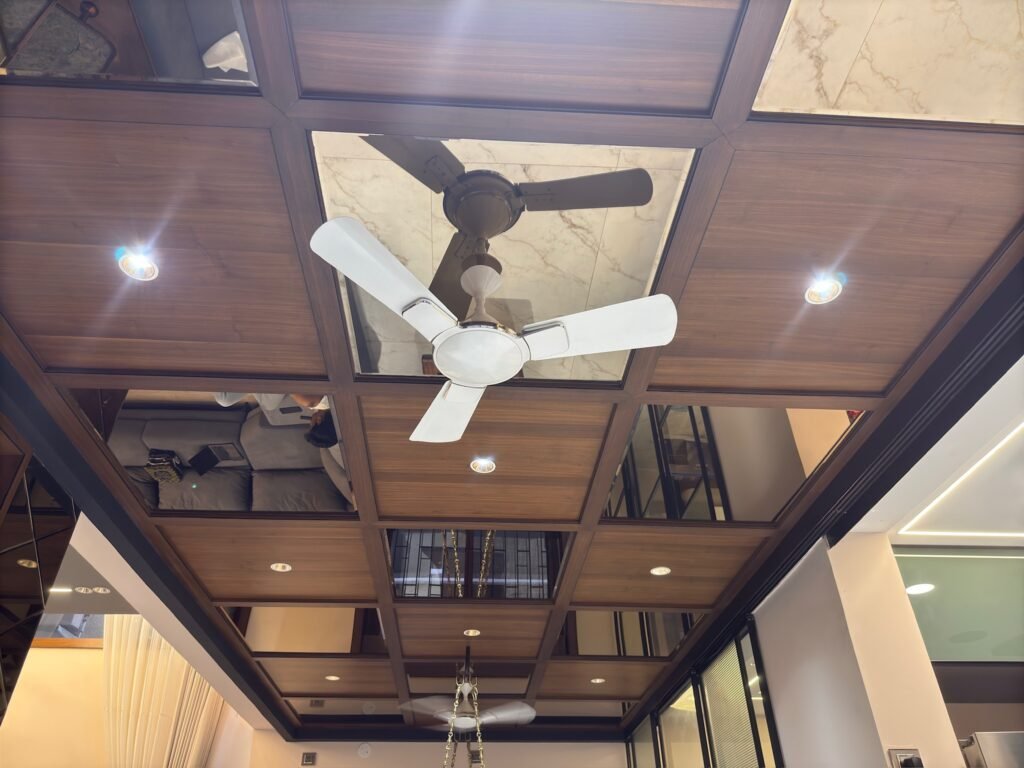
What makes wooden false ceiling designs different?
Wood changes the way a ceiling feels.
A plain white or gypsum ceiling can visually recede into the background. Wood does the opposite. It introduces grain, texture and a warmer visual weight, so even a relatively simple ceiling treatment can become an important part of the room.
That is why wooden false ceiling designs work particularly well when the rest of the interior already uses natural or warm finishes.
The important part is restraint. A wooden ceiling does not need to cover the entire ceiling to make an impact. A framed panel, linear slats, a recessed section or a wood accent combined with a plain ceiling can often achieve the intended effect with better visual balance.
What types of wooden false ceilings can you use?
Not every ceiling that looks like wood is made from solid timber. Before choosing a design, understand what is actually being specified.
Solid wood ceiling
Solid timber gives you genuine wood grain and a natural material presence. It can create a distinctive architectural finish, but wood is hygroscopic: it responds to changes in surrounding moisture and can expand or contract as conditions change. Proper material selection, finishing, acclimatisation and installation therefore matter.
Solid wood also needs more careful detailing because the ceiling is a large, visible surface where movement or poor joint treatment can become noticeable.
Veneer or engineered wood panels
Veneer can provide the appearance of natural wood while being used as part of an engineered panel system.
This can be useful when you want the character of a timber finish without specifying solid timber throughout the ceiling.
The substrate, edge detailing, finish and framing still need to be appropriate for ceiling use. The word “wooden” by itself does not tell you enough about how the ceiling will perform.
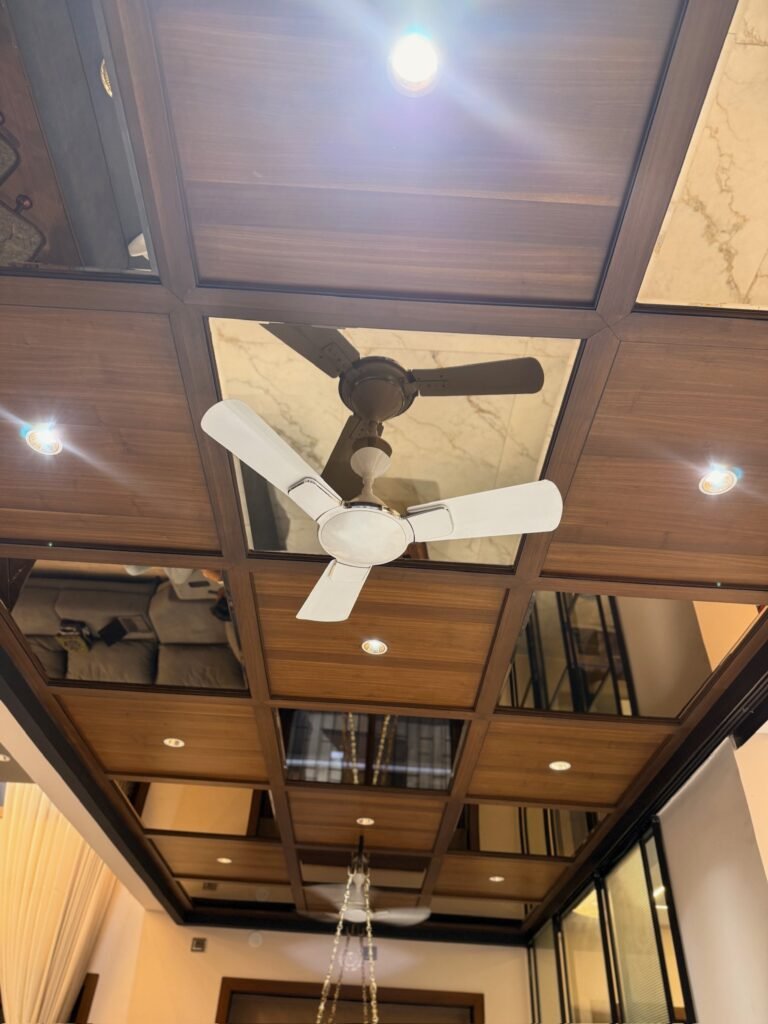
Wood-finish ceiling panels
Another option is a manufactured panel designed to reproduce the appearance of wood.
These can provide a consistent finish and may be easier to maintain than natural wood, depending on the specific product and its installation system.
This distinction is important when comparing wooden false ceiling designs. Two ceilings can look almost identical in photographs while having very different material properties and maintenance requirements.
Which wooden false ceiling designs work well in modern homes?
There is no universal answer.
The better choice depends on what you want the ceiling to do.
Consideration | Real wood / veneer | Wood-finish panel |
Visual character | Natural grain and variation | More consistent appearance |
Material behaviour | Requires attention to moisture and movement | Depends on panel construction |
Maintenance | Finish and material need care | Often simpler, depending on product |
Design flexibility | Strong for custom detailing | Strong for repeatable panel systems |
Visual warmth | Naturally high | Can reproduce a wood appearance |
Best use | Feature areas where material character matters | Areas where consistency and practicality are priorities |
The key is not to choose based only on the photograph. Ask what the actual substrate is, how it is finished, how it is supported and where it is suitable.
Which wooden false ceiling designs work well in modern homes?
1. Linear wooden slat ceiling
Long, parallel wooden slats create rhythm without requiring a complicated geometric ceiling.
They can work particularly well over a dining area, passage, living zone or selected portion of a larger room.
The spacing matters. If the slats are too dense, the ceiling can start to feel visually heavy. If they are too widely spaced, the feature may lose its intended continuity.
2. Wood and white ceiling combination
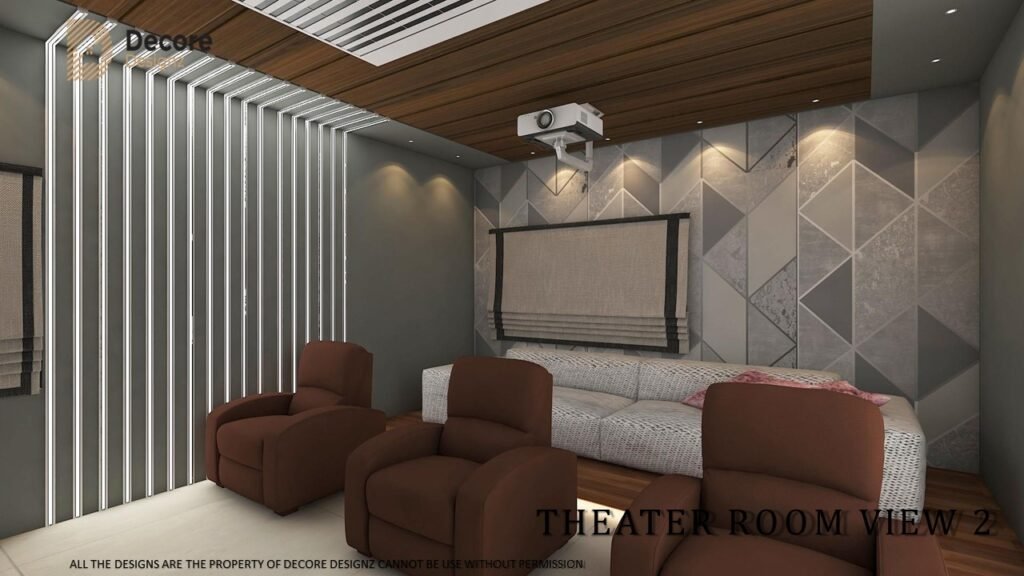
One of the easiest ways to use wood without making the room feel dark is to combine a wood section with a white or light neutral ceiling.
The wood provides warmth while the lighter ceiling keeps the overall composition visually open.
This approach is particularly useful in apartments where the available ceiling height and natural light need to be considered carefully.
3. Wooden tray ceiling
A recessed or framed wooden panel can create a defined centre without covering the entire ceiling.
It works well when the furniture arrangement gives you a clear zone to emphasise.
For example, a dining table or seating arrangement can become the visual reference point for the ceiling feature rather than placing a decorative shape randomly in the room.
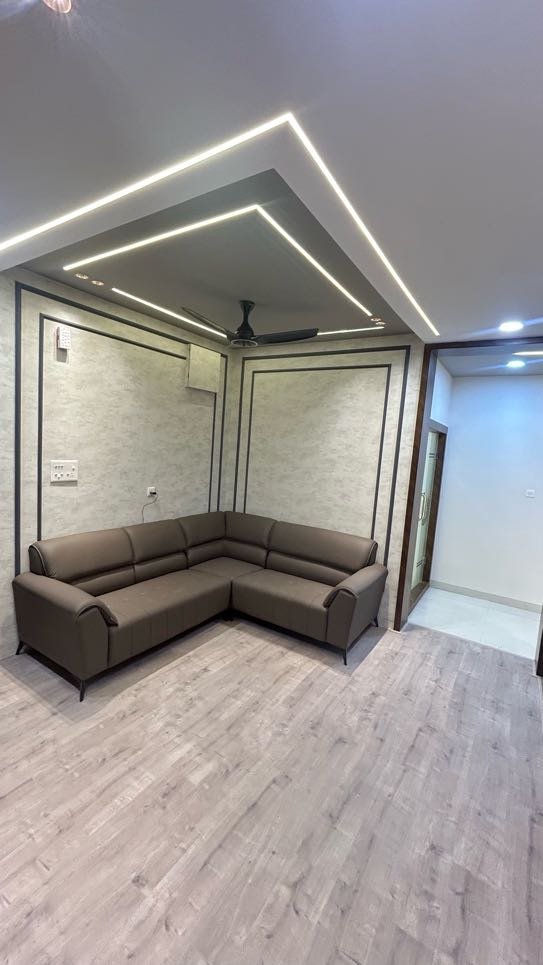
4. Wooden accent with gypsum
Wood does not have to compete with gypsum.
A simple gypsum ceiling can provide the main surface while a smaller wood or wood-finish section introduces warmth.
This combination is useful when you want a contemporary ceiling but do not want the entire surface to become a timber feature.
Decore Designz’s published residential work in HITEC City documents ambient ceiling lighting as part of the wider interior scheme. The project page does not specify a wooden ceiling, so it should not be presented as one; the useful takeaway is that ceiling treatment and lighting need to be planned together rather than separately.
5. Wooden ceiling with concealed lighting
Wood and concealed lighting can work particularly well together.
A recessed LED strip can wash light across the edge of a wooden feature, while the main room lighting handles functional illumination.
The important point is to decide the lighting positions before the ceiling is fabricated. The electrical layout, access requirements and panel detailing should all be considered together.
6. Wooden ceiling continuing into wall panelling
A ceiling feature can visually connect with a timber or wood-finish wall panel.
For example, the same finish can move from part of the ceiling down onto a TV wall or another architectural element.
This creates continuity, but it should be used selectively. Covering every adjacent surface in the same wood finish can make the room feel enclosed.
Where do wooden false ceilings work best?
Wooden false ceiling designs are generally easier to control in dry interior spaces where moisture exposure is limited.
Living rooms
The living room is one of the strongest applications because the ceiling can become part of the overall furniture, wall and lighting composition.
A wooden panel above the seating or dining zone can define the space without requiring an elaborate ceiling throughout.
Bedrooms
Wood can make a bedroom feel warmer and less stark.
A wood-and-white ceiling or a smaller wooden panel can work especially well with neutral wardrobes, upholstered furniture and warm lighting.
Decore Designz’s published bedroom false-ceiling guidance also uses wooden accents as a way of introducing warmth without making the complete ceiling visually heavy.
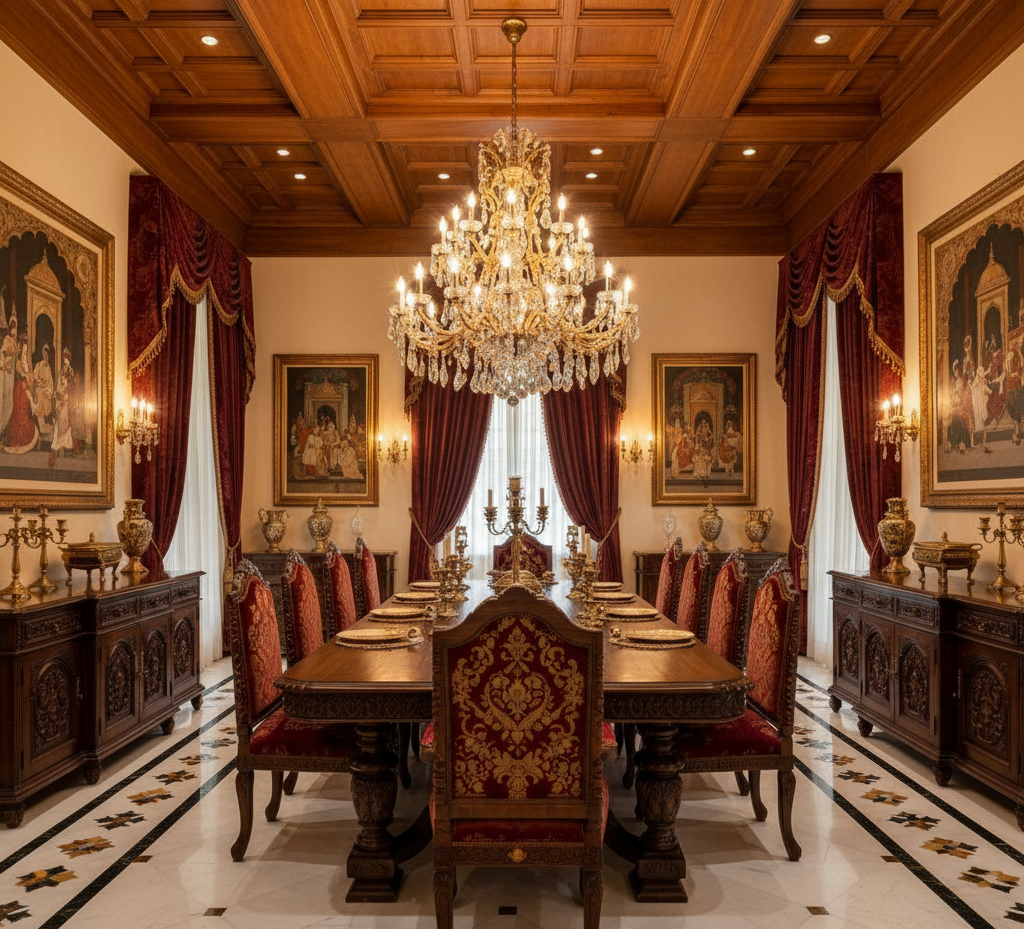
Dining areas
A wooden ceiling feature can help visually mark the dining zone in an open-plan home.
This is particularly useful when the living and dining areas share one larger ceiling plane.
Passages and transition spaces
A narrow wooden ceiling element can add direction and visual continuity to a passage without requiring a large decorative installation.
Can you use a wooden false ceiling in a kitchen or bathroom?
This requires more caution.
Wood products respond to environmental moisture, and the suitability of a particular panel depends on its construction, finish and specified application. Manufacturer installation guidance for wood ceiling systems commonly requires controlled site conditions and acclimatisation before installation.
For that reason, do not assume that a wood-look ceiling material is automatically suitable for every moisture-prone area.
In kitchens, consider the position of cooking steam, ventilation and the distance from wet areas.
Bathrooms require an even more careful material decision. A decorative wood appearance may be possible with a moisture-suitable manufactured panel, but natural wood should not be specified simply because it looks good in an inspiration photograph.
If the space has significant moisture exposure, the material should be selected for that condition first and appearance second.
What should you check before choosing a wooden false ceiling?
1. What is the actual material?
Ask whether it is:
- Solid timber
- Veneer
- Engineered wood
- MDF or another board with a wood finish
- Metal or another panel with a wood-look finish
“Wooden ceiling” is a design description, not a complete material specification.
2. How will it react to the room conditions?
Wood products can respond to changes in moisture and temperature. Installation guidance for wood ceiling products therefore places importance on acclimatisation and stable indoor conditions.
This is especially relevant in Hyderabad homes where the ceiling may experience seasonal changes in humidity and air-conditioning conditions.
3. How much ceiling height can you give up?
A wooden feature still needs a suitable support and fixing arrangement.
Do not finalise the design only from a front-facing photograph. Check the actual slab-to-floor height, service requirements, lighting depth and fan position.
4. How will the ceiling be cleaned?
Dust accumulates differently on flat panels, grooves and slatted ceilings.
A heavily grooved design can require more attention than a smooth panel. If maintenance needs to be simple, the detailing should reflect that from the beginning.
5. What happens around lights and services?
Downlights, AC vents, wiring and other ceiling services need coordinated openings.
Randomly cutting through a carefully arranged wood pattern later can damage the visual balance of the design.
What are the common mistakes with wooden false ceiling designs?
Using real wood simply because it looks premium.
Material selection should follow the room’s conditions and the intended maintenance level.
Covering the entire ceiling unnecessarily.
A smaller wooden feature can sometimes create more impact than a fully covered ceiling.
Ignoring moisture exposure.
Wood and wood-based materials are not interchangeable, and not every product is suitable for every room.
Choosing the wood colour separately from the furniture.
The ceiling should relate to flooring, wardrobes, wall panels, doors and furniture finishes.
Planning lighting after the ceiling design.
The lighting layout should be developed with the ceiling rather than cut into it afterwards.
Copying an inspiration image without checking ceiling height.
A design that works in a large villa may feel crowded in an apartment with less available height.
Does a wooden false ceiling suit every interior style?
No.
Wood works particularly well with contemporary, modern, minimalist, natural and warm interior schemes. It can also be used in more traditional interiors, but the profile, grain, colour and detailing need to match the overall design language.
The important thing is continuity.
If the home already uses walnut-toned furniture, beige upholstery and natural textures, a carefully selected wood ceiling can strengthen that palette.
If the rest of the home is highly glossy, cool-toned and minimal, a dark timber ceiling may introduce too much visual weight unless it is used selectively.
How should you choose the right wooden false ceiling design?
Start with the room rather than the ceiling photograph.
First check the available height, furniture layout, lighting requirements and services. Then decide whether the ceiling needs to be a major feature or a supporting element.
After that, choose the material.
For a natural timber appearance, compare solid wood, veneer and engineered options. If maintenance and moisture resistance are bigger concerns, investigate suitable wood-finish panel systems instead.
Finally, coordinate the ceiling with the rest of the interior.
A wooden false ceiling should not look like an object attached to an otherwise unrelated room. Its colour, scale, lighting and detailing should connect with the furniture, walls and materials around it.
Final Takeaway
The best wooden false ceiling designs are not simply the ones with the most wood.
They are the ones where material, proportion, lighting, ceiling height and the rest of the interior work together.
Use real wood when its natural character is genuinely part of the design objective. Consider veneer, engineered panels or wood-finish systems when consistency, maintenance or environmental conditions make them more appropriate.
For a Hyderabad home, the ceiling should be designed around the way the room is actually used—not copied from an inspiration image.
If you are planning a complete home interior, Decore Designz Studio can coordinate the false ceiling with lighting, furniture, wardrobes, kitchen planning, materials and execution as part of the wider interior design process. Explore our interior design services in Hyderabad or review our interior design projects in Hyderabad before discussing your requirements.
Frequently Asked Questions
Are wooden false ceilings good for homes?
Yes, wooden false ceilings can work well in homes when the material, detailing and installation are appropriate for the room. They are particularly effective when warmth and natural texture are important to the overall interior.
What is the best wood for a false ceiling?
There is no single best wood for every ceiling. The appropriate choice depends on the intended appearance, substrate, environmental conditions, finishing system, maintenance requirements and installation method.
Are wooden false ceilings suitable for Hyderabad?
They can be suitable for Hyderabad homes, particularly in controlled interior spaces, but material selection should account for humidity and seasonal environmental changes. Natural wood and wood-based panels can respond to moisture, so the exact product and installation method matter.
Is a wooden false ceiling better than gypsum?
Neither is automatically better. Gypsum is useful for clean, painted ceiling forms, while wood introduces natural texture and warmth. The right choice depends on the design, room conditions, ceiling height, lighting and maintenance expectations.
Can I combine wood with a gypsum false ceiling?
Yes. Combining a wooden accent with a gypsum ceiling can create contrast while keeping most of the ceiling visually light. This is often more controlled than using wood across the entire ceiling.
Can wooden false ceilings be used in bedrooms?
Yes. Bedrooms can be a good application because wood can introduce warmth and pair well with neutral finishes and softer lighting. A smaller wood accent is often enough to create the intended effect.
How do I maintain a wooden false ceiling?
Maintenance depends on the actual material and finish. Smooth surfaces are generally easier to dust than deeply grooved or slatted designs. Follow the material manufacturer’s cleaning and finishing instructions rather than treating every wood-look panel as natural timber.