

Green Bedroom Design Ideas
Green works exceptionally well in bedrooms because it can bring colour into the room without making the space feel visually aggressive. From soft sage and muted olive to deeper forest green, the right shade can create a bedroom that feels calm, warm and sophisticated. The key is not simply choosing green paint—it is deciding where the colour belongs and what materials, lighting and furniture should support it.
If you are looking for bedroom designs green enough to feel distinctive but still comfortable for everyday living, start with the room’s natural light, size, furniture and the mood you want to create.
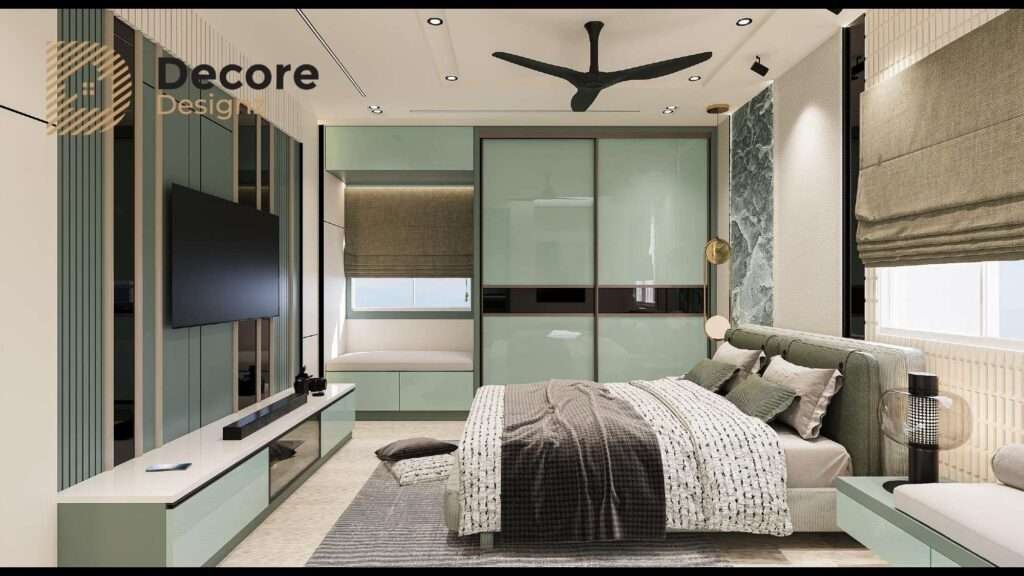
Why does green work so well in bedroom interiors?
Green sits naturally between warm and cool visual tones, which gives it more flexibility than many stronger colours.
A pale green can make a compact bedroom feel lighter. A muted olive can create a warmer, more mature atmosphere. A deep forest or bottle green can add drama, particularly when used on one wall rather than across the entire room.
But green should not be selected in isolation.
The same shade can look completely different beside white laminate, warm wood, beige upholstery or cool grey flooring. Lighting changes it again. This is why good green bedroom design starts with the entire material palette rather than a paint-card decision.
For a broader understanding of how bedroom colours work together, it is useful to explore the bedroom interior design approach separately rather than treating green as a standalone decoration.
Which green shades work best for bedrooms?
There is no single “best” green. The right shade depends on the amount of natural light, room size and the other finishes already planned.
1. Sage green for a soft bedroom
Sage is one of the easiest greens to use in a bedroom.
Its muted, greyed quality works particularly well with:
- Warm white
- Beige
- Light oak or natural wood
- Cream upholstery
- Soft grey
- Brushed-metal accents
Sage green is a good choice when you want colour without making the bedroom feel dark.
It works especially well in contemporary apartments where the room needs to remain visually light.
2. Olive green for a warm, sophisticated look
Olive green has more depth and warmth than sage.
It works particularly well with natural wood, beige, taupe, cream and darker brown finishes. It can also make a bedroom feel more layered without relying on excessive decoration.
This is a useful direction for homeowners who want bedroom designs green in colour but not obviously “green” in appearance.
Decore Designz has used muted olive green in a luxury bedroom project alongside warm beige and cream, taupe, darker brown, natural wood tones and selective darker accents. The important lesson is the balance: green was part of a broader earthy palette rather than being used everywhere.
3. Forest green for a dramatic bedroom
Deep forest green can create a strong bedroom statement.
It works particularly well when used on:
- The bed-back wall
- A textured feature wall
- Built-in cabinetry
- Selected upholstery
- Curtains or soft furnishings
However, using a very dark green across every wall can make a smaller bedroom feel enclosed.
If the room receives limited daylight, use the darker shade selectively and compensate with lighter bedding, ceiling finishes and layered lighting.
4. Pale green for smaller bedrooms
Very light green can work well when the objective is to introduce colour without visually reducing the room.
Pair it with lighter flooring, simple furniture and uncluttered walls. The result can feel fresher than an all-white bedroom while retaining the same sense of openness.
What colours go well with green in a bedroom?
Green becomes easier to work with when you treat it as one component of the palette.
Green | Supporting colours | Overall effect |
Sage green | Cream, beige, light wood | Soft and relaxed |
Olive green | Taupe, brown, natural wood | Warm and sophisticated |
Forest green | Off-white, walnut, brass | Dramatic and premium |
Pale green | White, light oak, beige | Fresh and airy |
Green-grey | Grey, cream, charcoal | Contemporary and restrained |
Moss green | Terracotta, tan, wood | Earthy and organic |
If you are planning the entire room, do not stop at wall colour. The same palette should be considered across the bed, wardrobe, flooring, curtains, lighting and smaller furniture pieces.
Should you paint the entire bedroom green?
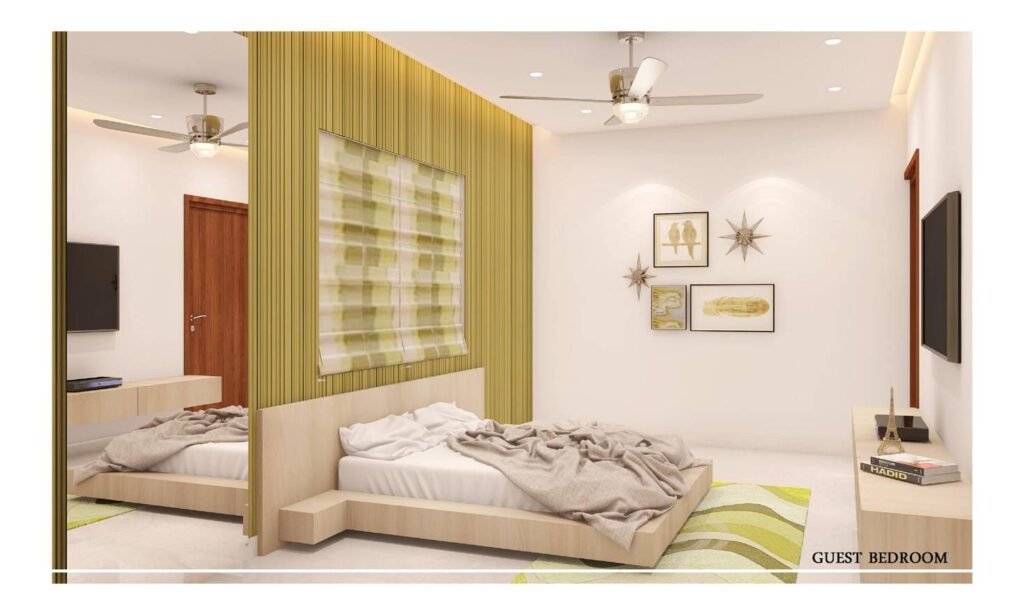
Usually, no.
A green feature wall is often more effective than four green walls, particularly when the bedroom already contains substantial wardrobes or custom furniture.
The wall behind the bed is the obvious location because it naturally acts as the visual anchor of the room.
For example, a muted olive or forest green behind an upholstered beige bed can create enough contrast without requiring additional decorative elements.
Another option is to keep the walls neutral and introduce green through the bed upholstery, curtains, cushions, artwork or a single furniture element.
This approach is easier to modify later and prevents the room from becoming overly dependent on one colour.
How can you create a modern green bedroom?
Modern green bedroom design is less about adding more green and more about controlling the number of finishes.
A practical combination could include:
Green feature wall + warm wood + neutral upholstery + simple lighting + clean storage
The wardrobe should not compete with the feature wall. If the green wall is already strong, a quieter wardrobe finish can create better visual balance.
Similarly, avoid combining a strong green wall with too many decorative wall panels, patterned wallpaper, colourful bedding and multiple contrasting finishes. The room quickly becomes busy.
In a well-planned bedroom, each element has a job.
The bed establishes the focal point.
The wardrobe handles storage.
Lighting establishes mood.
The wall treatment creates visual character.
The smaller furniture supports everyday use.
That is more effective than decorating every available surface.
What materials work best with green bedrooms?
Green is particularly compatible with natural-looking materials.
Natural wood
Wood and green are an obvious combination because both have an organic visual quality. Light wood keeps the room bright, while walnut and darker wood create a richer appearance.
Upholstery
Beige, cream, taupe and muted grey upholstery can soften stronger greens.
An upholstered bed can also prevent a deep green feature wall from feeling too hard or flat.
Matte finishes
Matte green surfaces generally look more sophisticated in bedrooms than highly reflective finishes. They absorb light rather than producing strong reflections.
Textured surfaces
If the green is being used on a feature wall, texture can add depth without introducing another colour.
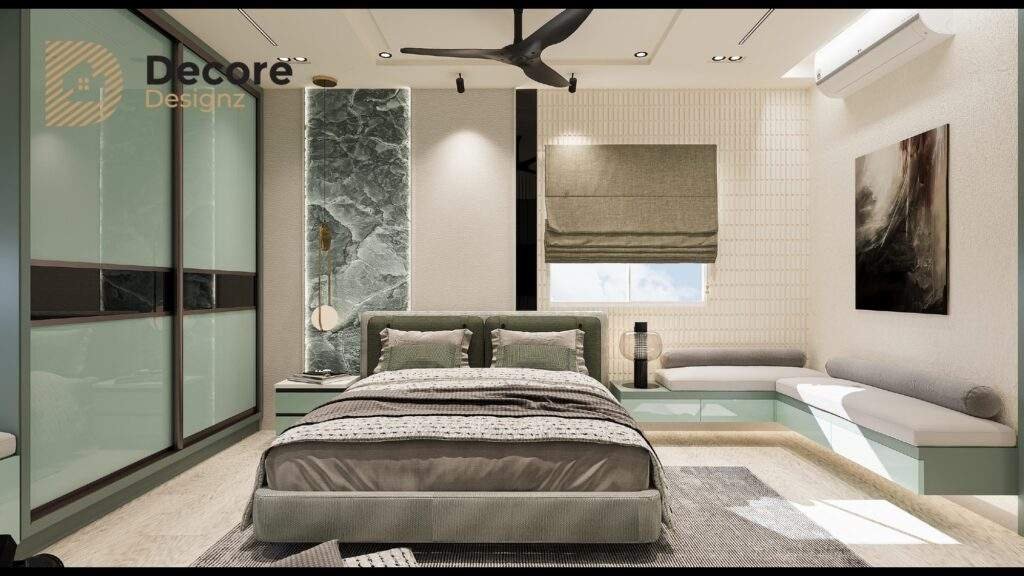
Fluted panels, subtle textured finishes or carefully selected wallpaper can work, provided they support the overall palette rather than becoming the main attraction.
If you want to explore how wall treatments can be used more deliberately, Decore Designz’s bedroom wall décor ideas provide a useful complementary direction.
How should lighting be planned for a green bedroom?
Lighting can completely change how green appears.
A shade that looks soft during daylight can become much darker under poor artificial lighting.
Use more than one lighting layer where possible:
- General ceiling lighting for overall illumination
- Bedside lighting for reading
- Soft ambient lighting for evenings
- Accent lighting to highlight the bed wall or texture
Warm lighting generally works well with olive, forest and earthy green palettes because it reinforces their warmer qualities.
This is especially important when the room contains both green and wood. Poorly positioned cool lighting can make the combination feel flatter and less inviting.
How do you use green in a small bedroom?
Small bedrooms need restraint.
Instead of covering every surface in green, use it as an accent and allow lighter finishes to occupy more visual space.
Three practical approaches are:
- Green bed wall: Keep the remaining walls light.
- Green upholstery: Use a neutral wall and introduce green through the bed or curtains.
- Green accessories: Keep the permanent finishes neutral and use bedding, cushions or artwork for colour.
Storage also matters. A bedroom can look much smaller when wardrobes and furniture interrupt too much of the wall surface.
This is why colour planning should happen alongside furniture and storage planning rather than after the layout is fixed. Decore Designz approaches bedroom interiors as a combination of space planning, storage, furniture, lighting and finishes rather than treating colour as a separate decorative decision.
What are the biggest mistakes in green bedroom design?
Using too many shades of green
Pick one dominant green and, if necessary, one closely related supporting shade. Multiple unrelated greens can make the room look accidental.
Ignoring natural light
A dark green in a naturally dark bedroom will behave very differently from the same colour in a bright room.
Matching everything to the green
Green walls, green wardrobe, green curtains, green bedding and green furniture usually create too much of one visual note.
Contrast is necessary.
Choosing colour before the materials
Paint should not be selected before you know what the flooring, wardrobe finish, upholstery and lighting will look like.
Following a reference image too literally
A bedroom photograph from Pinterest or Instagram may have completely different dimensions, window positions and natural light from your room.
The better approach is to borrow the design principle, not copy the room.
Which green bedroom style is right for you?
The easiest way to narrow the choice is to start with the atmosphere you want.
For calm and minimal: sage green + cream + light wood.
For warm and premium: olive green + beige + walnut.
For dramatic: forest green + off-white + darker wood.
For fresh and light: pale green + white + light oak.
For earthy: moss green + tan + terracotta + natural textures.
The colour is only the starting point. The final result depends on how the bed, storage, furniture, lighting and finishes are brought together.
For homeowners planning a complete bedroom rather than simply changing the wall colour, Decore Designz can help develop the bedroom interior design around the actual room, storage requirements and way the space will be used.
Planning a Complete Home Interior?
The best green bedroom design is not the one with the most green. It is the one where the colour, furniture, storage, lighting and materials work together without competing for attention.
Start with how you want the bedroom to feel. Then choose the green, build the supporting palette and plan the practical elements around it.
That is how an inspirational bedroom image becomes a room that actually works every day.
Frequently Asked Questions
Is green a good colour for a bedroom?
Yes. Green can work very well in bedrooms because muted greens can create a calm, natural atmosphere while deeper greens can provide contrast and visual depth. The right shade depends on the room’s light, size and surrounding materials.
Which green is best for a modern bedroom?
Sage, muted olive and green-grey are particularly versatile for modern bedrooms. Deeper forest green can also work well when used selectively as a feature colour.
What colour goes best with a green bedroom?
Cream, beige, warm white, natural wood and taupe are reliable combinations. The best supporting colour depends on the specific green and the mood you want to create.
Is dark green suitable for a small bedroom?
Yes, but it should generally be used selectively. A dark green bed wall can create depth without making every surface feel heavy. Good lighting and lighter surrounding finishes are important.
Can green and wood be used together in a bedroom?
Yes. Green and wood are naturally compatible, particularly when the green is muted and the wood has a warm natural tone. The combination can create a more grounded and comfortable bedroom.
Should the wardrobe match the green wall?
Not necessarily. A quieter wardrobe finish often creates better balance when the bed wall is already strong. The wardrobe should be planned according to storage requirements as well as appearance.