

Types of Plywood for Interiors: MR, BWR, BWP and Marine Grade Explained
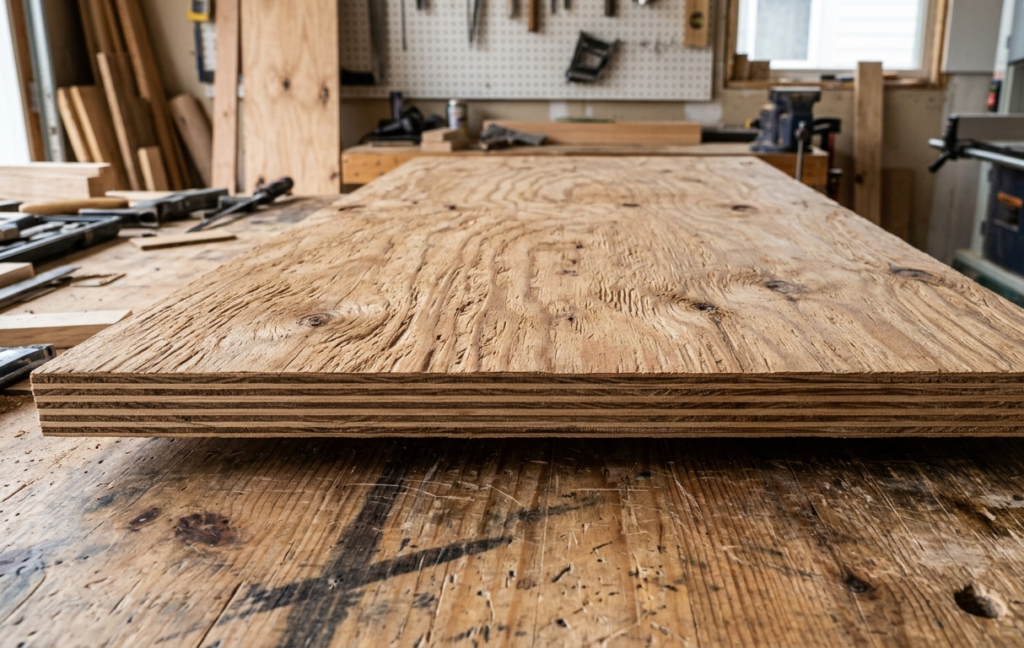
Choosing plywood for home interiors is not just about selecting a brand. The grade determines how well the adhesive bond withstands moisture, while core quality, thickness and manufacturing influence how the board performs in furniture.
MR plywood is generally suited to dry indoor applications, BWR offers greater moisture resistance, and BWP is designed for more demanding water exposure. Marine plywood follows a separate product specification. Understanding these differences helps homeowners choose suitable materials for wardrobes, kitchen cabinets, bathroom vanities and other interior furniture.
What are the different types of plywood used in interiors?
The main plywood grades homeowners encounter in India are MR (Moisture Resistant), BWR (Boiling Water Resistant) and BWP (Boiling Water Proof). Marine plywood is another category manufactured to a separate specification.
Although sellers sometimes use these terms interchangeably, they do not mean exactly the same thing. The grade primarily relates to the water resistance of the adhesive bond, not whether the entire sheet or finished cabinet is waterproof under every condition.
Plywood type | Properties and typical applications |
MR grade plywood | Intended for general indoor use in relatively dry conditions. Commonly used for wardrobes, beds, study tables and TV units. |
BWR grade plywood | Offers greater water resistance than MR. Often considered for kitchen cabinets and utility furniture exposed to higher humidity or occasional splashes. |
BWP grade plywood | Designed to meet more demanding boiling-water-resistance requirements. Can be considered for sink-base cabinets and other moisture-prone applications when properly specified. |
Marine plywood | Manufactured to a separate marine plywood specification. May be appropriate for demanding wet-area joinery where its additional requirements are justified. |
These are general recommendations, not guarantees. Actual performance depends on product certification, board construction, installation, edge protection and exposure conditions.
1. What is MR grade plywood, and where should you use it?
MR stands for Moisture Resistant. Commonly sold as commercial plywood, it is intended for general interior applications where prolonged water exposure is not expected.
MR plywood is often suitable for:
- Bedroom wardrobes in dry locations
- Bed frames and headboards
- Study tables and bookshelves
- TV units and living-room storage
- Decorative wall panelling in dry interiors
Its advantage is that a higher moisture-resistance grade is not necessary for every piece of furniture. Selecting materials according to actual use can prevent unnecessary upgrades without compromising the intended application.
However, moisture resistant does not mean waterproof. MR plywood should not be treated as the default choice for sink cabinets, regularly wet bathroom furniture or locations where leaks may go unnoticed.
Designer’s recommendation: MR plywood may be appropriate for a wardrobe in a dry bedroom. If the wardrobe sits against a damp wall or near a bathroom, investigate the moisture source and ventilation before choosing the grade.
For homeowners comparing board materials for furniture, our guide to plywood vs MDF for home interiors explains how the two materials differ in practical applications.
2. What is BWR plywood, and how is it different from MR?
BWR stands for Boiling Water Resistant. Compared with MR, BWR plywood is designed to provide a more water-resistant adhesive bond.
It can be appropriate for furniture exposed to higher humidity, occasional splashes or moisture associated with everyday kitchen use.
Common applications include:
- Kitchen wall and tall cabinets
- Kitchen storage away from direct water contact
- Utility-area cabinets in suitably protected locations
- Furniture installed in areas with elevated humidity
BWR does not guarantee protection against standing water, leaking plumbing or repeated soaking. Water can still enter through exposed edges, poorly sealed cut-outs, joints or damaged laminate.
The location of each kitchen cabinet matters. An overhead cabinet exposed mainly to cooking humidity does not face the same conditions as a cabinet immediately below a sink.
For a broader comparison of carcass materials, finishes and other kitchen components, see our modular kitchen materials guide.
3. What is BWP plywood, and when is it worth choosing?
BWP stands for Boiling Water Proof. It describes a plywood grade intended to meet more demanding water-resistance requirements than ordinary moisture-resistant plywood.
It is worth considering for components where water exposure is a significant design concern, including:
- Kitchen sink-base cabinets
- Cabinets close to plumbing connections
- Bathroom vanity carcasses, when suitable for the application
- Utility storage exposed to frequent splashes
BWP is not automatically the best choice for every cabinet. Its value comes from matching its performance to the conditions the board will face.
For example, a sink-base cabinet has a greater risk of water damage than a wardrobe in a dry bedroom. Specifying a suitable grade for the sink base makes more sense than upgrading every board in the home indiscriminately.
Even BWP plywood requires correct installation. Sealed edges, protected plumbing cut-outs, suitable hardware and prompt attention to leaks remain essential.
One important distinction: under the revised Indian standard for general-purpose plywood, BWP is a recognised grade. Therefore, do not assume that every product labelled BWP is marine plywood. Check the standard and certification printed on the actual product.
4. What is marine plywood, and is it better than BWP?
Marine plywood is manufactured to a separate specification for marine plywood. In India, the relevant standard is IS 710, while general-purpose plywood is covered by IS 303.
Marine plywood is designed for demanding moisture-related applications, but the label does not mean the complete furniture unit is waterproof. The board, edges, joints, surface finish and installation must work together.
Marine plywood may be worth evaluating for:
- Bathroom vanity cabinets exposed to frequent splashes
- Utility units exposed to challenging moisture conditions
- Joinery where the project specification requires marine plywood
- Other demanding applications where the additional specification is justified
It is not automatically necessary for every kitchen, wardrobe or bedroom unit. A dry wardrobe does not become more durable simply because its plywood has a higher water-resistance grade.
What is the difference between BWP and marine plywood?
The key distinction is the applicable product standard and its requirements, rather than the marketing name alone.
Comparison point | Explanation |
BWP plywood | A boiling-water-proof grade. General-purpose plywood under IS 303 can include this grade. |
Marine plywood | Plywood manufactured to the marine plywood specification under IS 710. |
How to verify | Check the applicable Indian Standard, product markings and supporting certification. |
Interior suitability | Choose according to the component, exposure conditions and project specification. |
Common misconception | BWP and marine plywood should not automatically be treated as interchangeable labels. |
Do not rely on a salesperson’s verbal assurance alone. Ask to see the product markings and supporting certification. The BIS product manual for marine plywood provides a reference for understanding the applicable product specification.
5. Which plywood grade should you use in each room?
The best plywood for home interiors is the grade that suits the exposure conditions of each component.
Interior application | Recommended starting point |
Bedroom wardrobe | MR plywood, provided the area is dry and properly ventilated. |
Bed, study table or TV unit | MR plywood, subject to the furniture’s structural requirements. |
Kitchen wall cabinets | BWR plywood where humidity and occasional moisture are concerns. |
Kitchen base cabinets away from the sink | BWR or a higher specified grade, depending on exposure. |
Kitchen sink-base cabinet | BWP or suitable marine plywood, with properly sealed edges and cut-outs. |
Bathroom vanity | BWP or suitable marine plywood, subject to splash exposure and installation details. |
Utility storage | BWR or a higher specified grade, depending on leaks, drainage and dampness risks. |
These are practical starting points, not universal specifications. A board’s suitability may change with the building conditions, intended use and manufacturer’s certified application.
6. What should you check before buying plywood?
Choosing the grade is only one part of the decision. Two sheets sold under similar labels can differ in construction and quality.
Check the certification
Confirm the applicable Indian Standard and verify that the product’s certification and markings are genuine. Do not rely solely on a brand name or a seller’s claim.
Inspect the core
Look at the exposed edges for obvious gaps, uneven layers, poor bonding or visible defects. A moisture-resistant adhesive cannot compensate for a badly manufactured board.
Confirm the thickness and intended use
The required thickness depends on cabinet dimensions, load, span, fixing method and design. Do not select thickness by habit alone.
Check the edge treatment
Cut edges, plumbing openings and joints are vulnerable entry points for moisture. Specify suitable sealing and finishing details.
Review the complete installation
Countertop joints, sink plumbing, wall dampness and ventilation can affect the life of a cabinet as much as the plywood grade itself.
Ask for product documentation
Do not confuse a decorative finish or a claim such as “premium plywood” with proof of a particular grade. Request documentation that identifies the actual product and its intended application.
7. What do homeowners often overlook when selecting plywood?
A higher grade cannot solve every moisture problem.
A sink cabinet made from BWP plywood can still deteriorate if a plumbing leak remains unnoticed or water repeatedly enters through unsealed cut-outs. Similarly, a wardrobe made with MR plywood may fail prematurely if it is installed against a persistently damp wall.
Material selection should happen alongside the design and execution plan. The designer must consider where water can enter, how the unit will be cleaned, whether pipes need access and how exposed edges will be finished.
At Decore Designz Studio, material decisions should be evaluated against the intended use of the furniture and actual site conditions, rather than treating the most expensive grade as the universal answer.
Choosing plywood for your home
Plywood selection works best when it forms part of a complete interior specification. The grade, board quality, cabinet construction, hardware, finishes and installation details must all suit the way the home will be used.
If you are planning wardrobes, a modular kitchen or a full home interior, explore our guide to custom wardrobe design for Indian homes to understand how material choices support furniture design and execution.
For a home planned around your family’s needs, speak with Decore Designz Studio, an interior design firm operating in Hyderabad since 2014. We can help you evaluate materials, finishes and execution requirements for your project.
Discuss your home interior project: Contact Decore Designz Studio to enquire about a consultation and material specification
Frequently asked questions
Which plywood is best for home interiors?
MR is a practical option for dry-room furniture, BWR for applications requiring greater moisture resistance, and BWP or suitable marine plywood for components exposed to more demanding wet conditions. The best choice depends on the location and installation details.
Is commercial plywood the same as MR plywood?
Commercial plywood is commonly used as a market term for MR-grade plywood. Verify the actual grade and applicable standard rather than relying on the name alone.
Is BWR plywood waterproof?
No. BWR plywood is designed to resist water exposure better than MR plywood, but it should not be assumed to withstand continuous soaking or prevent all water damage.
Is BWP plywood the same as marine plywood?
No. BWP is a plywood grade, while marine plywood is covered by the separate IS 710 specification. Check the product certification to distinguish them.
Can MR plywood be used in a modular kitchen?
It may be suitable for components in genuinely dry conditions, but kitchen cabinets can face steam, cleaning water and potential leaks. Choose the grade according to each cabinet’s exposure rather than using MR throughout without assessment.
Does marine plywood need edge sealing?
Yes. Appropriate edge protection and installation detailing remain important. Marine-grade plywood does not make exposed joints, cut-outs, plumbing connections or the complete cabinet waterproof.
How can I identify genuine BWP or marine plywood?
Check the product markings, applicable Indian Standard, certification details and manufacturer documentation. Do not rely only on a label, verbal assurance or the seller’s description.