

Interior Materials for Hyderabad's Climate: What Survives Humidity, Monsoon and Termites
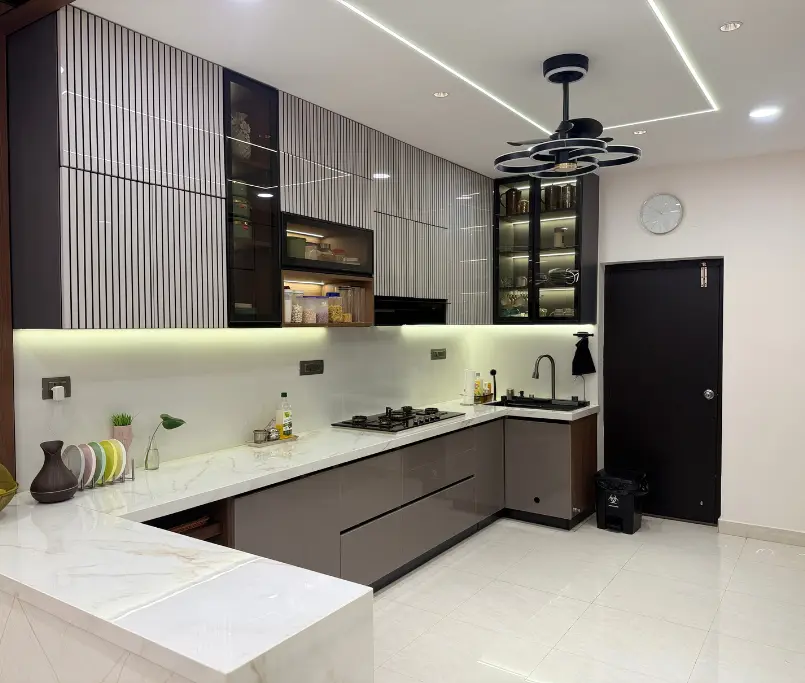
Hyderabad homes need interior materials that can handle more than everyday wear. Humidity, monsoon dampness, plumbing leaks, heat and termite activity can all affect how long cabinetry, furniture, flooring and finishes last. The best interior materials for a humid climate are not simply the most expensive or heavily marketed ones: they are materials selected for the location, exposure, installation method and maintenance they will actually face.
The practical rule is straightforward: control the source of moisture, specify the right grade of material, protect vulnerable edges and joints, and treat termite prevention as a building-level issue—not just a furniture choice.
What should you consider before choosing interior materials in Hyderabad?
Start with the conditions each part of the home will experience. A wardrobe in a dry bedroom does not face the same risks as a kitchen cabinet beside a sink or storage built against a wall with recurring dampness.
Four checks should guide material selection:
- Moisture exposure: Is the material near a sink, bathroom, utility area, balcony door or wall with a history of dampness?
- Termite risk: Is there evidence of termite activity, soil contact, untreated wood or vulnerable gaps around the building?
- Heat and sunlight: Will direct sunlight or heat affect the finish, adhesive, surface colour or stability?
- Cleaning and maintenance: Will the surface tolerate regular wiping, water splashes and the cleaning products used in the home?
Do not expect one material to solve every problem. A moisture-resistant board cannot repair a leaking pipe. A decorative laminate cannot make a poorly sealed edge waterproof. And termite-resistant claims do not replace proper inspection and treatment where an infestation exists.
Which materials work best in humid conditions?
Interior application | Material options to consider | Main precaution |
Wardrobe and storage carcasses | Appropriately graded plywood or another specified engineered board suited to the exposure | Protect exposed edges and keep the unit away from damp walls |
Cabinet shutters | Plywood or suitable engineered boards with a compatible finish | Seal edges, cut-outs and hardware openings properly |
Kitchen cabinets | Moisture-suitable board, durable surface finish and well-protected edges | Pay particular attention to the sink unit and plumbing access |
Shelves and drawer components | Plywood or engineered boards selected for the load and exposure | Prevent sagging, swelling and water entry at joints |
Flooring | A suitable tile or other flooring system selected for the room and substrate | Consider slip resistance, grout, drainage and water reaching the substrate |
Metal hardware and fittings | Corrosion-appropriate hardware and finishes | Match the specification to moisture exposure and cleaning practices |
Wall finishes | Compatible paint or coating after the wall is dry and the cause of dampness is addressed | Do not paint over active seepage or recurring leakage |
These are starting points, not universal specifications. The correct choice depends on the product grade, quality, installation and the conditions at the site.
Is plywood or MDF better for Hyderabad’s humidity?
Neither material should be selected on name alone. Performance depends on grade, manufacturing quality, exposure and how the finished unit is constructed.
Plywood is made from bonded veneer layers. It is commonly considered for cabinetry and furniture where the design needs a board with good strength and screw-holding characteristics. However, ordinary plywood is not automatically waterproof or termite-proof. The grade and product documentation matter.
MDF is made from wood fibres compressed with resin. Its smooth face can be useful for painted or routed shutters and decorative work. Standard MDF can swell or deteriorate when water enters its edges or remains on the board. Moisture-resistant MDF variants may be suitable for particular applications, but they should not be treated as waterproof.
Before choosing either, ask the supplier to identify the exact grade and intended use. For plywood, check the applicable Indian Standard and the manufacturer’s documentation rather than relying only on terms such as “premium” or “waterproof.”
For a closer board-by-board comparison, read Plywood vs MDF for Home Interiors. This climate guide covers the wider decision; that article should handle the detailed material comparison.
Which plywood grade should you use in a humid home?
Plywood grades are not interchangeable. The correct specification depends on how much moisture the board is expected to encounter.
- MR (moisture-resistant) plywood: Intended for general interior applications where the exposure is relatively limited. It should not be treated as a solution for persistent wetting.
- BWR (boiling-water-resistant) plywood: Designed for a higher level of water-resistance performance than standard MR grades. Its suitability still depends on the actual application and product specification.
- BWP or marine plywood: Often specified where higher water-resistance performance is required, but the label alone is not a guarantee against every form of damage. Verify the applicable standard, certification and intended use.
The Bureau of Indian Standards publishes specifications for general-purpose plywood under IS 303 and marine plywood under IS 710. Ask for the relevant documentation and verify the product marking instead of accepting a verbal claim. BIS: IS 303 · BIS standards information
Even a suitable grade can fail prematurely if water enters through unsealed edges, plumbing leaks remain unresolved or the board is installed against a persistently damp surface.
How can you protect interiors from termites?
There is no honest way to promise that a single board, polish or laminate will make a home completely termite-proof. Termite protection depends on the building, the source of infestation, the material specification and the treatment used.
Use this checklist before interior work begins:
- Inspect before covering. Look for mud tubes, damaged wood, discarded wings and other signs of activity. Do not cover suspicious areas with new panelling or cabinetry.
- Check moisture sources. Damp walls, leaking pipes and concealed wet areas need attention. Moisture is not the only cause of termites, but it can make affected areas easier to overlook and can damage interior materials independently.
- Ask about building-level protection. If termite activity is suspected, arrange an inspection by a qualified pest-management professional. Treatment may need to address entry routes and affected areas—not only the furniture.
- Verify treatment claims. Ask what treatment is proposed, where it will be applied and what documentation or warranty applies. Do not assume that a surface finish provides termite protection.
- Avoid concealing untreated damage. Replacing a visible panel without identifying the source can leave the underlying problem untouched.
Indian building standards include provisions for anti-termite measures. The correct response to an infestation depends on a site inspection and appropriate professional treatment; it is not simply a matter of buying “termite-proof” plywood.
What interior materials are suitable for kitchens and utility areas?
Kitchens and utility areas deserve stricter material selection because water can reach cabinet bases, edges, cut-outs and concealed joints. A durable surface finish helps with cleaning, but it does not compensate for a leaking sink trap or an unprotected board edge.
When planning kitchen cabinetry, confirm:
- The board grade is appropriate for the expected exposure.
- Exposed edges and cut-outs are sealed with a compatible system.
- Sink cabinets allow access to plumbing for inspection and repair.
- Hardware is suited to the moisture conditions.
- Water can be wiped away instead of collecting at the cabinet base.
- The finished unit is installed without trapping persistent dampness against a wall.
For the complete breakdown of cabinet materials and their trade-offs, see Modular Kitchen Materials: A Complete Guide.
What do homeowners often miss when choosing materials?
The weak point is often the installation, not the visible surface. A good board can still be damaged by a leaking pipe, exposed cut edge, poorly sealed joint or installation against a damp wall.
Before approving the material schedule, check these details:
- Wall condition: Resolve active seepage and plumbing leaks before fitting permanent cabinetry.
- Edge protection: Confirm how exposed edges, holes and joints will be sealed.
- Hardware quality: Hinges, channels and fittings should suit the expected use and exposure.
- Ventilation and access: Avoid designs that make plumbing leaks or termite activity impossible to inspect.
- Supplier documentation: Record the actual product, grade, standard and treatment rather than accepting a generic description.
- Maintenance expectations: Ask what cleaning methods and precautions the finished surface requires.
These details are less visible than a decorative finish, but they can have a greater effect on long-term performance.
How should you plan material selection before installation?
A reliable material decision follows the site conditions, not a showroom display.
First, inspect the room and identify water sources, damp patches, sunlight exposure and termite concerns. Next, select the material grade for each application and verify its documentation. Then agree on edge protection, hardware, installation clearances and access to plumbing. Finally, inspect delivered boards and finished work before vulnerable components are concealed.
If a wall is damp, pause the cabinetry work until the cause has been identified. If termites are suspected, get the site inspected before closing the area behind panels or wardrobes. If a product is marketed as waterproof or termite-proof, ask for the exact specification supporting that claim.
Decore Designz Studio approaches residential interiors as a combination of design decisions and execution details. The objective is not just to select an attractive surface; it is to choose materials that suit the home’s use and the conditions at the site.
Choose materials for the home you actually have
Hyderabad’s weather is only one part of the decision. Room use, plumbing, wall condition, product grade, installation quality and maintenance all affect how long interiors last.
Decore Designz Studio has been working in interior design since 2014, with an approach built around practical planning and real execution. If you are planning a home interior, discuss the site conditions and material specifications before finalising the design.
Explore premium interior design in Hyderabad and contact Decore Designz Studio to discuss your project and arrange a consultation.
Decore Designz Studio
Interior designer
Fourth Floor, Bhagyalaxmi Construction, KM Cube Building, 401, Ghousia Masjid Rd, Ramakrishnapur, Weaker Section Colony, Izzathnagar, HITEC City, Khanammet, Hyderabad, Telangana 500084
Phone: +91 96182 18055
Email: decoredesignzstudio@gmail.com
Frequently asked questions
What are the best interior materials for a humid climate?
The best option depends on the application. Appropriately graded plywood, suitable engineered boards, durable finishes, well-protected edges and moisture-appropriate hardware can all be part of a durable interior. No material can compensate for persistent leakage or poor installation.
Is waterproof plywood completely waterproof?
No. Water-resistance performance depends on the grade and product specification. Prolonged exposure, unsealed edges, damaged surfaces and poor installation can still cause problems. Verify the intended use and applicable standard before buying.
Does laminate make plywood termite-proof?
No. Laminate is a decorative surface finish, not a substitute for termite prevention or treatment. Termite protection must be considered at the building and material level.
Can MDF be used in Hyderabad homes?
Yes, in suitable applications, when the board grade and expected exposure are considered carefully. Standard MDF should not be assumed suitable for areas that may be repeatedly wetted. Moisture-resistant variants also have limits and must be used according to the manufacturer’s specifications.
What should I do if I find termites during renovation?
Stop work in the affected area and arrange an inspection by a qualified pest-management professional. Identify the extent and likely entry route before replacing panels or installing new cabinetry. Covering visible damage without addressing the infestation is not a reliable fix.
Should I install new interiors if a wall has seepage?
Not until the cause has been identified and addressed. Painting or covering a damp wall may hide the symptom while moisture continues to damage the finish, board or furniture behind it.