

Shutter and Surface Finishes: Laminate, Acrylic, PU, Veneer, Membrane and Glass Compared
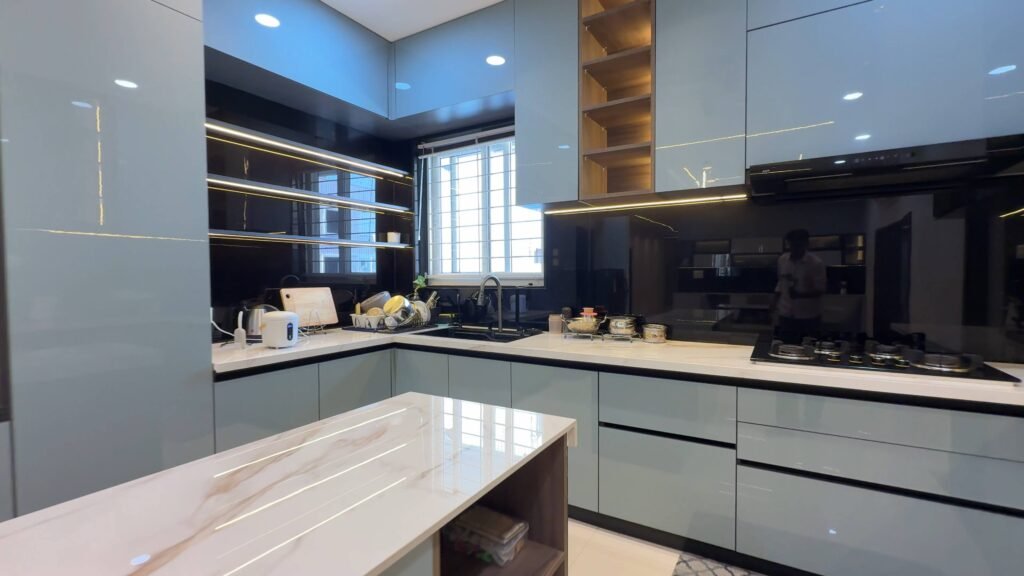
The finish on a wardrobe or kitchen shutter affects more than its appearance. It determines how the surface reflects light, how easily fingerprints show, how much maintenance it needs and how it responds to everyday use. Laminate, acrylic, PU, veneer, membrane and glass each have different strengths. The right choice depends on the furniture’s location, the look you want, the level of use and how much care you are prepared to give the surface.
What are the different types of wardrobe and shutter finishes?
A shutter is the visible front panel of a cabinet, wardrobe or storage unit. Its finish is the outer surface that gives it colour, texture, sheen and protection.
The six common options are not all made in the same way. Laminate and acrylic are typically supplied as surface materials; PU is a coating applied to a prepared surface; veneer is a thin layer of natural wood; membrane is a PVC film formed over a shutter; and glass is used as a separate visible panel or facing.
Finish | What it is | Typical visual character |
Laminate | Decorative sheet bonded to a substrate | Matte, textured, wood-look, stone-look or glossy |
Acrylic | High-gloss or matte decorative surface sheet | Smooth, clean and contemporary |
PU | Polyurethane coating applied to a prepared surface | Seamless painted appearance with varied sheen |
Veneer | Thin natural-wood layer applied to a substrate | Real wood grain and natural variation |
Membrane | PVC film pressed over a shaped shutter | Smooth or routed profiles, often with a continuous finish |
Glass | Glass panel used as a shutter facing or insert | Reflective, sleek or translucent depending on type |
The names alone do not tell you how durable a shutter will be. Substrate quality, edge treatment, application, hardware, installation and maintenance all influence the result.
1. Laminate finish: Is it the practical everyday choice?
Laminate is one of the most widely used finishes for wardrobes, kitchen cabinets and other built-in furniture. It is a decorative sheet bonded to a board surface, available in a broad range of colours, patterns and textures.
You can choose a restrained matte finish, a wood-grain texture, a stone-inspired pattern or a high-gloss surface. This flexibility makes laminate useful when several pieces of furniture need to work together visually.
Advantages
- Wide choice of colours, patterns and textures.
- Available in matte, textured and glossy options.
- Generally straightforward to clean with suitable products.
- Can work across wardrobes, kitchen shutters, study units and other cabinetry.
- Offers practical options for furniture used every day.
Limitations
- Damaged or chipped laminate can be difficult to repair invisibly.
- Poor edge finishing can allow moisture to affect the board underneath.
- Glossy surfaces may show fingerprints, smudges and scratches more clearly.
- The final result depends on the quality of the sheet, substrate and workmanship.
Where it works: Wardrobes, kitchen cabinets, utility storage, study units and other frequently used furniture.
For homeowners who want a finish that balances design flexibility with manageable maintenance, laminate is often a sensible starting point.
2. Acrylic finish: Does the high-gloss look justify the choice?
Acrylic finishes are known for their smooth, reflective appearance. High-gloss acrylic can make a cabinet front look crisp and contemporary, while matte acrylic offers a more subdued surface.
It is often selected for modern kitchens and wardrobes where a clean, uninterrupted appearance is important.
Advantages
- Smooth, refined surface.
- High-gloss options reflect light and create a bright appearance.
- Available in contemporary colours and selected matte finishes.
- Suitable for modern wardrobe and kitchen designs.
Limitations
- Fingerprints and smudges can be noticeable, particularly on darker glossy colours.
- Scratches may be visible depending on the colour and surface.
- Repairs to damaged areas can be difficult to blend.
- Edge quality and substrate preparation matter to the final appearance.
Where it works: Modern wardrobes, kitchen shutters, display units and selected feature cabinets.
Acrylic is not automatically the best finish because it looks premium. If the furniture will be handled frequently, consider how visible fingerprints and surface marks will be in daily use.
3. PU finish: When should you choose a painted surface?
PU, short for polyurethane, is a coating applied to a prepared surface. Unlike a decorative sheet, it creates a painted finish. It can be specified in different colours and sheen levels, including matte, satin and gloss.
One of its main design advantages is the ability to create a consistent painted appearance across cabinet fronts, including certain shaped or detailed profiles.
Advantages
- Smooth, continuous painted appearance.
- Wide choice of colours and sheen levels.
- Useful for customised colour schemes.
- Can be applied to suitable flat or shaped surfaces.
- Works well when cabinetry needs to coordinate closely with the interior palette.
Limitations
- The quality of the result depends heavily on surface preparation and application.
- Chips and scratches may expose the layer underneath.
- Touch-ups may not perfectly match the original finish.
- Application requires appropriate conditions, materials and skilled workmanship.
Where it works: Premium wardrobes, feature cabinets, selected kitchen shutters, vanity units and custom furniture.
PU is worth considering when the colour itself is a major part of the design. However, the application process and repair requirements should be discussed before finalising it.
4. Veneer finish: What makes natural wood different?
Veneer is a thin layer of real wood applied to a stable substrate. It gives furniture the natural grain and variation of timber without constructing the entire shutter from solid wood.
No two veneer sheets look exactly alike. Grain direction, colour variation and the way the veneer is matched across adjacent shutters all influence the finished appearance.
Advantages
- Genuine natural-wood appearance.
- Distinctive grain patterns and character.
- Can be finished in different stains and protective coatings.
- Suitable for warm, understated and material-led interiors.
Limitations
- Natural variation means samples and finished panels may not look identical.
- The surface needs appropriate protection and care.
- Scratches and damage may require specialist repair.
- Poor sealing and unsuitable exposure can affect long-term performance.
Where it works: Feature wardrobes, bedroom cabinetry, study furniture, living-room storage and selected premium kitchen applications.
Veneer is a design choice as much as a surface choice. It works best when the natural grain is treated as part of the interior composition rather than just another printed pattern.
For a more focused comparison of natural wood and decorative surfaces, read our guide to custom wardrobe design for Indian homes.
5. Membrane finish: Is it suitable for every kitchen?
Membrane shutters use a PVC film pressed over a prepared shutter, often with a vacuum-pressing process. The film can wrap around edges and shaped profiles, creating a continuous surface without the same kind of visible edge strip used on many laminate shutters.
This makes membrane useful for routed and profiled cabinet designs.
Advantages
- Can cover shaped profiles and routed details.
- Provides a continuous finish across the face and edges.
- Available in a range of colours and wood-inspired designs.
- Useful for selected traditional and contemporary cabinet styles.
Limitations
- Heat exposure can cause problems with some membrane products and installations.
- Peeling or lifting may occur if bonding or application is poor.
- Damage can be difficult to repair cleanly.
- Product quality and suitability vary; not every membrane is appropriate for every location.
Where it works: Wardrobes, selected bedroom furniture and kitchen shutters where heat exposure is controlled.
For kitchens, the location matters. Shutters close to ovens, hobs or other heat sources need particular attention. Do not assume that a membrane finish is suitable simply because it is marketed for kitchens.
6. Glass finish: Is it only for display cabinets?
Glass can be used as a cabinet shutter panel, an insert within a frame or a back-painted surface. Depending on the type, it can create a reflective, translucent or solid-colour appearance.
Clear glass can display the contents of a cabinet, while frosted or tinted glass provides varying levels of visual screening. Back-painted glass creates a more solid and uniform colour.
Advantages
- Creates a clean, reflective appearance.
- Useful for display and feature cabinets.
- Clear, frosted, tinted and back-painted options offer different levels of visibility.
- Can visually break up large runs of solid cabinetry.
Limitations
- Fingerprints and smudges may be visible.
- Glass can break or chip depending on the type and impact.
- Weight and hardware compatibility need to be considered.
- Clear glass requires the cabinet interior to remain organised.
- The correct glass specification is important for safety.
Where it works: Display cabinets, bar units, selected wardrobe shutters, crockery units and feature storage.
Glass is not always the right choice for a full wardrobe. It is often more effective when used selectively, such as on a few display shutters alongside solid-finish cabinetry.
Which shutter finish is best for wardrobes and kitchens?
There is no universal winner. The choice should reflect the location, frequency of use, desired appearance and maintenance expectations.
Your priority | Finish worth considering |
Everyday practicality | Laminate |
High-gloss contemporary look | Acrylic |
Custom painted colour | PU |
Natural wood grain | Veneer |
Routed or profiled shutters | Membrane |
Reflective or display cabinets | Glass |
For wardrobes, laminate is a practical option for many households, while veneer and PU can be considered when the design calls for a more specific material character or colour. Acrylic can suit contemporary wardrobes, and glass can be used selectively for display sections.
For kitchens, the decision needs additional care. Heat exposure, moisture around sinks, cleaning frequency and the position of appliances should influence the finish. The broader cabinet construction matters just as much as the surface. Our modular kitchen materials guide explains how cabinet materials and finishes work together.
How do you choose a shutter finish for your home?
Before finalising a finish, consider these questions:
- Where will the shutter be installed? A bedroom wardrobe and a cabinet beside a cooking zone face different conditions.
- How often will it be touched? Frequently handled shutters need a surface and colour that suit your cleaning routine.
- What kind of light reaches the room? Glossy and reflective surfaces can behave very differently under direct sunlight and artificial lighting.
- How much natural variation do you want? Veneer has real grain variation; laminates and acrylics offer more controlled patterns and colours.
- Can the finish be repaired? Ask what happens if a panel is chipped, scratched, peeled or otherwise damaged.
- What is underneath the finish? Confirm the substrate, thickness, edge treatment and hardware compatibility.
- Who is installing it? Good materials can still produce poor results if preparation, bonding, finishing or installation is careless.
Always inspect a physical sample. Check it in the room’s lighting and alongside the flooring, wall colour, handles and other visible materials.
Choose finishes that work beyond the showroom
A shutter finish should look right in the finished room, not just on a sample board. The colour, texture, reflection and maintenance needs must work with the household’s routines and the rest of the interior.
At Decore Designz Studio, material selection is considered alongside furniture design, storage requirements, lighting and execution. If you are planning wardrobes or kitchen cabinetry in Hyderabad, speak with our team about creating a coordinated material palette through premium interior design in Hyderabad.
Frequently asked questions
Which finish is best for wardrobe shutters?
Laminate is a practical choice for many wardrobes because it offers a broad range of designs and manageable maintenance. Acrylic, PU, veneer, membrane and glass can also work when selected for the intended use and design.
Is acrylic better than laminate?
Not in every situation. Acrylic is often chosen for its smooth, reflective appearance, while laminate offers a wider range of textures and practical design options. Fingerprint visibility, scratch behaviour, maintenance and the overall design should guide the decision.
Is PU finish durable for kitchen shutters?
PU can work on kitchen shutters when the coating, substrate, application and installation are suitable. Its performance depends on preparation and workmanship, and damaged areas may need specialist repair.
Does veneer require more maintenance than laminate?
Veneer generally needs more care because it is a natural wood surface with a protective coating. Laminate is often easier to maintain for everyday use, although the quality of both materials and their installation matters.
Do membrane shutters peel?
They can. Heat exposure, poor bonding, unsuitable product quality and application problems can contribute to peeling or lifting. Correct product selection and installation are important.
Can glass be used for full wardrobe shutters?
Yes, with an appropriate design, glass specification, frame and hardware. However, weight, safety, visibility of stored items and handling should be considered before using it across a large wardrobe.