

HDHMR vs Plywood: Which Is Better for Wardrobes and Kitchens?
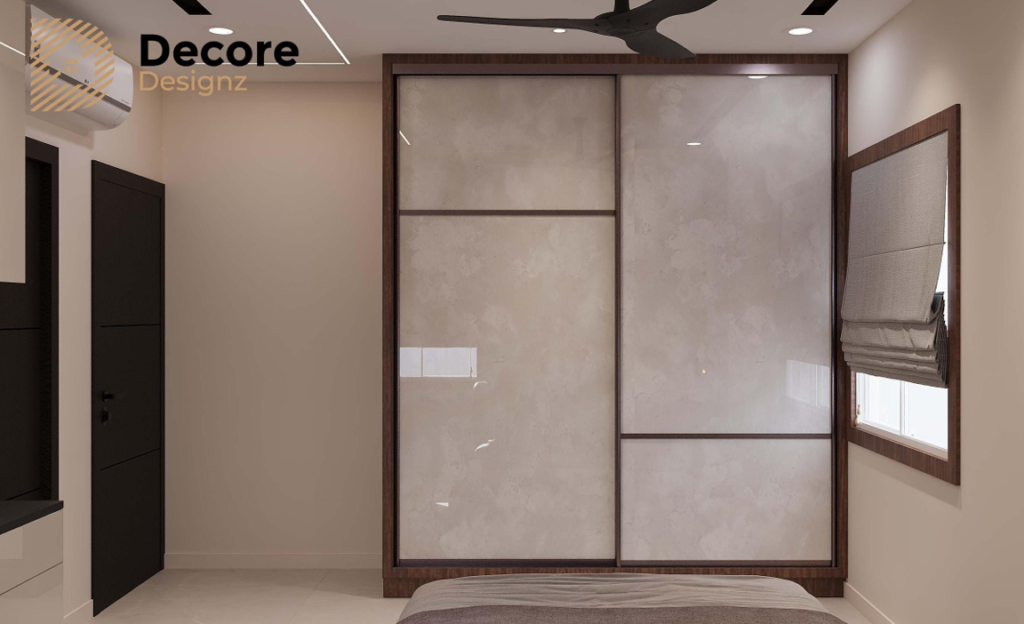
Choosing the right board material is one of the most important decisions when planning wardrobes and kitchen cabinets. Two options that often come up are HDHMR and plywood. Both are used in residential interiors, but they differ in how they are manufactured, how they respond to moisture, how they hold screws and where they perform best.
So, in the HDHMR vs plywood comparison, which one should you choose?
Plywood is generally the more dependable choice for kitchen cabinets and structures that need strong mechanical fixing and better tolerance for demanding conditions. HDHMR can be a practical option for wardrobe shutters, panels and selected interior applications where a smooth, uniform surface is important. The right choice still depends on board quality, grade, thickness, construction and exposure.
Let’s compare them in practical terms.
What Is HDHMR Board?
HDHMR stands for High-Density High Moisture Resistance board. It is an engineered wood panel made by compressing wood fibres with resin under heat and pressure. This produces a dense, uniform board with a relatively smooth surface.
HDHMR is often considered for wardrobe shutters, cabinet panels and furniture components because its consistent surface can support a neat finish. It can be used with laminates, acrylic and other suitable surface finishes, subject to the manufacturer’s specifications.
However, the term moisture resistant should not be interpreted as waterproof. Prolonged exposure to water, poorly sealed edges or damp conditions can still damage the board. Its actual performance depends on the product specification and manufacturing quality.
What Is Plywood?
Plywood is made by bonding multiple thin layers of wood veneer together, generally with the grain direction of adjacent layers arranged at right angles. This cross-layer construction gives plywood good structural stability and strength.
Different plywood grades are designed for different conditions. MR, BWR and BWP are common classifications you may encounter, but the grade and its intended application should always be checked against the manufacturer’s documentation.
Plywood is widely used for kitchen carcasses, wardrobes, storage units, partitions and other furniture structures. Its layered construction also makes it suitable for many applications that require reliable screw fixing.
Like HDHMR, plywood is not automatically waterproof or immune to damage. The correct grade, adhesive quality, edge sealing and installation matter.
HDHMR vs Plywood: Key Differences
Comparison | HDHMR vs Plywood |
Construction | HDHMR is made from compressed wood fibres; plywood is made from bonded wood veneers. |
Surface | HDHMR generally offers a uniform, smooth surface; plywood may show natural veneer variation. |
Structural strength | Plywood is generally preferred for demanding structural applications; HDHMR performance depends on density and product specification. |
Moisture resistance | HDHMR offers moisture resistance but is not waterproof; plywood performance depends heavily on grade and edge protection. |
Screw holding | Plywood generally offers dependable screw-holding across many furniture applications; HDHMR requires suitable fixing methods and edge-distance care. |
Finishing | HDHMR’s uniform surface can be useful for certain finishes; plywood can take laminates, veneer and other suitable finishes. |
Weight | Both vary by thickness and density; HDHMR can be relatively dense. |
Typical applications | HDHMR is often used for shutters and selected panels; plywood is commonly used for carcasses and structural furniture components. |
1. Strength and Load-Bearing Performance
Strength is one of the main reasons plywood is widely used in furniture construction.
Its cross-layer veneer structure provides good stability and makes it suitable for cabinet carcasses, shelves, partitions and storage units. When properly specified and constructed, plywood can handle the demands of everyday furniture use.
HDHMR is dense and can be suitable for several furniture applications. However, density alone does not establish structural suitability. The board’s internal bonding, thickness, span, fixing method and manufacturer’s performance data all matter.
Our practical view: For kitchen carcasses, heavy storage and components that need reliable structural fixing, plywood is usually the safer starting point. HDHMR should be selected for structural use only when its specifications support the intended load and fixing requirements.
2. Moisture Resistance: Which Performs Better?
Moisture resistance is especially important in kitchens, utility areas and homes where boards may be exposed to humidity or occasional spills.
HDHMR is manufactured to offer better moisture resistance than ordinary fibreboard products. However, it can still swell or deteriorate if water enters through exposed edges, damaged surfaces or joints.
Plywood’s moisture performance depends on its grade. MR plywood is intended for interior use in relatively dry conditions, while BWR and BWP grades are designed for more demanding moisture conditions. These terms should not be treated as interchangeable, and the manufacturer’s stated application should be checked.
For either material, water can enter through poorly sealed edges, cut-outs, joints and damaged finishes.
Our practical view: For kitchen cabinets, choose the plywood grade according to the actual exposure conditions. HDHMR may work in selected kitchen components, but it should not be treated as a waterproof substitute.
3. Screw-Holding and Hardware Fixing
Cabinets rely on hinges, drawer channels, handles and other hardware. The board must hold these fixings securely through repeated use.
Plywood is generally a dependable option for screw fixing, which is one reason it is commonly used for cabinet structures and furniture carcasses.
HDHMR can also be used with hardware, but the fixing method needs attention. Screw type, pilot-hole preparation, edge distance and board thickness can influence the result. Repeated removal and refitting of screws can also affect holding performance.
For heavy shutters, frequently used drawers and hardware-intensive cabinets, the material should be selected alongside the hardware and construction details.
Our practical view: Plywood is usually the more straightforward choice for components with demanding hardware requirements. HDHMR can be suitable where the fixing design is appropriate and the board specification supports it.
4. Surface Finish and Appearance
Both materials can be used to create refined, contemporary interiors. The difference is often in the surface preparation and finish selected.
HDHMR has a relatively uniform surface, which can make it useful for applications where a consistent finish is required. It is commonly considered for laminate and other compatible shutter finishes.
Plywood can also receive laminates, veneer and other suitable finishes. Natural veneer can be particularly useful when the design calls for visible wood grain and variation.
The final appearance is not determined by the core board alone. Adhesive selection, surface preparation, edge treatment and workmanship have a major influence.
For a broader look at material selection, see our guide to plywood vs MDF for home interiors.
5. Which Is Better for Wardrobes?
For wardrobes, the answer depends on whether you are selecting the material for the carcass, shelves, shutters or internal components.
HDHMR for wardrobe shutters
HDHMR can be a practical choice for wardrobe shutters when a smooth, uniform surface is needed. It can work with suitable laminates and other compatible finishes.
However, the shutter’s size, thickness, weight, hinge arrangement and fixing details must be considered. A large or heavy shutter should not be specified based only on the board name.
Plywood for wardrobe carcasses
Plywood is commonly preferred for wardrobe carcasses, shelves and structural components because of its strength and screw-holding characteristics.
It is also useful where the wardrobe needs to support heavier storage loads or more demanding hardware.
Our recommendation: A combination can make sense: plywood for the main carcass and HDHMR for selected shutters or panels where the design and board specification justify it. This is not a universal formula; the final selection should follow the wardrobe’s dimensions, load and finish requirements.
Explore our custom wardrobe design solutions to understand how storage layout, shutters and internal construction work together.
6. Which Is Better for Modular Kitchens?
Kitchen cabinets face more demanding conditions than many other furniture units. They experience frequent opening and closing, heavy storage loads, plumbing-related risks, cleaning and occasional spills.
For this reason, the carcass material deserves particular attention.
Plywood for kitchen cabinets
Suitable-grade plywood is generally a dependable choice for kitchen carcasses, especially where cabinets need to support heavy cookware, appliances and frequently used hardware.
The grade must match the moisture exposure. Areas near sinks and plumbing need careful detailing, sealing and installation.
HDHMR for kitchen shutters and selected panels
HDHMR can be considered for selected kitchen shutters and panels where a uniform surface is desired. Its suitability depends on the manufacturer’s specifications, the location of the component and how well exposed edges are protected.
It should not automatically be used for every kitchen component simply because it is labelled moisture resistant.
Our recommendation: For most demanding kitchen carcass applications, start by evaluating suitable-grade plywood. Consider HDHMR selectively for shutters or panels after checking its technical specifications and intended use.
For a more detailed breakdown of cabinet construction, read our complete guide to modular kitchen materials.
Can HDHMR and Plywood Be Used Together?
Yes. They do not need to be treated as competing materials where one must be used throughout the home.
A well-planned interior can use different boards for different functions. Plywood may be selected for the main structure, while HDHMR may be used for suitable shutters or panels.
The important point is to specify each material based on its job. A board that works well for a wardrobe shutter may not be the best choice for a heavily loaded kitchen carcass.
What Should You Check Before Choosing?
Before approving a material, ask your designer or contractor for the following:
- Exact board specification: Confirm the manufacturer, product type, grade and thickness. Do not rely only on verbal descriptions.
- Intended application: Ask whether the board is recommended for the specific component and exposure conditions.
- Moisture performance: Request the manufacturer’s technical information rather than assuming that moisture resistant means waterproof.
- Hardware compatibility: Check the fixing method for hinges, drawer channels and handles.
- Edge protection: Confirm how cut edges, joints and exposed areas will be sealed.
- Finish compatibility: Ensure that the adhesive and surface finish are suitable for the selected board.
- Warranty and documentation: Ask for product documentation and applicable warranty terms.
A reliable interior is not created by choosing the most expensive board or using one material everywhere. It comes from matching the material to the function, environment and construction method.
Final Verdict: HDHMR vs Plywood
There is no single winner for every part of a home.
For kitchen carcasses, heavy storage and components that need reliable mechanical fixing, suitable-grade plywood is generally the stronger recommendation. For wardrobe shutters and selected panels where a smooth, consistent surface is important, HDHMR can be a practical option when its specifications match the application.
The most sensible approach is to choose materials component by component rather than using one board everywhere.
At Decore Designz Studio, material selection is considered alongside layout, storage requirements, hardware, finishes and the way the home will be used. If you are planning a new wardrobe or modular kitchen, speak with our team for a material recommendation based on your space and requirements
Frequently asked questions
Is HDHMR better than plywood?
Not in every application. HDHMR can be useful for selected shutters and panels, while plywood is generally preferred for demanding structural applications and reliable hardware fixing. The better option depends on the component and product specification.
Is HDHMR waterproof?
No. HDHMR is designed to offer moisture resistance, but it is not waterproof. Prolonged water exposure and unprotected edges can still cause damage.
Is HDHMR good for kitchen cabinets?
It can be suitable for selected kitchen components, such as certain shutters or panels, when the manufacturer’s specifications support the application. For demanding kitchen carcasses, suitable-grade plywood is generally the more dependable starting point.
Can HDHMR be used for wardrobe shutters?
Yes. HDHMR is commonly considered for wardrobe shutters because of its uniform surface and compatibility with suitable finishes. The shutter size, thickness, weight and hardware arrangement still need to be checked.
Which material holds screws better?
Plywood generally provides dependable screw-holding for many furniture applications. HDHMR can also hold hardware when the correct fixing method is used, but its performance should be checked for the intended application.
Can plywood and HDHMR be used in the same wardrobe?
Yes. Plywood can be used for the carcass and shelves, while HDHMR can be considered for selected shutters or panels. The combination should be based on structural requirements, finish and manufacturer specifications.