

Chimney and Ventilation Guide for Modular Kitchens

A good modular kitchen chimney should do more than look right above the hob. It should capture cooking smoke, oil vapour and odours effectively, while fitting the kitchen’s layout and ventilation arrangements. For Indian cooking, the important decisions include chimney size, suction capacity, filter type, ducting and installation height. Planning these details before cabinet fabrication helps prevent avoidable installation problems later.
Why Does a Modular Kitchen Need Proper Ventilation?
Cooking releases moisture, heat, grease particles and odours into the air. Without effective extraction, some of these can settle on cabinet shutters, walls and ceilings. Poor ventilation can also leave the kitchen feeling warm and stuffy.
This matters in Indian kitchens where tempering, shallow frying, deep frying and high-heat cooking are common. However, choosing the most powerful chimney available is not always the answer. The appliance must suit the hob, cooking habits and available duct route.
A well-planned kitchen considers the chimney, fresh-air movement, windows and other ventilation openings together.
1. Which Type of Kitchen Chimney Should You Choose?
The first decision is how the chimney will handle the extracted air.
Ducted chimney
A ducted chimney draws cooking fumes through a pipe and discharges them outside the home through an appropriate outlet.
Why consider it?
- It removes extracted air from the kitchen rather than returning it to the room.
- It is generally the preferred option for frequent frying and oily Indian cooking.
- It can reduce lingering cooking odours when correctly sized and installed.
What needs planning?
The duct needs a suitable route to an approved external outlet. Its length, diameter and bends affect airflow. The route should be planned before the cabinets, ceiling finishes and other services are finalised.
Ductless or recirculating chimney
A ductless chimney passes air through filters and returns it to the kitchen. Depending on the model, it may use grease filters and activated-carbon filters to help reduce odours.
Why consider it?
- It may suit a kitchen where an external duct route is not possible.
- It avoids the need for a duct leading outside.
- It can offer more flexibility in certain apartment layouts.
What should you know?
A recirculating model does not discharge moisture and cooking fumes outside in the same way as a ducted system. Its odour-control performance depends on the filters and their condition. Filter replacement and maintenance requirements should be checked before purchase.
Which is better for Indian cooking?
If a suitable external duct can be installed, a ducted chimney is generally the stronger choice for removing cooking fumes. A recirculating model is a practical alternative where ducting is genuinely not feasible, but it should not be treated as equivalent to external extraction.
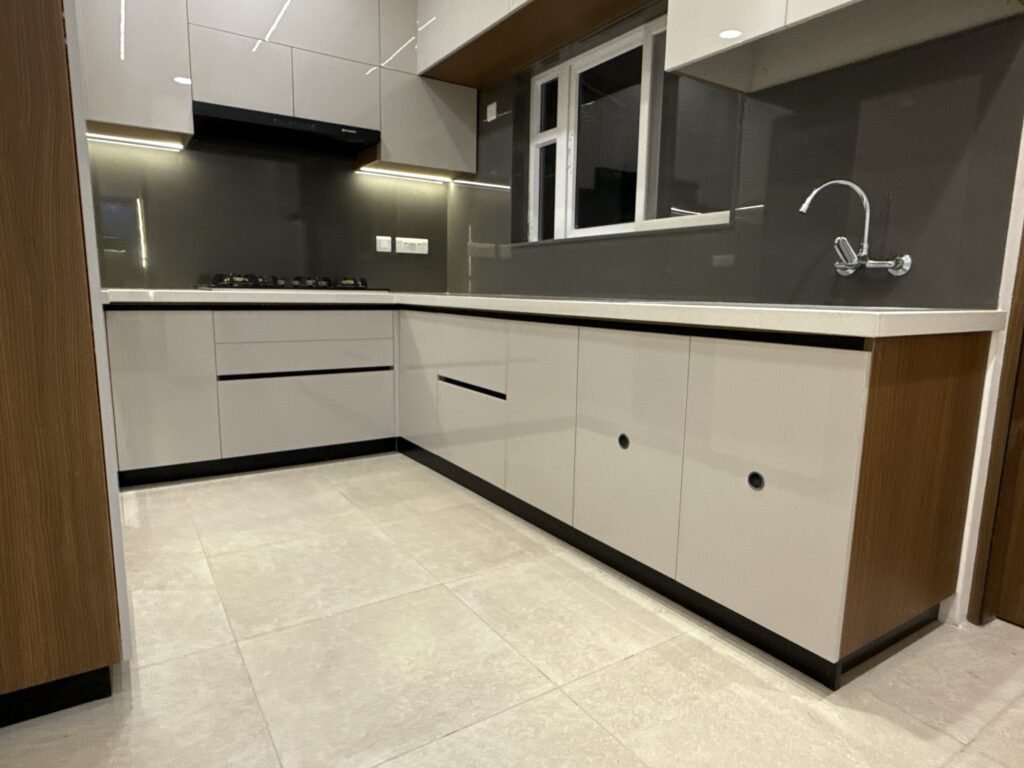
2. How Much Suction Capacity Does Your Kitchen Need?
Chimney suction capacity is commonly expressed in cubic metres per hour (m³/h). It indicates the volume of air the appliance is designed to move under specified test conditions. Actual performance can vary with duct length, bends, filters and installation.
The right capacity depends on several factors:
- Kitchen size: A larger space may require greater airflow.
- Cooking habits: Frequent frying and high-heat cooking can create more smoke and airborne grease than light cooking.
- Hob size: The chimney needs sufficient coverage over the cooking area.
- Kitchen layout: Open kitchens allow cooking odours to travel into connected living and dining spaces.
- Duct design: A long or restrictive duct route can reduce effective airflow.
- Noise and comfort: A high setting may be louder, so consider everyday operating conditions as well as the maximum rating.
Do not choose a chimney by its advertised suction figure alone. Compare the manufacturer’s performance specifications and installation requirements, then match them to your kitchen.
3. Which Chimney Filter Is Suitable for Indian Cooking?
The filter helps manage grease and other particles drawn into the chimney. The right choice depends on the appliance design and the maintenance routine you are comfortable following.
Baffle filters
Baffle filters use shaped panels to redirect airflow and separate grease from the air stream. They are commonly used in chimneys intended for Indian cooking.
They need periodic cleaning to prevent grease build-up. Check whether the filters can be removed easily and whether the manufacturer permits washing them in a dishwasher or by hand.

Mesh filters
Mesh filters capture grease through a fine mesh structure. Grease can accumulate within the mesh, so cleaning frequency matters, especially when cooking with oil regularly.
Before choosing this type, understand how often the filter needs cleaning and how easily it can be accessed.
Filterless or auto-clean models
Some models use designs that collect grease in a dedicated container, while others include a heating-based auto-clean function. The exact mechanism varies by product.
These features can reduce certain cleaning tasks, but they do not make the entire appliance maintenance-free. The collection cup, internal surfaces and other specified components may still need attention.
Practical advice: Compare the manufacturer’s filter design, cleaning process, replacement requirements and service support. Choose the system you can maintain consistently.
4. What Chimney Size Should Match Your Hob?
The chimney should provide suitable coverage over the cooking area. A hood that is too narrow may fail to capture fumes escaping from the outer burners.
Many domestic models are sold in widths commonly suited to standard hob sizes. However, the right selection depends on the actual dimensions of your hob and the chimney’s capture area.
Before buying, check:
- The full width of the hob, including its outer burners.
- The chimney’s effective capture area.
- The installation clearance required by the manufacturer.
- The available wall or ceiling space.
- Whether nearby wall cabinets will interfere with the hood.
If you are planning a new modular kitchen, select the hob and chimney together. This makes it easier to coordinate the cooking zone with the surrounding cabinets and countertop.
5. What Is the Correct Height for Installing a Kitchen Chimney?
The mounting height affects both safety and smoke capture. If the chimney is installed too close to the hob, it may interfere with cooking or violate the manufacturer’s clearance requirements. If it is too high, fumes may spread before reaching the extraction area.
There is no single height that applies to every model. The correct clearance depends on the appliance design and whether the hob is gas, electric or induction.
Follow the installation manual for the exact model and hob combination. Confirm the measurement before fixing the chimney or finalising the adjacent wall cabinets.
Also check the position of the electrical connection, duct outlet and any ceiling bulkhead. These should not obstruct the appliance or make future servicing difficult.
6. How Should Chimney Ducting Be Planned?
Ducting is often overlooked because it is less visible than the chimney itself. However, a poorly planned route can undermine the performance of an otherwise suitable appliance.
Keep these principles in mind:
- Plan the outlet early: Confirm where the duct can discharge outside, subject to building rules and permissions.
- Keep the route practical: A shorter, straighter route is generally preferable to a long route with multiple bends.
- Follow the specified diameter: Use the duct size recommended by the manufacturer. Do not reduce it without checking the technical requirements.
- Avoid unnecessary bends: Bends and restrictions can increase resistance and reduce airflow.
- Coordinate with cabinetry: Allow space for the duct without compromising cabinet storage or access.
- Check access for maintenance: The route and connections should be installed so that relevant components can be inspected or serviced when required.
In apartments, the available outlet may be restricted by the building layout or community rules. Confirm feasibility before purchasing the chimney rather than assuming a duct can be routed through any wall, shaft or ceiling.
7. Does a Kitchen Chimney Replace General Ventilation?
No. A chimney is a local extraction appliance, while general ventilation helps maintain air movement in the wider room.
A window or other suitable ventilation opening may help refresh the air, depending on the kitchen layout and outdoor conditions. However, a window alone does not provide the same targeted capture of cooking fumes as a correctly installed chimney.
Similarly, a chimney cannot compensate for every ventilation issue. In a tightly enclosed kitchen, consider how replacement air can enter the room while the chimney extracts air. Strong cross-draughts directly across the hob may also disturb the capture of rising fumes.
The aim is to coordinate extraction and air movement, not simply to install a powerful appliance and assume the problem is solved.
8. What Should You Finalise Before the Modular Kitchen Is Built?
The chimney should be included in the kitchen design from the planning stage.
Before cabinet fabrication, confirm:
- The selected hob and chimney models.
- The chimney width and required mounting clearance.
- The duct route and external outlet feasibility.
- The electrical point and any other service connections.
- The size and position of adjacent wall cabinets.
- The access needed for filter cleaning and maintenance.
- Any apartment or building restrictions affecting external ducting.
These decisions influence one another. For example, changing the chimney height can affect the cabinet arrangement beside it. Changing the hob position may require a different duct route.
Planning them together helps avoid last-minute adjustments to cabinetry and finishes.
Planning a Modular Kitchen in Hyderabad?
At Decore Designz Studio, kitchen planning brings together the layout, cabinetry, appliances, materials and practical requirements of daily cooking. Deciding on the chimney and ventilation early helps the cooking zone work with the rest of the kitchen.
Explore our modular kitchen design services in Hyderabad to discuss your layout and appliance-planning requirements.
Frequently Asked Questions
Which chimney is best for a modular kitchen?
A ducted chimney is generally preferable when a suitable external duct route is available. Choose the size, suction capacity and filter system according to the hob, cooking habits and installation conditions.
Is a ductless chimney suitable for Indian cooking?
It can be useful when external ducting is not feasible. However, it recirculates filtered air instead of discharging extracted air outside, so it may be less effective for managing heavy cooking fumes.
Does higher suction always mean better performance?
No. Effective airflow also depends on the duct route, filters, installation and kitchen layout. A higher advertised rating does not guarantee better results in every installation.
Should the chimney be installed before or after the modular kitchen cabinets?
The chimney should be planned before cabinet fabrication. The final installation sequence depends on the appliance, ducting and countertop work, so the designer and installer should coordinate the stages.
Can a kitchen window replace a chimney?
A window can support general ventilation, but it does not provide the same targeted extraction above the hob. The best solution depends on the cooking routine and the kitchen’s ventilation conditions.
How can I reduce chimney noise?
Choose a model suited to your kitchen and have it installed according to the manufacturer’s instructions. Correct duct sizing, fewer unnecessary bends and proper installation can help avoid avoidable airflow noise.