

Bedroom Accent Walls and Paint Finish Ideas
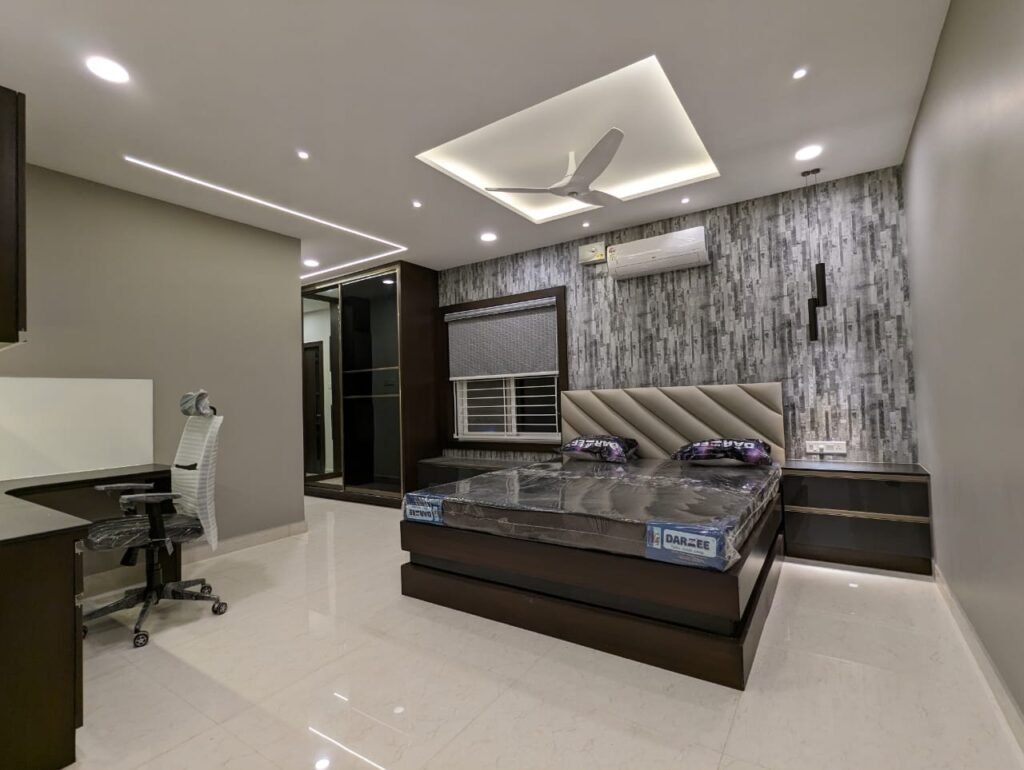
A well-designed bedroom accent wall adds depth and character without making the room feel busy. The best approach is to choose one wall with a clear purpose, then select a paint colour, finish or texture that works with the lighting, furniture and rest of the interior. For most bedrooms, a carefully planned matte finish or subtle textured surface creates a more balanced result than applying a decorative treatment to every wall.
What Are the Best Bedroom Accent Wall Ideas?
The best bedroom accent wall ideas depend on the room’s proportions, the position of the bed, natural light and the look you want to create. A painted wall behind the headboard is a straightforward option. Textured paint adds depth, while wallpaper introduces a pattern or more pronounced visual detail.
Before choosing a treatment, decide what the wall needs to do. Should it make the bed the focal point? Add warmth to a neutral bedroom? Create contrast in a minimalist interior? Or bring character to a plain wall without introducing more furniture?
That decision will help narrow the options.
1. Which Bedroom Accent Wall Designs Work Best?
A painted wall behind the bed
The wall behind the headboard is often the most practical place for an accent. It naturally draws attention towards the bed and can establish the bedroom’s visual direction.
A single painted surface can work particularly well when the bed, wardrobe and bedside tables already have enough detail. You do not need decorative panels or multiple materials to create a focal point.
Keep the paint treatment within the wall’s natural boundaries unless there is a clear reason to extend it. An oversized colour block can look disconnected if it ignores the furniture layout.
A two-tone bedroom wall
A two-tone wall introduces contrast without requiring a complicated design. You could use a deeper shade on the lower section and a lighter shade above, or create a clean horizontal or vertical division.
The proportions matter more than the number of colours. A line placed at an arbitrary height can make the wall feel awkward. Relate the division to the headboard, furniture or architectural features so the composition looks intentional.
A soft, textured accent wall
Textured paint is useful when you want a wall to have character without adding a strong pattern. Depending on the product and application method, the surface may have a subtle mineral appearance, a brushed effect or a more pronounced texture.
Fine texture tends to work well with simple furniture because it adds interest without competing for attention. Heavier texture is more noticeable and needs careful coordination with lighting.
Always inspect a sample before committing. A finish that looks subtle in a showroom can appear much stronger when applied across a large wall.
A darker feature wall
A deeper shade behind the bed can create a sense of depth and make lighter bedding or furniture stand out. It can also give a large bedroom a more intimate feel.
However, a dark wall does not automatically make a bedroom look luxurious. If the room receives limited daylight, or if several other surfaces are already dark, the overall effect can feel heavy.
Use the room’s natural light, artificial lighting and furniture finishes to judge whether the contrast is appropriate.
2. How Do You Plan an Accent Wall for an Indian Bedroom?
In Hyderabad homes, the practical details matter as much as the finish selected.
Start by checking the wall’s condition. Newly plastered surfaces need appropriate preparation and drying before painting. Older walls may have cracks, previous paint layers, damp patches or repairs that need attention.
Then consider how the room is used. A bedroom with a large upholstered headboard may need only a restrained painted backdrop. A wall with limited furniture may benefit from a stronger visual treatment, provided the proportions are right.
Also consider:
- Natural light: Observe the wall in daylight and after the room’s lights are switched on.
- Artificial lighting: Wall washers and lights placed close to the surface can exaggerate texture and imperfections.
- Furniture alignment: Plan the accent around the bed and headboard rather than choosing a colour before finalising the layout.
- Electrical points: Account for switches, sockets, bedside lights and other fittings.
- Adjacent finishes: Check how the paint relates to flooring, wardrobe shutters, curtains and ceiling colour.
- Maintenance: Ask whether the selected product can tolerate the cleaning the wall is likely to need.
The sample should be viewed on the actual wall whenever possible. Small colour cards are useful for narrowing choices, but they do not fully show how a shade will look across a large surface.
3. What Common Accent-Wall Mistakes Should You Avoid?
Painting every wall in a strong colour: An accent wall works through contrast. If every surface demands attention, the focal point disappears.
Choosing a finish before inspecting the wall: Higher-sheen finishes can expose uneven surfaces. Correct preparation is more effective than expecting paint to hide poor workmanship.
Combining too many treatments: Textured paint, patterned wallpaper, elaborate panelling and contrasting colours can compete with one another. Choose a main treatment and let the other elements support it.
Ignoring lighting: A wall may look different under daylight, warm bedside lamps and cooler ceiling lights. Review the actual lighting conditions before finalising the colour.
Selecting a trend without considering the furniture: A popular shade can still clash with existing flooring, wardrobes or upholstery. The entire room needs to work together.
Forgetting future repairs: Special textures and strongly patterned wallpaper can be more difficult to match after damage. Keep product details and colour references for future maintenance.
Which Paint Finishes Are Best for Bedroom Walls?
The paint finish affects how light reflects from a wall, how clearly surface imperfections appear and how easily the surface can be maintained. The right choice depends on the wall condition, the specific paint product and how the bedroom is used.
Paint finish | Appearance | Main consideration |
Matte | Soft, low-reflection surface | Can help disguise minor surface irregularities, but some products are harder to clean |
Eggshell | Gentle sheen | Offers a middle ground between a flat look and a more reflective finish |
Satin | Noticeable, smooth sheen | Can be easier to wipe, but may highlight uneven plaster or patching |
Semi-gloss | Stronger reflection | Better suited to selected details than to an entire bedroom wall when a calm look is the priority |
Textured finish | Visible surface variation | Adds depth, but repair and repainting can be more complicated |
Product formulations vary, so do not assume every matte paint is washable or every satin paint performs identically. Check the manufacturer’s technical information for cleanability, coverage, application requirements and suitability for the surface.
Is matte paint better than satin paint for a bedroom?
Matte is usually the better starting point when the goal is a quiet, understated bedroom wall with minimal reflection. Satin is worth considering when wipeability is a higher priority and the wall surface is properly prepared.
The trade-off is straightforward: lower sheen generally gives a softer appearance, while higher sheen reflects more light and can reveal surface defects more clearly.
For a bedroom with grazing light from a window or wall-mounted fitting, inspect the wall from different angles before deciding. Light can make roller marks, uneven plaster and patch repairs more visible, even when the paint colour is correct.
Should You Choose Bedroom Wallpaper or Paint?
Paint and wallpaper serve different purposes. Neither is automatically the better option.
Consideration | Painted accent wall | Wallpaper accent wall |
Visual effect | Can be plain, tonal or textured | Can introduce detailed patterns and printed designs |
Design flexibility | Easy to explore different colours | Pattern, repeat and scale influence the result |
Surface preparation | Requires a properly prepared wall | Requires a suitable, smooth substrate for many products |
Future changes | Generally straightforward to repaint | Removal and replacement depend on the wallpaper and adhesive |
Maintenance | Depends on paint formulation and sheen | Depends on material, finish and manufacturer’s instructions |
Choose paint when you want a clean, flexible finish or subtle surface variation. Choose wallpaper when the pattern itself is an important part of the design.
Before installing wallpaper, check the wall for dampness, peeling paint and unevenness. Wallpaper will not solve an underlying moisture problem, and a patterned surface can make poor alignment or installation defects especially noticeable.
For inspiration on wallpaper as a feature treatment, see our existing article, Creating a Stunning Fireplace Feature Wall With Wallpaper. Its focus is a fireplace wall, while the decision-making principles around pattern, scale and surface preparation can also inform bedroom planning.
A Real Bedroom Design Reference From Decore Designz Studio
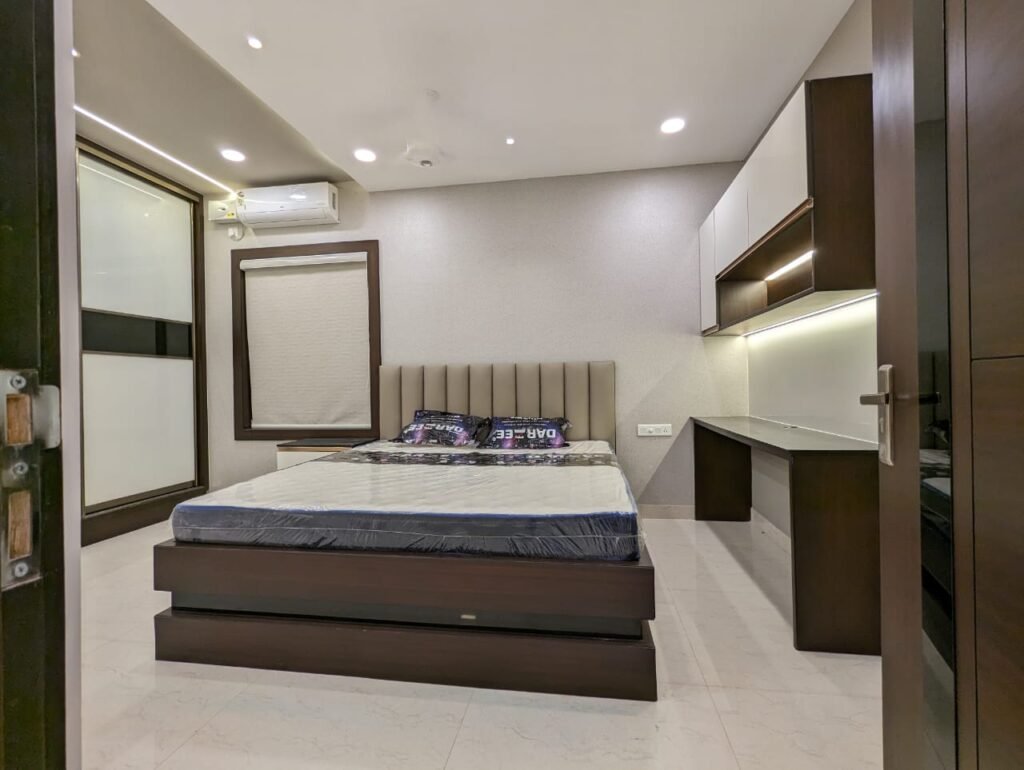
Our luxury bedroom interior design in Hyderabad project illustrates how a bedroom can combine warm beige and cream, taupe and light brown, deeper brown tones, and selected terracotta and burgundy accents. The documented design also includes a statement bed wall, custom storage, a dressing area, a study corner and layered lighting.
The useful lesson is not to copy its palette or assume every bedroom needs a statement wall. It is to consider the bed wall alongside the rest of the room. Colour, furniture, storage and lighting should contribute to one coherent design rather than compete for attention.
When planning a similar treatment, settle the bed position and major furniture first. Then decide whether paint alone will achieve the intended result or whether wallpaper or a textured finish has a clear purpose.
For more examples of how these decisions fit into a complete home, explore Decore Designz Studio’s interior design services in Hyderabad.
Planning a Bedroom Accent Wall?
A successful accent wall is not simply a colour applied to a blank surface. It is a decision about proportion, lighting, materials and how the bedroom will feel when everything is in place.
Decore Designz Studio has been designing residential interiors in Hyderabad since 2014, with an approach that connects design decisions to practical execution. If you are planning a bedroom refresh or a complete home interior, start with the space, your requirements and the finishes that will work for everyday living.
Phone: +91 96182 18055
Email: decoredesignzstudio@gmail.com
Frequently Asked Questions
Which wall should be the accent wall in a bedroom?
The wall behind the bed is usually the most natural choice because it establishes a focal point. Other walls can work when the layout, windows or furniture make them more prominent.
Which paint finish is best for bedroom walls?
Matte is a strong starting point for a soft, low-reflection appearance. Eggshell or satin may suit rooms where easier cleaning is important. The product’s durability and cleanability should be checked before selection.
Is textured paint good for a bedroom accent wall?
Yes. Textured paint can add depth without relying on a bold colour or printed pattern. The texture should suit the room’s scale, lighting and overall design, and the wall must be properly prepared.
Is wallpaper better than paint for a bedroom feature wall?
Wallpaper is useful when you want a distinct pattern or printed design. Paint offers greater simplicity and is generally easier to change. The best choice depends on the desired appearance, substrate, maintenance requirements and installation quality.
Can a small bedroom have an accent wall?
Yes. A single, restrained treatment can give a small bedroom a focal point without filling the room with decorative elements. Avoid excessive contrast or busy patterns if they make the space feel visually crowded.
How do I choose bedroom interior paint colours?
Evaluate the paint alongside the bed, wardrobe, flooring, curtains and lighting. Test samples on the actual wall and view them at different times of day before making a final decision.