

False Ceiling LED Lighting Ideas for a Warmer Home
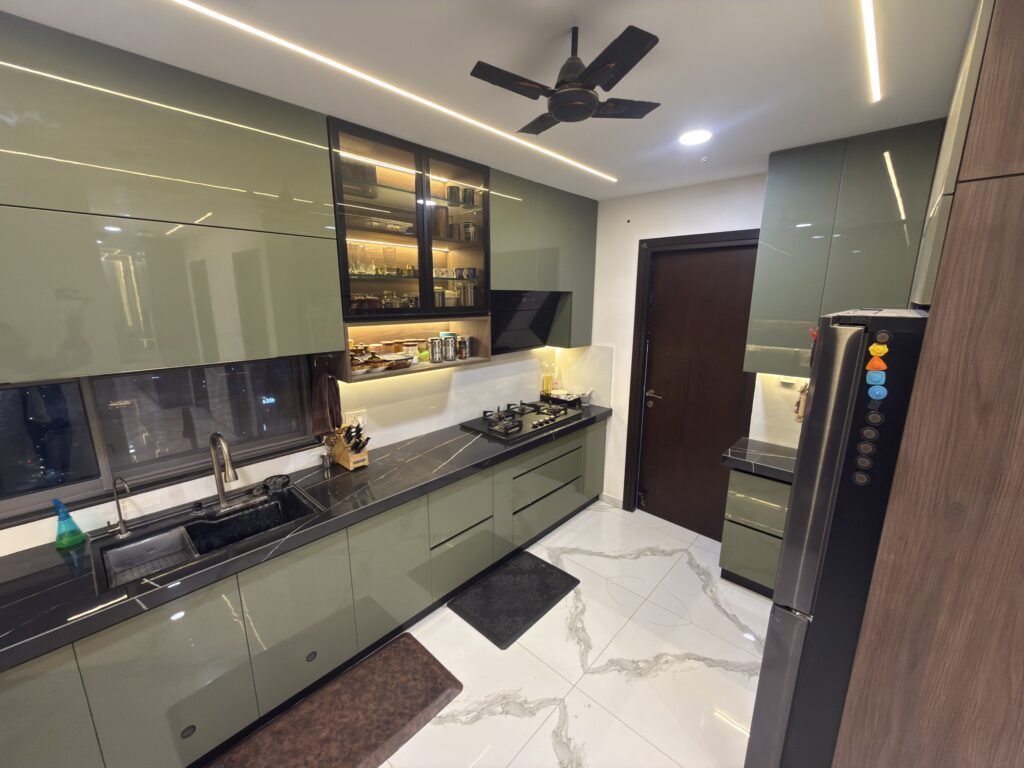
False ceiling LED lighting can do much more than brighten a room. When planned properly, it can make a home feel warmer, create separate lighting zones, highlight architectural details and reduce the need for one harsh central light.
The important part is not simply adding more LEDs. The right false ceiling LED lights should match the room’s size, ceiling height, furniture layout, colour palette and how the space is actually used.
A living room may need a combination of ambient and accent lighting. A bedroom usually benefits from softer illumination. A kitchen needs stronger functional light. The ceiling should support these differences rather than using the same lighting pattern throughout the home.
What Are False Ceiling LED Lights?
False ceiling LED lights are LED-based fixtures or strips integrated into a suspended or secondary ceiling.
They can include:
- Recessed LED downlights
- Concealed LED strip lights
- LED panels
- Perimeter LED lighting
- Linear LED lights
- LED spotlights
- LED lighting integrated into trays, recesses or ceiling details
The important distinction is between lighting the room and decorating the ceiling with lights.
A ceiling filled with fixtures is not necessarily better lit. Good lighting should provide enough illumination for everyday activities while creating the atmosphere you want in the evening.
1. Use Layered LED Lighting Instead of One Bright Light
One of the most useful approaches is to divide lighting into different functions.
Ambient lighting
This provides general illumination throughout the room.
Recessed LEDs, concealed LED strips or other ceiling-mounted fixtures can provide this layer.
Task lighting
This is lighting for specific activities.
Examples include:
- Kitchen worktops
- Study desks
- Dressing areas
- Reading corners
- Dining areas
Accent lighting
Accent lighting draws attention to something specific, such as a textured wall, artwork, architectural feature or decorative surface.
This layered approach gives you more control than switching on a single bright ceiling light every time you enter the room.
Decore Designz’s published Hitech City 3BHK project is a useful example of this broader principle. The project documents ceiling, decorative and accent lighting being used together to create different layers of illumination, rather than treating lighting as a single fixture decision.
2. False Ceiling LED Strip Lighting for a Softer Glow
LED strips are particularly useful when the light source itself does not need to be visible.
They can be integrated into:
- Ceiling recesses
- Perimeter details
- Floating ceiling elements
- Tray ceilings
- Selected architectural gaps
The result can be softer than a directly visible downlight because the light is reflected from another surface.
However, LED strips should not automatically be used around the entire ceiling.
If the room already has enough general illumination, a continuous bright strip can make the ceiling unnecessarily dominant.
The objective should be controlled ambient light, not simply more light.
3. Combine Recessed LEDs With Concealed Lighting
A combination of recessed lights and concealed LED lighting is often more flexible than relying on either one alone.
The concealed lighting can provide a softer background layer while recessed fixtures provide more direct illumination.
For example, a living room could have:
Concealed LED lighting → ambient atmosphere
Recessed LEDs → general illumination
Accent lighting → artwork or feature wall
Pendant/chandelier → visual focal point
This creates different moods without requiring the ceiling itself to become overly complicated.
The existing Decore Designz guidance on false ceiling design follows the same principle: lighting should be planned together with the ceiling, furniture and room layout rather than added after the ceiling design is finished.
4. Choose the Right LED Colour Temperature
Colour temperature has a major effect on how a room feels.
Warm white lighting generally creates a softer, more relaxed atmosphere and works particularly well in living rooms and bedrooms.
Neutral white lighting can provide a cleaner, more functional appearance and can be useful where visibility matters more.
As a general starting point:
Lighting tone | Typical range | Suitable use |
Warm white | Around 2700–3000K | Bedrooms, living rooms, relaxed spaces |
Neutral white | Around 3500–4000K | Kitchens, studies, functional areas |
Cooler white | 4000K+ | More task-oriented environments |
These are starting points rather than rules.
The colour of the walls, flooring, furniture and cabinetry also affects how the lighting will appear.
A warm LED against a warm beige interior can feel very different from the same light used against a predominantly white or grey interior.
5. Use LED Lighting Around the Perimeter Carefully
A perimeter LED detail can make a ceiling appear lighter and more visually defined.
It can work particularly well when:
- The ceiling has enough height
- The room has a relatively clean layout
- The perimeter detail has a clear architectural purpose
- The central ceiling is kept visually simple
This is different from saying that every room needs perimeter lighting.
In a compact apartment, a narrow perimeter detail may be enough. In another room, recessed lights without a perimeter strip may produce a cleaner result.
The ceiling should respond to the room rather than follow a fixed formula.
6. False Ceiling LED Lights for the Living Room
Living rooms often benefit most from layered ceiling lighting because they perform several functions.
The same room may be used for:
- Family time
- Watching television
- Entertaining guests
- Reading
- Relaxing in the evening
A useful combination could include recessed LEDs for general lighting, concealed lighting for softer evening illumination and a decorative fixture where the furniture layout supports one.
The living-room ceiling should also be coordinated with the sofa, TV unit, dining area and circulation path.
For more room-specific ceiling ideas, see Decore Designz’s guide to false ceiling design for hall and living room, which covers fan positions, ceiling proportions, recessed lights, perimeter lighting and different ceiling forms.
7. False Ceiling LED Lighting for Bedrooms
Bedrooms generally need more control over brightness.
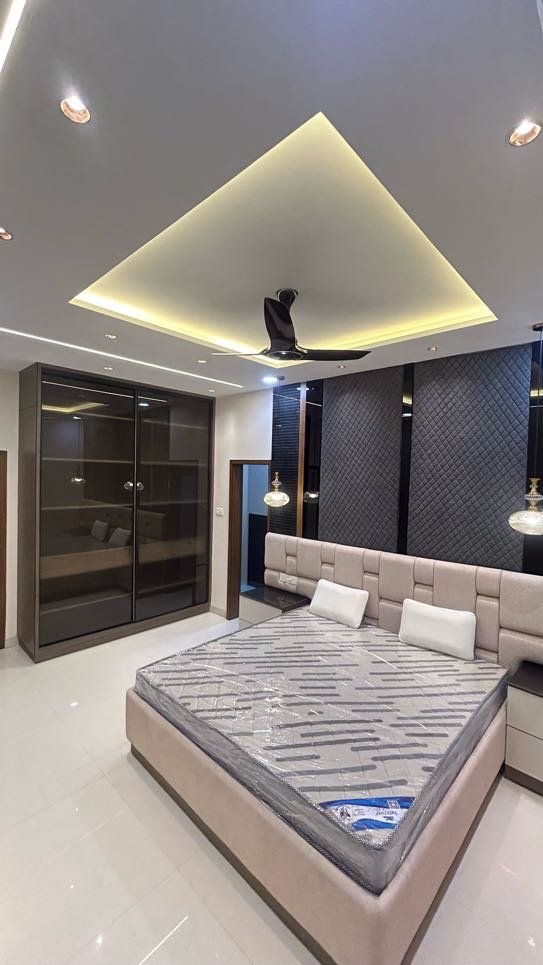
A bright ceiling full of exposed or highly visible lights can work against the relaxed atmosphere you want at night.
A better approach may be:
- Soft ambient LED lighting
- Selected recessed lights
- Bedside lighting
- Dressing-area lighting
- Study lighting where required
- Concealed LED lighting for atmosphere
The bedroom false ceiling should also be coordinated with the wardrobe and bed wall.
For example, if the bed wall already contains strong panelling or texture, the ceiling does not necessarily need another elaborate feature.
The dedicated false ceiling design for bedroom guide covers these room-specific considerations in more detail.
8. LED Lighting for Kitchens Needs to Be More Functional
Kitchen lighting should not be designed around atmosphere alone.
You need enough light to see the worktop, cooking area and storage clearly.
A false ceiling can accommodate recessed LED lights, but they should be positioned according to the actual kitchen layout.
This matters because a badly positioned ceiling light can place the person cooking between the light source and the work surface, creating unwanted shadows.
Kitchen lighting may therefore combine:
- Ceiling LEDs for general illumination
- Under-cabinet LED strips for work surfaces
- Pendant lighting where appropriate
- Selective decorative lighting
A full decorative ceiling with multiple LED layers is not automatically better for a kitchen.
The dedicated false ceiling design for kitchen article goes deeper into this distinction.
9. Don't Make Every LED Light the Same Brightness
One common mistake is using identical bright fixtures throughout the home.
Different areas need different lighting levels.
A study desk needs useful task illumination. A bedroom may need softer ambient light. A TV area may benefit from lower surrounding brightness to avoid visual discomfort.
Dimming or separate switching can make a major difference.
Instead of one switch controlling every ceiling LED, consider dividing the lighting into zones where the layout and electrical planning allow it.
For example:
Zone 1: General ceiling lighting
Zone 2: Concealed/perimeter LED lighting
Zone 3: Accent lighting
Zone 4: Decorative fixture
This gives the homeowner more control over the room at different times of the day.
10. Plan LED Lighting Before the False Ceiling Is Built
This is one of the most important practical points.
Do not finalise the false ceiling shape first and then decide where the lights should go.
The lighting plan should be considered alongside:
- Furniture placement
- Fan position
- TV unit
- Dining table
- Wardrobes
- Study areas
- Kitchen cabinets
- AC and other services
- Electrical routing
- Ceiling height
This is also why false ceiling installation needs coordination between design and site execution.
The position of a light on a drawing may look correct, but the final placement needs to work with the actual furniture and services on site.
Common False Ceiling LED Lighting Mistakes
Using too many LEDs
More fixtures do not automatically mean better illumination.
Creating a random spotlight grid
Lights should respond to furniture and activity zones rather than simply filling empty ceiling space.
Using very bright strips everywhere
A bright continuous LED strip can make a room feel harsh instead of warm.
Ignoring colour temperature
Different light tones can change the appearance of wall colours, wood finishes and fabrics.
Planning lighting after the ceiling
This can result in awkward fixture positions, unnecessary ceiling changes and poor coordination with furniture.
Forgetting maintenance
LED strips, drivers and fixtures may eventually need servicing or replacement. Access should be considered during design.
Treating every room the same
A bedroom, kitchen, living room and study have different lighting requirements.
Does a False Ceiling Always Need LED Lighting?
No.
A false ceiling can be designed without extensive LED lighting if the existing light sources already meet the room’s requirements.
This is particularly relevant in apartments with limited ceiling height.
Before adding a false ceiling and multiple LED layers, ask:
- What problem is the ceiling solving?
- Where is additional lighting actually needed?
- How much ceiling height will be lost?
- Which lights are functional and which are decorative?
- Can the lighting be controlled separately?
- How will the fixtures be maintained?
Sometimes a simple ceiling with a few well-positioned lights will work better than an elaborate LED design.
False Ceiling LED Lighting Should Support the Interior
The strongest false ceiling LED lighting ideas are not necessarily the most dramatic ones.
A well-designed home might use concealed LEDs in one room, recessed lighting in another, task lighting in the kitchen and softer ambient lighting in the bedrooms.
The important thing is that the lighting works with the furniture, materials, colours, ceiling height and everyday use of the home.
That broader approach is visible in Decore Designz’s residential work, including the My Home Krishe 3BHK in Gachibowli, where space planning, materials, furniture, lighting and finishing were treated as connected parts of the interior rather than separate decisions.
Final Takeaway
False ceiling LED lighting works best when it is treated as part of the interior design rather than as decoration added to an empty ceiling.
Use LED strips when you need concealed ambient light. Use recessed LEDs where direct illumination is useful. Use accent lighting selectively. Choose colour temperature according to the room. Most importantly, plan the lighting around the way the space will actually be used.
A warmer home does not need more lights. It needs better-controlled light.
If you are planning a complete home interior in Hyderabad, Decore Designz Studio can coordinate ceiling design, lighting, furniture, materials and execution as part of the same interior plan. Discuss your home, requirements and preferred design direction with the team before finalising the ceiling.
Frequently Asked Questions
What are the main types of false ceilings?
The main types include single-layer, multi-level, tray, cove or perimeter, floating and grid-style ceilings. These designs can be constructed using materials such as gypsum, POP, PVC, wood or metal systems.
Which false ceiling is best for a living room?
A single-layer, perimeter, tray or floating false ceiling can work well in a living room. The choice depends on the room’s size, ceiling height, furniture layout and lighting plan.
Which false ceiling is best for a bedroom?
Bedrooms generally benefit from simpler ceiling profiles that support comfortable ambient and bedside lighting without making the room feel visually heavy.
Is gypsum better than POP for a false ceiling?
Neither is automatically better. Gypsum is practical for many clean residential ceiling designs, while POP provides flexibility for customised decorative forms. The right choice depends on the design, site conditions and workmanship.
Is PVC good for false ceilings?
PVC can be useful in selected areas where moisture resistance is important. It should still be evaluated against the room’s appearance, ventilation, maintenance and overall design requirements.
Are wooden false ceilings suitable for homes?
Yes. Wood or wood-finish elements can add warmth and texture, particularly when used as a feature or coordinated with furniture and wall finishes. The exact material should be selected according to the room and maintenance requirements.
Does every room need a false ceiling?
No. A false ceiling should have a clear purpose, such as integrating lighting, concealing services or adding useful architectural detail. Some rooms may work better with the original ceiling left exposed.