

Modular Kitchen Cost in Hyderabad: What Affects the Final Price?
Quick answer
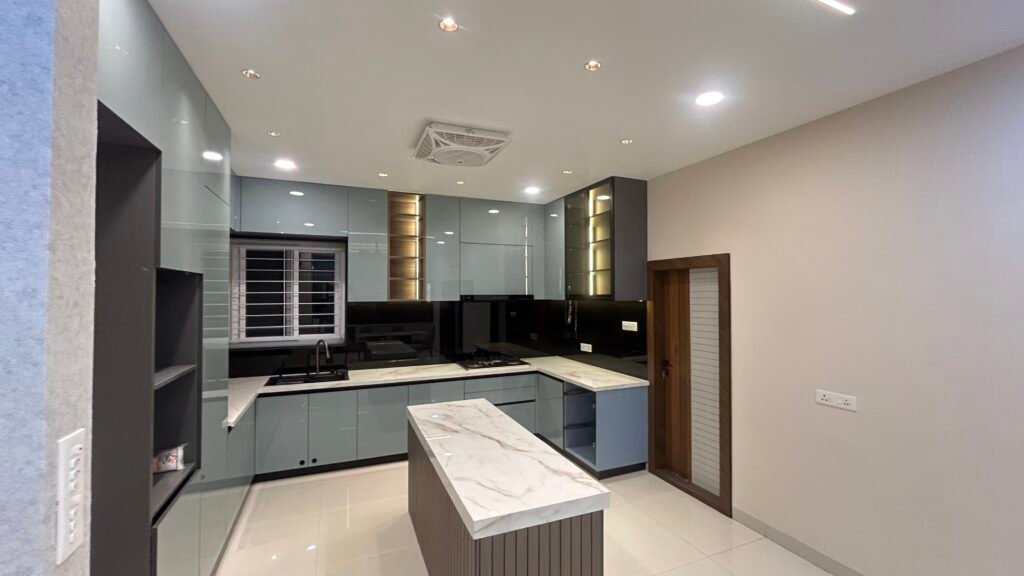
There is no single modular kitchen cost in Hyderabad that applies to every home. The final price depends on the kitchen size and layout, cabinet construction, materials, finishes, hardware, storage accessories, countertop, appliances, customisation and installation. Two kitchens with similar dimensions can have very different quotations because the specifications behind them are different.
If you are comparing kitchen quotations, compare the complete scope and specification, not just the final number.
What determines modular kitchen cost in Hyderabad?
The cost of a modular kitchen is usually built from several decisions rather than one fixed rate.
The main factors are:
- Kitchen size and configuration
- Layout
- Cabinet material and construction
- Exterior finish
- Hardware
- Storage accessories
- Countertop
- Appliances
- Electrical and plumbing requirements
- Customisation
- Installation and site work
This is why a simple L-shaped kitchen and a highly customised U-shaped kitchen cannot realistically be compared only by their size.
For premium home interiors, the more useful question is:
What exactly are you getting for the quoted amount?
1. Kitchen size and layout affect the scope
A larger kitchen generally needs more cabinetry and countertop area, but size alone does not determine the final price.
The layout also changes the specification.
An L-shaped, U-shaped, straight, parallel or island kitchen can have different requirements for:
- Cabinet quantity
- Corner storage
- Drawers
- Tall units
- Countertop length
- Appliance placement
- Hardware
- Electrical points
A kitchen with several corners or specialised storage can require more hardware and planning than a straightforward layout.
The layout should therefore be chosen according to the actual room, movement and cooking habits rather than simply copying a kitchen seen online.
2. Cabinet material is one of the important cost factors
The word “plywood” or “MDF” in a quotation does not tell you the complete story.
You also need to understand:
- Where the material is being used
- Board grade and thickness
- Moisture exposure
- Expected load
- Edge treatment
- Cabinet construction
- Finish being applied
- Hardware being used
There is no single material that automatically makes sense for every part of a kitchen.
For example, kitchen cabinetry around sinks and other moisture-prone areas needs different consideration from a decorative element used elsewhere in the home.
For a deeper explanation of where different boards make sense, see our guide to Plywood vs MDF for Home Interiors.
The important point is simple: compare the actual specification, not just the material name.
3. Finishes can change the price
The exterior finish is one of the most visible parts of a modular kitchen.
Depending on the design, you may consider laminates, acrylics, veneers or other decorative finishes.
Each option can differ in:
- Appearance
- Surface maintenance
- Cleaning requirements
- Durability
- Detailing
- Installation requirements
- Cost
A premium-looking finish is not automatically the right finish.
For a kitchen used every day, the surface should also be practical to clean and maintain.
A good specification balances appearance with how the kitchen will actually be used.
4. Hardware is easy to overlook — but it matters
A kitchen may look almost identical from the outside while costing considerably more because of what is happening inside the cabinets.
Hardware can include:
- Hinges
- Drawer channels
- Soft-close systems
- Lift-up mechanisms
- Pull-outs
- Corner mechanisms
- Tandem drawers
- Other specialised fittings
More drawers and specialised accessories mean more hardware.
The difference is not only about price. Good hardware also affects how the kitchen feels to use every day — opening movement, accessibility, load capacity and durability.
This is one of the reasons two modular kitchen quotations should never be compared only by their headline amount.
5. Storage requirements can increase the specification
A kitchen may look almost identical from the outside while costing considerably more because of what is happening inside the cabinets.
A kitchen with basic shelves is very different from one designed with:
- Tall pantry units
- Deep drawers
- Bottle pull-outs
- Cutlery organisers
- Corner storage
- Appliance storage
- Specialised internal accessories
These features can make everyday cooking easier, but each one adds to the specification.
That does not mean you should remove useful storage to reduce cost.
Instead, decide which storage features solve a genuine problem.
Our detailed Kitchen Storage Planning guide explains how drawers, pull-outs, tall units, corners and appliance storage can be planned around actual usage.
6. Countertop and appliance planning also affect cost
The countertop is another major part of the kitchen specification.
Its cost can be influenced by:
- Material
- Thickness
- Size
- Edge detailing
- Sink cut-outs
- Hob cut-outs
- Installation
Appliances also need to be decided early.
A built-in oven, dishwasher, microwave, chimney or large refrigerator can affect cabinet dimensions, electrical points, ventilation and storage.
Changing appliance decisions after the cabinets have already been designed can create unnecessary additional work.
7. Customisation can increase modular kitchen price
Standardised modules work well for many homes.
But some kitchens need custom solutions because of:
- Unusual dimensions
- Structural constraints
- Specific storage requirements
- Integrated appliances
- Non-standard cabinet sizes
- Bespoke detailing
- Premium finishes
Customisation itself is not a problem.
In fact, it can be the reason a kitchen works properly.
The better question is whether the additional cost is solving a real requirement or simply adding features because they look impressive.
What is usually included in a modular kitchen quotation?
Before comparing modular kitchen prices in Hyderabad, ask exactly what the quotation includes.
Depending on the company and project, it may include:
|
Cost component |
What to check |
|
Cabinets |
Carcass, shutters and construction |
|
Finish |
Exact laminate, acrylic, veneer or other finish |
|
Hardware |
Brand, model and mechanism |
|
Accessories |
Pull-outs, drawers, baskets and organisers |
|
Countertop |
Material, thickness and cut-outs |
|
Appliances |
Included or excluded |
|
Installation |
Fitting and assembly |
|
Electrical |
New or modified points |
|
Plumbing |
Sink and related changes |
|
Site work |
Dismantling, repairs or other requirements |
The exact scope should always be confirmed in writing.
Hidden costs homeowners often miss
The number shown at the bottom of a quotation may not represent the complete kitchen investment.
Depending on the project, additional requirements can include:
- Existing-kitchen dismantling
- Civil modifications
- Electrical changes
- Plumbing changes
- Wall repairs
- Additional site work
- Countertop upgrades
- Premium hardware upgrades
- Appliances
- Certain storage accessories
- Transportation or installation-related requirements
This is why the cheapest-looking quotation is not necessarily the lowest total project cost.
Compare inclusions and exclusions before comparing numbers.
A real Decore Designz project perspective
Decore Designz’s portfolio includes a Modern 4BHK Interior Design in Kokapet, a 2,000 sq. ft. residential project with customised furniture, practical storage and a functional kitchen.

This is exactly why a modular kitchen price should be connected to a real specification. A kitchen quotation only becomes meaningful when you know the materials, hardware, storage, countertop, appliances and execution included in it.
You can explore more completed work through Decore Designz’s interior design projects in Hyderabad.
How to compare two modular kitchen quotations
If you have received two quotations, put them side by side and ask:
- Are the kitchen layouts identical?
- Are the cabinet materials genuinely comparable?
- Is the board thickness specified?
- Are the finishes equivalent?
- Are the hardware specifications the same?
- Are drawers and pull-outs included?
- Is the countertop included?
- Are appliances included?
- Is installation included?
- Are electrical and plumbing changes included?
- Are dismantling and site repairs included?
- What warranty and after-sales support are included?
Only after answering these questions does the final price become useful for comparison.
What should you decide before finalising your kitchen?
Before execution begins, try to have the major decisions settled:
- Final layout
- Storage requirements
- Appliance locations
- Cabinet materials
- Finishes
- Hardware
- Countertop
- Electrical points
- Lighting
- Scope of work
- Budget priorities
This reduces the chance of expensive changes after fabrication or installation has already started.
At Decore Designz Studio, kitchen planning starts with how the kitchen will actually be used. Cooking habits, storage, appliances, movement, materials and execution all need to work together.
A premium modular kitchen is not simply an expensive kitchen
For a premium home, spending more does not automatically mean designing better.
A well-planned kitchen should use the right material in the right place, provide storage where it is needed, make appliances easy to use, maintain comfortable movement and remain practical after the photographs are taken.
The finish should work with the rest of the home rather than making the kitchen feel like a separate showroom.
That is the difference between adding expensive features and designing a kitchen properly.
Planning a modular kitchen in Hyderabad?
If you are planning a new kitchen as part of a complete home interior, Decore Designz Studio can help with layout planning, storage, materials, finishes, hardware, appliance planning and execution. Our modular kitchen design services connect kitchen planning with the wider interior rather than treating it as an isolated product.
If you already have your floor plan or kitchen dimensions, the next useful step is to discuss the actual scope rather than relying on a generic online price.
Contact Decore Designz Studio to discuss your kitchen requirements and book a consultation.
Frequently Asked Questions
How much does a modular kitchen cost in Hyderabad?
There is no single price that applies to every kitchen. The final cost depends on the layout, size, cabinet materials, finishes, hardware, storage accessories, countertop, appliances, customisation and execution requirements.
What is the biggest factor affecting modular kitchen cost?
There is no single biggest factor. Kitchen size and layout establish the scope, while materials, hardware, finishes, accessories and customisation can substantially change the final specification.
Is modular kitchen price calculated per square foot?
Some companies may use area-based calculations, while others prepare itemised quotations. A per-square-foot figure alone is not enough to compare kitchens because the materials, hardware, storage and inclusions may differ.
Why are two modular kitchen quotations so different?
Two quotations can specify different cabinet materials, finishes, hardware, accessories, countertops, appliances, installation work and site requirements even when the kitchens appear similar.
How can I reduce modular kitchen cost without compromising the design?
Start by separating essential requirements from optional features. Prioritise good planning, appropriate cabinet construction, useful storage and reliable hardware rather than adding accessories that do not solve a real problem.
Should appliances be selected before designing the kitchen?
Yes. Major appliances should ideally be identified before final cabinet drawings are approved because their dimensions, ventilation and electrical requirements can affect the kitchen design.