

False Ceiling Colour Combinations That Actually Work
A good false ceiling colour combination should work with the walls, flooring, furniture and natural light—not compete with them. White and warm neutrals are reliable starting points, but wood tones, soft beige, muted grey and carefully chosen accent colours can also work well. The right combination depends on the room’s height, size, lighting and overall interior palette.
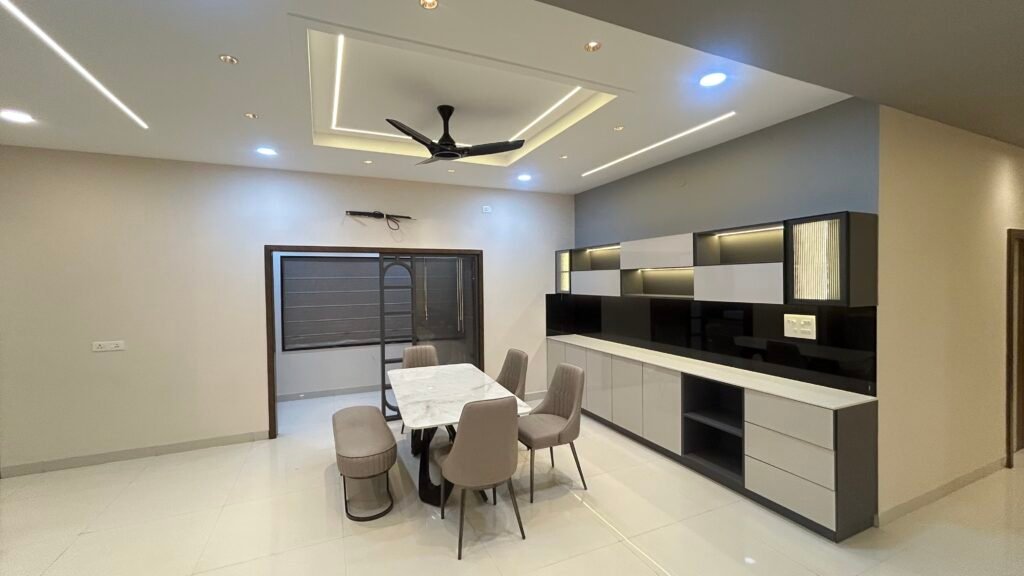
How do you choose a false ceiling colour combination?
Start with the room, not the ceiling.
A false ceiling is only one part of an interior. Its colour needs to relate to the walls, flooring, furniture, curtains and lighting. A combination that looks balanced in a large villa may feel too heavy in a compact apartment.
Before choosing a colour, look at:
- Existing wall colour
- Flooring and other large surfaces
- Furniture finishes
- Amount of natural light
- Ceiling height
- False ceiling design and number of levels
- Lighting colour and intensity
- Overall interior style
At Decore Designz Studio, ceiling design is considered alongside furniture, lighting, materials and room proportions rather than as a separate decorative element. This is particularly important when the ceiling includes recessed lights, cove lighting or multiple levels.
Which false ceiling colour combinations work best?
There is no single colour combination that works for every home. However, some pairings are easier to balance because they keep the ceiling visually light while adding enough contrast to create definition.
1. White and warm wood
White combined with a wood finish is one of the most useful combinations for contemporary homes.
Keep the main ceiling white or off-white and use wood selectively in a recessed panel, linear feature or defined zone.
The advantage is contrast without making the entire ceiling dark.
This works particularly well when the room already contains wooden furniture, a wood-finish TV unit, wardrobes or flooring details. The ceiling then feels connected to the rest of the interior instead of looking like an unrelated feature.
For a smaller room, use the wood finish as an accent rather than covering a large percentage of the ceiling.
2. White and beige
White and beige create a softer transition than high-contrast colour combinations.
A white central ceiling with a warm beige perimeter, recessed panel or wall connection can work well in living rooms and bedrooms.
This combination is particularly useful when the interior already uses:
- Beige upholstery
- Cream walls
- Natural wood
- Warm flooring
- Neutral curtains
The important point is to avoid choosing several slightly different beige shades without a clear relationship between them. Small differences can sometimes make the room look mismatched rather than layered.
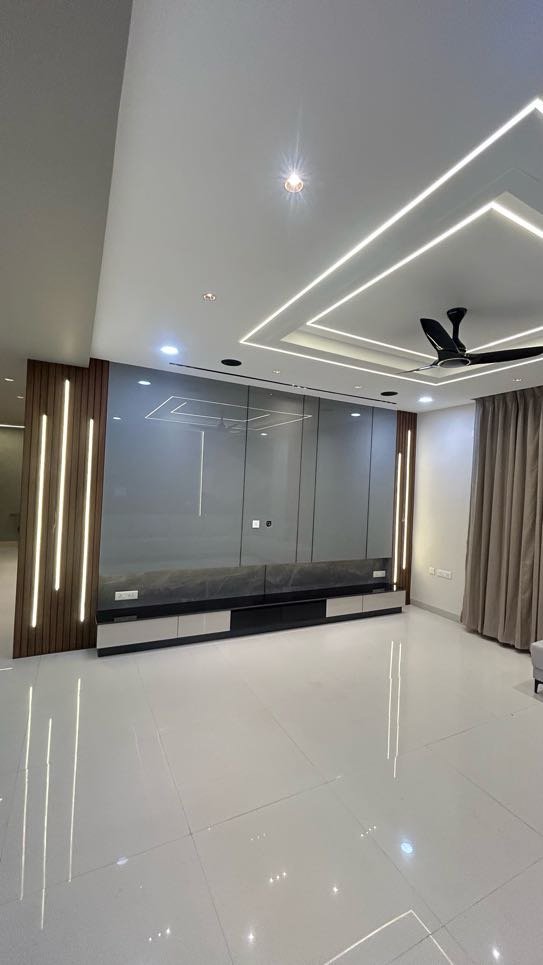
3. White and soft grey
White with soft grey can give a false ceiling a cleaner contemporary appearance.
Grey works particularly well when the room already includes grey furniture, stone surfaces, neutral flooring or darker metal details.
Use softer grey tones when the room has limited natural light. A very dark grey ceiling can visually lower the room and become the first thing you notice.
For a modern apartment, a simple white ceiling with a restrained grey recessed section can provide enough contrast without requiring an elaborate ceiling pattern.
4. Off-white and taupe
If pure white feels too stark, off-white paired with taupe can create a warmer, more understated ceiling.
This works well with natural-looking interiors where the palette includes:
- Beige
- Brown
- Wood
- Cream
- Muted stone tones
The combination is especially suitable when the objective is a calm, sophisticated interior rather than a high-contrast statement ceiling.
5. White with a muted accent colour
A false ceiling does not always need to be limited to white and neutrals.
A muted green, blue, terracotta or another restrained accent can work when it is already present elsewhere in the room.
The key is repetition.
If the ceiling uses a muted accent colour, that colour should have some relationship with the furniture, upholstery, wall treatment or accessories. Otherwise, the ceiling can look disconnected from the rest of the room.
Strong colours should generally be used in smaller areas rather than spread across the entire ceiling.
Should the false ceiling be the same colour as the walls?
It can be, particularly when the goal is to create a visually continuous interior.
Using a similar ceiling and wall colour can make the transition between the two surfaces less obvious. This can work well with soft neutrals, off-white, beige and other restrained palettes.
However, matching the ceiling and walls exactly is not always necessary.
For example, an off-white ceiling with slightly warmer walls can create subtle separation while maintaining a cohesive appearance.
The decision should also consider lighting. A colour can appear noticeably different under warm artificial light compared with natural daylight.
What are good two-colour false ceiling combinations?
Two-colour false ceiling combinations work best when one colour acts as the dominant background and the second is used as an accent.
Some practical combinations include:
Main ceiling colour | Accent colour | Where it can work |
White | Warm wood | Living rooms, dining areas |
White | Beige | Living rooms, bedrooms |
White | Soft grey | Contemporary living rooms, bedrooms |
Off-white | Taupe | Bedrooms, calm neutral interiors |
White | Muted green | Natural or earthy interiors |
White | Muted blue | Bedrooms and selected feature areas |
White | Wood finish | Modern apartments and villas |
Cream | Warm brown | Traditional or warm contemporary interiors |
The table is a starting point, not a rule. The same combination can look completely different depending on the room’s natural light, flooring and furniture.
Which false ceiling colours make a small room look larger?
Light colours generally make it easier to maintain a visually open ceiling.
White, off-white and light neutral shades can help the ceiling feel less visually heavy. This is especially useful when the room already has limited height.
A simple perimeter false ceiling with a light central area can also retain a sense of openness while providing space for concealed lighting.
Dark colours are not automatically wrong. They simply need more care.
A dark recessed panel can create depth in the right room, but using a dark colour across a large ceiling area may make a compact room feel more enclosed.
This is why ceiling height should be considered before choosing the colour.
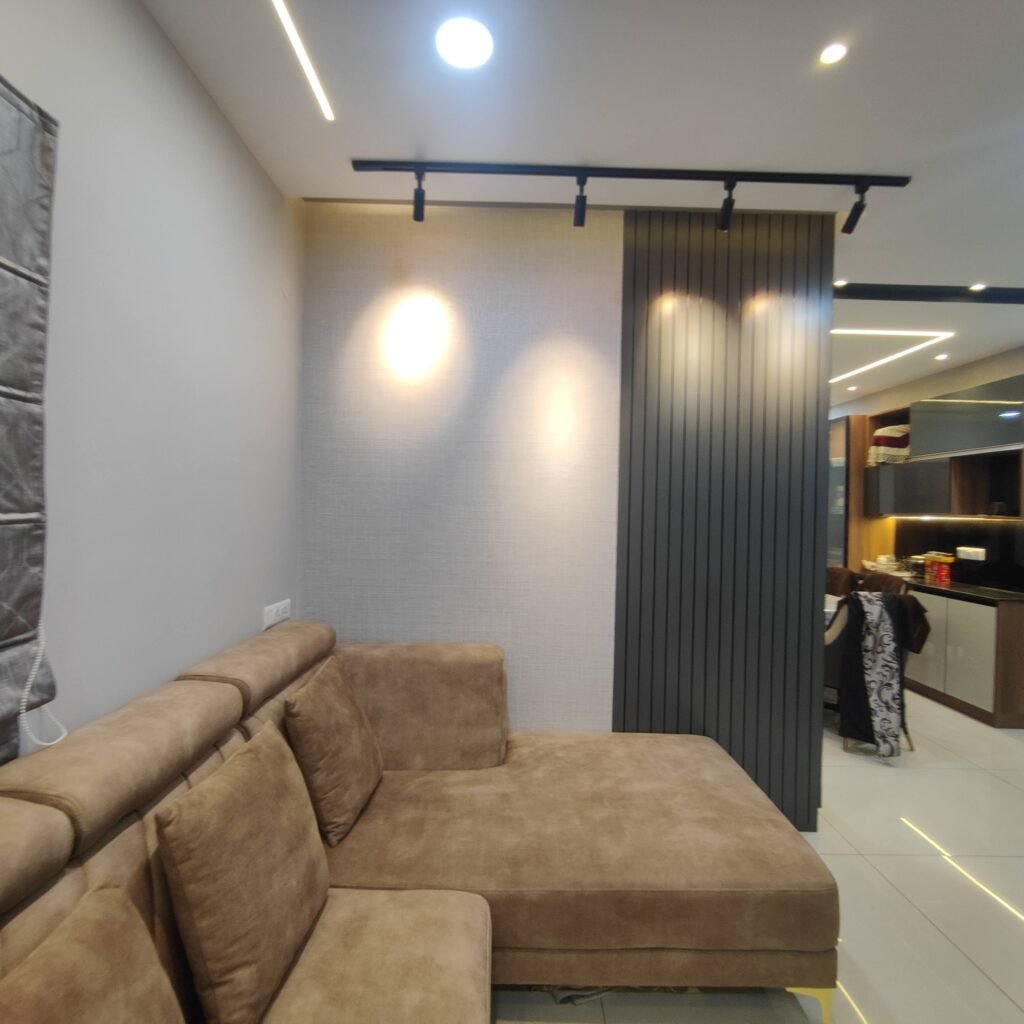
Can you use dark colours on a false ceiling?
Yes, but dark colours work best when they have a clear design purpose.
A charcoal, deep brown or other dark shade can be effective as:
- A narrow recessed border
- A defined central panel
- A feature around a lighting zone
- A wood-toned ceiling element
- A small accent within a larger light ceiling
The surrounding ceiling and walls can remain lighter so that the dark element has visual definition.
The mistake is not using a dark colour. The mistake is using too much of it without considering the room’s proportions.
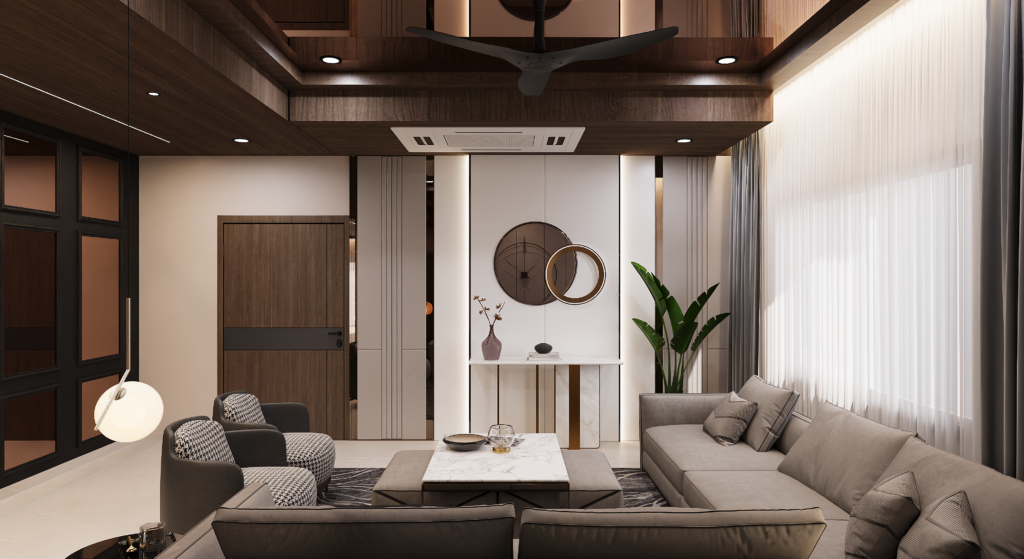
How does lighting change a false ceiling colour?
Lighting can significantly affect how a ceiling colour is perceived.
A warm light can make beige, cream, brown and wood tones appear warmer. Cooler lighting can make some neutral colours appear sharper or more grey.
This is why the ceiling colour should be considered together with the lighting plan.
For example, a warm-neutral ceiling may work particularly well with concealed warm lighting, while a very cool light source can change the appearance of the same finish.
Lighting also affects how visible ceiling details are. A recessed panel, cove or textured finish may look subtle during the day but become much more prominent once the lights are switched on.
Decore Designz’s published false ceiling guidance similarly treats lighting as part of the ceiling planning process rather than something added after construction. The studio’s published HITEC City project documents ambient, decorative and accent lighting as part of the wider apartment interior; the project information does not specify its false-ceiling colour, so that detail should not be assumed.
Should the false ceiling colour match the furniture?
It does not need to match exactly.
In fact, matching every surface to the same colour can make an interior feel flat.
A better approach is to create a relationship between the ceiling and the furniture.
For example:
Wooden furniture + white ceiling + wood ceiling accent
The wood accent connects the ceiling to the furniture without making the entire ceiling wooden.
Or:
Grey sofa + white ceiling + soft grey recessed detail
The grey detail repeats the furniture colour while allowing the ceiling to remain visually light.
The goal is coordination, not exact matching.
What false ceiling colour works with wooden interiors?
White, off-white, cream and warm neutral tones generally provide a useful contrast against wood.
If the furniture already contains substantial wood, repeating the same wood finish on a small ceiling feature can create continuity.
However, the wood tone should be checked carefully.
Different wood finishes can have different undertones. A very reddish wood finish combined with a cool grey palette may feel disconnected, while a warmer wood tone can sit more naturally with beige, cream and off-white interiors.
For this reason, choose the ceiling finish alongside actual furniture and wall samples rather than relying only on an online colour image.
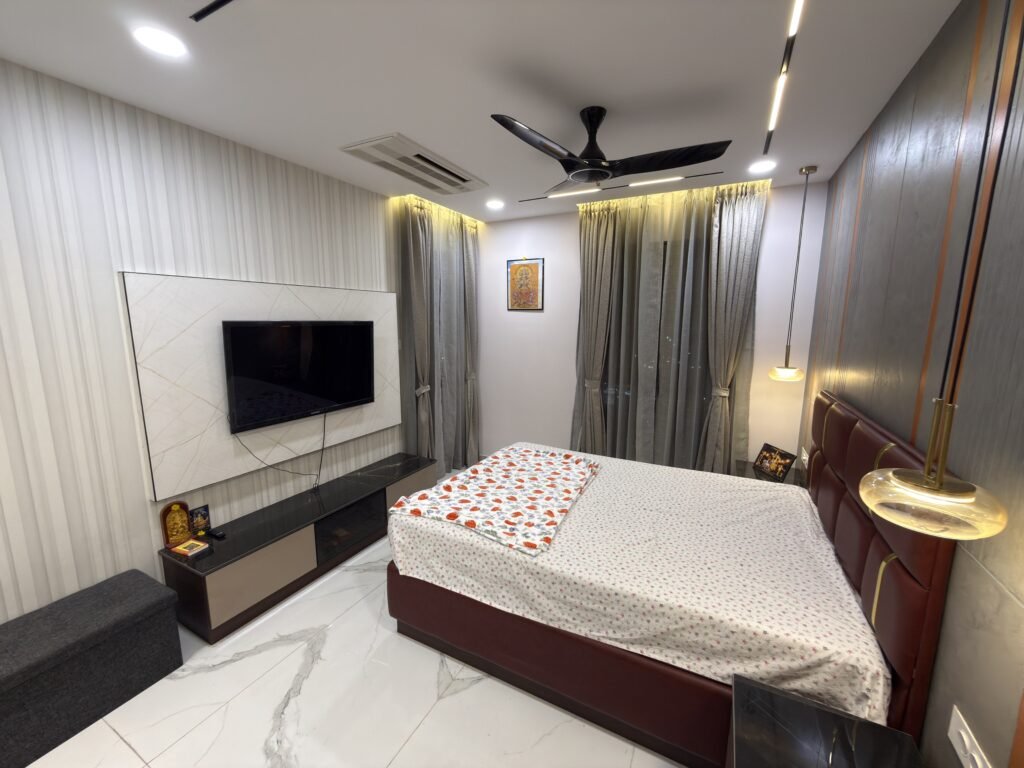
What colour combination works best for a bedroom false ceiling?
Bedrooms usually benefit from quieter combinations.
White and warm wood, off-white and beige, or white with a soft neutral accent can work well when the objective is a calm atmosphere.
The ceiling should also work with the bed wall and wardrobe.
A heavily patterned ceiling combined with an elaborate headboard and detailed wardrobe can create too many competing focal points.
A simpler ceiling with controlled indirect lighting often gives the bedroom a more balanced appearance.
For room-specific ceiling planning, the Decore Designz guide to false ceiling design for bedrooms can be used alongside this colour guide.
The living room allows more flexibility because it is usually a more visible social space.
White and wood, white and beige, white and soft grey, and light neutral combinations can all work depending on the interior style.
The ceiling should be coordinated with:
- Sofa and seating
- TV wall
- Flooring
- Curtains
- Feature walls
- Lighting
- Dining area, if the spaces are connected
In an open living-dining layout, the ceiling colour can also help connect the two zones.
For example, keeping the main ceiling consistent while using a subtle wood or neutral accent above the dining area can create visual zoning without physically separating the spaces.
The broader false ceiling design ideas for hall and living room guide covers how ceiling shape, fan position, lighting and room proportions affect the design.
What colour combination works best for a living room false ceiling?

Common false ceiling colour mistakes to avoid
Choosing the colour before the rest of the interior
The ceiling should be selected after considering the major finishes. Otherwise, the ceiling may force unnecessary changes elsewhere.
Using too many colours
A ceiling normally needs fewer colours than a wall or furniture composition.
One dominant colour plus one controlled accent is often enough.
Making every room identical
A home can have a consistent palette without using exactly the same ceiling design and colour in every room.
The living room, bedroom, kitchen and passage have different functions and lighting conditions.
Ignoring natural light
A colour that looks balanced in a brightly lit room may feel much heavier in a darker room.
Choosing colours from a screen alone
Digital images are useful for inspiration but can distort colour. Always check actual material, paint or finish samples in the intended room.
Forgetting the ceiling height
A visually heavy colour can make a low ceiling feel lower. Before selecting a dark or layered ceiling treatment, understand how much height the construction will use.
How should you choose a false ceiling colour combination?
- Start with the room.
Check dimensions, ceiling height and natural light. - Identify the dominant colours.
Look at flooring, furniture, walls and large finishes. - Choose the ceiling’s base colour.
White, off-white or a light neutral is often a useful starting point. - Add one supporting colour or finish.
This could be wood, beige, grey or a muted accent.
- Coordinate the lighting.
Check how the selected colours look under the actual lighting plan. - Review the complete room.
The ceiling should support the furniture and walls rather than compete with them. - Test samples before execution.
A small sample can reveal differences that are difficult to see in a digital render.
Final Takeaway
The best false ceiling colour combination is usually not the most dramatic one. It is the one that makes the ceiling feel connected to the rest of the room.
White with wood can add warmth. White with beige can soften a room. White with grey can support a contemporary palette. Off-white with taupe can create a quieter interior. A muted accent colour can work when it is repeated elsewhere in the room.
The right decision depends on ceiling height, natural light, furniture, flooring, wall colours and the lighting plan.
If you are planning a complete home interior in Hyderabad, Decore Designz Studio can coordinate the false ceiling with furniture, lighting, wall finishes and the wider interior design rather than treating the ceiling as an isolated element.
Frequently Asked Questions
What is the best false ceiling colour combination?
There is no single best combination for every room. White with warm wood, white with beige and white with soft grey are versatile starting points, but the right choice depends on the room’s size, natural light, ceiling height and existing interior palette.
Which colour is best for a false ceiling in a small room?
Light colours such as white, off-white and light neutrals are generally easier to use in small rooms because they keep the ceiling visually light. The ceiling design itself should also avoid unnecessary layers.
Can a false ceiling be two colours?
Yes. Two-colour false ceiling combinations can work well when one colour remains dominant and the second is used as a controlled accent.
Should the ceiling be lighter or darker than the walls?
Either can work. A lighter ceiling can help maintain an open feeling, while a darker ceiling can create a stronger architectural feature. The choice should consider ceiling height, natural light and the overall interior palette.
Can I use wood colour in a false ceiling?
Yes. Wood or wood-finish accents can add warmth to a false ceiling. They are usually more balanced when used selectively rather than covering the entire ceiling, particularly in smaller rooms.
Does false ceiling colour affect lighting?
Yes. The colour and finish of the ceiling affect how the room appears under artificial light. Warm and cool lighting can also change how neutral and wood tones are perceived.
Should the false ceiling match the wall colour?
It does not have to match exactly. Similar or complementary colours can create a cohesive transition, while a controlled contrast can give the ceiling more definition.
Can dark colours be used for false ceilings?
Yes, but dark colours should be used deliberately. A dark recessed panel or accent can create depth, while covering a large low ceiling in a dark colour may make the room feel more enclosed.