

Living Room Sofa Design: Types, Sizes and How to Choose
A good living room sofa design should do more than look attractive. It should fit the room, support the way your family relaxes and allow people to move around comfortably. The right choice depends on the sofa’s shape, seat depth, upholstery, frame, colour and available floor space. Before selecting a living room sofa set, measure your room and consider how you use it every day.

What Are the Main Types of Living Room Sofas?
Different sofa styles suit different rooms and routines. Before choosing a design, consider how many people need to sit, how much space is available and whether the sofa should create a formal or relaxed atmosphere.
1. Straight Sofa
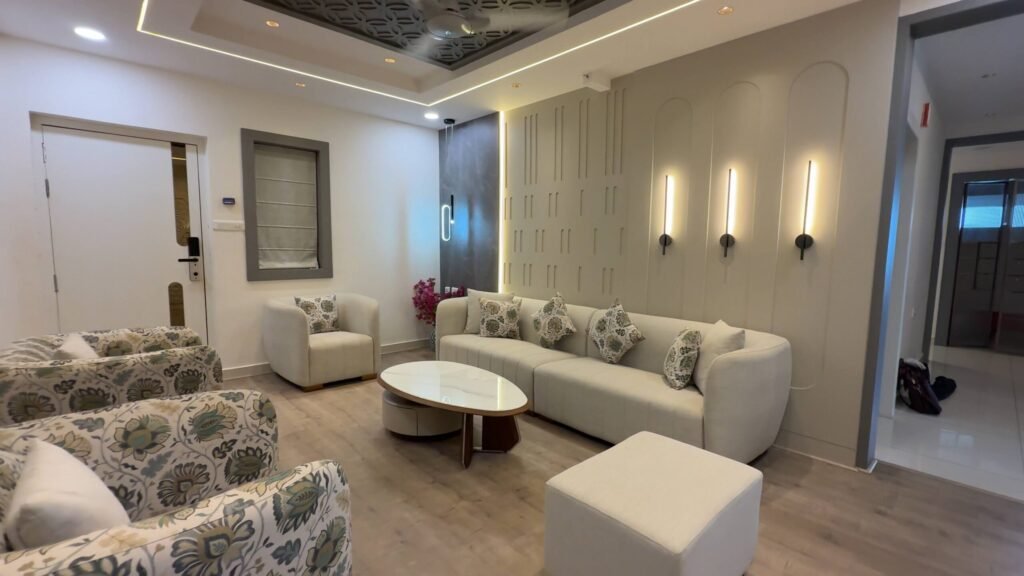
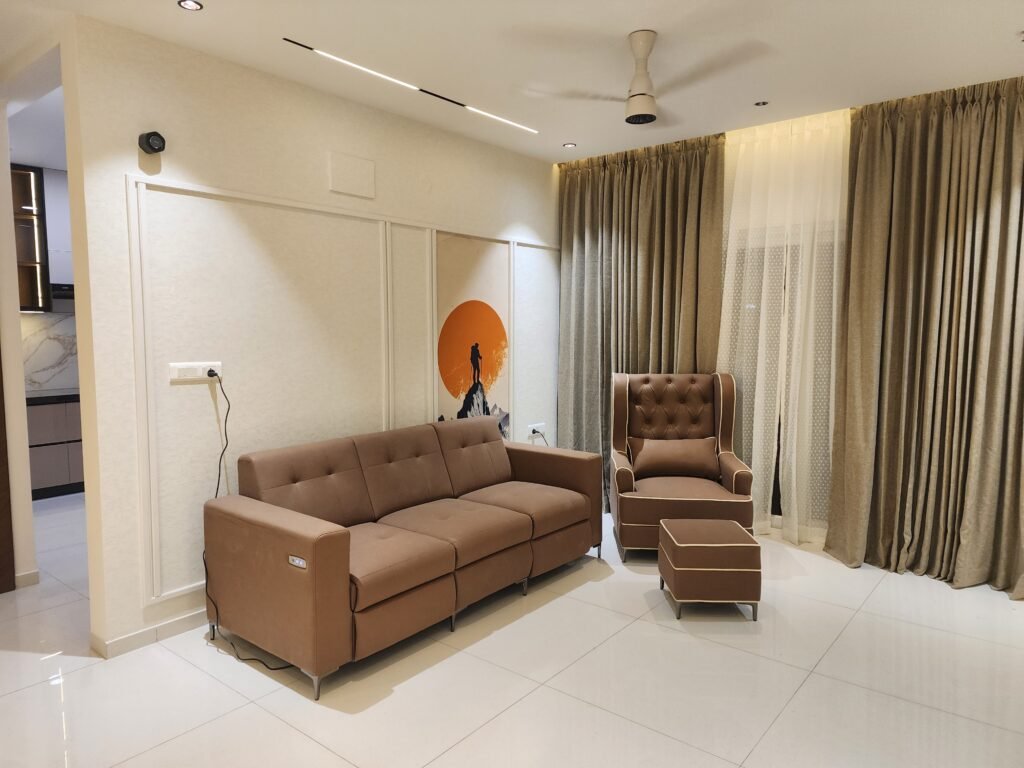
A straight sofa has a single linear seating arrangement and works well in many Indian apartments. It can sit against a wall, face the television or form part of a larger seating arrangement.
Best for: Compact and medium-sized living rooms, straightforward layouts and homeowners who want flexible furniture placement.
What to consider: Measure the full length, including the arms. A wide-arm design can occupy more space than expected, even when the seating capacity is similar.
2. L-Shape Sofa
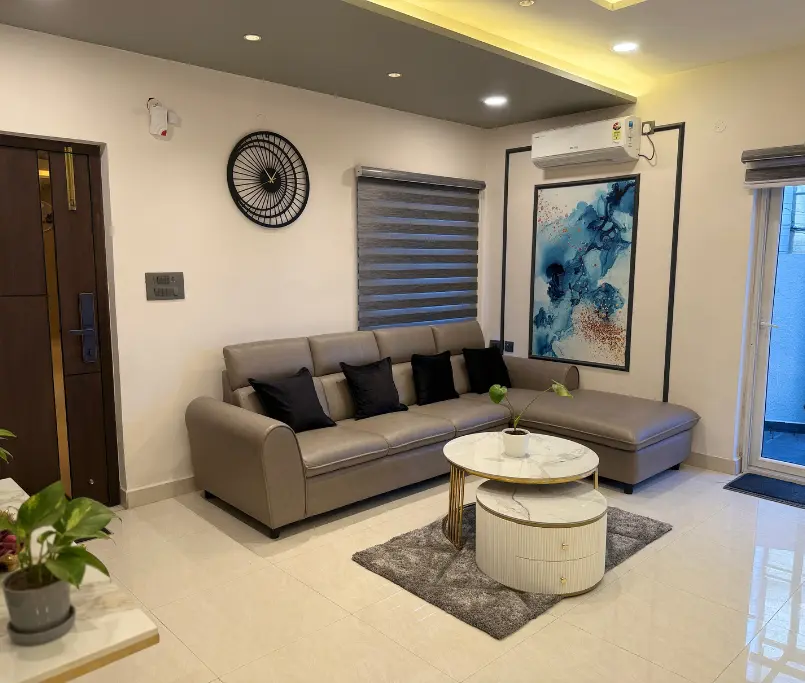
An L-shape sofa combines two seating sections at a right angle. It can define a seating zone in an open-plan room and provide several seats without requiring separate sofa units.
However, the return section needs careful planning. It may obstruct a passage or interfere with access to a balcony, dining area or television unit.
3. Modular Sofa
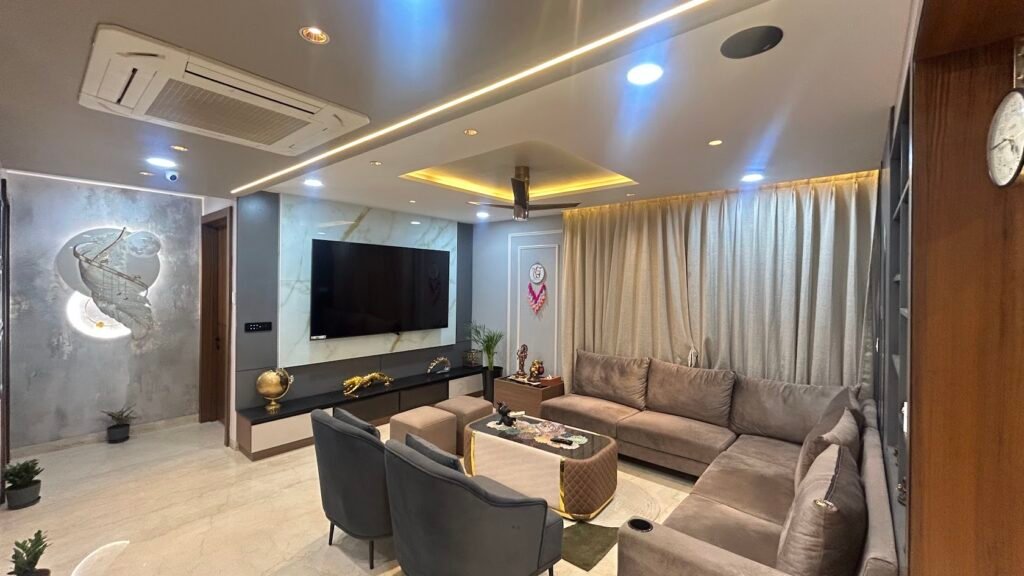
A modular sofa consists of individual sections that can be arranged in different configurations, depending on the design. It may suit households that want flexibility or expect their furniture needs to change.
Best for: Larger living spaces, adaptable layouts and families who prefer configurable seating.
What to consider: Check how securely the sections connect, whether the arrangement fits your room and how easy it is to clean between modules.
4. Loveseat or Compact Two-Seater
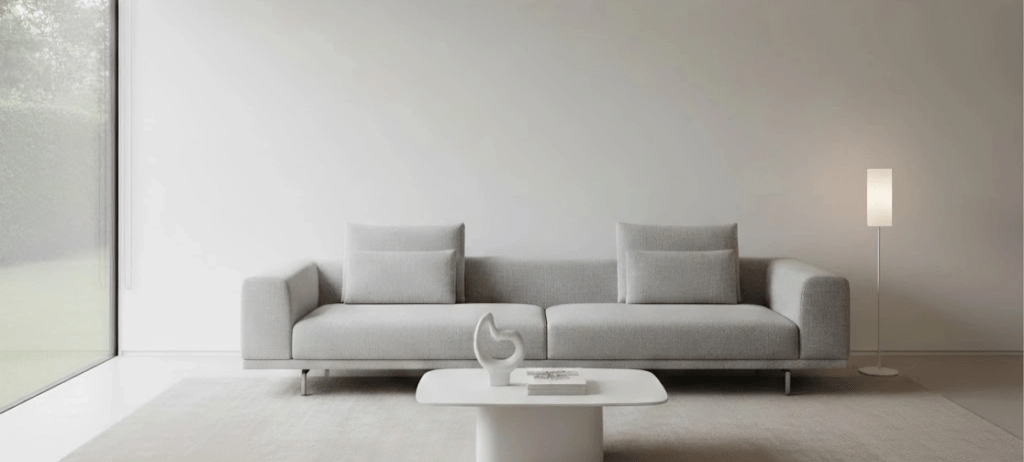
A loveseat provides seating for two people and can work well where a full-size sofa would feel bulky. It may also complement an existing seating arrangement.
Best for: Small apartments, secondary seating areas and rooms where preserving open floor space is important.
What to consider: Do not judge the fit by the seat count alone. Arm thickness, back height and overall depth affect how much room the sofa occupies.
5. Three-Seater Sofa
A three-seater is a common choice for family living rooms. It offers more seating than a compact sofa while retaining a simple, familiar form.
Best for: Families who want a primary seating piece without introducing a more complex layout.
What to consider: Confirm that the sofa fits the wall or designated seating zone while leaving enough space for circulation.
How Do You Choose the Right Sofa Size for Your Living Room?
The right sofa size depends on the room’s dimensions and the space required around it. A sofa may fit against a wall yet still make the room uncomfortable if it blocks a walkway or crowds the entrance.
Before ordering, follow these steps:
- Measure the available area. Record the wall length and the usable floor depth, accounting for doors, windows and other fixed features.
- Mark the sofa footprint. Use masking tape on the floor to outline the proposed length and depth. This helps you visualise how much space remains.
- Check the walkways. Preserve clear routes between the entrance, seating area, balcony, dining space and other frequently used areas.
- Account for doors and drawers. Ensure that doors can open fully and nearby storage can be accessed without moving the sofa.
- Measure the delivery route. Check doorways, lifts, staircases and turns before ordering a large or modular piece.
What Sofa Seat Depth Is Most Comfortable?
Seat depth affects posture and how people use the sofa. A shallower seat can feel more supportive for upright sitting, while a deeper seat may suit lounging.
The best choice depends on the intended use and the people who will use it. If possible, sit on the sofa before ordering. Check whether your feet rest comfortably, your back receives adequate support and you can stand up without difficulty.
Also check the overall seat height, back support, arm height and cushion firmness. A sofa can look impressive in a photograph but feel uncomfortable during everyday use.
Which Sofa Upholstery Is Best for Hyderabad Homes?
Fabric and leather-style upholstery each have advantages. The better option depends on the room’s ventilation, sunlight, maintenance routine, household needs and preferred appearance.
Upholstery option | Advantages | What to consider |
Woven fabric | Offers a wide choice of textures, colours and patterns | Check stain resistance, cleaning instructions and how the fabric handles daily wear |
Performance fabric | Some options are designed for easier cleaning and greater resistance to stains | Confirm the specific fabric’s care requirements rather than relying on the label alone |
Leather | Provides a smooth surface and a distinct, structured appearance | Can feel warm against the skin; check care requirements and exposure to direct sunlight |
Leatherette | Offers a leather-like appearance and is generally easy to wipe | Quality varies; inspect breathability, surface durability and how it may wear over time |
Velvet or textured upholstery | Adds visual depth and a more pronounced finish | May require more careful cleaning and can show marks or pressure changes depending on the fabric |
Fabric vs Leather: What Should You Consider?
For Hyderabad homes, consider how the room behaves throughout the year rather than choosing upholstery based on appearance alone. A well-ventilated room, direct afternoon sunlight and frequent daily use can affect how different materials feel and age.
Fabric offers extensive choices in texture and colour, but cleaning needs vary by weave and finish. Leather and leatherette can be easier to wipe, although they may feel warmer and require attention to sunlight and surface care.
Ask for a material sample where possible. Check its feel, colour in your room’s lighting and cleaning instructions before making a final decision.
How Should You Choose a Sofa Colour?
The sofa colour should work with the room’s overall palette, not just with the wall behind it. Consider the flooring, wall finish, natural light and other permanent elements before choosing upholstery.
- Beige and warm neutrals: Work well in calm, understated interiors and can pair with a range of wall colours.
- Grey: Offers a versatile option for contemporary spaces, although its undertone should complement the flooring and lighting.
- Brown: Can add warmth and a grounded appearance, particularly alongside wood finishes.
- Green: Can introduce colour without relying on a bright or highly saturated palette. The result depends on the shade, upholstery texture and surrounding finishes.
- Blue: Can create a distinct focal point when balanced with suitable neutral surfaces.
Are Green Sofas a Good Choice for Living Rooms?
Green can work well when you want the sofa to become a feature of the room. Muted olive and sage tones can feel restrained, while deeper greens create a stronger visual statement.
Before choosing a shade, check it in both daylight and artificial lighting. Also consider whether the colour will work with the room if you repaint the walls or change other finishes later.
What Should You Check Before Ordering a Sofa?
A sofa is a frequently used piece of furniture, so inspect more than its appearance. The construction and upholstery should suit the way your household uses the room.
Frame and support: Ask about the frame material, joint construction and support system. These affect stability and long-term performance.
Cushion filling: Compare the available fillings and ask how they retain their shape with regular use. A softer cushion is not automatically more comfortable or more durable.
Upholstery quality: Check the fabric composition, cleaning instructions and suitability for your household. If you have children or pets, maintenance may be especially important.
Dimensions: Confirm the complete external measurements, including arms, back and any projecting sections. Do not rely only on the stated seating capacity.
Maintenance: Ask whether cushion covers can be removed, whether replacement covers are available and what cleaning methods are recommended.
Daily comfort: Test the seat depth, back support and arm position if possible. Different people may prefer different firmness levels.
Room coordination: Check that the sofa’s scale and finish work with the existing interior. Our article on curves and fluidity in living room interiors explores how softer forms can influence the feel of a space.
Should You Choose a Ready-Made or Customised Sofa?
A ready-made sofa can be suitable when its dimensions, comfort and finish already meet your requirements. It also allows you to inspect the finished product before purchasing, where showroom availability permits.
A customised sofa may be worth considering when the room has unusual dimensions, a specific seating requirement or a design direction that standard options do not meet. However, customisation requires clear decisions about measurements, materials, construction and finishing.
Read our guide to the importance of customised furniture to understand where made-to-measure solutions can help.
Before placing an order, confirm the final dimensions, upholstery selection, cushion specification, delivery access and agreed scope. These details help prevent avoidable problems after the sofa arrives.
How Can You Make Sure the Sofa Fits the Overall Interior?
Treat the sofa as part of the room’s design rather than an isolated purchase. Its proportions should relate to the room’s scale, while its colour and texture should complement the surrounding finishes.
For example, a visually heavy sofa may dominate a compact room even if its measurements technically fit. A sofa with slimmer arms and a more open base can sometimes make the same area feel less crowded.
Also consider how the sofa relates to the television wall, lighting and circulation routes. If you are planning a complete room, our living room interior design service in Hyderabad can help you coordinate furniture selection with the overall layout.
Choose a Sofa That Works for Your Home
The right living room sofa design balances comfort, dimensions, upholstery and appearance. Start with measurements and daily-use requirements, then compare sofa styles and materials that suit your home.
Decore Designz Studio designs residential interiors around how people actually live. If you are planning a living room in Hyderabad, contact our team to discuss your space, furniture requirements and design preferences.
Decore Designz Studio
Fourth Floor, Bhagyalaxmi Construction, KM Cube Building, 401, Ghousia Masjid Rd, Ramakrishnapur, Weaker Section Colony, Izzathnagar, HITEC City, Khanammet, Hyderabad, Telangana 500084
Phone: +91 96182 18055
Email: decoredesignzstudio@gmail.com
Website: https://decoredesignz.com/
Frequently Asked Questions
Which sofa is best for a small living room?
A compact straight sofa or loveseat can work well because it keeps the layout simple. Measure the available area, check the sofa’s overall depth and preserve clear walkways before choosing a design.
Which sofa material is easiest to maintain?
Wipe-clean surfaces may be convenient for everyday spills, while some fabric options offer stain-resistant finishes. The best choice depends on the exact material and its care instructions.
Is a firm or soft sofa better?
Neither is universally better. The right firmness depends on personal comfort, posture and intended use. Test the seat and back support where possible before ordering.
Should the sofa match the wall colour?
No. The sofa should coordinate with the wall colour rather than necessarily match it. A complementary shade or a restrained contrast can create a more balanced interior.
Is a customised sofa worth considering?
It can be useful when standard sizes or finishes do not suit the room. Compare the proposed dimensions, construction, upholstery and maintenance needs before making a decision.