

Curtains in Interior Design: How to Choose the Right Look for Your Home
Curtains are easy to treat as a finishing touch, but they can influence much more than the appearance of a window. Curtains in interior design affect light, privacy, proportions, colour balance and the overall mood of a room.
The right curtain can make a room feel softer and more finished. The wrong one can make a well-planned room feel heavy, short or visually disconnected.
That is why curtain selection is better done as part of the interior design rather than after everything else is complete.
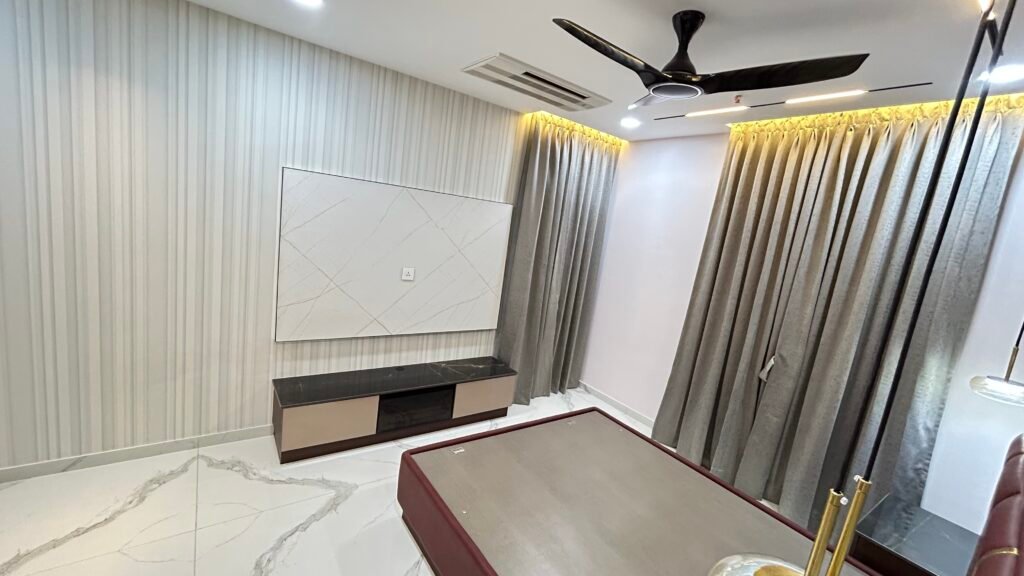
Why Curtains Matter in Interior Design
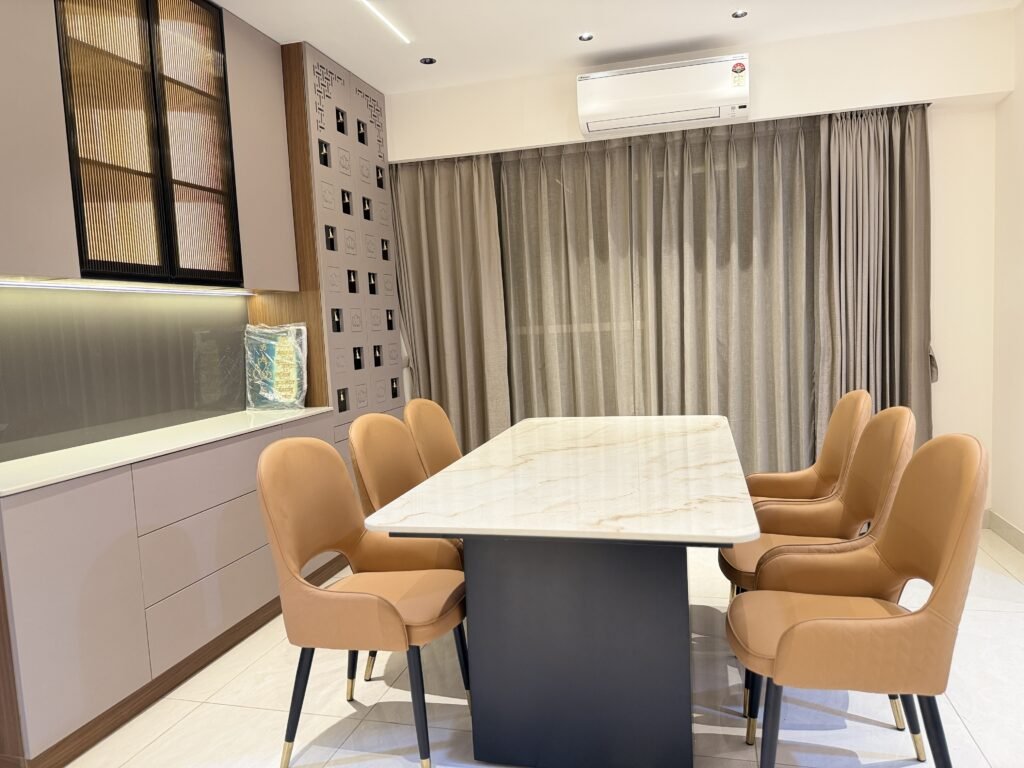
Curtains can help with several practical and visual requirements:
- Controlling natural light
- Improving privacy
- Adding softness to hard surfaces
- Bringing colour or texture into a room
- Making windows appear larger
- Creating a sense of height
- Dividing spaces when needed
- Reducing some echo in rooms with many hard surfaces
The important part is choosing curtains according to how the room is actually used.
A bedroom may need better light control and privacy. A living room may benefit from softer daylight. A home theatre may need stronger blackout control. There is no single curtain solution for every room.
1. Start With Light, Not Colour
One of the first questions to ask is how much natural light the room receives.
A bright living room may work beautifully with lightweight or sheer curtains that soften sunlight without completely blocking it.
A bedroom may need a combination of sheer and blackout curtains, particularly if the room receives strong morning sunlight.
This is why curtain selection should happen alongside lighting and window planning rather than as an afterthought.
If the room already has enough natural light, heavy curtains may make it unnecessarily dark during the day.
If privacy is a concern, a sheer layer can provide daytime filtering while a heavier layer gives more privacy when required.
2. Sheer, Blackout or Layered Curtains?
The three approaches serve different purposes.
Sheer Curtains
Sheers allow natural light to enter while softening the view through the window.
They work well when you want a room to remain bright and relaxed during the day.
Blackout Curtains
Blackout curtains provide stronger light control and are particularly useful in bedrooms, media rooms and spaces where daytime darkness is desirable.
Layered Curtains
Layering a sheer curtain with a heavier curtain gives you more control.
During the day, you can use the sheer layer for filtered light. In the evening, the heavier curtain can provide additional privacy and darkness.
For many homes, layered curtains are useful because they combine appearance with flexibility.
3. Choose Curtain Length Carefully
Curtain length can change how tall or short a room appears.
Curtains that extend close to the floor generally create a more continuous vertical line and can make the window treatment feel more integrated with the room.
For a more refined look, the curtain rod can be positioned higher than the actual window frame, depending on the architecture and available wall space.
However, this does not mean every curtain should simply be hung as high as possible.
The location of the ceiling, false ceiling, window frame, furniture and curtain track all need to be considered together.
Good curtain design is usually about proportion rather than following one fixed rule.
4. Think About Fabric and Texture
The fabric affects both appearance and performance.
Lightweight fabrics create a softer, airier feeling. Heavier fabrics can introduce more visual depth and provide stronger light control.
The choice should also consider maintenance.
For a frequently used living room, a fabric that is practical to clean may make more sense than one chosen purely for its appearance.
Similarly, a bedroom curtain may be selected for softness and light control, while a formal living room may allow more emphasis on texture and visual richness.
The best material is therefore not necessarily the most expensive one. It is the one that works for the room.
5. How Should Curtain Colours Be Chosen?
Curtains do not always need to match the sofa exactly.
In fact, exact matching can sometimes make the room feel too coordinated.
Instead, look at the existing colour palette:
- Wall colour
- Flooring
- Sofa upholstery
- Rugs
- Wood finishes
- Accent colours
- Artwork
- Bed upholstery or headboard
Neutral curtains can quietly connect several elements without competing with them.
A deeper curtain colour can become a stronger visual element in an otherwise restrained room.
If the rest of the interior already has several patterns and colours, a simpler curtain may create better balance.
The goal is coordination, not repetition.
6. Curtains Can Change the Perceived Size of a Room
Curtains are particularly useful when working with proportions.
In a smaller room, overly bulky curtains or excessive fabric can make the window area feel heavy.
A simpler treatment with appropriate proportions can keep the room visually lighter.
In a taller room, full-length curtains can reinforce the vertical character of the space.
In open-plan homes, curtains can also help define areas without permanently closing them off.
For example, a curtain can provide temporary privacy around a study area while allowing the larger space to remain visually connected when the curtain is open.
7. Curtains in Living Room Interior Design
The living room is often where curtain design becomes part of the larger visual composition.
Look at the relationship between the curtains and:
- Sofa
- TV unit
- Accent wall
- Flooring
- Coffee table
- Lighting
- Windows and balcony doors
If the living room already has a strong TV wall or statement furniture, quieter curtains may work better.
If the room has a simple neutral palette, texture or subtle colour in the curtains can add depth.
For larger windows and balcony openings, curtain tracks should also be planned around furniture movement and access rather than simply covering the opening.
8. Curtains in Bedroom Interior Design
Bedrooms usually need a stronger balance between comfort, privacy and light control.
A combination of sheer and blackout curtains can be practical here.
The colour can also contribute to the feeling of the room. Softer neutrals and muted tones can support a calm bedroom without making the curtains the main feature.
Curtain placement should also be coordinated with wardrobes, bedside tables and the bed position.
This is particularly important in smaller bedrooms, where every few inches of usable wall and floor space can matter.
9. Common Curtain Mistakes to Avoid
Even a beautiful fabric can look wrong if the installation or proportion is not considered properly.
Choosing curtains only for colour
A colour may look attractive in a sample but behave differently under natural and artificial light.
Ignoring the window proportions
The curtain treatment should relate to the actual window, wall and room proportions.
Using too much fabric
Excessive volume can make smaller rooms feel heavy.
Forgetting maintenance
A fabric that is difficult to clean may become frustrating in a frequently used room.
Selecting curtains at the very end
Curtain tracks, pelmets, ceiling details and electrical points may need to be coordinated earlier.
Matching everything too closely
Curtains do not need to exactly match every piece of furniture. Good interiors usually have relationships between colours and textures rather than identical elements.
Curtains Should Be Planned With the Interior, Not After It
A well-designed home is made from many small decisions that need to work together.
Curtains are one of those decisions.
They interact with natural light, furniture, wall colours, flooring, ceiling details and the way the family uses each room. That is why curtain selection becomes easier when it is considered during the overall interior design process.
At Decore Designz, our approach is to design homes around the way people actually live. Window treatments are one part of that larger process, where comfort, functionality and visual balance need to work together.
If you are planning your home interiors and want the details—from furniture and lighting to curtains and finishes—to feel connected rather than added one by one, speak with our team about your project.
Frequently Asked Questions
Why are curtains important in interior design?
Curtains influence light, privacy, colour, texture and the perceived proportions of a room. They can also soften spaces and help create a more finished interior.
Are sheer curtains better than blackout curtains?
They serve different purposes. Sheer curtains provide filtered daylight and privacy during the day, while blackout curtains provide stronger control over light. Layering both can offer greater flexibility.
Should curtains match the sofa?
They do not have to match exactly. Curtains can instead complement the sofa, flooring, walls and other elements through related colours or textures.
Are floor-length curtains better for interiors?
Floor-length curtains can create a stronger vertical line and a more continuous appearance, but the correct length depends on the room, window, furniture and installation details.
Are curtains part of interior design?
Yes. Curtains are both functional and visual elements of an interior. Their material, colour, length, placement and light-control properties can affect how a room looks and feels.