

The Evolution of Interior Design: Past, Present and Future
The evolution of interior design is really the evolution of how people live. Homes have moved from heavily ornamental spaces to more functional, personalised and technology-aware environments, but the basic purpose of design has remained the same: making a space work for the people who use it.
Today, interior design sits somewhere between architecture, lifestyle, technology, craftsmanship and personal expression. Looking at how interiors have changed helps explain why today’s homes look the way they do — and where design is heading next.
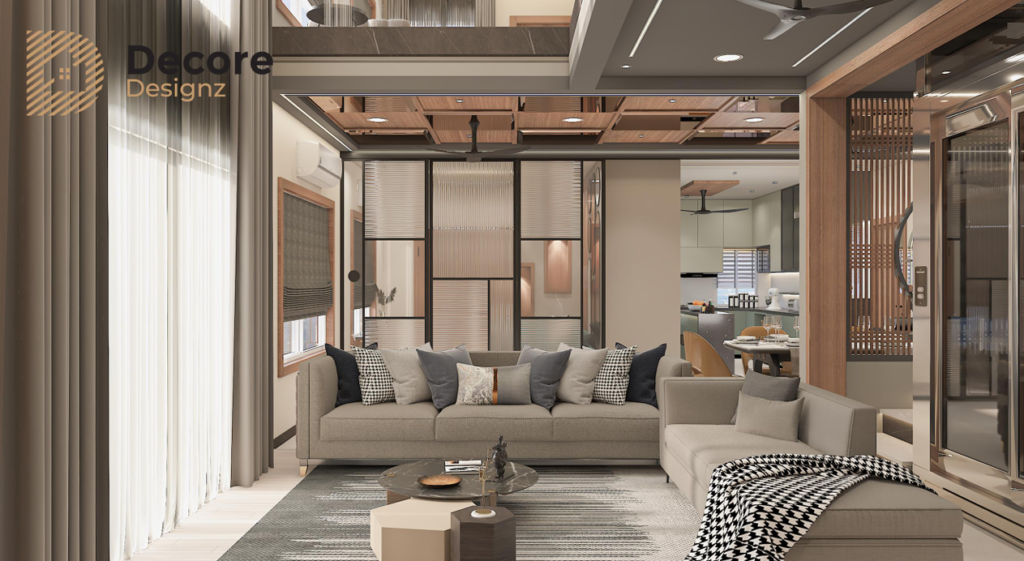
A Short History of Interior Design
Interior design did not begin as a separate modern profession. For centuries, the arrangement of homes was shaped by local materials, climate, culture, available craftsmanship and the social position of the people living there.
Traditional Indian homes, for example, often used locally available timber, stone, textiles, handcrafted furniture and decorative elements. Hyderabad’s own interiors have also changed considerably over time, moving from more ornate traditional environments toward contemporary homes focused on functionality, storage, natural light and modern technology.
The important point is that older interiors were not simply “traditional.”
They were responses to the way people lived at that time.
As lifestyles changed, homes changed with them.
1. Traditional Interiors: Craftsmanship Came First
Earlier interiors were heavily influenced by craftsmanship.
Wood carving, decorative ceilings, patterned textiles, handcrafted furniture, ornamental details and locally available materials played an important role.
In many traditional Indian homes, furniture was also expected to last for generations.
Design was therefore closely connected to:
- Craftsmanship
- Local materials
- Cultural traditions
- Climate
- Family structure
- Practical household needs
Decoration was not necessarily separate from function.
A carved wooden element could be structural, decorative and culturally significant at the same time.
1. Traditional Interiors: Craftsmanship Came First
Earlier interiors were heavily influenced by craftsmanship.
Wood carving, decorative ceilings, patterned textiles, handcrafted furniture, ornamental details and locally available materials played an important role.
In many traditional Indian homes, furniture was also expected to last for generations.
Design was therefore closely connected to:
- Craftsmanship
- Local materials
- Cultural traditions
- Climate
- Family structure
- Practical household needs
Decoration was not necessarily separate from function.
A carved wooden element could be structural, decorative and culturally significant at the same time.
What We Can Learn From Traditional Design
One thing traditional interiors understood particularly well was material character.
Natural wood showed its grain. Stone had variation. Textiles carried texture. Handcrafted objects were not expected to look identical.
That appreciation for material character is returning in contemporary interiors, although in a much more restrained form.
2. The Move Towards Modern Interior Design
The next major stage in the evolution of interior design came with modernism.
The focus shifted toward cleaner forms, simpler spaces and greater functionality.
Instead of filling rooms with decorative elements, designers began asking:
What does this space actually need to do?
This changed furniture, architecture, storage and room planning.
Clean lines became more important. Unnecessary ornamentation was reduced. Open spaces and functional furniture became increasingly relevant.
Modern design also introduced a stronger relationship between form and function.
The result was not simply a different visual style.
It was a different way of thinking about the home.
3. Contemporary Interiors Became More Personal
Modernism established simplicity and function. Contemporary design expanded the idea further.
Today’s contemporary interiors can combine clean architectural forms with natural materials, softer furniture, artwork, technology and personalised details.
There is no single contemporary look.
A contemporary Hyderabad apartment can be completely different from a contemporary villa because the layout, family requirements, climate, available space and lifestyle are different.
This is one reason we avoid treating interior design as a fixed template at Decore Designz Studio.
A design that works beautifully in a large villa may be completely wrong for a compact apartment.
4. The Rise of Functional Space Planning
One of the most important changes in the history of interior design has been the increasing importance of space planning.
As urban homes became more compact and lifestyles became more complex, every square foot started to matter.
A modern home may need to accommodate:
- Family living
- Work from home
- Study
- Entertainment
- Storage
- Cooking
- Dining
- Exercise
- Guest accommodation
This has pushed interior design beyond decoration.
Furniture placement, circulation, storage and multifunctional spaces now have a direct influence on how comfortable a home feels.
Decore Designz’s 3BHK apartment project in Hitech City is a useful example. The project combines customised furniture and storage with planned lighting and space-efficient layouts across the living room, dining area, bedrooms and kitchen.
That is the practical side of contemporary interior design: the finished space needs to work before it needs to impress.
5. Technology Changed the Way Homes Are Designed
Technology has influenced interior design in two different ways.
First, technology changed how designers work.
3D visualisation, digital drawings and increasingly sophisticated design software allow homeowners to understand a proposed interior before execution.
Second, technology changed the home itself.
Lighting, curtains, security, climate control, entertainment systems and appliances can now be integrated into the interior.
This means electrical planning and technology requirements need to be considered much earlier in the design process.
A smart home cannot simply be added at the end.
The wiring, controls, lighting and furniture relationships need to be planned together.
6. Sustainability Became Part of the Design Conversation
Another major development in the evolution of interior design is the growing attention given to environmental impact.
Sustainable interior design is moving beyond simply adding indoor plants.
Current conversations include:
- Lower-impact materials
- Low-VOC finishes
- Natural materials
- Energy-efficient lighting
- Responsible sourcing
- Durable furniture
- Reuse and restoration
- Passive cooling and natural ventilation
Current 2026 Indian design coverage also places strong emphasis on natural materials, low-VOC finishes, climate-conscious design and energy efficiency.
The important shift is that sustainability is increasingly being considered as part of performance and longevity, not just aesthetics.
A material that lasts longer and does not need frequent replacement can be a more sensible choice than a fashionable finish that dates quickly.
7. From Cold Minimalism to Warmer Minimalism
Minimalism itself has evolved.
The earlier interpretation often focused on stark white spaces, extremely simple furniture and very little visual detail.
Today’s version is warmer.
Current Indian interior design coverage points toward warm whites, beige, natural wood, tactile materials, earthy colours and softer lighting.
This is sometimes described as warm minimalism.
The idea is simple:
Keep the space visually calm without making it feel empty.
Natural wood can add warmth. Textured walls can add depth. Fabric can soften hard surfaces. Layered lighting can change the atmosphere during the evening.
The room remains clean, but it feels more lived in.
8. The Return of Natural Materials and Texture
The current evolution of interior design is also bringing greater attention to material texture.
Natural wood, stone, lime-based finishes, textiles, terracotta and other tactile materials are increasingly being used to give contemporary homes more character. Current 2026 trend coverage in India repeatedly highlights natural materials, warmer woods and tactile surfaces.
This does not mean every home needs to become rustic.
A modern apartment can use one natural wood wall, a textured fabric headboard or a stone surface while keeping the rest of the interior clean and contemporary.
The goal is balance.
9. Interior Design Is Becoming More Personal
Perhaps the biggest change in recent years is that homeowners are becoming less interested in copying a complete style.
Instead, they are combining influences.
A homeowner may want:
- Modern furniture
- Traditional Indian artwork
- Natural wood
- Contemporary lighting
- Family heirlooms
- Handmade accessories
- Smart technology
The result may not fit neatly into one design category.
That is not necessarily a problem.
The strongest homes often reflect the people living in them rather than looking like a showroom designed around one trend.
Recent Indian design coverage also identifies this movement toward more personal, lived-in interiors rather than perfectly staged spaces.
What Is the Current Direction of Interior Design in 2026?
The current direction is less about one dominant style and more about several ideas coming together.
Warm and tactile materials
Natural wood, stone, textiles and textured surfaces are replacing some of the colder, highly polished finishes that dominated earlier modern interiors.
More flexible spaces
Rooms increasingly need to support multiple activities. Work, study, relaxation and entertainment may happen in the same home, sometimes in the same room.
Layered lighting
Lighting is becoming part of the architecture rather than simply a ceiling fixture. Ambient, task and accent lighting allow one space to perform differently throughout the day.
Softer forms
Curved furniture, rounded edges and organic shapes are becoming more common in contemporary homes.
Natural and earthy colours
Terracotta, sage, brown, warm beige and other grounded colours are increasingly replacing the dominance of cool grey palettes.
Technology that stays discreet
Smart lighting, automation and connected appliances are becoming more integrated into interiors without necessarily becoming visual focal points.
What Will Interior Design Look Like in the Future?
The future of interior design is unlikely to be one specific style.
Instead, it will probably be more adaptive.
Homes will need to respond to changing lifestyles, technology, climate and personal requirements.
1. More Multifunctional Homes
A bedroom may need to accommodate work. A dining area may become a study. A balcony may become a reading space.
Furniture and partitions will increasingly need to support these changes without making the home feel temporary.
2. Smarter but Quieter Technology
Technology will become more integrated into the background.
Instead of making a home look futuristic, smart systems are likely to become easier to use and less visually obvious.
3. Greater Material Responsibility
Homeowners and designers will continue to pay more attention to where materials come from, how long they last and what happens when they eventually need replacement.
4. More Climate-Responsive Interiors
In Indian homes, ventilation, shading, daylight, insulation, energy efficiency and heat management will become increasingly important design considerations.
5. More Individual Design
The future home will probably be less about following one style and more about creating an environment that reflects the people living there.
That may be the most important evolution of all.
What Has Not Changed in Interior Design?
Despite all these changes, some principles remain constant.
A good interior still needs:
Good proportions.
Furniture needs to fit the room.
Comfortable movement.
A beautiful layout that is difficult to move through is not a successful layout.
Useful storage.
Storage needs to reflect what people actually own.
Good lighting.
Natural and artificial light affect how a space feels throughout the day.
Durable materials.
The interior needs to survive everyday use.
A connection to the people living there.
The home should feel personal.
Technology changes.
Colours change.
Furniture trends change.
But these fundamentals do not.
The Evolution of Interior Design at Decore Designz
At Decore Designz Studio, we see this evolution in the residential projects we design and execute.
The emphasis has moved beyond simply making a room look attractive. Space planning, storage, customised furniture, lighting, material selection and everyday usability now have to work together.
Our Hitech City 3BHK project, for example, combines modern aesthetics with customised furniture, integrated storage, planned lighting and practical space planning.
Our wider portfolio also spans apartments and homes in locations including Kokapet, Kompally, L.B. Nagar, Financial District, Madhapur, Serilingampalle, Kondapur and Hitech City. The variety of these projects is a useful reminder that contemporary interior design does not have to look identical from one home to another.
That is how we approach design:
Beautiful and luxury homes designed around the way people actually live.
Frequently Asked Questions
What is the evolution of interior design?
The evolution of interior design describes how the planning, decoration and use of interior spaces have changed in response to culture, technology, materials, architecture and lifestyle. Design has moved from strongly ornamental and craft-led interiors toward more functional, personalised, technology-aware and sustainable spaces.
How has interior design changed over time?
Interior design has moved from heavily decorative and traditional approaches toward modern and contemporary environments that place greater emphasis on function, space planning, comfort, storage and personalisation.
What are the current interior design trends in 2026?
Major 2026 directions include warm minimalism, natural and tactile materials, earthy colours, curved forms, layered lighting, flexible spaces, sustainable choices and more personalised interiors.
What is the future of interior design?
The future is likely to focus on adaptable spaces, integrated technology, sustainable materials, climate-responsive planning and interiors that respond more closely to individual lifestyles.
Is modern interior design better than traditional interior design?
Neither is automatically better. Traditional and modern design solve different needs. A good interior combines the elements that suit the home’s architecture, the available space and the people living there.
Why is sustainability becoming important in interior design?
Sustainability is becoming important because material selection, energy use, durability, maintenance and waste all affect the long-term performance of a home. Current design practice increasingly considers these factors alongside appearance.
Will interior design trends continue to change?
Yes. Trends change as lifestyles, technology, materials and cultural preferences change. The more durable approach is to keep the basic layout, storage and functional planning timeless while using trends selectively through finishes, furniture and accessories.
Final Thought
The evolution of interior design is not simply a story of traditional interiors becoming modern.
It is a story of people changing the way they live — and designers responding to those changes.
The homes of the future may be smarter, more sustainable and more flexible. But they will still need to feel comfortable, personal and useful.
That is the part of interior design that does not go out of style.
If you are planning a new home or renovating an existing one in Hyderabad, start with how you live today. The design should grow from there.