

Simple False Ceiling Designs for Small Budgets
A simple false ceiling design does not have to mean a plain or unfinished ceiling. In fact, keeping the design simple can be one of the most effective ways to control material, detailing and execution complexity while still improving lighting and the overall appearance of a room. For homeowners working with a smaller budget, the focus should be on fewer levels, clean lines, useful lighting and a design that suits the room rather than adding decoration for its own sake.
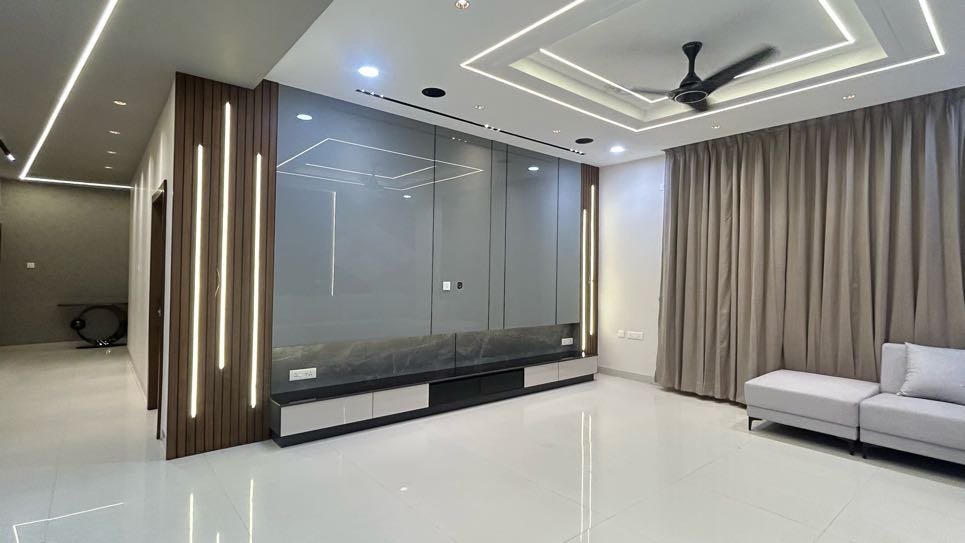
What makes a false ceiling design simple?
A simple false ceiling usually has fewer construction details and a clearer visual structure.
Instead of multiple levels, elaborate cut-outs and several decorative elements, the design may use one straightforward ceiling plane, a limited perimeter detail, recessed lighting or a small cove.
The advantage is not simply visual.
A simpler design can also mean:
- Fewer unnecessary ceiling elements
- Less visual clutter
- Easier coordination with electrical work
- Simpler lighting layouts
- Better suitability for apartments
- Easier maintenance
- Less risk of the ceiling overpowering the room
This is particularly useful in Hyderabad apartments where ceiling height and room dimensions can place practical limits on elaborate ceiling designs.
What are the best simple false ceiling designs?
The right design depends on the room, ceiling height, lighting requirement and overall interior. These are some of the simplest approaches that can work across residential spaces.
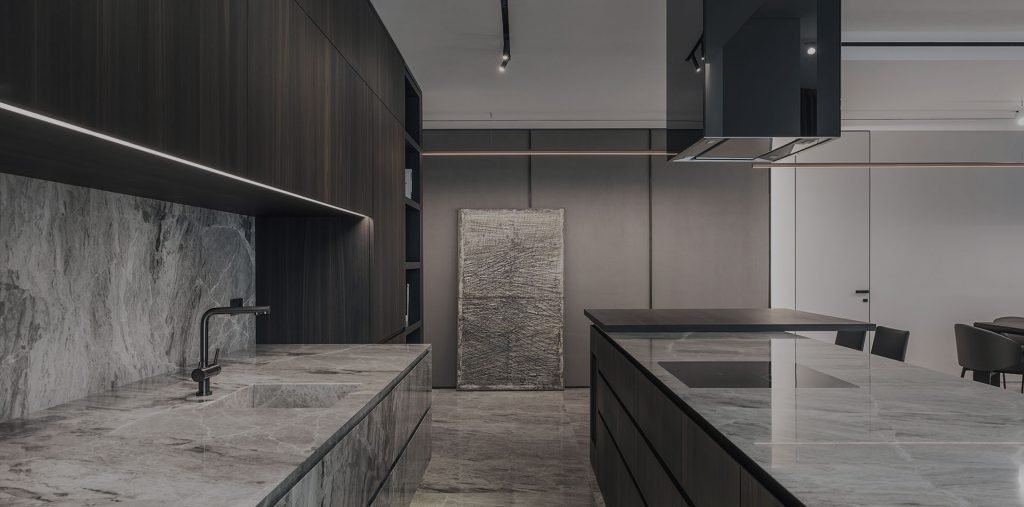
1. Single-layer false ceiling
A single-level ceiling is one of the most straightforward options.
The entire ceiling can be kept visually clean, with recessed lights or selected surface-mounted fixtures providing the required illumination.
This works particularly well when the rest of the room already has enough visual detail through furniture, wall finishes or storage.
The ceiling does not need to become another feature wall.
2. Simple perimeter false ceiling
A narrow perimeter treatment can create a finished edge around the room without introducing several ceiling levels.
It can also provide a place for indirect lighting if that is actually required.
This design is useful when you want some ceiling detailing without making the centre of the room feel heavy.
3. Simple cove ceiling
A small cove can introduce indirect light and a softer evening atmosphere.
The key is restraint.
A cove does not need to run through multiple layers or complicated shapes. A clean perimeter with concealed lighting can be enough.
The lighting itself should also be selected according to the room. Warm, soft lighting may suit a living or bedroom area, while a kitchen needs more functional illumination.
4. False ceiling with recessed lights
Sometimes the simplest design is simply a clean ceiling with correctly positioned recessed lights.
This approach puts the emphasis on lighting rather than decoration.
It is especially useful when the homeowner wants a modern interior but does not want a heavily designed ceiling.
The important part is the lighting layout.
A row of lights added simply because there is space for them is not necessarily good lighting design.
5. Floating centre panel
A small floating panel can create a visual centre without requiring a complicated multi-level ceiling.
It can be used around a central light or another focal element.
The panel should remain proportionate to the room. A large floating element in a small room can have the opposite effect and make the ceiling feel heavier.
6. Simple rectangular ceiling detail
A clean rectangular border or inset can work well in rooms with straightforward furniture layouts.
It is particularly suitable for modern interiors where geometry and proportion are more important than decorative detailing.
The shape should relate to the furniture below it rather than being placed randomly.
7. Minimal ceiling with a fan
A ceiling does not need to hide the fan or compete with it.
In rooms where a ceiling fan is important, a simple false ceiling can be designed around the fan position while keeping enough clear space around the fixture.
The fan location should be decided together with the furniture layout and lighting.
This is especially important in living rooms and bedrooms where furniture placement determines how the room is actually used.
8. Simple false ceiling around a central light
If the room only needs one main light source, a small ceiling feature around the fixture can provide enough definition.
This can be more appropriate than covering the entire ceiling with decorative details.
The result is clean, functional and easier to coordinate with the rest of the room.
9. Simple gypsum false ceiling
Gypsum can be used to create clean, straightforward ceiling forms without relying on complicated decorative patterns.
The benefit of a gypsum ceiling is not that it automatically makes a room look premium. The result depends on the detailing, proportions, lighting and execution.
For a homeowner looking for a simple false ceiling design, gypsum can therefore be considered where its characteristics suit the application.
10. Plain ceiling with selective lighting
A false ceiling is not always necessary to make a room look designed.
In some homes, the better solution may be to keep most of the existing ceiling visible and introduce only selected lighting or a limited ceiling treatment.
This is an important distinction.
A simple design should not mean adding a false ceiling everywhere.
How can you keep a false ceiling budget-friendly without making it look cheap?
The cluster specifically calls for “budget-friendly” to be expressed through design simplicity rather than price figures.
The best place to simplify is usually the design itself.
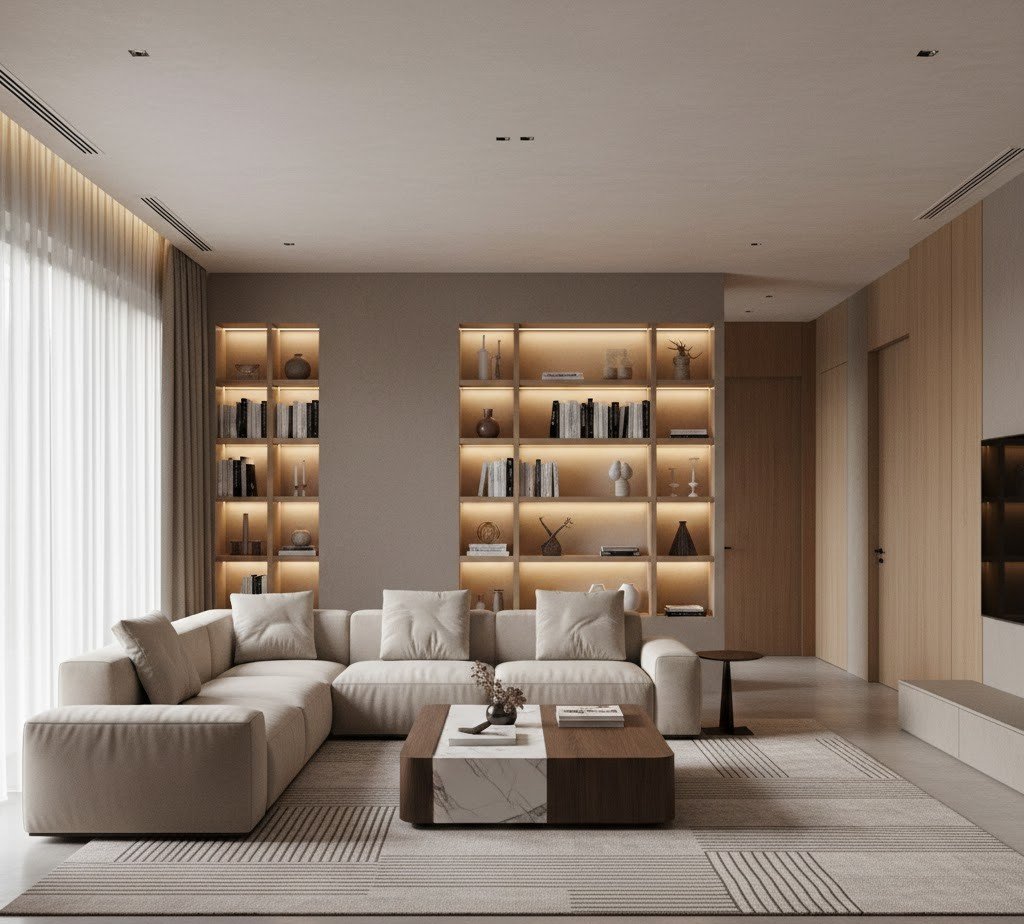
Instead of reducing quality blindly, look at where unnecessary complexity can be removed.
Keep the number of levels low
Multiple ceiling levels require more detailing and more coordination.
A single clean level can often achieve the intended visual effect without unnecessary construction.
Avoid decorative cut-outs without a purpose
Curves, patterns and geometric cut-outs can look attractive in reference photographs.
But every additional shape needs to be measured, constructed, finished and coordinated with lighting.
If the detail does not improve the room, it may not be worth adding.
Use lighting as the feature
A well-planned lighting layout can give a simple ceiling enough visual character.
Instead of adding decorative ceiling shapes, consider whether the lighting itself can create the desired effect.
Match the ceiling to the room
A simple ceiling in a well-planned room can look more considered than an elaborate ceiling added to an otherwise poorly planned space.
Furniture proportions, wall finishes, curtains, lighting and storage all contribute to the final appearance.
The ceiling is only one part of the room.
Is a simple false ceiling suitable for a small home?
Yes, but ceiling height needs to be considered first.
In a smaller apartment or compact room, an elaborate false ceiling can make the space feel lower and more enclosed.
A simpler design can help maintain a sense of openness.
Before deciding on a false ceiling, check:
- Existing ceiling height
- Required electrical routing
- Lighting positions
- Fan locations
- AC or other services
- Furniture arrangement
- Wardrobe or storage height
- Whether the ceiling actually needs to be lowered
This is one reason the existing Decore Designz guide on where a false ceiling is actually needed in a home is useful before choosing a particular design. It takes the more fundamental question first: whether adding another ceiling layer makes sense for the room.
Which rooms work well with simple false ceilings?
Living room
A simple perimeter ceiling, recessed lighting or a small central detail can work well.
The living room usually benefits from layered lighting, but the ceiling does not have to contain every possible lighting effect.
Bedroom
Bedrooms generally benefit from calmer ceiling designs.
A simple perimeter treatment, cove or clean recessed-light layout can provide enough detail without making the ceiling visually dominant.
Dining area
A small ceiling feature can help visually define the dining area, particularly in an open-plan apartment.
The ceiling detail can be aligned with the dining table rather than covering the entire room.
Kitchen
Kitchen ceilings require more coordination because cabinetry, chimney, ventilation, electrical points and lighting all need to work together.
A simple ceiling treatment can be useful, but a full decorative false ceiling is not automatically necessary.
Passage or foyer
These areas often need less ceiling detailing.
A small lighting-focused treatment can provide enough definition without introducing unnecessary construction.
What should you avoid in a simple false ceiling design?
A simple ceiling can still go wrong.
Too many spotlights
More lights do not automatically mean better lighting.
The position and purpose of each light matter more than the number of fixtures.
Too many ceiling levels
If the objective is simplicity, multiple drops and layers work against it.
Oversized cove lighting
A large cove can make a compact room feel visually heavier.
The cove should be proportionate to the room and should have a clear lighting purpose.
Decorative designs copied from large homes
A ceiling photographed in a large villa may not translate well into a compact apartment.
Room height, furniture scale and natural light are different.
Ignoring maintenance
The ceiling will eventually need cleaning, electrical maintenance or fixture replacement.
Designing every element so tightly that access becomes difficult can create unnecessary problems later.
Designing the ceiling last
This is one of the most important mistakes to avoid.
Lighting, fan positions, furniture, wardrobes, kitchen cabinets and electrical requirements can all affect the ceiling.
The ceiling should be coordinated with these decisions rather than treated as a decorative layer added at the end.
Simple false ceiling vs elaborate false ceiling
Design consideration | Simple approach | Elaborate approach |
Ceiling levels | Usually fewer | Multiple levels possible |
Visual character | Clean and restrained | More decorative |
Lighting | Focused and functional | Multiple lighting layers |
Suitable for compact rooms | Often easier to integrate | Can feel heavy if overdone |
Maintenance | Generally simpler | More detailing can mean more access points |
Furniture coordination | Straightforward | Requires more careful planning |
Design flexibility | Clean forms | More shapes and features |
Overall approach | Less but deliberate | More decorative detailing |
Neither approach is automatically right for every home.
The important question is whether the additional detailing improves the room enough to justify the extra complexity.
Does a simple false ceiling mean using cheaper materials?
No.
Simple refers primarily to the design approach, not automatically to material quality.
A homeowner can choose a clean ceiling design while still paying attention to appropriate material specification, workmanship, lighting quality and finishing.
This distinction is important because cutting unnecessary design complexity is very different from compromising on the parts of the ceiling that affect durability and execution.
The aim should be to simplify intelligently.
What should you decide before starting the ceiling work?
Before the false ceiling frame is installed, clarify the following:
- What is the ceiling supposed to achieve?
Is it for lighting, wiring, visual detailing, service concealment or a combination?
- How much ceiling height can be used?
Do not assume that every reference design will work in your room.
- Where are the lights going?
Lighting positions should be coordinated with furniture and room usage.
- Where is the fan?
The fan position should work with both furniture and lighting.
- Are there services above the ceiling?
Electrical wiring, AC-related requirements and other services may affect the available space.
- How will the ceiling meet wardrobes and other tall elements?
The junctions need to look intentional.
- Is the design still useful if the decorative elements are removed?
If the answer is yes, the design is probably doing its job.
How does Decore Designz approach simple ceiling design?
Before approving the design, check these points with your interior designer:
- What problem is the false ceiling solving?
- How much ceiling height will be lost?
- Where will the main kitchen lights be positioned?
- Will the lighting illuminate the countertop properly?
- How will the chimney and ventilation be accommodated?
- Does the ceiling align with the overhead cabinets?
- Can electrical wiring be routed without unnecessary drops?
- Is the material suitable for the kitchen environment?
- How will maintenance or access be handled?
- Would the kitchen actually look better without a false ceiling?
That last question is worth asking.
A good designer should be comfortable telling you when a false ceiling is unnecessary.
Common false ceiling mistakes in kitchens
The broader Decore Designz approach is to start with how the home will actually be used rather than applying the same decorative treatment to every room.
Its residential design process brings together space planning, furniture, lighting, materials and execution. The company also states that it does not believe every homeowner needs the same package or that every room needs the same treatment.
That matters when planning a simpler ceiling.
If the room already works well with its existing ceiling, there may be no reason to add multiple layers simply because they are common in interior photographs.
If lighting, wiring or visual definition would benefit from a false ceiling, then a restrained design may be enough.
Final Takeaway
A simple false ceiling design is not about doing less carelessly.
It is about removing details that do not add enough value.
For a homeowner working with a smaller budget, the most sensible approach is usually to simplify the design rather than compromise blindly on materials or workmanship. Use fewer levels, keep the lighting purposeful, respect the existing ceiling height and coordinate the ceiling with the furniture and services below it.
And before adding a false ceiling, ask one simple question:
Does this room actually need one?
If the answer is yes, the design can then be built around what the ceiling needs to accomplish.
If you are planning a home interior in Hyderabad and want the ceiling, lighting, furniture and other elements to work as one design, Decore Designz Studio’s interior design services in Hyderabad can be considered as the next step. The studio handles residential design and execution, including lighting, materials, modular kitchens, false ceilings and related interior work.
Frequently Asked Questions
What is the simplest false ceiling design?
A single-level ceiling with clean edges and a carefully planned lighting layout is one of the simplest approaches. A limited perimeter or small cove can also work when the room needs additional visual or lighting detail.
Is a simple false ceiling good for a small house?
It can be. A simple design is often easier to integrate into a compact home because it can minimise visual clutter and unnecessary ceiling drops. Existing ceiling height should be checked before finalising the design.
Which false ceiling is best for a small room?
There is no single best design for every small room. A clean single-level ceiling, narrow perimeter detail or restrained cove can work depending on the room’s height, lighting requirements and furniture layout.
Can a false ceiling be simple and still look modern?
Yes. Modern ceiling design does not require multiple levels or elaborate patterns. Clean lines, good proportions and well-planned lighting can create a contemporary appearance without excessive detailing.
Is gypsum suitable for a simple false ceiling?
Gypsum can be suitable for simple ceiling forms when the specification and site conditions are appropriate. The design and execution quality matter as much as the material selection.
How do I make a false ceiling look less expensive?
The better approach is not to make the ceiling look “cheap,” but to remove unnecessary complexity. Fewer levels, restrained detailing, appropriate lighting and good proportions can create a clean result without relying on decorative features.
Do all rooms need a false ceiling?
No. A false ceiling should have a practical or design reason. Some rooms may benefit from concealed wiring or planned lighting, while others may work better with the existing ceiling.
Can simple false ceiling designs include LED lights?
Yes. LED lighting can be integrated into simple ceiling designs through recessed fixtures, concealed cove lighting or selected accent lighting. The lighting layout should be planned according to how the room is used.