

Best Countertop Material for Indian Kitchens: Granite, Quartz, Solid Surface and Steel
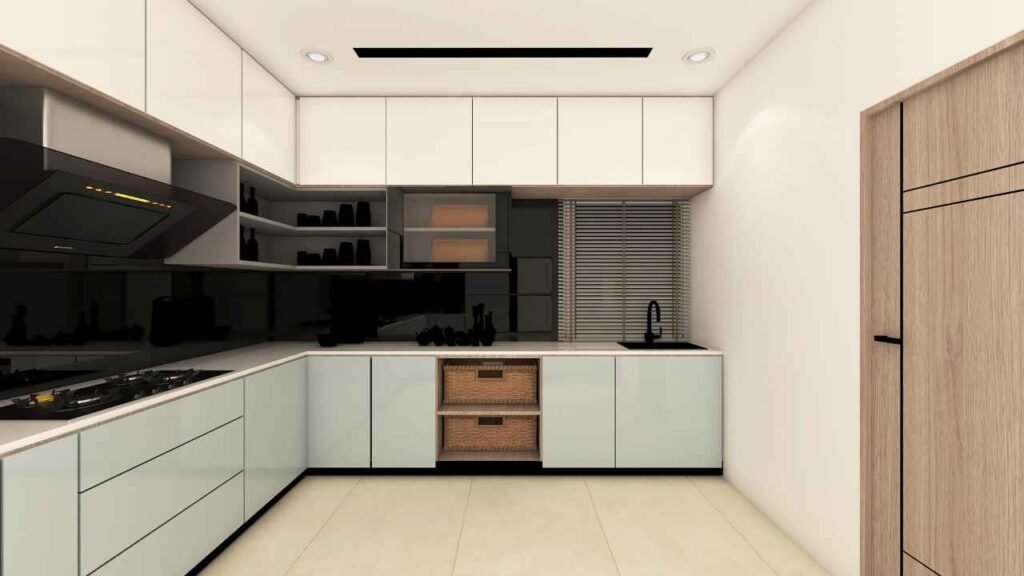
The best countertop material for an Indian kitchen depends on how frequently you cook, how much heat the surface encounters and how much maintenance you are comfortable with. Granite is generally the most practical choice for heavy Indian cooking, while quartz offers better colour consistency and stain resistance. Solid surface suits seamless designs, and stainless steel works well for hygiene-focused, functional kitchens.
Choosing a kitchen countertop is not simply about selecting a colour that matches your cabinets. It is one of the most frequently used surfaces in your home.
Think about the everyday activities it needs to handle: preparing vegetables, working with turmeric and oil, placing heavy utensils, cleaning spills and managing hot cookware.
A material that looks beautiful in a showroom might not be the right choice for your cooking habits.
For Indian homes, the decision becomes particularly important because the kitchen often handles multiple cooking activities throughout the day.
Let’s compare four popular kitchen countertop materials and understand where each one makes sense.
1. What Should You Consider Before Choosing a Kitchen Countertop?
Before comparing individual materials, consider the conditions your countertop will experience.
Factor | Why it matters |
Heat resistance | Hot kadais, tawas and pressure cookers can damage certain surfaces. |
Stain resistance | Turmeric, oil, coffee and food spills can leave marks. |
Scratch resistance | Heavy utensils and everyday food preparation create surface wear. |
Water resistance | Frequent washing and moisture around the sink require a suitable surface. |
Maintenance | Some materials need periodic sealing or specialised cleaning. |
Appearance | Colour, texture, pattern and finish influence the overall kitchen design. |
Fabrication | Joints, edges, sink cut-outs and installation quality affect long-term performance. |
One important point: countertop durability is not determined by the material alone. The quality of the slab, fabrication, supporting cabinets and installation also matter.
2. Is Granite the Best Countertop Material for Indian Kitchens?
Granite remains one of the most practical choices for Indian kitchens, particularly for households that cook frequently.
It is a natural stone known for its hardness, durability and ability to handle everyday kitchen activity. It also tolerates heat better than resin-based countertop materials.
Why choose granite?
- Handles everyday cooking conditions well.
- Offers good resistance to scratches.
- Available in numerous natural colours and patterns.
- Generally handles hot cookware better than engineered quartz and solid surface.
- Works with traditional, contemporary and modern kitchen designs.
What should you watch out for?
Granite is a natural material, so no two slabs are necessarily identical. Some varieties have greater porosity than others.
Certain granite surfaces can benefit from an appropriate penetrating sealer to reduce moisture absorption. Whether sealing is necessary depends on the particular stone.
Dark granite, especially black varieties, is popular in Indian kitchens because it creates a strong contrast against lighter cabinetry. However, water marks, dust and fingerprints can sometimes be more noticeable depending on the finish.
Best suited for: Families that cook frequently, use heavy cookware and want a durable everyday cooking platform.
Which Granite Is Suitable for an Indian Kitchen?
Black granite is a popular option, but choosing granite purely by colour is a mistake.
Consider:
- Black granite: Creates a bold, clean appearance and pairs well with white, beige and wood-finish cabinets.
- Brown granite: Works well with warm wooden cabinetry and traditional kitchen palettes.
- Grey granite: Complements contemporary kitchens with neutral colours.
- Light granite: Creates a brighter appearance but requires careful evaluation of its stain resistance and maintenance requirements.
Always inspect the actual slab rather than relying entirely on a small sample or catalogue photograph.
3. Is Quartz Better Than Granite for Kitchen Countertops?
Engineered quartz is made using quartz particles combined with resin and pigments. Unlike natural granite, its manufacturing process allows greater consistency in colour and pattern.
This makes it popular in contemporary kitchens where homeowners prefer clean, uniform surfaces.
Why choose quartz?
- Non-porous surface.
- Excellent resistance to everyday staining.
- Consistent colours and patterns.
- Available in white, beige, grey and marble-inspired designs.
- Does not generally require the sealing associated with some natural stones.
What should you watch out for?
Heat is the main consideration.
Engineered quartz contains resin, which can be affected by concentrated heat. Placing a very hot kadai, tawa or pressure cooker directly on the surface can cause discolouration, scorching or damage.
Use trivets or heat-resistant pads.
Quartz is also not scratch-proof. Cutting directly on the countertop and dragging heavy objects across it should be avoided.
Another consideration is sunlight. Some engineered quartz products are intended primarily for indoor applications and may experience colour changes with prolonged UV exposure. Check the manufacturer’s specifications.
Best suited for: Homeowners who prefer a uniform, contemporary appearance and want a low-maintenance surface, provided they are comfortable using heat protection.
Quartz vs Granite: Which Is Better for Indian Cooking?
The answer depends on your cooking habits.
If your kitchen sees frequent heavy cooking, granite generally offers greater tolerance for direct heat exposure.
If you prioritise stain resistance, consistent patterns and a contemporary appearance, quartz has advantages.
Neither material is indestructible. The right selection depends on how you use the kitchen.
4. Is Solid Surface a Good Option for Kitchen Countertops?
Solid surface is an engineered material commonly made using acrylic or polyester resins combined with mineral fillers.
Its biggest design advantage is its ability to create smooth, continuous surfaces.
Unlike conventional stone countertops, solid surface can be fabricated with joints that are designed to appear almost invisible.
Why choose solid surface?
- Seamless-looking joints.
- Can be shaped into curved designs.
- Integrated sinks can be created.
- Non-porous surface.
- Minor scratches and some surface damage can be repaired or refinished.
It is particularly useful when the design calls for a continuous countertop and integrated sink rather than separate components.
What should you watch out for?
Solid surface is less suitable for households that frequently place hot cookware directly on the kitchen platform.
High temperatures can cause scorching or other surface damage. It can also develop scratches through everyday use, although many minor imperfections are repairable.
Dark, glossy finishes may reveal scratches and surface marks more easily than lighter or textured alternatives.
Best suited for: Contemporary kitchens, integrated sink designs and homeowners who prioritise seamless detailing over heavy-duty cooking performance.
For a frequently used Indian cooking platform, granite is generally the more forgiving option.
5. Is Stainless Steel Suitable for Residential Kitchen Countertops?
Stainless steel is commonly associated with commercial kitchens, restaurants and professional food-preparation spaces. However, it can also work in residential kitchens.
Its biggest advantages are its resistance to heat, moisture and staining, along with its ease of cleaning.
Why choose stainless steel?
- Handles hot cookware well.
- Easy to clean and sanitise.
- Does not absorb food spills like porous materials.
- Provides a functional, contemporary appearance.
- Works particularly well in utility and dedicated preparation areas.
What should you watch out for?
Stainless steel develops scratches through everyday use. It can also show fingerprints, water marks and dents, depending on the thickness and finish.
The quality and grade of steel matter.
For food-contact applications, grades such as SS 304 and SS 316 are commonly used. SS 316 offers greater corrosion resistance in certain environments, particularly where chlorides are involved. The correct grade should be specified according to the application.
Do not assume that every product advertised as stainless steel offers the same performance.
Best suited for: Utility kitchens, professional-style kitchens and homeowners who prioritise functionality and hygiene over a traditional stone appearance.
6. Granite vs Quartz vs Solid Surface vs Steel: Complete Comparison
Here is how the four materials compare across the factors that matter in an Indian kitchen.
Feature | Comparison |
Heat resistance | Granite: Very good; Quartz: Limited; Solid surface: Limited; Steel: Excellent. |
Stain resistance | Granite: Good, varies by stone; Quartz: Excellent; Solid surface: Very good; Steel: Excellent. |
Scratch resistance | Granite: Very good; Quartz: Very good; Solid surface: Moderate; Steel: Moderate. |
Maintenance | Granite: Low to moderate; Quartz: Low; Solid surface: Low to moderate; Steel: Low. |
Seam visibility | Granite: Visible; Quartz: Usually visible; Solid surface: Almost invisible; Steel: Depends on fabrication. |
Repairability | Granite: Difficult; Quartz: Difficult; Solid surface: Good; Steel: Limited. |
Design flexibility | Granite: Natural patterns; Quartz: Consistent colours; Solid surface: Flexible shaping; Steel: Industrial appearance. |
Best application | Granite: Heavy cooking; Quartz: Modern kitchens; Solid surface: Seamless designs; Steel: Utility kitchens. |
These are general material characteristics, not guarantees. Actual performance varies by product specification, finish, fabrication and installation.
Which Material Wins in Each Category?
- Best for heavy Indian cooking: Granite.
- Best for stain resistance: Engineered quartz and stainless steel.
- Best for seamless designs: Solid surface.
- Best for heat tolerance: Granite and stainless steel.
- Best for consistent colours: Engineered quartz.
- Best for professional-style kitchens: Stainless steel.
- Best all-round choice for most Indian households: Granite.
The important thing is not to select a material based on one feature alone. A countertop that performs well against stains might still struggle with direct heat.
7. Which Countertop Material Should You Choose Based on Your Cooking Style?
Instead of asking which material is universally the best, consider how your family uses the kitchen.
For households that cook multiple meals every day
Granite is generally the practical choice. It handles everyday wear and heat better than resin-based alternatives.
For homeowners who prefer a clean, modern kitchen
Quartz is worth considering. Its uniform appearance works particularly well with minimalist cabinets, handleless shutters and contemporary kitchen layouts.
For kitchens where design continuity matters
Solid surface offers flexibility for integrated sinks, curved edges and seamless-looking transitions.
For utility kitchens and heavy-duty preparation areas
Stainless steel is a strong functional option. It is particularly useful where easy cleaning and resistance to heat and moisture are priorities.
Can You Combine Two Countertop Materials?
Yes. In fact, combining materials can be a practical design decision.
For example:
- Granite for the primary cooking platform.
- Quartz for a breakfast counter or secondary preparation area.
- Stainless steel for a utility or dedicated washing zone.
- Solid surface for an integrated sink or a design-focused counter.
However, combining materials requires careful planning. Their thicknesses, edge profiles, support requirements and joint details need to work together.
The objective should be to assign each material a purpose rather than introducing multiple finishes simply for visual variety.
8. What Details Should You Check Before Installing a Kitchen Countertop?
The countertop material gets most of the attention, but several installation details determine how well it performs.
- Slab thickness and support
The slab must be compatible with the cabinet structure beneath it. Overhangs, unsupported sections and island extensions need appropriate support.
- Edge profile
A sharp, exposed corner is more vulnerable to chipping than a suitably eased edge. Choose an edge profile that suits both the material and daily use.
- Sink and hob cut-outs
Cut-outs create vulnerable sections in the countertop. Their dimensions, finishing and positioning should be planned carefully.
- Joint placement
Natural stone and engineered slabs may require joints. Position them thoughtfully, particularly around sinks, cooking areas and corners.
- Backsplash connection
The connection between the countertop and backsplash needs proper detailing to prevent water from entering gaps.
- Cleaning requirements
Ask the supplier about recommended cleaners, sealing requirements, heat protection and maintenance before finalising the material.
These details should be discussed during kitchen planning, not after the cabinets have already been installed.
For a broader understanding of cabinet construction, finishes and material selection, read our guide to modular kitchen materials.
9. What Homeowners Often Overlook When Choosing Kitchen Countertops
There are a few decisions that can create problems later, even when the selected material is good.
- Choosing by appearance alone: A beautiful white countertop might not suit a household that expects to place hot cookware directly on the surface.
- Ignoring the actual slab: Natural materials vary. Inspect the specific slab being purchased.
- Overlooking fabrication quality: Poor joints, badly finished cut-outs and inadequate support can affect durability.
- Assuming all granite is identical: Porosity, finish and natural characteristics differ.
- Ignoring future repairs: A seamless solid-surface countertop and a natural granite slab require different repair approaches.
- Not confirming the material grade: This is particularly important when choosing stainless steel.
At Decore Designz Studio, countertop selection should be considered alongside the entire kitchen layout. Cabinet finishes, storage requirements, sink placement, cooking zones and lighting all influence the final decision.
10. How a Real Decore Designz Kitchen Project Used Quartz
Material selection becomes easier to understand when you look at how it works in an actual home.
In a 3BHK apartment project in Madhapur, Decore Designz incorporated a quartz countertop as part of the modular kitchen design.
The kitchen also included space-saving pull-out cabinets and sensor lighting. These decisions addressed different aspects of everyday use: accessible storage, countertop functionality and convenient lighting.
The quartz countertop was part of a broader kitchen plan rather than an isolated aesthetic choice. The overall approach focused on creating a practical, low-maintenance kitchen suited to the client’s lifestyle.
This example illustrates why countertop selection should happen alongside storage planning, lighting and kitchen workflow.
A quartz surface can be a suitable choice when homeowners prefer a consistent finish and are comfortable protecting it from direct heat. For households that regularly handle hot cookware, those precautions should be considered from the beginning.
How Decore Designz Approaches Kitchen Countertop Selection
At Decore Designz Studio, kitchen material selection begins with understanding how the homeowner uses the space.
A kitchen designed for frequent cooking needs different material priorities from one designed primarily for occasional use or entertaining.
The countertop should also complement the cabinetry, storage arrangement, backsplash and overall interior palette.
Our approach considers:
- Daily cooking habits and family requirements.
- Kitchen layout and available working space.
- Cabinet materials and finishes.
- Sink, hob and appliance positioning.
- Material durability and maintenance.
- Overall design consistency.
You can explore our modular kitchen units and layout options to understand how these decisions come together.
If you are planning a new kitchen or renovating an existing one, speak with our interior designers in Hyderabad.
Planning a Modular Kitchen?
Contact Decore Designz Studio to discuss your kitchen layout, material preferences and countertop requirements.
WhatsApp: +91 96182 18055
Email: decoredesignzstudio@gmail.com
Frequently asked questions
Which Is the Best Countertop Material for an Indian Kitchen?
Granite is generally the most practical all-round choice for Indian kitchens, particularly for households that cook frequently. It offers good heat tolerance, scratch resistance and durability. Quartz is a good alternative when stain resistance and a consistent appearance are priorities.
Is Black Granite Good for Indian Kitchen Platforms?
Yes. Black granite is a popular kitchen platform choice because of its durability, natural appearance and ability to complement different cabinet finishes. However, inspect the actual slab for quality, porosity and finish before purchasing.
Is Quartz Suitable for Indian Cooking?
Yes, engineered quartz can be used in Indian kitchens. However, direct contact with hot cookware should be avoided. Always use trivets or heat-resistant pads to prevent thermal damage.
Which Countertop Is Easiest to Maintain?
Engineered quartz and stainless steel are generally easy to maintain because they resist staining and do not require the same sealing considerations as some natural stones. Solid surface is also relatively easy to clean, although scratches and heat exposure need attention.
Is Solid Surface Better Than Granite?
Not for every application. Granite is generally better for heavy cooking and heat exposure. Solid surface is better suited to seamless designs, integrated sinks and curved countertop applications.
Can Stainless Steel Countertops Be Used in Indian Homes?
Yes. Stainless steel works well in residential kitchens, especially utility kitchens and functional preparation areas. Select the appropriate grade and thickness, and consider the appearance of scratches and fingerprints over time.
Does Granite Need Sealing?
Not every granite requires sealing. The requirement depends on the stone’s absorption characteristics. A suitable penetrating sealer can improve resistance to moisture and staining where necessary. Follow the fabricator’s recommendations for the specific slab.
Which Countertop Is Better for a White Modular Kitchen?
Both white quartz and granite can complement white modular kitchen cabinets. Quartz offers greater colour consistency, while granite introduces natural patterns and texture. The choice depends on the overall design and maintenance expectations.