

Best Shutter Finish for Wardrobes: Fingerprints, Glare and Sliding Doors
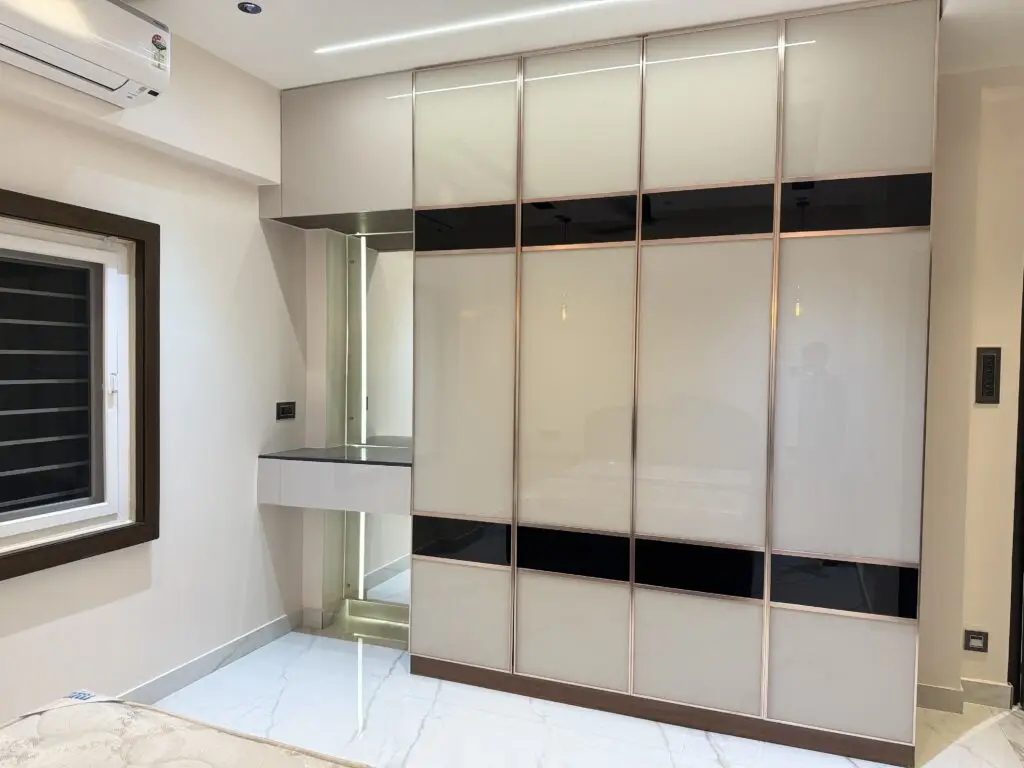
A wardrobe can look impressive in a showroom and become difficult to maintain once it is used every day. Fingerprints on dark shutters, reflections from glossy surfaces and visible dust on certain finishes can all affect how the wardrobe looks over time.
The best finish for wardrobe shutters is not necessarily the most expensive-looking or the most reflective. It is the one that suits the bedroom’s lighting, how frequently the wardrobe is used, who uses it and how much maintenance the household is comfortable with.
For most bedrooms, a good-quality matte or soft-textured finish is a practical starting point. Glossy finishes can work well when a brighter, more reflective appearance is wanted, while laminate, acrylic, veneer and other surface options each have different maintenance requirements.
1. Matte vs Glossy Wardrobe: What Is the Actual Difference?
The first decision is usually between a matte and a glossy appearance. Both can look refined, but they behave differently under bedroom lighting and daily use.
Matte wardrobe finishes
Matte finishes have a low-reflection surface. They absorb and diffuse more light instead of reflecting it directly, giving wardrobe shutters a quieter, understated appearance.
Advantages:
- Reflections and glare are generally less noticeable.
- They suit contemporary, minimal and warm bedroom interiors.
- They can make large wardrobe surfaces feel visually calmer.
- Subtle textures can help disguise minor surface marks.
Limitations:
- Dark matte finishes can still show oily fingerprints and hand marks.
- Some textured surfaces collect dust in their grain or grooves.
- Cleaning methods depend on the actual finish and manufacturer instructions.
Matte is a strong option for bedrooms where the wardrobe occupies a large wall or sits opposite a window. It avoids the prominent reflections that can make a large glossy surface visually distracting.
Glossy wardrobe finishes
Glossy shutters have a reflective surface that creates a brighter, more polished appearance. They can reflect daylight and artificial lighting, making them useful in rooms where a more luminous finish is desired.
Advantages:
- Reflects light and can make a room feel brighter.
- Creates a smooth, polished appearance.
- Works well with contemporary and high-contrast bedroom designs.
- Smooth surfaces are generally straightforward to wipe.
Limitations:
- Fingerprints and smudges can be more visible, particularly on dark glossy surfaces.
- Reflections from windows, ceiling lights and downlights can become distracting.
- Scratches and surface imperfections may be more noticeable depending on the material.
Glossy finishes are worth considering when the wardrobe is not directly exposed to strong reflections and the household is comfortable wiping the shutters regularly.
2. Which Wardrobe Finish Shows Fewer Fingerprints?
Fingerprint visibility is influenced by three things: surface sheen, colour and texture. It is not accurate to assume that every matte finish hides fingerprints or that every glossy finish shows them equally.
A dark, smooth surface can reveal oily marks under side lighting. A lighter, lightly textured finish may disguise everyday handling better.
Here is how common choices compare:
Finish | Fingerprint visibility |
Light matte | Generally less noticeable |
Dark matte | Can show oily marks |
Light glossy | Smudges may be less prominent than on dark glossy surfaces |
Dark glossy | Often makes fingerprints and wipe marks obvious |
Textured laminate | Texture may help disguise minor marks |
For a master bedroom wardrobe that is opened several times a day, a light or medium-toned matte laminate is often a practical choice. For a child’s bedroom, consider a durable, easy-to-clean surface rather than selecting a finish based only on appearance.
Also consider where the handles are placed. Shutters with integrated finger pulls or push-to-open mechanisms can concentrate hand contact around specific areas. Handle design and cleaning habits matter as much as the finish itself.
3. How Bedroom Lighting Affects Wardrobe Finishes
A wardrobe finish should be selected in the actual bedroom lighting conditions, not only under showroom lights.
A glossy shutter opposite a large window can reflect daylight directly into the room. Similarly, a wardrobe facing ceiling spotlights may show bright reflected spots across its surface.
Matte finishes diffuse light more softly, making them easier to coordinate with layered bedroom lighting.
Before finalising a finish, consider:
- Window position: Check whether daylight falls directly on the wardrobe.
- Artificial lighting: Look at how spotlights, cove lighting and bedside lights reflect on the shutters.
- Room size: Large reflective surfaces can dominate a compact bedroom.
- Colour: Dark finishes can feel visually heavier, while lighter shades often create a more open appearance.
- Other surfaces: Coordinate the wardrobe with flooring, wall colours, headboard finishes and furniture.
For a small bedroom, a light matte or subtle textured finish is often easier to integrate. A glossy finish can also work, but it should be tested under the room’s actual lighting before approval.
4. Choosing Between Laminate, Acrylic, PU and Veneer
Matte and glossy describe the appearance of a surface. Laminate, acrylic, PU and veneer describe different finish materials or finishing systems. They should not be treated as interchangeable categories.
Laminate
Laminate is a versatile wardrobe shutter option available in a wide range of colours, patterns, textures and sheen levels.
It can imitate wood grains, stone-like patterns and solid colours. Matte and textured laminates are useful when a restrained appearance and practical everyday maintenance are priorities.
Best suited for: Bedrooms that need a broad choice of finishes and a balance between appearance and everyday usability.
Acrylic
Acrylic is commonly selected for its smooth, high-gloss appearance. It produces a more reflective surface than a typical matte laminate.
It can look striking on contemporary wardrobes, but fingerprints and smudges may be more noticeable, particularly on darker colours.
Best suited for: Wardrobes where a polished, reflective appearance is a deliberate design choice.
PU finish
PU (polyurethane) is a coating system that can create a smooth, refined finish in different sheen levels, depending on the product and application.
It offers flexibility in colour and appearance, but the quality of preparation and application matters. Maintenance and repair requirements should be discussed with the finishing specialist.
Best suited for: Custom wardrobes where a specific colour, surface appearance or seamless design is required.
Veneer
Veneer uses a thin layer of natural wood applied over a suitable substrate. It brings natural grain variation and warmth to a bedroom.
Veneer is not a uniform printed pattern. Each surface can have natural differences in grain and tone. Its protective coating and care requirements should be confirmed before selection.
Best suited for: Bedrooms where natural wood character and a warmer material palette are important.
The right choice depends on the design, substrate, finish quality and expected use. For a wider material comparison, read our guide to custom wardrobe design for Indian homes.
5. What Is the Best Finish for Sliding Wardrobe Doors?
Sliding wardrobes need more than an attractive shutter surface. Their large panels move along tracks and are handled frequently, so the finish must work with the door design and hardware.
A sliding wardrobe can have a matte, glossy, textured, wood-look or other suitable surface. The choice should account for the size of each shutter, the lighting in front of it and how the doors will be operated.
Practical recommendations:
- For frequent use: Choose a surface that is easy to wipe and does not make everyday handling marks overly prominent.
- For large sliding panels: Consider matte or subtle textures to reduce strong reflections across a wide surface.
- For compact bedrooms: Lighter colours can help the wardrobe feel less visually heavy.
- For mirrored panels: Check reflections, privacy and placement before using large mirror sections.
- For handleless designs: Confirm where users will grip the shutter and whether the finish will show repeated contact.
Do not overlook the sliding mechanism. Track quality, rollers, alignment, shutter weight and installation affect the door’s long-term performance. A premium surface cannot compensate for poorly selected or installed hardware.
For layout and mechanism considerations, see our guide to wardrobes with sliding doors.
6. Best Wardrobe Finish for Different Bedroom Needs
There is no single finish that works equally well in every bedroom. The choice should reflect the room’s use and the people using it.
Bedroom situation | Practical finish direction |
Master bedroom | Light or medium matte, veneer or a carefully selected PU finish |
Children’s bedroom | Easy-to-clean laminate with a practical surface texture |
Small bedroom | Light matte or subtle gloss, depending on lighting |
Dark-themed bedroom | Textured or medium-sheen surfaces to manage visible marks |
Minimal bedroom | Matte solid colours or understated wood-look laminate |
Luxury contemporary bedroom | Veneer, refined PU or selected acrylic accents |
These are starting points, not fixed rules. A dark matte finish may still be unsuitable for a household that wants to avoid visible hand marks, while a glossy finish may work perfectly well in a bedroom with controlled lighting and regular cleaning.
7. How to Maintain Wardrobe Shutter Finishes
Even a well-chosen finish needs appropriate care. Using the wrong cleaning product can dull a surface, damage a coating or leave visible streaks.
Follow these basic practices:
- Use a soft microfibre cloth for routine dusting.
- Wipe marks with a slightly damp cloth when permitted by the manufacturer’s care instructions.
- Avoid abrasive scrubbers and harsh cleaning chemicals.
- Do not allow moisture to remain around shutter edges and joints.
- Follow the manufacturer’s instructions for veneer, PU and specialty surfaces.
- Clean handles and frequently touched areas regularly.
Before approving the material, ask the supplier for a sample and the recommended cleaning procedure. Test the sample under the bedroom’s lighting and inspect it after handling.
8. What to Check Before Finalising Your Wardrobe Finish
A finish sample can look different on a large installed shutter. Before confirming the selection, check:
- Actual sample size: Review a sufficiently large sample instead of relying on a tiny swatch.
- Lighting: Inspect it in daylight and under the bedroom’s planned artificial lighting.
- Fingerprints: Handle the sample with clean and slightly oily fingers to understand how marks appear.
- Cleaning: Ask how ordinary marks should be removed.
- Edges: Check how the shutter edges will be finished and protected.
- Hardware: Confirm compatibility with the shutter thickness, weight and opening mechanism.
- Consistency: Check that the finish, colour and texture match across all shutters.
For a complete bedroom layout, storage and shutter-selection approach, explore our bedroom wardrobe planning guide.
Choose a Wardrobe Finish That Works Every Day
A wardrobe should complement the bedroom while remaining practical through years of daily use. Fingerprint visibility, glare, cleaning requirements, shutter size and hardware should all be considered before selecting the final surface.
At Decore Designz Studio, wardrobe finishes are considered as part of the complete bedroom design—not as an isolated material choice. The right combination of colour, texture, storage layout and shutter mechanism helps create a wardrobe that looks considered and works comfortably in everyday life.
If you are planning a new bedroom or upgrading an existing wardrobe, speak with our team of interior designers in Hyderabad. We can help you evaluate the available finishes and plan a wardrobe around your space and requirements.
Frequently asked questions
Which is better for wardrobe shutters, matte or glossy?
Matte is generally a practical choice when you want lower reflection and a softer appearance. Glossy is better when you deliberately want a polished, light-reflecting surface. Fingerprint visibility depends on colour, material and surface texture.
Which wardrobe finish shows the least fingerprints?
Light or medium-toned matte and subtly textured finishes often make everyday fingerprints less noticeable. Dark matte surfaces can still show oily marks, so always test a sample.
Is glossy finish good for sliding wardrobes?
Yes. Glossy finishes can work on sliding wardrobes, provided the room’s lighting and reflections are considered. On large panels, strong reflections and visible smudges may require more frequent cleaning.
Is laminate a good finish for bedroom wardrobes?
Yes. Laminate offers a wide selection of colours, patterns and surface textures. Its practicality depends on product quality, edge detailing, installation and the care instructions for the selected finish.
Does matte finish make a bedroom look smaller?
Not necessarily. Matte describes how a surface reflects light, not how large the room appears. Colour, lighting, shutter proportions and the overall bedroom palette have a greater influence on the visual effect.