

How to Fit a Study Corner into Your Bedroom
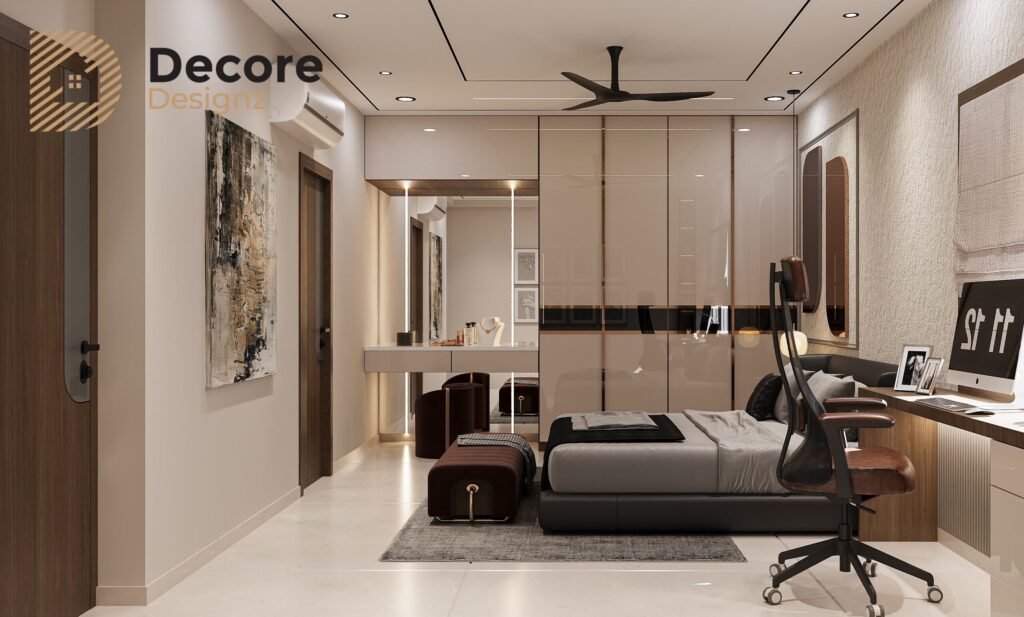
A bedroom does not need a separate room to accommodate a comfortable study or work area. With the right layout, a compact desk, suitable chair, focused lighting and well-planned storage can fit into an existing bedroom without making it feel crowded. The key is to position the workspace around your daily routine, available wall space, natural light and the clearance needed to move comfortably around the bed.
How do you fit a study corner into your bedroom?
The best way to create a study corner is to identify an underused part of the bedroom and give it a clear purpose. A desk beside a window, a compact workstation against an available wall or a built-in unit alongside storage can work well, depending on the room layout.
Start by measuring the available space. Account for the desk, chair movement, electrical points, doors, wardrobe shutters and walking paths before choosing furniture. This prevents a common mistake: fitting a desk into the room on paper, only to discover that using it makes the rest of the bedroom inconvenient.
A good study corner should support focused work while allowing the bedroom to remain a place to rest.
Where should you place a study table in your bedroom?
The right position depends on the window, bed, wardrobe and the way you use the room. Consider these practical options before deciding on a layout.
1. Beside a window
A window-side desk is useful for reading, writing and working during the day. Natural light can make the corner feel more open and pleasant.
However, avoid placing a monitor where direct sunlight creates reflections. A suitable blind or curtain can help control glare without blocking daylight completely. Also check whether the window can open freely and whether the desk interferes with the curtain.
2. Against an unused wall
An available wall can accommodate a straightforward desk with drawers, a floating shelf or a narrow bookcase. This arrangement works particularly well when the window is needed for ventilation or when the room has limited uninterrupted wall space.
Keep the desk visually simple. A compact work surface and a few well-positioned shelves are usually more useful than a large unit that dominates the bedroom.
3. Alongside a wardrobe or storage unit
A customised study desk can sometimes be integrated into a bedroom’s existing storage layout. This creates a more cohesive appearance and can reduce the number of separate furniture pieces.
The trade-off is flexibility. Built-in furniture makes better use of specific dimensions, but it is less convenient to move or repurpose later. Check that the desk does not obstruct wardrobe shutters, drawers or dressing access.
For wardrobe planning, see our guide to bedroom wardrobe planning.
4. In an unused corner
A corner can accommodate a compact desk if both the seating position and the route through the room remain comfortable. Corner shelving can provide additional storage without spreading furniture across multiple walls.
Do not choose this layout simply because a corner is available. Check the lighting, chair clearance and whether the desk feels comfortable to use for extended periods.
What furniture works best for a bedroom study corner?
The best furniture is not necessarily the smallest furniture. It is the furniture that supports your actual tasks without taking more space than necessary.
Furniture | What to consider |
Study desk | Enough usable surface for your laptop, books or monitor |
Chair | Comfortable back support, appropriate desk height and sufficient movement space |
Drawers | Storage for stationery, chargers and documents you use regularly |
Wall shelves | Vertical storage without occupying additional floor space |
Cable management | Concealed or organised wiring to keep the desk tidy |
Desk lamp | Focused illumination that reduces shadows and screen glare |
The aim is not to choose the cheapest option in each row. It is to spend where quality affects everyday use, longevity or future repair work—and avoid paying for complexity that adds little practical value.
If you mainly use a laptop, a compact desk may be sufficient. If you use a monitor, keyboard, notebooks and other equipment, you will need more surface area.
Do not sacrifice chair comfort to save a small amount of floor space. A stool may fit neatly beneath a desk, but it is not a practical substitute for a supportive chair if you work for long periods.
How can you design a study corner in a small bedroom?
In a small bedroom, the objective is to make the workspace useful without adding visual clutter or restricting movement.
Choose a wall-mounted or floating desk. This can leave the floor beneath the desk visually open. It also makes routine cleaning easier, although the wall and fixings must be suitable for the intended load.
Use vertical storage. Shelves above or beside the desk can hold books and everyday items. Keep frequently used objects within easy reach and avoid filling every available wall with storage.
Consider a fold-down desk. This can be useful when the workspace is needed only occasionally. Check the clearance required to open it and whether the surrounding wall can support the installation.
Keep the palette consistent. Matching the desk finish to the bedroom’s existing wood tones or cabinetry helps the study corner feel integrated rather than added as an afterthought.
Avoid oversized furniture. A deep desk or bulky chair can make a compact bedroom difficult to navigate. Measure first, then select the furniture.
If the room has several competing requirements, our space-saving interior design approach explains how layouts, storage and furniture can work together without making a home feel crowded.
How should you light a bedroom study area?
A ceiling light alone may not provide enough illumination for detailed work. Plan the study area with both general room lighting and a dedicated task light.
A desk lamp with an adjustable head allows you to direct light onto books or a work surface. Position it to reduce shadows from your writing hand and avoid placing a bright light source where it reflects directly off a monitor.
Where possible, use daylight during the day and artificial task lighting when needed. The desk should not be so close to the window that glare becomes a recurring problem, nor so far from useful daylight that the corner feels unnecessarily dark.
Electrical planning matters too. Place power outlets where chargers and equipment can reach them without cables crossing the walking path. If the desk is built into cabinetry, plan wiring before the furniture is installed.
How do you separate the study area from the sleeping area?
A bedroom workspace does not always need a physical partition. In many cases, a clear visual boundary is enough.
You can define the study corner through a different wall finish, a compact shelving unit, a desk lamp or a change in furniture arrangement. Keep the distinction subtle so the bedroom retains a consistent design.
A full-height partition may be unnecessary in a small room because it can interrupt light and make the space feel divided. If privacy or video calls are a concern, consider the desk’s background and orientation before introducing additional structures.
Storage also affects the atmosphere. Keep work documents, cables and equipment organised so they do not spread onto the bed or bedside table. At the end of the workday, being able to close a drawer or clear the desk helps restore the bedroom’s restful character.
What can a real bedroom design teach us about study corners?
Decore Designz Studio’s warm, modern luxury bedroom project in Hyderabad illustrates how a study area can sit beside a window while remaining part of a larger bedroom arrangement.
The published design combines the study corner with bedroom storage, a dressing area, bedside furniture and coordinated finishes. The useful lesson is that the desk should not be planned in isolation. Its position and appearance need to work with the other furniture and the room’s overall use.
What mistakes should you avoid when adding a study table to a bedroom?
- Blocking circulation: The chair should not obstruct the route between the bed, door and wardrobe.
- Ignoring wardrobe access: Check shutter openings and drawer movement before fixing the desk position.
- Choosing a desk before measuring: Furniture dimensions must suit the actual room, not just an inspiration photograph.
- Relying on overhead lighting: Provide task lighting where detailed work takes place.
- Ignoring cables and sockets: Plan electrical access and cable routes before installation.
- Overloading the wall: Too many shelves, cabinets and decorative items can make a small workspace feel cramped.
- Using the wrong chair: Comfort and support matter when the desk is used regularly.
- Making the workspace permanent without a reason: If your needs may change, a movable desk may be more practical than a custom-built unit.
Plan a bedroom that works for your routine
A well-designed study corner should make everyday work easier without taking away from the comfort of your bedroom. The desk, lighting, chair, storage and surrounding furniture all need to work together.
At Decore Designz Studio, we approach bedroom interiors by considering how people actually use their homes, not simply how a finished room looks in a rendering. Explore our interior design studio in Hyderabad to understand our approach to residential design and execution.
If you are planning a bedroom renovation or a complete home interior, contact Decore Designz Studio to discuss your layout, furniture requirements and design preferences.
Decore Designz Studio
Fourth Floor, Bhagyalaxmi Construction, KM Cube Building, 401, Ghousia Masjid Rd, Ramakrishnapur, Weaker Section Colony, Izzathnagar, HITEC City, Khanammet, Hyderabad, Telangana 500084
Phone/WhatsApp: +91 96182 18055
Email: decoredesignzstudio@gmail.com
Frequently asked questions
Can I put a study table in my bedroom?
Yes. A study table can fit beside a window, against an unused wall or within a planned storage arrangement. The best location depends on the room’s dimensions, lighting, furniture and circulation.
Which direction should a study table face in a bedroom?
There is no single direction that works for every bedroom. Prioritise comfortable seating, useful light, minimal screen glare, convenient electrical access and enough space to move around the desk.
How do I fit a study table into a small bedroom?
Consider a floating desk, a compact work surface, vertical shelving or a fold-down workstation. Measure the chair clearance and walking paths before choosing the final arrangement.
Is a window-side study table a good idea?
It can be an excellent option because it provides access to natural light. However, direct sunlight, monitor reflections, curtain movement and window access must be considered.
Should a bedroom study table be built into the wardrobe?
An integrated desk can create a coordinated appearance and use wall space efficiently. A separate desk offers more flexibility if you expect to change the room layout or move the workspace later.
How can I make my bedroom study corner look neat?
Keep the desk surface limited to essential items, use drawers or shelves for storage, organise cables and coordinate the furniture finish with the bedroom. Avoid turning the entire wall into a storage display.