

Bedroom Colour Design: Combinations That Work for Every Style
The right bedroom colour design is not simply about choosing two colours that look good together. The colours need to work with the room’s natural light, furniture, flooring, wardrobe finishes, fabrics and the mood you want the bedroom to create. For most bedrooms, a balanced combination of a dominant neutral, a supporting colour and a smaller accent works better than using several strong colours at once.
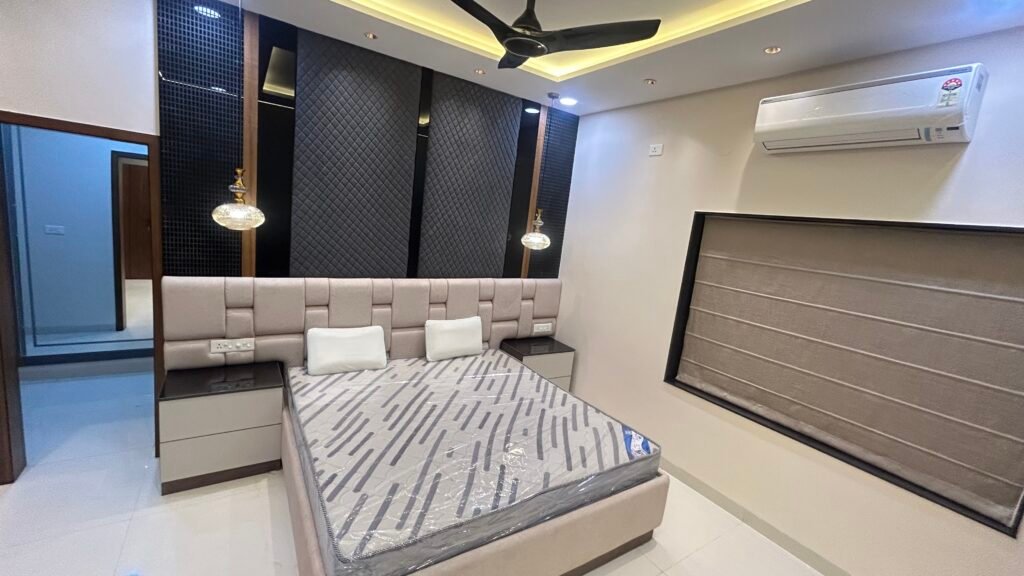
How do you choose a bedroom colour combination that actually works?
Start with the room rather than the paint catalogue.
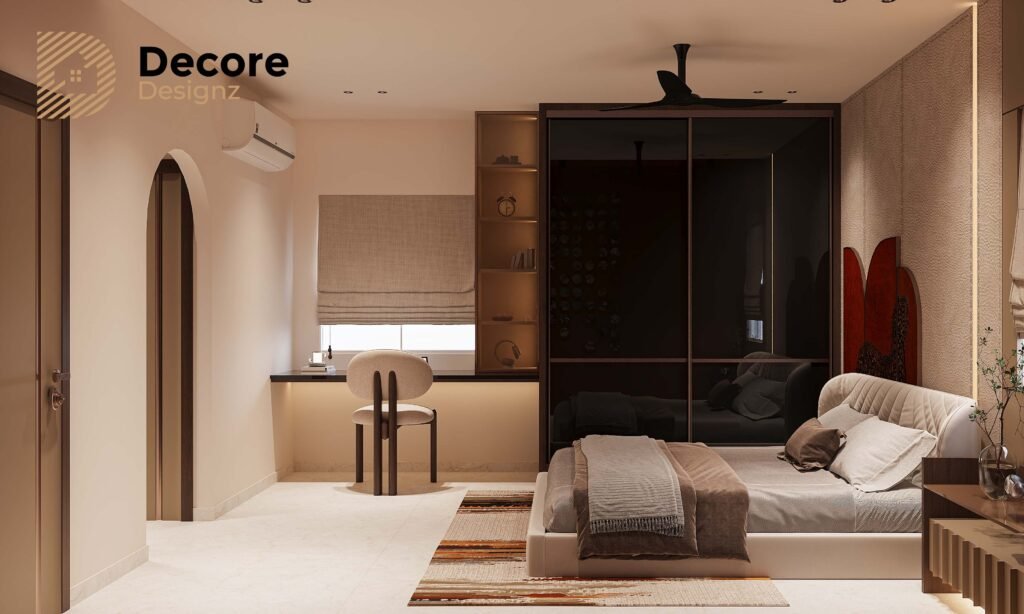
Look at the amount of natural light, room size, flooring, bed upholstery, wardrobe finish and existing furniture. Then decide whether you want the bedroom to feel warm, calm, dramatic, contemporary, minimal or luxurious.
A useful starting point is:
- Base colour: the largest visual area, usually walls, ceiling or major furniture
- Supporting colour: wardrobes, upholstery, curtains or larger furniture pieces
- Accent colour: cushions, artwork, lighting details or a feature wall
This creates hierarchy without making the room feel visually busy.
At Decore Designz Studio, colour selection is considered alongside furniture, materials, lighting and the way the room will actually be used. Colour should not be treated as a decision made separately at the end of the design process.
What are the best bedroom colour combinations?
There is no single best combination for every bedroom. The right choice depends on the style, lighting and materials in the room.
Here are combinations that work particularly well across different interior styles.
1. Beige and Warm White
Beige with warm white is one of the safest choices for a calm bedroom.
Warm white keeps the room light, while beige introduces enough warmth to prevent it from feeling stark. Add natural wood, cream upholstery or soft brown accents if you want more depth.
Works well for: minimalist, contemporary and timeless bedrooms.
2. Beige and Walnut Brown
For a warmer and richer bedroom, combine beige walls with walnut or medium-brown furniture.
The neutral wall colour keeps the room visually open while the darker wood gives the bedroom structure. This combination works particularly well when wardrobes, bedside tables or a bed frame have prominent wood finishes.
Works well for: contemporary, modern and luxury bedrooms.
3. Grey and White
Grey and white create a clean, restrained bedroom colour scheme.
Use warmer greys rather than very cold grey when the bedroom needs to feel comfortable. White can be used for walls, ceilings, bedding or selected furniture, while grey provides contrast through upholstery, a feature wall or cabinetry.
Works well for: modern and minimalist bedrooms.
If you want to explore grey as a complete design direction rather than just a colour pairing, the planned Grey Bedroom Design Ideas article should sit underneath this pillar and go deeper into that specific palette.
4. Sage Green and Cream
Muted green paired with cream creates a softer connection with natural colours.
Sage, olive or similarly subdued greens work better in a bedroom than highly saturated greens when the goal is a restful atmosphere. Cream balances the green and keeps the overall scheme warm.
Works well for: contemporary, natural and relaxed bedrooms.
5. Olive Green and Warm Beige
Olive green becomes more sophisticated when combined with warm beige instead of bright white.
The beige provides a neutral foundation while olive can be introduced through the bed wall, upholstery, curtains or smaller decorative elements.
This is particularly useful when the bedroom already contains natural wood tones.
6. Navy Blue and Off-White
Navy blue creates stronger contrast and gives the bedroom a more dramatic character.
The mistake is using navy everywhere. A better approach is to use it selectively on a bed wall, upholstered bed or cabinetry while keeping the surrounding elements lighter.
Works well for: contemporary, modern and statement bedrooms.
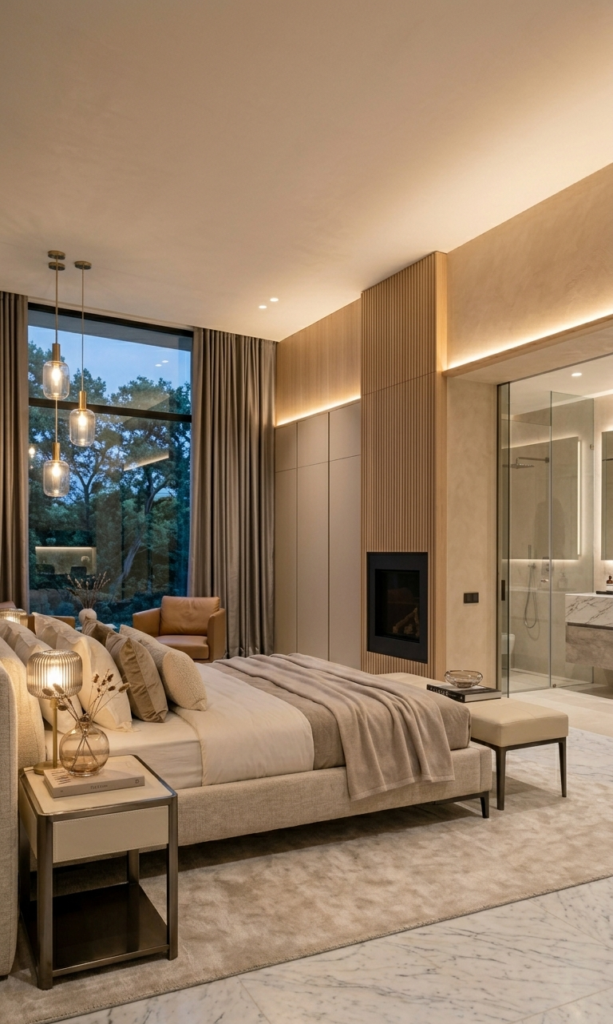
7. Charcoal and Warm Beige
Charcoal can make a bedroom feel sophisticated, but it needs enough lighter colour around it.
Pairing charcoal with warm beige creates a useful balance: charcoal provides depth while beige prevents the room from becoming visually heavy.
This combination works particularly well with warm lighting, wood textures and restrained metallic accents.
8. Blush Pink and Cream
Blush pink does not have to make a bedroom look overly decorative.
A muted blush combined with cream, beige or light wood can create a soft and contemporary bedroom. Keep the pink controlled rather than using it across every surface.
Works well for: soft contemporary, modern and elegant bedrooms.
9. Terracotta and Beige
Terracotta adds warmth without the intensity of a bright red.
Combine it with beige, cream or warm white and use wood tones to connect the palette. It can work particularly well as an accent colour on a bed wall, upholstery or decorative panels.
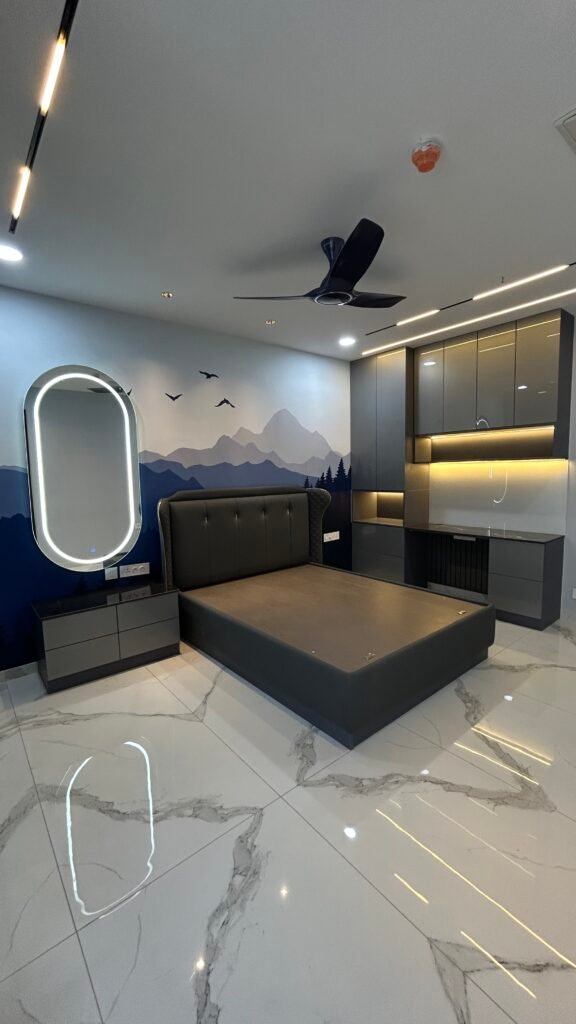
10. Burgundy and Taupe
Burgundy works best as an accent rather than the dominant colour in most bedrooms.
Taupe creates a quieter background, allowing burgundy to provide depth and personality without overwhelming the room.
This is a particularly useful combination for a more luxurious bedroom.
11. Black and White
Black and white is one of the strongest bedroom colour combinations, but it needs careful proportion.
Too much black can make the room feel heavy, particularly if natural light is limited. Use white or a soft neutral as the larger background and introduce black through furniture, frames, lighting, handles or selected wall details.
The planned Black and White Bedroom Design Ideas article can cover this specific combination in greater depth once published.
12. Cream and Light Wood
For a warm minimalist bedroom, cream and light wood are difficult to get wrong.
The combination works because both colours are relatively quiet. Texture therefore becomes important. Upholstery, timber grain, curtains, rugs and subtle wall finishes can provide variation without adding strong colours.
13. Greige and Natural Wood
Greige sits between grey and beige and can be useful when you want a neutral bedroom without making it feel too cold.
Pair it with natural wood and warm lighting for a contemporary bedroom that feels understated rather than stark.
Works well for: modern, contemporary and minimalist interiors.
14. Deep Blue and Warm Wood
Deep blue can be paired with walnut or other warm wood tones to create a more grounded bedroom.
Use the darker blue selectively and let the wood introduce warmth. Bedding, curtains and wall colours can then remain relatively neutral.
Works well for: contemporary and premium bedrooms.
15. Earthy Neutrals with a Controlled Accent
You do not always need a conventional two-colour combination.
A bedroom can use beige, cream, taupe and wood tones as the foundation, with one controlled accent such as terracotta, burgundy or muted green.
This approach is particularly useful when you want the bedroom to feel layered rather than obviously colour-blocked.
Which bedroom colour combinations work best for Indian homes?
For Indian homes, the most practical colour combinations are not necessarily the brightest or trendiest ones.
Warm neutrals, beige, cream, muted greens, earthy browns, terracotta, taupe and restrained darker accents can work particularly well because they are adaptable to different materials, wood finishes, fabrics and lighting conditions.
A bedroom interior design colour combination for Indian homes should also consider the rest of the home.
If the living room uses warm wood and beige tones, suddenly introducing a completely cool blue-grey bedroom may make the bedroom feel disconnected. The bedroom can have its own identity, but some relationship with the wider home’s material and colour language usually creates a more cohesive result.
Should the bedroom walls and furniture be the same colour?
No.
Matching every major element to the same colour often makes a bedroom look flat.
A better approach is to coordinate rather than match.
For example:
Warm beige wall + walnut wardrobe + cream upholstery + muted green accent
works because the colours are related without being identical.
The same principle applies to grey, white, wood, black and darker accent colours. Contrast creates definition, while repetition creates visual connection.
How many colours should a bedroom have?
For most bedrooms, three levels of colour are enough:
- Dominant colour — the main background
- Secondary colour — furniture, upholstery or larger surfaces
- Accent colour — smaller details that add personality
This does not mean you are restricted to exactly three colours. Materials naturally introduce variations through wood grain, stone, fabric and metal.
The important point is to control the visual hierarchy.
If the wall, wardrobe, bed, curtains, rug and accessories all compete for attention, the bedroom starts feeling cluttered even when the furniture itself is well designed.
How does natural light affect bedroom colour design?
Natural light can change how a colour appears throughout the day.
A colour that looks soft in a showroom or on a digital mood board can appear considerably different under strong daylight, low daylight or warm artificial lighting.
Before finalising a bedroom interior colour design, consider:
- Direction and amount of natural light
- Window size
- Existing flooring
- Ceiling colour
- Artificial lighting temperature
- Wardrobe and furniture finishes
- Curtain fabric and colour
Dark colours can work beautifully in a bright bedroom. In a darker room, however, using several deep colours across large surfaces can make the space feel smaller and heavier.
The answer is not automatically “use white.” It is about balancing the darker elements with enough reflective and lighter surfaces.
Should you use a dark colour in a small bedroom?
Yes, if it is controlled.
A common mistake is assuming that every small bedroom needs to be completely white.
A darker colour can work effectively on the wall behind the bed while the remaining walls, ceiling, bedding or furniture stay lighter. This creates a focal point without visually closing in the entire room.
The important factors are the amount of light, the size of the dark surface and the finishes used around it.
How should bedroom colour work with wardrobes and furniture?
Wardrobes are large visual surfaces, so they should be considered when choosing the bedroom palette.
A wall colour that looks good on its own may clash with a large dark wardrobe. Similarly, a strong wardrobe finish can make an already colourful bed wall feel excessive.
Think about the room as one composition.
For example:
Light wall + dark wood wardrobe + upholstered bed + warm lighting
creates a different mood from:
Dark wall + dark wardrobe + dark furniture.
Neither is automatically wrong. The second simply needs more careful control of contrast and lighting.
Decore Designz Studio’s approach to bedroom interiors considers wardrobes, furniture, lighting, colours and finishes together rather than treating each element as a separate purchase.
What colour combination creates a luxury bedroom?
Luxury does not require one particular colour.
Warm beige with walnut, taupe with burgundy, cream with dark wood, charcoal with beige, or deep blue with warm wood can all create a premium appearance when the proportions and finishes are right.
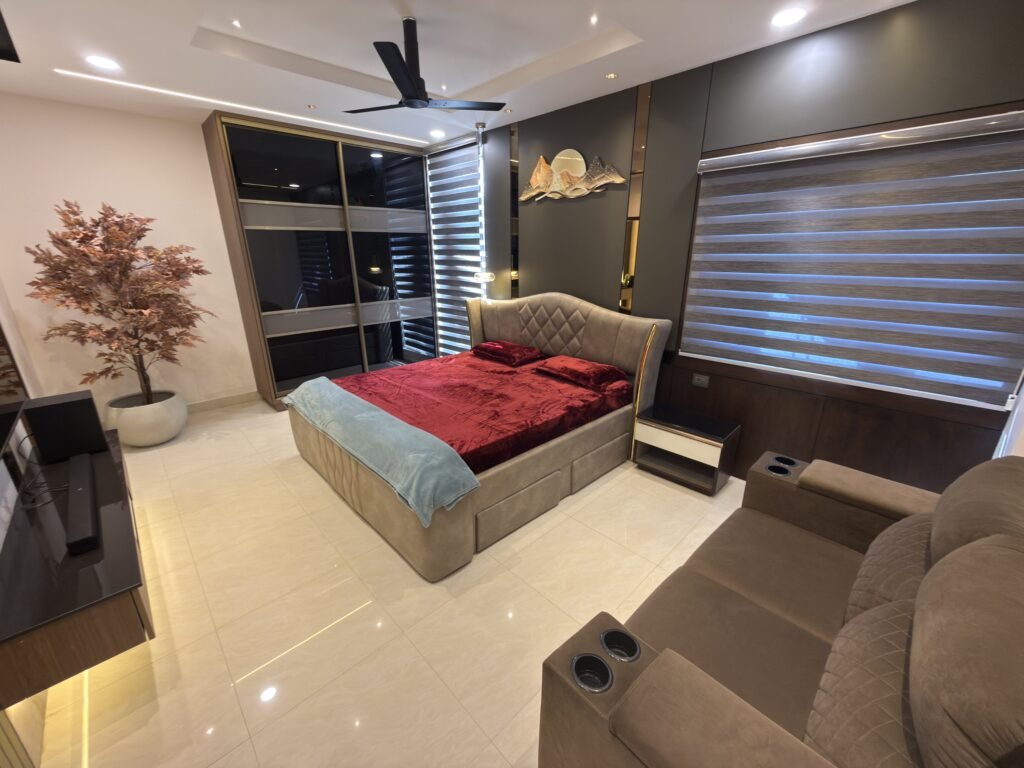
A recently published Decore Designz bedroom example demonstrates this principle with warm beige and cream as the base, taupe and brown as supporting tones, and burgundy/terracotta, black and muted olive as controlled accents. The palette is reinforced through textured wall treatments, dark wardrobe finishes, upholstery and warm layered lighting.
The important lesson is that luxury comes from coordination.
Colour alone cannot compensate for poor proportions, awkward furniture placement or badly integrated lighting.
What colour combination is best for a minimalist bedroom?
Minimalist bedrooms generally benefit from restrained combinations such as:
- Warm white + beige
- Cream + light wood
- Greige + natural wood
- Warm grey + white
- Beige + muted olive
The goal is not to remove all colour.
The goal is to remove unnecessary visual competition.
A controlled accent can give a minimalist bedroom personality without turning it into a busy space. This is consistent with the wider Decore Designz approach to minimalist interiors, where colour, storage, lighting and furniture are deliberately controlled rather than simply stripped down.
What mistakes should you avoid when choosing bedroom colours?
Choosing colours from a small paint sample
A small swatch cannot show how a colour will behave across an entire wall.
Consider the room’s actual lighting and surrounding finishes before making the final decision.
Using too many strong colours
Several saturated colours competing in the same room usually create visual noise.
Choose one dominant accent and let the remaining colours support it.
Ignoring the wardrobe
A wardrobe can occupy a substantial part of the bedroom. Treating it as an afterthought can make an otherwise good colour scheme look disconnected.
Matching everything exactly
A beige wall, beige wardrobe, beige bed, beige curtains and beige accessories may technically match, but the room can become flat.
Use differences in tone, texture and material to create depth.
Choosing colours before planning the room
Colour should follow the broader design direction.
Furniture, lighting, storage, flooring and wall treatments all affect how the final colour scheme will look.
Copying a trend without considering the room
A colour combination that looks excellent in a large, naturally lit bedroom may not work in a smaller apartment bedroom.
Good bedroom colour design starts with the actual room.
How do you create a balanced bedroom colour palette?
Use this simple process:
- Start with the largest fixed elements.
Look at flooring, windows, doors and existing finishes. - Choose the dominant background colour.
This is usually a wall or large neutral surface. - Select the main furniture tone.
Consider the bed, wardrobe and other large pieces together. - Add one supporting colour.
Use upholstery, curtains, a feature wall or selected furniture details. - Introduce a controlled accent.
Use smaller elements rather than spreading the accent across the entire room. - Check the palette under actual lighting.
Look at the colours in daylight and in the evening. - Step back and assess the whole room.
The colours should support the bedroom rather than become the main event.
For homeowners planning a complete bedroom rather than simply repainting a wall, Decore Designz Studio’s interior design services in Hyderabad include bedroom planning, colour and material selection, lighting, furniture and storage as part of the broader design process.
Final Takeaway: Do You Really Need a False Ceiling?
Good bedroom colour design is not about finding the trendiest combination. It is about choosing colours that work with the room, the furniture, the lighting and the way you actually live.
A bedroom can be neutral and still have character. It can use dark colours without feeling heavy. It can be colourful without becoming chaotic.
The strongest combinations usually come from controlled contrast, appropriate proportions and materials that support the chosen palette.
If you are planning a bedroom as part of a larger home interior, the colour should be developed alongside the furniture layout, storage, lighting and finishes rather than chosen in isolation. That is where a colour palette becomes part of a properly designed room rather than simply a paint choice.
For a bedroom or complete home in Hyderabad, you can discuss your space, preferred style and requirements with Decore Designz Studio before finalising the design direction.
Frequently Asked Questions
Which colour combination is best for a bedroom?
Warm beige and white, beige and walnut, grey and white, sage green and cream, and cream with natural wood are versatile choices. The best combination depends on natural light, furniture, flooring and the desired mood.
Which two colours are best for a bedroom?
There is no universal pair. Beige and warm white are among the most versatile, while navy and off-white, olive and beige, or charcoal and beige create stronger visual character.
Which colour is most relaxing for a bedroom?
Soft, muted colours such as warm beige, cream, sage green, muted blue and gentle grey can create a calmer atmosphere. The finish and lighting matter as much as the colour itself.
Should a master bedroom have dark colours?
It can. Dark colours work particularly well as controlled feature colours or on the wall behind the bed. Balance them with lighter surfaces and appropriate lighting.
What is a good bedroom colour combination for Indian homes?
Warm neutrals such as beige, cream, taupe and wood tones are versatile starting points. Muted green, terracotta, burgundy or deeper blue can then be introduced as controlled accents.
Should bedroom walls be lighter or darker than the furniture?
Either can work. What matters is contrast. A darker wardrobe against a lighter wall creates definition, while a darker wall behind lighter furniture can create a strong focal point.
How many colours should a bedroom have?
A dominant colour, supporting colour and controlled accent are usually enough to establish a balanced palette. Materials and textures can add variation without introducing additional strong colours.