

Types of False Ceiling Designs: A Homeowner's Guide
Choosing a false ceiling is not simply about picking a design you like from a photograph. Different types of false ceilings serve different purposes, and the right choice depends on your ceiling height, room size, lighting plan, moisture exposure, maintenance requirements and overall interior style.
For most homes, the main options include single-layer, multi-level, tray, cove or perimeter, gypsum, POP, PVC, wooden and grid-style false ceilings. The best choice is the one that fits the room rather than the most elaborate design.
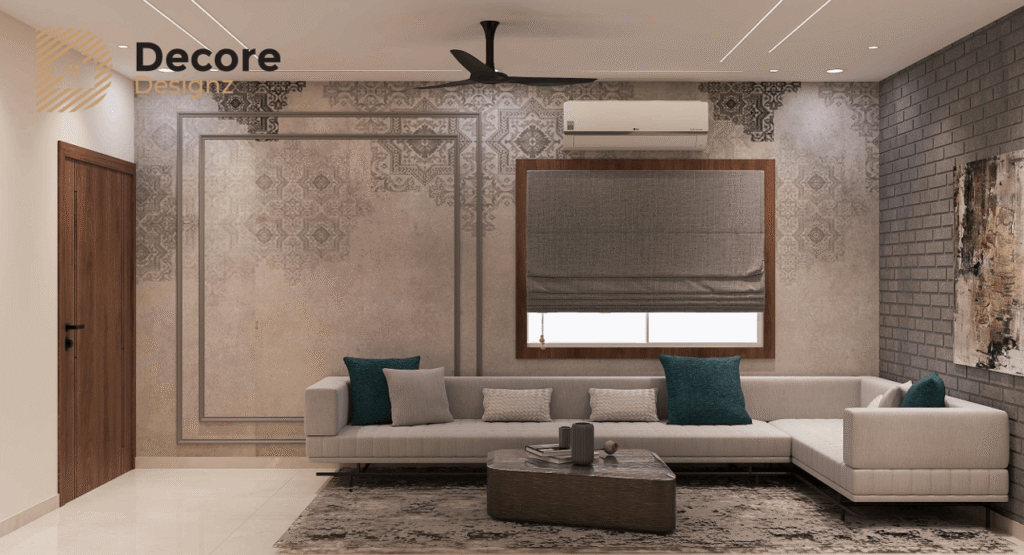
What are the main types of false ceiling designs?
The main types can be understood in two ways: by the form of the ceiling design and by the material used to construct it.
Design forms include single-layer, multi-level, tray, floating and cove or perimeter ceilings. Material choices include gypsum board, POP, PVC, wood or wood-finish panels and metal or grid systems.
These categories can overlap. For example, a single-layer false ceiling can be made using gypsum board, while a wooden false ceiling may be used as a feature within a larger gypsum ceiling.
That distinction is useful because design type and material are not the same decision.
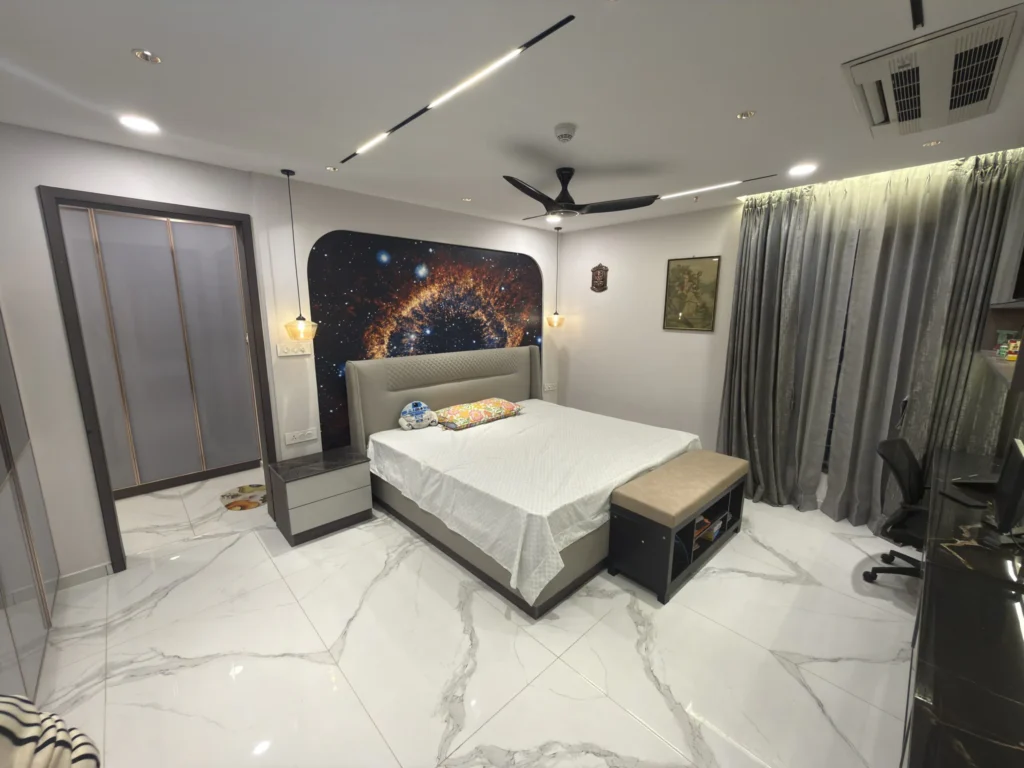
1. What is a single-layer false ceiling?
A single-layer false ceiling is one of the simplest false ceiling designs. A secondary ceiling is created at one level below the original slab, usually with a clean, uninterrupted appearance.
It can accommodate:
- Recessed lights
- Downlights
- Concealed wiring
- Selected electrical fixtures
- Simple perimeter detailing
This type works well when you want the ceiling to support the interior rather than become the main visual feature.
It is particularly useful in apartments where excessive ceiling detailing can make the room feel lower.
If you prefer a restrained look, explore our guide to simple false ceiling designs for more examples.
2. What is a multi-level false ceiling?
A multi-level false ceiling uses two or more ceiling planes at different heights.
The changes in level can create visual zones around:
- Seating areas
- Dining areas
- TV walls
- Bed zones
- Circulation areas
- Lighting features
Multi-level ceilings can create more architectural interest, but they also require more planning.
Adding layers simply because the ceiling looks empty can make a room feel visually heavy. The different levels should have a reason—whether that is lighting, zoning, proportion or a particular design language.
For a compact apartment, a shallow and controlled version may work better than a heavily layered design.
3. What is a tray false ceiling?
A tray ceiling creates a recessed or raised central portion, usually surrounded by a border.
The result can give the ceiling a framed appearance without covering the entire surface with elaborate detailing.
A tray false ceiling can work particularly well in:
- Living rooms
- Bedrooms
- Dining areas
- Larger master bedrooms
- Larger villas
The proportions matter.
A very wide border in a small room can reduce the feeling of openness, while a carefully scaled border can give the room structure without making the ceiling dominant.
4. What is a cove or perimeter false ceiling?
A cove or perimeter false ceiling focuses the design around the edges of the room.
The central ceiling remains relatively open while the perimeter can accommodate concealed lighting or a simple architectural detail.
This is one of the more versatile approaches because it can provide a finished ceiling appearance without requiring multiple layers across the entire room.
It can also work well when the furniture layout already provides a strong visual centre.
For more detail on the lighting side, see our guide to false ceiling cove lighting.
5. What is a floating false ceiling?
A floating false ceiling is designed to appear visually separated from the surrounding ceiling.
A recessed edge or concealed light source can create the impression that the central ceiling element is floating.
This design can create a clean contemporary effect, particularly when the lighting is carefully integrated.
However, the floating effect depends heavily on proportions and lighting. If the recess is too shallow or the lighting is poorly positioned, the intended effect can disappear.
6. What is a gypsum false ceiling?
Gypsum board is one of the most commonly considered materials for residential false ceilings.
It is useful for creating:
- Smooth flat surfaces
- Simple geometric forms
- Recessed lighting
- Cove details
- Layered ceiling profiles
- Custom ceiling shapes
Gypsum is particularly suitable when the design requires a clean finished surface and integrated lighting.
However, gypsum should not automatically be treated as the best material for every location. Moisture exposure, access requirements, design complexity and workmanship all matter.
Our dedicated gypsum board false ceiling guide goes deeper into the material itself.
7. Joints and screw points are treated
The joints between boards and visible fixing points need to be treated so that the final surface can be finished cleanly.
This stage is important because imperfections can become obvious after painting, particularly when light falls across the ceiling.
A ceiling can look perfectly acceptable under construction lighting and reveal uneven areas once the final lighting is switched on.
7. What is a POP false ceiling?
POP, or plaster of Paris, can be shaped into more customised decorative forms.
It may be considered when the design calls for:
- Curved details
- Decorative profiles
- Custom mouldings
- Intricate ceiling shapes
- Bespoke architectural detailing
POP can therefore provide design flexibility, particularly for decorative work.
The quality of the finished result depends significantly on workmanship. A complicated shape does not automatically make a ceiling better.
If you are deciding between materials, our POP vs gypsum vs PVC false ceiling guide can help you compare the practical differences.
8. What is a PVC false ceiling?
PVC panels are another option, particularly in areas where moisture resistance is an important consideration.
They can be useful for selected applications where conventional dry interior ceiling materials may not be the most practical choice.
However, PVC should not be selected simply because it is marketed as a universal solution. The room’s appearance, ventilation, lighting, maintenance requirements and overall interior design still need to be considered.
For rooms with moisture exposure, the material decision should be made alongside ventilation and service requirements.
9. What are wooden false ceiling designs?
Wood can introduce warmth and texture into a ceiling.
There is an important distinction between:
- Real wood
- Veneer
- Wood-finish panels
- Other wood-look finishes
The visual effect can be similar from a distance, but the material, maintenance and installation requirements can be different.
Wooden elements often work best when used selectively rather than covering every part of the ceiling.
They can complement contemporary, warm minimalist and natural interior styles particularly well.
For a deeper comparison, see our guide to wooden false ceiling designs.
10. What is a grid or suspended false ceiling?
Grid-style suspended ceilings use a visible or concealed framework to support ceiling panels.
This approach is more common in commercial environments, offices and spaces where access to services above the ceiling is important.
For a typical home, it may not always be the first choice if the design goal is a seamless residential appearance.
However, the system can make sense when service access, maintenance or a particular functional requirement is more important than creating a completely seamless ceiling.
Which false ceiling type is best for a home?
There is no single best false ceiling type for every home.
Ceiling Type | Usually Best For | Main Strength |
Single-layer | Apartments, bedrooms, living rooms | Clean and simple |
Multi-level | Larger rooms and villas | Stronger visual zoning |
Tray | Living rooms, bedrooms, dining areas | Framed architectural look |
Cove/perimeter | Modern residential interiors | Subtle detailing and lighting |
Floating | Contemporary spaces | Lightweight visual effect |
Gypsum | Most dry residential spaces | Flexible design and smooth finish |
POP | Decorative/custom forms | Shape flexibility |
PVC | Selected moisture-prone areas | Moisture-oriented application |
Wood/wood finish | Feature areas | Warmth and texture |
Grid/suspended | Functional/service-heavy spaces | Service access |
The table is a starting point—not a substitute for looking at the actual room.
How should you choose between different false ceiling designs?
Start with the room rather than the ceiling catalogue.
1. Check the ceiling height
A design that works beautifully in a tall villa may feel restrictive in an apartment.
The amount of ceiling drop should be considered before choosing a layered design.
2. Look at the furniture layout
The ceiling should relate to the way furniture is arranged.
For example, a living room ceiling can be planned around the seating arrangement, dining zone or circulation rather than simply being centred on the room’s dimensions.
3. Plan lighting at the same time
Downlights, cove lighting, fans, pendants and other fixtures need to be coordinated before the ceiling is built.
Lighting should follow the room’s functional zones rather than being added after the ceiling design is finalised.
4. Consider maintenance
More layers, recesses and decorative details can create more surfaces and junctions that need cleaning or maintenance.
A simpler ceiling may sometimes be the better long-term decision.
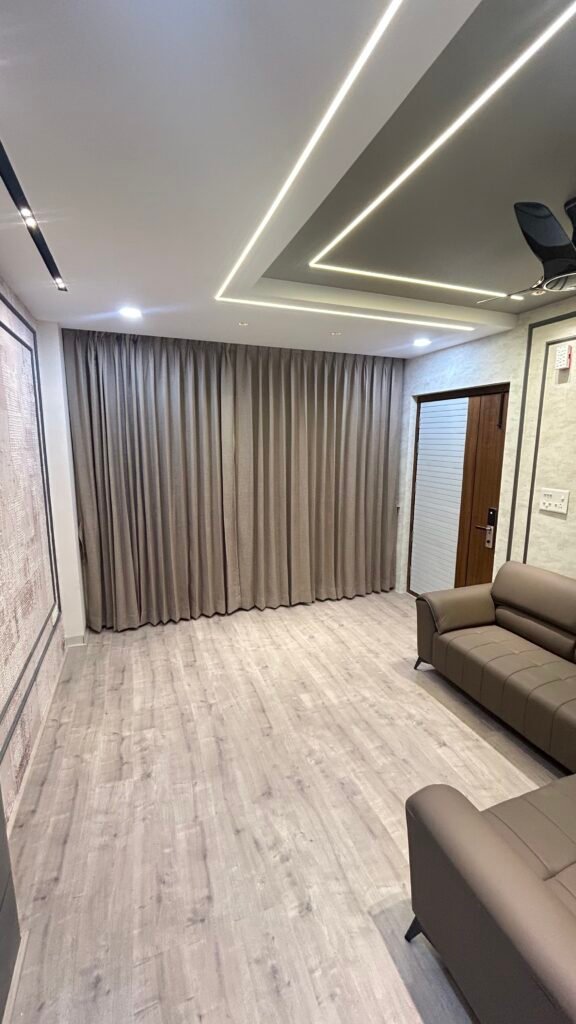
5. Consider the room’s moisture exposure
Bathrooms, balconies and kitchens need different consideration from dry living rooms and bedrooms.
The material should suit the environment rather than being selected purely for appearance.
6. Match the rest of the interior
A ceiling should work with the flooring, furniture, wall treatments, lighting and overall colour palette.
A highly decorative ceiling can look disconnected if everything else in the room is deliberately minimal.
Which false ceiling design is best for a modern home?
For many contemporary homes, a simple single-layer, perimeter, tray or carefully controlled floating design can provide enough architectural detail without making the ceiling unnecessarily busy.
But “modern” does not automatically mean minimal.
The right design depends on the room’s proportions, furniture, lighting, ceiling height and the overall design language of the home.
A large villa may comfortably accommodate a more architectural ceiling. A compact apartment may benefit from a much quieter treatment.
The goal is not to make the ceiling the most noticeable element in the room.
The goal is to make it belong there.
Common mistakes homeowners make when choosing a false ceiling
Choosing from a photograph without checking ceiling height
A design can look excellent online but feel too heavy in a real room.
Mixing too many ceiling levels
More layers do not necessarily mean better design.
Planning lighting afterwards
Lighting positions should influence the ceiling layout from the beginning.
Ignoring fans and other fixtures
Fan position, AC units, pendants and electrical points need to be coordinated.
Choosing material based only on appearance
Moisture, maintenance, installation and durability also matter.
Treating every room the same way
A bedroom, kitchen, living room and balcony have different requirements.
Final Takeaway
The best way to choose between different types of false ceiling designs is to stop thinking of them as isolated styles.
First decide what the room needs. Then choose the appropriate ceiling form, material, lighting arrangement and level of detailing.
A well-planned ceiling should support the interior—not compete with it.
If you are planning a complete home interior in Hyderabad, Decore Designz Studio can coordinate ceiling design with space planning, furniture, lighting, materials and execution as part of the wider interior design process. You can explore the firm’s interior design services in Hyderabad before discussing your home and requirements.
Frequently Asked Questions
What are the main types of false ceilings?
The main types include single-layer, multi-level, tray, cove or perimeter, floating and grid-style ceilings. These designs can be constructed using materials such as gypsum, POP, PVC, wood or metal systems.
Which false ceiling is best for a living room?
A single-layer, perimeter, tray or floating false ceiling can work well in a living room. The choice depends on the room’s size, ceiling height, furniture layout and lighting plan.
Which false ceiling is best for a bedroom?
Bedrooms generally benefit from simpler ceiling profiles that support comfortable ambient and bedside lighting without making the room feel visually heavy.
Is gypsum better than POP for a false ceiling?
Neither is automatically better. Gypsum is practical for many clean residential ceiling designs, while POP provides flexibility for customised decorative forms. The right choice depends on the design, site conditions and workmanship.
Is PVC good for false ceilings?
PVC can be useful in selected areas where moisture resistance is important. It should still be evaluated against the room’s appearance, ventilation, maintenance and overall design requirements.
Are wooden false ceilings suitable for homes?
Yes. Wood or wood-finish elements can add warmth and texture, particularly when used as a feature or coordinated with furniture and wall finishes. The exact material should be selected according to the room and maintenance requirements.
Does every room need a false ceiling?
No. A false ceiling should have a clear purpose, such as integrating lighting, concealing services or adding useful architectural detail. Some rooms may work better with the original ceiling left exposed.