

Modern Puja Unit Designs for Contemporary Homes
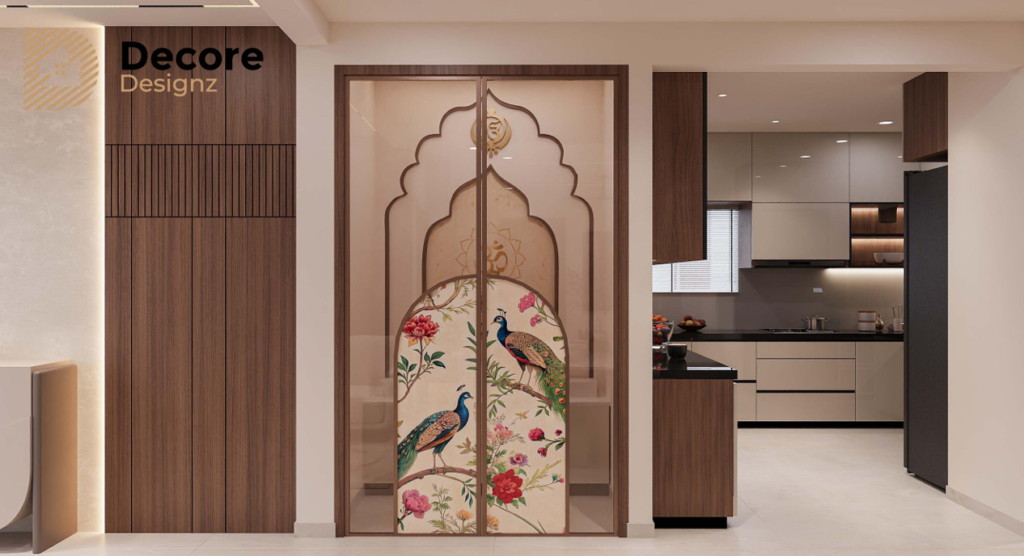
A prayer area can be part of the living room, a separate room or a small section near the dining area. The design depends on the place available and how you want to arrange the idols, pictures and items used during prayer.
Some homeowners prefer a traditional wooden finish, while others choose a simple wall-mounted arrangement. Before selecting a design, it helps to look at the different ways the area can be planned and decide which details suit your home.
1. A Separate Niche for the Prayer Area
If your home has an unused wall recess, it can be considered for a dedicated prayer area. The niche creates a clear boundary without requiring a separate room.
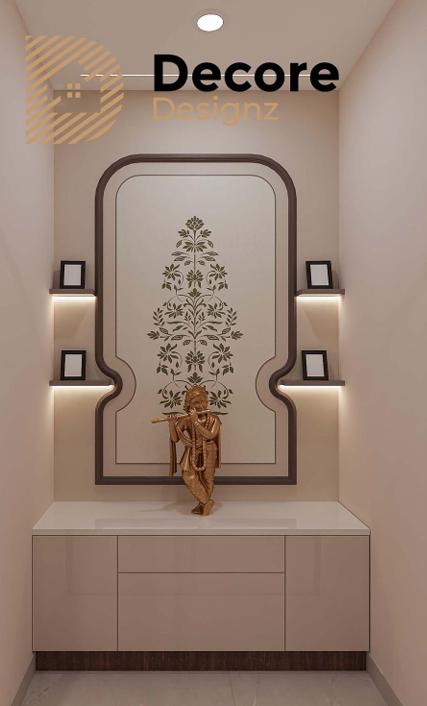
A wooden frame around the opening can give it a finished appearance. You can also use a different wall finish inside the niche to distinguish it from the surrounding walls. If the recess is narrow, keep the decoration simple so the idols remain the main focus.
Check the depth before choosing this option. A shallow niche may suit framed pictures and smaller idols, but it may not provide enough room for a wider arrangement.
When planning a prayer niche within a shared space, the surrounding furniture and room layout also matter. Explore our guide to living room interior design in Hyderabad for ideas on balancing feature areas, furniture and movement.
2. Traditional Woodwork With a Modern Finish
Traditional detailing does not have to cover the entire structure. A plain wooden cabinet with a carved border, decorative pillars or a small arch can provide a traditional appearance without making the design too elaborate.
Consider these things:
The choice of wood shade also affects the overall look.
- Darker finishes can create contrast against light walls, while lighter shades may suit rooms with pale flooring and furniture.
- If you are considering carved panels, look at the pattern at its actual size.
- A design that looks attractive in a small catalogue image may appear too busy when used across a large panel.
3. Marble and Stone Finishes for the Backdrop
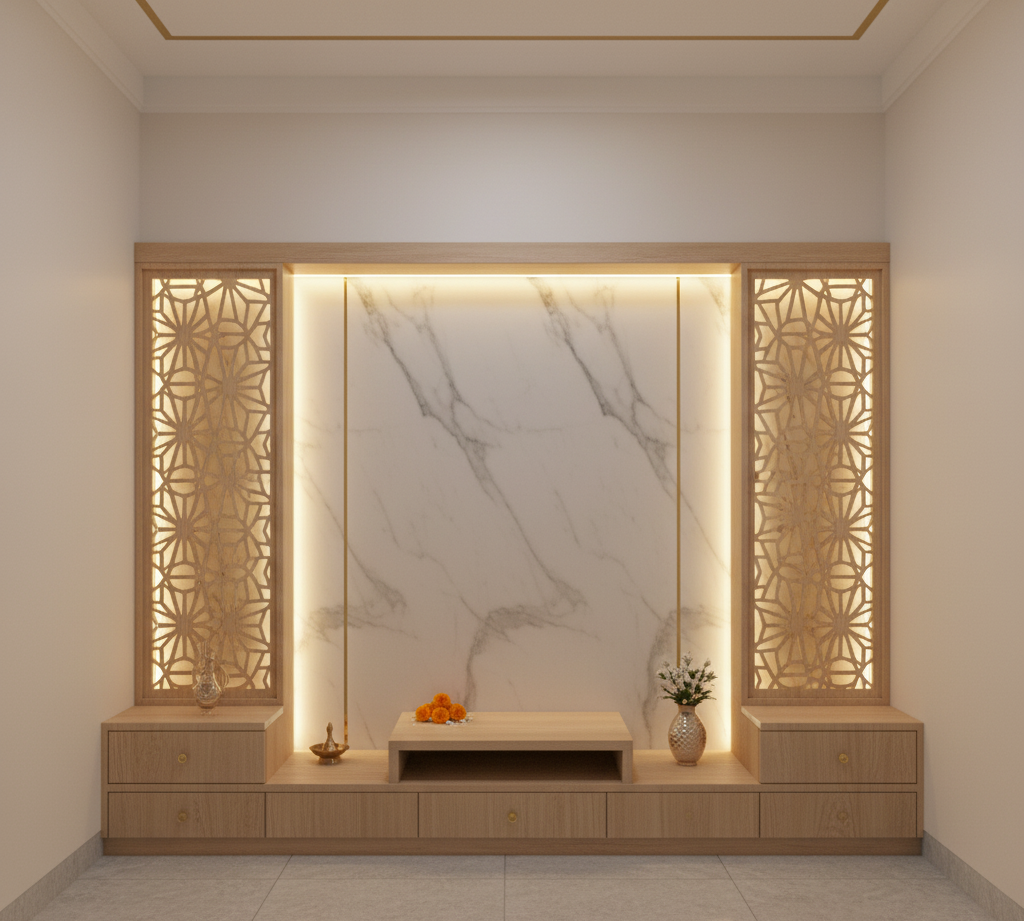
A marble-look panel can provide a different finish from the wooden cabinet below it. White and cream shades are common choices, but beige or grey can also work depending on the colours used in the room.
You do not need to cover the whole wall with stone. A panel behind the idols may be sufficient, especially when the surrounding wall already has a suitable finish.
Before finalising the material, compare samples under the lighting planned for the room. Check the maintenance instructions as well, particularly if the surface is close to oil lamps or incense.
4. Jaali Panels as a Decorative Feature
A jaali panel can be used as a backdrop or as a partition when the prayer area shares a room with the living or dining space. The pattern allows the design to have detail without using several different decorative finishes.
- Geometric patterns can suit a simple contemporary interior, while floral or traditional patterns may work better with carved wooden details.
- Consider the pattern and panel size together. A heavily detailed design may not suit a narrow section, and a large cut-out may need additional support depending on the material.
- The designer should confirm the panel dimensions and fixing method before fabrication.
5. Open Shelves or Closed Cabinets?
An open arrangement keeps the idols visible and makes it easy to reach the items used during prayer. A cabinet with doors gives the area a more enclosed appearance when it is not in use.
The decision also depends on where the prayer area is located. In a living room, closed storage may help keep spare items out of sight. In a separate prayer room, open shelves may be enough if you do not need additional storage.
You can combine both options by keeping the main platform open and placing less frequently used items in a lower cabinet. The number of shelves and compartments should depend on the items you actually have, rather than adding them only for appearance.
6. Lighting That Suits the Design
A small light above the idols can provide visibility without making the backdrop too bright. Concealed lighting can also be used behind a panel, provided the fitting and wiring are installed safely.
The finish matters here. Glossy surfaces may reflect the light directly, while textured or matte surfaces can produce a different effect. Ask to see the material sample with the proposed lighting before approving the final combination.
- Keep electrical fittings, wires and decorative materials away from the flame and heat of a diya.
- The lamp should sit on a stable, suitable surface with adequate clearance from anything combustible.
7. Planning a Small Prayer Corner
When there is limited room, the design should suit the available wall rather than occupy more of the room than necessary. A compact platform with a simple backdrop may be sufficient if you only need room for a few idols and regularly used items.
Check the surrounding furniture before deciding the width. A unit beside a television cabinet, doorway or dining table should not obstruct movement or make the wall feel overcrowded.
If you need a place for extra pooja items, consider one small drawer or cabinet instead of a large base unit. This keeps the design compact while providing some enclosed storage.
8. Storage Without Making the Design Bulky
Storage can be included below the prayer platform or in a side cabinet. The right arrangement depends on whether you keep only a few daily-use items or also need room for books, spare lamps and festival accessories.
Consider these things
- For a modern puja unit design with storage, measure the items before deciding the drawer depth.
- Small packets and prayer books do not require the same compartment size as larger containers.
- Avoid adding several narrow drawers if a single wider compartment would be easier to use.
Simple internal divisions can help separate different items without adding extra fittings to the exterior.
The same principle applies to the rest of your home: storage should be planned around what you use and where you need it. Learn how Decore Designz approaches customised storage and complete home interior design for practical, cohesive interiors.
9. Details to Finalise Before the Work Begins
Once you have chosen a style, confirm the measurements and finishes before the unit is made. This is also the time to discuss electrical points, wall fixing and the position of the diya.
Check that:
- The idols and framed pictures fit comfortably.
- The main platform has enough room for items used during prayer.
- Cabinet doors and drawers can open without hitting nearby furniture.
- The selected finish suits the surrounding walls and furniture.
- Lighting and wiring positions are finalised in advance.
- The diya can be placed safely away from electrical fittings and combustible materials.
- The finished unit can be reached and cleaned comfortably.
These details help the final installation match the approved design.
Before finalising your design, it can also help to review completed homes for ideas on materials, finishes and space planning. Browse our interior design projects in Hyderabad to explore different approaches to residential interiors.
Discuss Your Home Interior Plans With Decore Designz
Decore Designz provides interior design and execution services in Hyderabad for apartments, villas and independent homes. If you are planning a prayer area as part of your home interiors, the design team can help you consider the available wall, preferred finishes and cabinet arrangement before finalising the design.
Choose a style that suits the room and provides enough room for the items used during prayer. The right measurements and material choices matter more than adding unnecessary decoration.
Frequently Asked Questions
Which finish works well for a modern prayer area?
Wood, laminate, veneer and selected stone finishes are possible options. The choice depends on the overall interior, budget and maintenance requirements.
Can a prayer area be included in the living room?
Yes. A wall niche, compact cabinet or decorative partition can help distinguish the area without requiring a separate room.
Are wooden finishes suitable for contemporary interiors?
Yes. A plain wooden panel or a cabinet with limited traditional detailing can suit a contemporary room without making the design too elaborate.
Is a jaali partition suitable for a small apartment?
It can work if the panel size and pattern suit the available area. The fixing method and material should be confirmed before fabrication.
How can I include storage without making the unit bulky?
Use a compact drawer or a lower cabinet sized for the items you need to keep. Avoid adding compartments that are unlikely to be used.
What should I consider when planning lighting?
Check the finish, position of the light source and electrical wiring. Keep the diya safely away from electrical fittings and combustible materials.
When should the measurements be finalised?
Confirm the dimensions, shelf arrangement, storage, finishes and electrical points before fabrication begins.