

Do You Really Need a False Ceiling? 1BHK, 2BHK & 3BHK
A false ceiling can improve lighting, conceal wiring, accommodate services and add architectural detail. But that does not mean every home—or every room—needs one.
For a 1BHK, 2BHK or 3BHK, the right decision depends on the existing ceiling height, lighting requirements, electrical work, AC services, room proportions and how the space will actually be used.
In many apartments, a selective false ceiling in the living room may make sense while the bedrooms can retain the original ceiling. In other homes, even the living room may not need one.
The question should not be “Which false ceiling design should I choose?”
It should be “What problem will the false ceiling solve?”
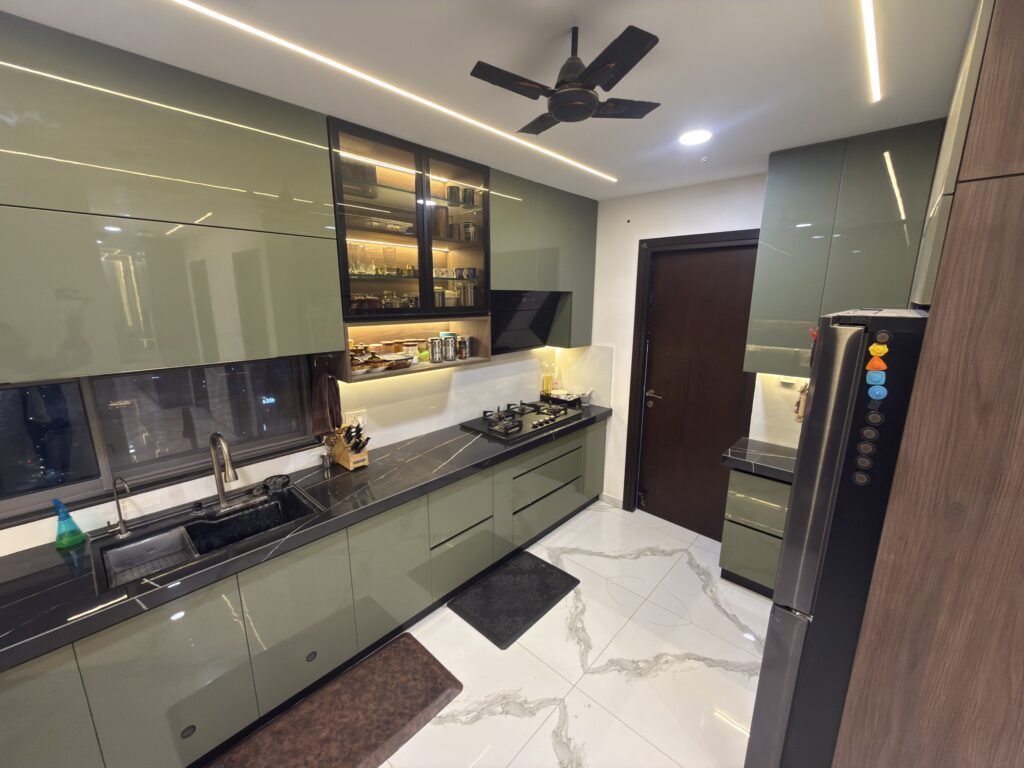
What Is a False Ceiling and Why Do People Use One?
A false ceiling is a secondary ceiling installed below the original structural ceiling.
Homeowners generally consider one for four main reasons:
- Integrating recessed or concealed lighting
- Concealing electrical wiring and selected services
- Creating a cleaner architectural finish
- Introducing ceiling details that support the interior design
A false ceiling can therefore be functional as well as decorative.
But if your existing ceiling already provides enough lighting, the wiring is suitably routed and there is no architectural reason to lower the ceiling, adding another layer may not provide enough benefit.
Decore Designz’s broader false ceiling design for homes guide makes the same distinction: a false ceiling should serve a purpose and should not unnecessarily reduce the room’s available height.
Does Every Room Need a False Ceiling?
No. A false ceiling is not necessary in every room.
The decision should be made room by room.
A living room may need several lighting points and concealed electrical routing. A bedroom may only need one or two well-positioned lights. A passage might need no ceiling treatment at all.
Before deciding, ask:
- Does the room need additional lighting?
- Is electrical wiring difficult to conceal otherwise?
- Are AC ducts, pipes or other services being routed through the ceiling?
- Is there enough ceiling height?
- Will the ceiling improve the room rather than simply add decoration?
- Will future maintenance remain practical?
If most of these answers are no, keeping the original ceiling may be the better decision.
Do You Need a False Ceiling in a 1BHK?
A 1BHK usually benefits from a more selective approach because the rooms are often compact and ceiling height is particularly noticeable.
Living room
The living room is usually the strongest candidate if you need:
- Multiple lighting points
- Concealed wiring
- A TV-wall lighting arrangement
- A small perimeter detail
- Better separation between living and dining areas
But a compact living room does not automatically need a multi-level ceiling.
A simple, shallow treatment—or even a well-planned original ceiling—may work better.
Bedroom
A bedroom generally needs less general lighting than a living room.
If the existing ceiling height is comfortable and the electrical requirements are straightforward, there may be little reason to install a full false ceiling.
The false ceiling design for bedroom guide also takes this room-specific approach rather than assuming every bedroom requires a ceiling treatment.
Kitchen
A 1BHK kitchen needs functional lighting and coordination with cabinets, ventilation and services.
A false ceiling can help in some layouts, but it should not be added purely for appearance.
Decore Designz’s kitchen ceiling guide makes the same point: a kitchen can work perfectly well without a false ceiling when the existing ceiling, lighting and electrical arrangement already meet the requirements.
Is a False Ceiling Necessary in a 2BHK?
Not necessarily.
A 2BHK is large enough for ceiling design to become useful, but that still does not mean the entire apartment needs the same treatment.
Living room
This is often where a false ceiling provides the most practical value.
You may need several lighting layers, concealed wiring, fan coordination and lighting around the TV or feature wall.
A simple ceiling with carefully positioned lights may be enough.
Dining area
If the dining table is part of the living space, a ceiling detail can visually define the dining zone.
But if there is already an appropriate light point above the table, a full ceiling treatment may not be necessary.
Bedrooms
Bedrooms should be evaluated separately.
If the room has sufficient ceiling height, straightforward lighting and no services to conceal, the original ceiling may be perfectly adequate.
Passage
A passage only needs a false ceiling when there is a genuine reason for it, such as lighting, wiring or service concealment.
A heavy ceiling design in a narrow passage can make it feel lower and more enclosed.
The existing Decore Designz 2BHK guide already establishes this selective approach; expanding it to other apartment sizes gives the page a broader search-intent footprint without abandoning the original ranking signals.
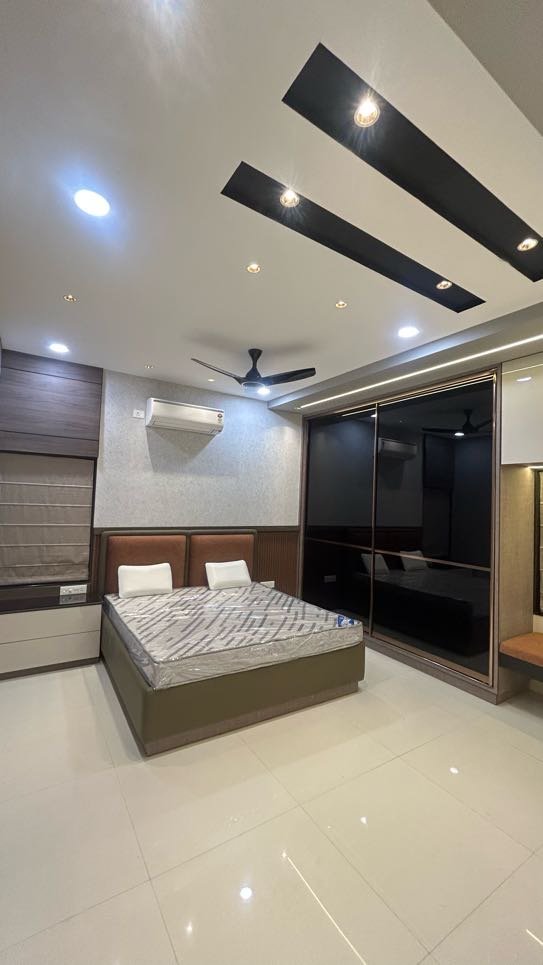
Does a 3BHK Need a False Ceiling?
A 3BHK gives you more flexibility, but size alone is not a reason to install a false ceiling.
A larger home may have more rooms, more lighting zones and more services to coordinate. That can make ceiling planning more useful.
At the same time, a 3BHK apartment with limited ceiling height may still benefit from keeping several rooms simple.
Where a false ceiling may be useful
- Living room
- Dining area
- Selected bedroom areas
- Passage with multiple lighting requirements
- Areas where AC or electrical services need concealment
Where you may not need one
- Rooms with adequate existing lighting
- Bedrooms with simple electrical requirements
- Areas where reducing ceiling height would make the room uncomfortable
- Spaces where the ceiling would be decorative without solving a practical problem
The goal is not to make every room look identical.
It is to make each room work.
When Is a False Ceiling Actually Worth It?
A false ceiling is more justified when it solves one or more practical problems.
1. You need multiple lighting layers
If a room needs ambient, task and accent lighting, the ceiling can provide a useful framework for organising those points.
For more detail, see Decore Designz’s guide to false ceiling LED lighting ideas, particularly if concealed LED strips and recessed fixtures are part of your plan.
2. You need to conceal services
Electrical wiring, selected AC services and other building services can sometimes be coordinated above a false ceiling.
But the required ceiling depth depends on what actually needs to be accommodated.
3. You want architectural zoning
A ceiling can visually separate living, dining or other areas within an open-plan space.
4. The existing ceiling needs a cleaner finish
In some interiors, a secondary ceiling provides a more controlled surface for lighting and detailing.
When Should You Skip a False Ceiling?
You should seriously consider skipping it when:
- The ceiling height is already limited.
- Existing lighting is sufficient.
- There are few electrical points to conceal.
- No major services need to pass above the ceiling.
- The room is small and a ceiling drop would make it feel enclosed.
- The proposed design is purely decorative.
- Future maintenance would become unnecessarily difficult.
This is not an anti-false-ceiling position.
It is simply a reminder that not installing something can also be a design decision.
Can You Have a False Ceiling in Only One Room?
Yes.
You do not need to install a false ceiling throughout the home.
For example:
Living room: false ceiling with planned lighting
Dining area: selective ceiling treatment
Master bedroom: simple ceiling or original slab
Other bedrooms: original ceiling with appropriate lighting
Passage: no false ceiling unless required
This selective approach can preserve ceiling height where it matters while still giving you the lighting and service coordination you need in key areas.
Does a False Ceiling Make a Room Look Smaller?
It can.
The effect depends on how much height is lost, the visual weight of the design and the proportions of the room.
A complicated multi-level ceiling can feel heavy in a compact apartment.
A simpler perimeter or single-layer treatment may feel lighter.
The important point is to measure the existing ceiling and understand the proposed finished level before approving the design.
There is no single ceiling drop that works for every room because the required depth depends on the lighting fixtures, framework, wiring, ducts and other services involved.
Does a False Ceiling Make a Room Look Smaller?
It can.
The effect depends on how much height is lost, the visual weight of the design and the proportions of the room.
A complicated multi-level ceiling can feel heavy in a compact apartment.
A simpler perimeter or single-layer treatment may feel lighter.
The important point is to measure the existing ceiling and understand the proposed finished level before approving the design.
There is no single ceiling drop that works for every room because the required depth depends on the lighting fixtures, framework, wiring, ducts and other services involved.
What About Lighting Without a False Ceiling?
You can absolutely light a room without a false ceiling.
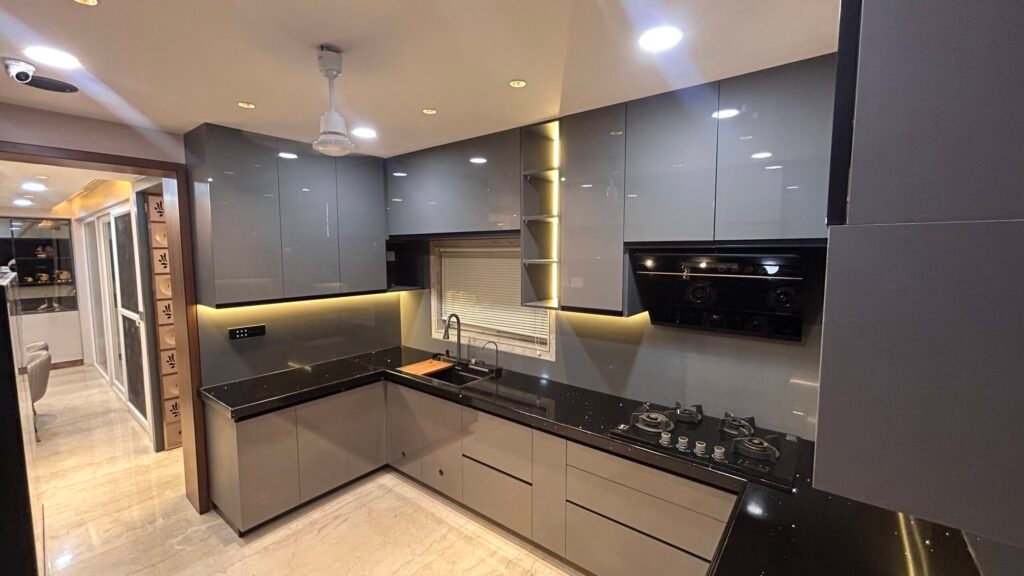
Depending on the room, alternatives may include:
- Surface-mounted fixtures
- Wall lights
- Pendant lights
- Track lighting
- Existing electrical points
- Under-cabinet lighting in kitchens
- Decorative lamps
A full false ceiling should not be treated as a prerequisite for good lighting.
The lighting plan should come first. The ceiling should then be used only where it provides a clear advantage.
Final Takeaway: Do You Really Need a False Ceiling?
Not always.
A false ceiling makes sense when it solves a real requirement such as lighting integration, service concealment, electrical coordination or architectural zoning.
For a 1BHK, it may be useful only in selected areas. For a 2BHK, the living room may benefit while some bedrooms can remain untouched. For a 3BHK, there may be more opportunities to use one, but each room should still be assessed independently.
The best ceiling is not the one with the most layers.
It is the one that gives the room what it needs without taking away height, comfort or practicality unnecessarily.
If you are planning complete interiors in Hyderabad, Decore Designz Studio can assess the floor plan, ceiling height, lighting requirements, furniture layout and services together before deciding where a false ceiling is actually worthwhile.
Frequently Asked Questions
Is a false ceiling necessary in a 1BHK?
No. A 1BHK may need a false ceiling in the living room or another specific area, but there is no need to install one throughout the home if the existing ceiling already works.
Is a false ceiling necessary in a 2BHK?
No. A 2BHK can use a false ceiling selectively. Living rooms often have more lighting and electrical requirements, while bedrooms or passages may not need one.
Does a 3BHK need a false ceiling?
Not automatically. A 3BHK may have more opportunities for ceiling integration because of its size and number of rooms, but the decision should still depend on ceiling height, lighting, services and room usage.
Can I have a false ceiling only in the living room?
Yes. A false ceiling does not have to cover the entire home. It can be limited to rooms where it provides a practical or design benefit.
Can I install lights without a false ceiling?
Yes. Surface-mounted lights, wall lights, pendant fixtures, track lighting and other options can work without a false ceiling, depending on the room and electrical layout.
Does a false ceiling reduce ceiling height?
Yes. A false ceiling creates a finished surface below the original slab, so some vertical space is lost. The amount depends on the framework, lighting, wiring, ducts and other services being accommodated.
Does a false ceiling make a small room look smaller?
It can if too much height is lost or the design is visually heavy. Simpler ceiling treatments can be more appropriate for compact rooms.
Is gypsum false ceiling necessary for every room?
No. Gypsum is one commonly used false-ceiling material, but the material should be selected according to the design, room conditions, ceiling requirements and installation method.
Is POP better than gypsum?
Neither is universally better. The choice depends on the type of design, required detailing, site conditions and execution requirements.
Is a false ceiling worth it just for decoration?
Not necessarily. If decoration is the only reason, consider whether the same visual improvement can be achieved through lighting, wall treatment, furniture or other interior elements without reducing ceiling height.
What is the biggest mistake when planning a false ceiling?
Installing one without first understanding what it needs to accomplish. The lighting, furniture, fan positions, electrical work, AC services and available ceiling height should be considered before finalising the design.