

What Does an Interior Designer Actually Do? Inside Our Process
A good interior designer does more than choose colours, furniture and decorative finishes. An interior designer helps you plan how your home will work, develops the design around your needs, coordinates important decisions and helps turn that design into a finished space.
At Decore Designz Studio, our approach begins with understanding how you live. From the first conversation to the final finishing touches, we bring together space planning, design, materials, furniture, visualisation and execution to create homes that feel personal and work comfortably.
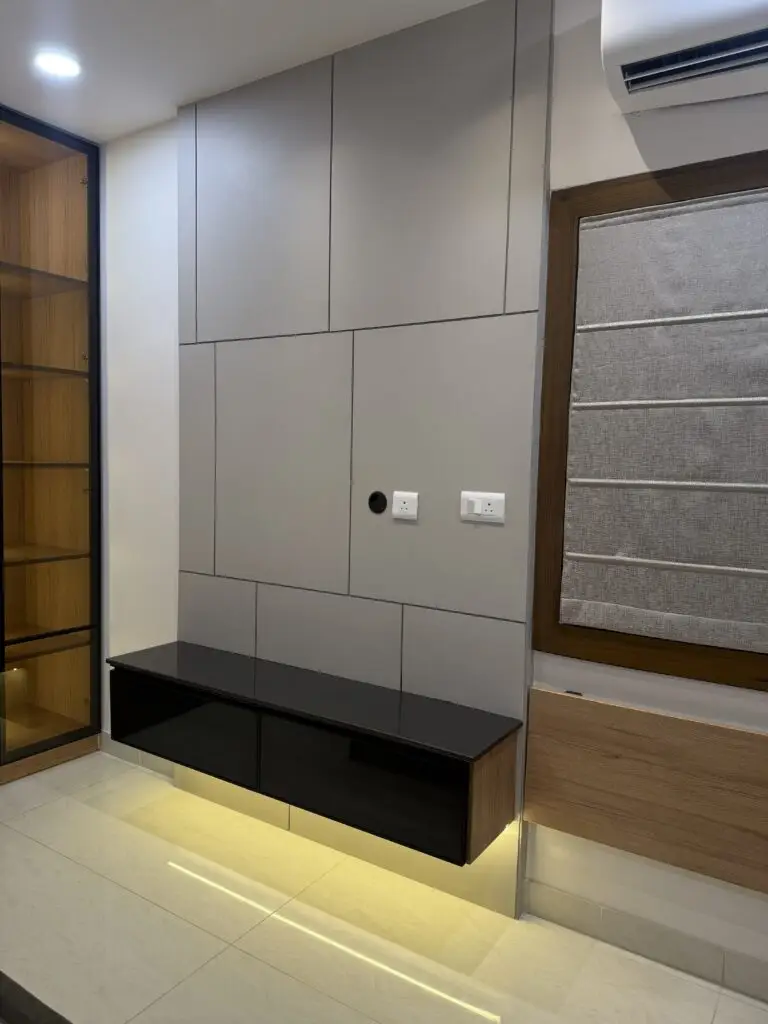
What Does an Interior Designer Do for a Home?
An interior designer helps homeowners make practical and visual decisions about their space. This can include room layouts, furniture placement, storage, lighting, materials, colours, customised furniture and the execution of the approved design.
The exact scope depends on the project. Designing one bedroom is different from planning the interiors of a complete apartment or villa.
The role is not simply to make a home look attractive. It is to make the available space work for the people who will use it.
Why Interior Design Involves More Than Choosing a Style
Many homeowners begin with a reference image. They may like a particular living room, kitchen or bedroom and want something similar in their own home.
That is a useful starting point, but a reference image cannot tell you everything.
A design needs to account for:
- The size and shape of your rooms.
- How people move through the home.
- Furniture dimensions and placement.
- Storage requirements.
- Kitchen routines and daily use.
- Lighting needs.
- Material preferences and maintenance.
- The available budget and project scope.
A beautiful room can still be uncomfortable if the furniture is too large, storage is insufficient or movement is restricted.
This is why the planning stage matters as much as the finished appearance.
Our Interior Design Process: From Ideas to Home
At Decore Designz, we follow a connected process that takes a project from understanding the homeowner’s requirements to design development, execution and handover.
The stages are straightforward. The decisions within each stage are what make the work meaningful.
1. Understand: Start With How You Live
The first step is a conversation about your home and your requirements.
We want to understand what matters to you before deciding how the space should look.
Questions may include:
- Who will be using the home?
- How do you use each room?
- Where do you need more storage?
- Who uses the kitchen most?
- Do you work or study from home?
- Do you regularly have guests?
- What should be easy to maintain?
- What design styles, colours or materials do you prefer?
These details help establish the direction of the project.
For example, a home designed for a family that regularly hosts guests may need a different living room arrangement from a home designed around quiet evenings and minimal furniture.
The design should respond to that difference.
2. Plan: Make the Space Work Before Making It Beautiful
Once we understand your requirements, we study the available space and plan how it will be used.
This includes furniture layouts, movement, room relationships, storage and practical requirements.
Planning is where many important decisions happen before materials or decorative finishes are selected.
A wardrobe needs enough usable storage. A kitchen needs a layout that supports cooking. A living room needs comfortable seating and clear movement. A bedroom needs to feel restful without losing essential functionality.
In our approach, these practical decisions guide the visual design rather than being added afterward.
3. Design: Develop the Look Around the Plan
After the planning is clear, the design direction begins to take shape.
This is where we bring together:
- Colours and material combinations.
- Furniture and customised pieces.
- Lighting concepts.
- Wall treatments and finishes.
- Storage details.
- The overall design style.
The objective is not to use every design feature available. It is to select elements that suit the space, the homeowner and the intended experience of the room.
A contemporary home, for example, may use clean-lined furniture and restrained finishes. A more traditional interior may need different materials, detailing and furniture proportions.
The style should support the home, not overpower it.
4. Visualise: See the Design Before Execution
3D visualisation helps homeowners understand the proposed interior before work begins.
It gives a clearer idea of the planned layout, furniture, materials, colours and overall appearance.
This is useful because design decisions can be difficult to judge from descriptions alone.
However, a 3D render is not the finished home. It is a design representation. The actual result also depends on measurements, material availability, construction details, installation and finishing.
That is why visualisation should be connected to practical planning and execution.
5. Finalise the Scope and Quotation
Before execution, the design and project scope need to be clear.
At Decore Designz, the homepage process describes a tentative quotation, design development, a final quotation and agreement before execution.
This sequence gives the homeowner an opportunity to understand what is being proposed and how the scope develops.
The final quotation should be understood alongside the agreed design and scope of work. Depending on the project, the details may include furniture, materials, finishes, installation and other work required for the approved design.
A useful question to ask any interior designer is:
6. Execute: Turn the Design Into a Real Home
This is where the design moves from the screen to the site.
Execution may involve material coordination, customised furniture, installation, finishing and other work required for the project.
This stage requires attention to details that are not always visible in a finished photograph.
For example, a wardrobe design needs more than an attractive exterior. Its internal layout, hardware, construction and installation all affect how it works in daily use.
Similarly, a kitchen needs practical storage, appropriate materials and a layout that suits the homeowner’s routine.
The execution stage is where design intent meets real conditions. Measurements, site coordination and material decisions matter.
At Decore Designz, our approach connects the design process with execution rather than treating the design as something separate from the actual work.
7. Handover: Complete the Final Details
The final stage is handover.
The work is brought to completion through final checks and finishing so the homeowner can take possession of the finished space.
Handover is not simply the moment when the furniture is installed. It is the point at which the project moves from an active worksite to a home ready for use.
The details matter because a well-planned interior should feel complete, comfortable and practical when the homeowner begins living in it.
What Does an Interior Designer Actually Manage?
The designer’s role varies by project, but the following areas commonly form part of residential interior design.
Area | What it involves |
Space planning | Furniture layouts, movement and room usage |
Design development | Colours, materials, finishes and visual direction |
Furniture | Selection or design of furniture and customised pieces |
Storage | Wardrobes, kitchen storage and other built-in requirements |
Lighting | Planning lighting needs and its relationship with the design |
Visualisation | Helping homeowners understand the proposed interior |
Execution | Connecting approved design decisions with site work |
Finishing | Attention to the details that complete the interior |
Not every project requires the same level of involvement in every area. A complete home interior and a single-room project may have different requirements.
The important part is to establish the scope clearly before work begins.
What Makes Our Approach Different?
At Decore Designz, we believe a home should feel like home, not like a showroom that you are afraid to use.
Our design decisions begin with the homeowner’s lifestyle, preferences, routines and practical needs.
That means we consider more than the visual style. We look at how the space will be used, what needs to be stored, which furniture fits, how lighting should work and how the materials and finishes will come together.
The design then develops around those decisions.
We also believe that execution is part of the expertise. The finished photographs show the result, but they do not show every measurement, material choice, installation decision or finishing detail that went into creating it.
That is why we look at the complete journey from ideas to home.
A Real Decore Designz Project: Akriti Arv Viva, Tellapur
Our homepage features Akriti Arv Viva in Tellapur as a premium end-to-end villa interior project covering a 3,500+ sq. ft. residence.
The project description identifies space planning, design development, high-quality materials, functional planning, execution and final finishing as part of the work.
This is a useful example of why interior design and execution need to be considered together.
A villa has its own planning requirements. The scale of the home, the relationship between rooms, furniture proportions, materials and finishing details all influence the final result.
The project is presented as a complete interior transformation rather than a collection of individual decorative choices.
You can explore the project through the Decore Designz homepage and learn more about the studio’s approach through our interior designing services in Hyderabad.
Do You Need an Interior Designer for Your Home?
An interior designer can be useful when you need help planning your space, making design decisions or coordinating a more involved interior project.
This is particularly relevant when you are:
- Moving into a new apartment or villa.
- Planning interiors for a complete home.
- Renovating an existing space.
- Trying to improve storage and furniture layouts.
- Unsure how to combine materials, colours and lighting.
- Looking for a design that can be taken through execution.
The right level of professional involvement depends on the project.
Some homeowners need help with planning and design. Others need a connected design and execution service. Understanding the difference helps you choose a scope that fits your requirements.
Planning Your Home Interiors in Hyderabad?
An interior designer can be useful when you need help planning your space, making design decisions or coordinating a more involved interior project.
A well-designed home starts with understanding how you live.
If you are planning a new apartment, villa or home renovation, Decore Designz Studio can help you explore the design and execution requirements for your space.
FAQs
What does an interior designer do?
An interior designer plans and develops the interior of a space around the homeowner’s requirements. The work can include space planning, furniture, storage, materials, lighting, colours, visualisation and execution, depending on the project scope.
Does an interior designer also handle execution?
Some interior designers provide both design and execution. At Decore Designz, our approach connects the design process with execution, including material coordination, customised work, installation and finishing.
What happens during an interior design consultation?
A consultation is an opportunity to discuss your home, lifestyle, requirements, preferences and project priorities. These details help establish the direction for planning and design.
Do I need to know my design style before hiring an interior designer?
No. Having reference images or a preferred style can be helpful, but it is not essential. A designer can help you understand different design directions and identify what suits your home and requirements.
Does the interior designer choose all the materials?
Material selection depends on the project and agreed scope. Materials and finishes are considered as part of the design development, with attention to the space, intended use, appearance and practical requirements.
Is 3D visualisation the same as the finished interior?
No. A 3D visualisation represents the proposed design. The finished interior depends on execution, materials, measurements, installation and finishing.
How do I start an interior design project with Decore Designz?
You can begin by discussing your home, requirements and project scope with Decore Designz. The next steps can then be planned around your needs, including design development, quotation and execution where applicable.